
政务大模型

Search documents
政务大模型应用提速 “AI+治理”成新焦点
Zhong Guo Xin Wen Wang· 2026-01-16 05:17
Core Insights - The application of large models in government services is rapidly increasing, with a projected 593% growth in the number of projects and a 275% increase in disclosed amounts by 2025 [1] - The government sector ranks second in project quantity and first in project value among all industries for large model applications [1] Group 1: Government Sector Developments - The core driver for the growth of large models in the government sector is policy guidance, highlighted by the State Council's directive on advancing AI applications in government [1] - The introduction of the "Guidelines for the Deployment and Application of Large Models in the Government Sector" marks a significant policy framework for AI in government [1] Group 2: Technological Advancements - The rapid improvement in domestic large model performance and cost optimization, particularly through open-source models, has lowered the technical barriers for government departments [1] - The integration of large models into various government functions, such as internal operations and decision-making, is accelerating the transition to intelligent governance [2] Group 3: Practical Applications - Local governments are leveraging AI large models to enhance governance capabilities, with examples including the collaboration between Zhongguancun KJ and multiple cities in Sichuan to create specialized knowledge bases for public services [2] - The Hefei Government Service Center is utilizing AI to streamline processes, achieving significant efficiency gains by reducing reliance on human services through intelligent systems [2] Group 4: Industry Participation - Over 300 entities in China have initiated applications related to government large models, expanding from simple Q&A to core areas like service processing and urban management [3] - Major players in the large model market, including Alibaba Cloud and Huawei, are actively engaging in the government sector, indicating a robust competitive landscape [3]
当AI“+”上你的生活……这些悄悄发生的改变,你感受到了吗?
Xin Lang Cai Jing· 2025-12-12 22:19
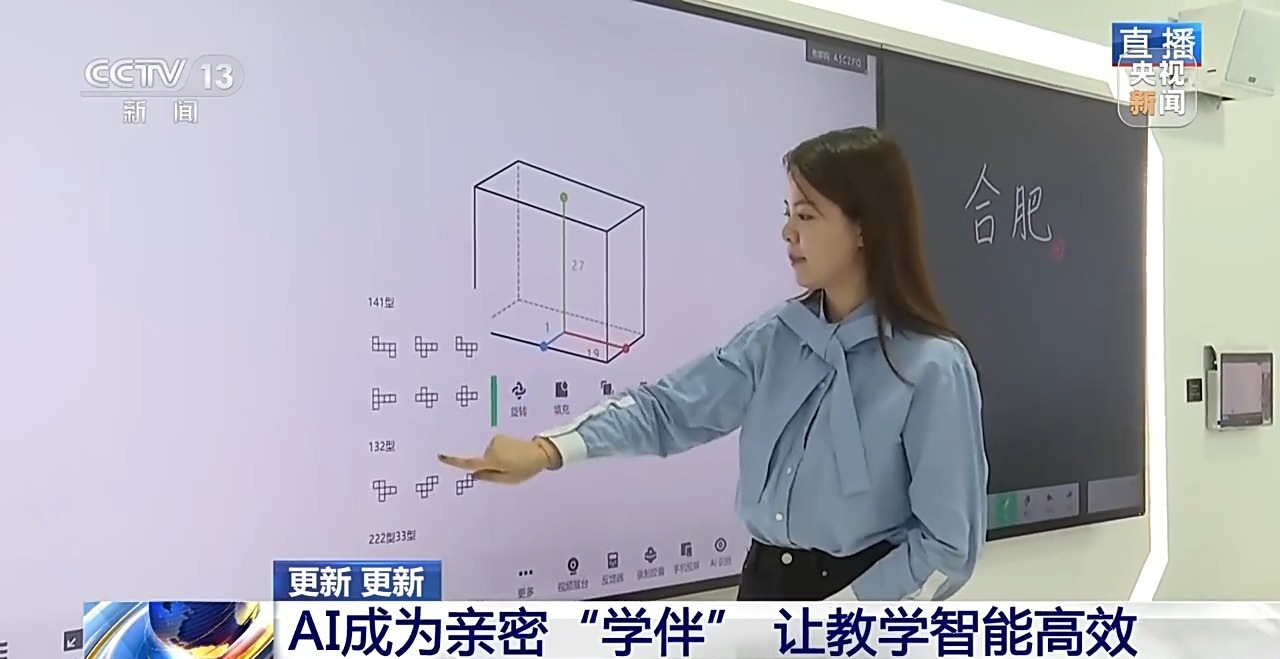
Group 1 - The core theme of the article is the rapid advancement and integration of artificial intelligence (AI) across various sectors in China, enhancing economic vitality and improving daily life for citizens [1][3]. - AI is being implemented in education through intelligent teaching assistants that help teachers prepare lessons efficiently, generating teaching outlines and materials based on set objectives [3][5]. - Over 3,000 schools in China have adopted AI-powered smart classrooms, improving teaching efficiency and providing personalized learning experiences for students [5]. Group 2 - AI technology is enhancing traditional fitness equipment by generating personalized workout prescriptions, improving user experience with real-time feedback [9]. - AI applications are also transforming public services, with AI assistants facilitating processes in government offices, making services more accessible and efficient [11]. - The "14th Five-Year Plan" emphasizes the implementation of the "AI+" initiative, aiming to lead in AI research and application, with Anhui province reporting significant growth in AI enterprises, achieving revenues of 106.99 billion yuan by mid-2025 [13].

计算机行业周报:政务大模型政策出台,具身智能加速落地-20251014
Shanghai Securities· 2025-10-14 11:29
Investment Rating - The industry investment rating is "Maintain Overweight" [10] Core Viewpoints - The escalation of US-China trade tensions is expected to benefit domestic software, particularly in the foundational software sector, as the US imposes new tariffs and export controls on key software [2] - The introduction of the first policy document for large models in the government sector is expected to heat up the AI bidding market, with significant budgets allocated for various AI projects [3] - Major tech companies are accelerating their investments in embodied intelligence, indicating a global competition in robotics and AI applications [4] Summary by Sections Market Review - During the past week (October 6-12), the Shanghai Composite Index rose by 0.37%, while the ChiNext Index fell by 3.86%. The CSI 300 Index decreased by 0.51%, and the computer sector index (Shenwan) dropped by 1.83%, underperforming the Shanghai Composite by 2.20 percentage points and outperforming the ChiNext by 2.03 percentage points [1] Policy Developments - The Central Cyberspace Affairs Commission and the National Development and Reform Commission issued guidelines for the deployment and application of AI large models in government sectors, providing a framework for various applications [3] Industry Trends - The bidding market for AI large models in government is gaining momentum, with notable procurement announcements and significant budget allocations for projects in cities like Nanjing, Hangzhou, and Beijing [3] - Tech giants like Alibaba and companies like Sais and Volcano Engine are forming partnerships to advance embodied intelligence technologies, indicating a shift towards practical applications in the physical world [4] Investment Recommendations - Suggested companies to focus on include those in computing power such as Huafeng Technology, Shenling Environment, and Cambrian; in AIDC such as Kehua Data and Yunsai Zhili; and in AI applications like Kingsoft Office and iFlytek [10]
互联网行业高质量发展成效显著
Jing Ji Ri Bao· 2025-07-30 22:20
Group 1: Industry Overview - The 2025 China Internet Conference highlighted the rapid evolution of network technology in China, emphasizing a shift towards data-driven and intelligent advancements, with 5G-A technology development leading globally [1] - The number of telecom and internet operators in China doubled from 94,000 to 187,000 during the 14th Five-Year Plan, while the total revenue of the top ten internet companies increased from 2.4 trillion yuan to over 4 trillion yuan [1] - China has established the world's largest 5G network and gigabit optical network, with 5G base stations reaching 4.549 million and mobile internet traffic totaling 1,867 billion GB, a year-on-year increase of 16.4% [1] Group 2: AI and Smart Agents - The number of internet users in China surpassed 1.1 billion, with over 250 million users of generative AI, and the AI industry nearing 270 billion yuan in scale [2] - Smart agents are recognized as a core symbol of internet evolution, reshaping the underlying logic of research, production, and daily life, with a closed-loop system comprising "large models + memory systems + tool invocation + planning capabilities" [2] - The concept of "smart agents as a service" is emerging, shifting user operations from manual control to AI-driven decision-making, necessitating upgrades in internet architecture for enhanced bandwidth and low latency [2] Group 3: Practical Applications and Innovations - Smart agents are penetrating various sectors, including industrial manufacturing, government services, content creation, and cybersecurity, driving a revolution in efficiency [3] - Companies like Tencent showcased applications of smart agents, such as the "anti-fraud assistant," which enhances user experience in fraud prevention [3] - China Unicom is developing government-focused smart models and intelligent services to automate simple inquiries and intelligently allocate complex tasks [3] Group 4: Future Directions - The need for deep integration of the internet with "artificial intelligence +" is emphasized, alongside the promotion of new information infrastructure and enhanced AI service capabilities [4]
青岛探讨大模型技术在城市治理中的创新应用与发展前景
Qi Lu Wan Bao Wang· 2025-05-26 08:47
Group 1 - The core theme of the event is "Empowering the Future of Cities with Large Models," focusing on the innovative applications and development prospects of large model technology in urban governance [1][2] - Qingdao's big data development management bureau emphasizes that large model technology is a core engine for building a digital Qingdao, aiming to enhance the intelligent level of government services through integrated management and service systems [2][4] - The event showcased various applications of large model technology in urban governance, including case studies on community management efficiency and AI-driven digital upgrades for enterprises [2][3] Group 2 - The interactive dialogue segment highlighted the collaboration among industry associations, enterprises, and research institutions, discussing challenges and solutions in enhancing urban service capabilities through large models [3] - The Qingdao big data development management bureau plans to continue promoting the inclusive application of large models in education, healthcare, and transportation, fostering a collaborative mechanism among government, enterprises, and citizens [4]
科大讯飞深度赋能千行百业高质量发展
Zhong Guo Jing Ji Wang· 2025-02-26 23:39
Core Insights - The global AI industry is accelerating towards a "deep empowerment" phase by 2025, with iFlytek Co., Ltd. leading the way through its Spark model, which is being applied across various sectors such as education, healthcare, and automotive [1][3]. Technology Breakthroughs - iFlytek has transitioned from a "follower" to a "leader" in AI technology, significantly increasing its R&D investment, which reached 3.827 billion yuan in 2023, accounting for 19.53% of its revenue [1]. - The company launched the "Feixing No. 1" computing cluster in October 2023, achieving a 94% average utilization rate for training large models [2]. - In January 2025, iFlytek introduced the Spark 4.0 Turbo model, which features advanced reasoning capabilities and aims to match the performance of OpenAI's latest models [2]. Industry Empowerment - iFlytek's Spark model has been widely adopted in various industries, with 91 projects won in the large model bidding market in 2024, totaling 848 million yuan [3]. - In healthcare, the Spark medical model has been implemented in over 60,000 grassroots medical institutions, providing more than 877 million AI-assisted diagnosis suggestions [3]. - In the financial sector, the Spark model serves as a digital foundation for several banks and insurance companies, enhancing their operational capabilities [3]. Educational Initiatives - iFlytek collaborates with educational institutions to develop AI teaching assistants, impacting over 10,000 teachers across more than 2,000 schools [4]. - The company has provided AI teaching solutions to over 1,000 schools in remote areas, demonstrating its commitment to educational equity [5]. Social Governance and Applications - iFlytek has established smart computing centers in various cities to support urban development and governance [5]. - The company has developed a governance model that significantly reduces processing times for public services, enhancing efficiency [6]. - iFlytek's AI applications in construction management have won awards for their innovative approach to digital management [6]. Conclusion - iFlytek's advancements in AI technology and its applications across multiple sectors position it as a key player in driving high-quality development and providing a model for AI empowerment in China [6].
