数据资产质押

Search documents
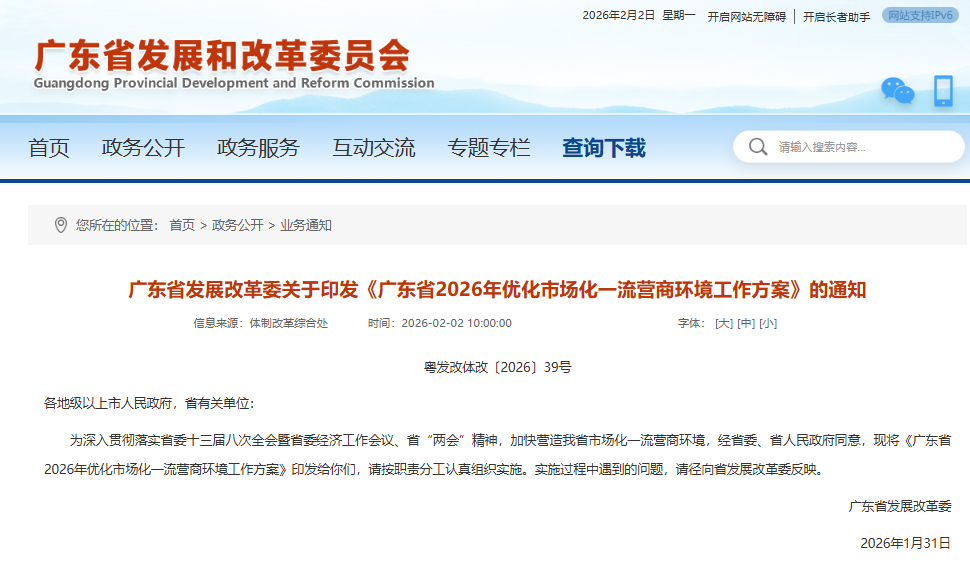
广东:围绕科技研发、科技成果转化等场景,创新保险产品和服务
Jin Rong Jie· 2026-02-02 06:02
Group 1 - The core viewpoint of the article is the Guangdong Provincial Development and Reform Commission's issuance of a work plan aimed at optimizing the market-oriented business environment by 2026, with a focus on enhancing financing efforts for enterprises [2][3] - The plan includes establishing a "Financial Service Day" on the 10th of each month to facilitate connections between government, banks, and enterprises, promoting policies and financing opportunities [2] - Various financing models such as "Credit Easy Loan," "Park Loan," and "Innovation Loan" will be promoted to improve the accessibility and reduce the cost of financing for small and micro enterprises [2][3] Group 2 - The plan aims to strengthen the incubation system for listed companies and support technology-driven enterprises in overcoming key technological challenges to go public [2] - A risk-sharing and reward mechanism for bond issuance will be established to encourage more technology companies to enter the bond market's "Technology Board" [2] - The initiative includes the innovation of insurance products and services tailored to technology research and development, technology achievement transformation, and entrepreneurship [2]

2025年浙江金融“成绩单”揭晓 多项核心指标位居全国前列
Mei Ri Shang Bao· 2026-01-26 23:31
Group 1 - The year 2025 is crucial for Zhejiang's high-quality development and the construction of a common prosperity demonstration zone, with significant financial support for economic stability and growth [1] - As of the end of November 2025, the balance of financial "five major articles" loans in Zhejiang reached 12.8 trillion yuan, a year-on-year increase of 10.9%, accounting for 11.9% of the national total [1] - The balance of loans in the province's financial system reached 25.69 trillion yuan, with a year-on-year growth of 8%, surpassing the national growth rate by 1.8 percentage points [1] Group 2 - Zhejiang has implemented 17 measures in technology finance to support seed and startup enterprises, with technology loans and loans for strategic emerging industries growing by 13.7% and 14.9% respectively [2] - The province has introduced 20 measures in green finance, with green loan balances reaching 4.57 trillion yuan, a year-on-year increase of 19.3%, ranking among the top in the country [2] - The province has optimized the business environment for private enterprises, with inclusive small and micro loans and agricultural loans ranking first nationally as of the end of 2025 [2] Group 3 - The development of pension finance and digital finance is accelerating, with loans for service consumption and the pension industry exceeding 100 billion yuan, and pension industry loans growing by 92.2% year-on-year [3] - The balance of loans in the core digital economy sectors increased by 14.9% as of the end of November 2025, focusing on areas like integrated circuits and artificial intelligence [3] - A new credit repair policy effective from January 1, 2026, allows individuals to have overdue information removed from the credit system if they repay overdue debts by March 31, 2026, without needing to apply [3]
华中金融深一度丨华中四省12家城农商行2024年财报全景扫描: 分化加剧下的区域银行业生态
2 1 Shi Ji Jing Ji Bao Dao· 2025-05-22 08:49
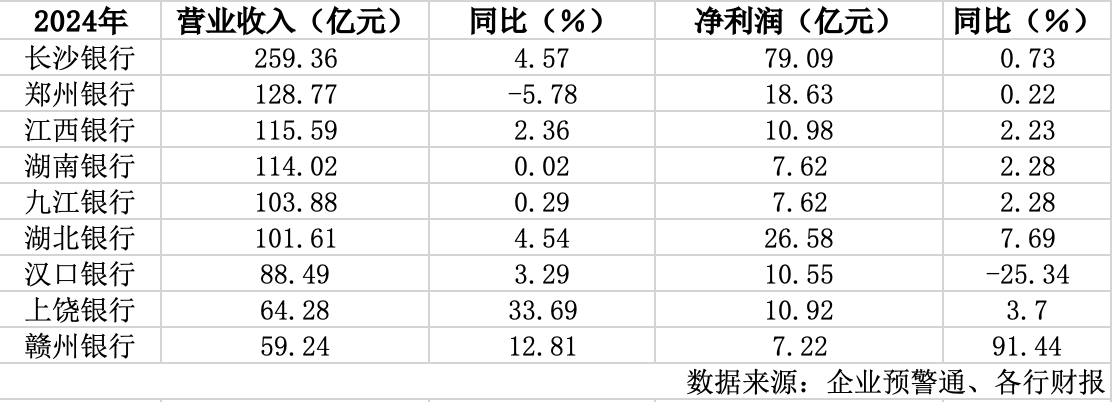
Core Viewpoint - The banking sector in Central China, particularly in Hubei, Hunan, Henan, and Jiangxi provinces, is experiencing differentiated development, with city commercial banks showing resilience and growth, while rural commercial banks face significant operational challenges [1][9]. Group 1: City Commercial Banks Performance - Among the nine city commercial banks, eight reported year-on-year revenue growth, with seven achieving both revenue and net profit increases, indicating strong operational resilience [1][3]. - Changsha Bank leads with a revenue of 25.936 billion yuan and a net profit of 7.909 billion yuan, becoming a crucial pillar of regional finance [1][5]. - The revenue growth rates for Shangrao Bank and Ganzhou Bank were 33.69% and 12.81%, respectively, highlighting the growth potential of smaller city commercial banks [1][5]. Group 2: Net Profit and Revenue Disparities - In terms of net profit, Changsha Bank achieved 7.909 billion yuan, significantly higher than Ganzhou Bank's 722 million yuan, showcasing a stark disparity among the banks [4][5]. - The net profit growth rates varied, with Ganzhou Bank experiencing a remarkable increase of 91.44%, while other banks maintained stable growth rates between 0.22% and 7.69% [6][5]. Group 3: Asset Quality and Growth - Changsha Bank's total assets exceeded 1 trillion yuan, reaching 1,146.768 billion yuan, while other banks maintained assets between 500 billion and 700 billion yuan [8]. - Five city commercial banks showed robust asset growth, with asset expansion rates exceeding 10% for banks like Hubei Bank and Changsha Bank [8]. Group 4: Rural Commercial Banks Challenges - The three rural commercial banks faced significant operational pressures, with Wuhan Rural Commercial Bank's net profit declining by 50.46% and Changsha Rural Commercial Bank's by 31.62% [2][11]. - Despite efforts to diversify income sources, the reliance on interest income remains high, constituting 70% to 90% of total revenue for these banks [13]. Group 5: Strategic Alignment with Regional Development - City commercial banks are increasingly aligning their strategies with regional economic development, as seen with Changsha Bank's focus on key industries such as engineering machinery and renewable energy [14]. - The differentiation in performance between city and rural commercial banks reflects not only financial metrics but also their responsiveness to regional development strategies and core competitiveness [16][17].