文旅出行智能助手

Search documents
AI打响服务消费升级战,智能化重塑消费全链条竞争力
Zheng Quan Shi Bao· 2025-10-21 04:29
Core Insights - The article highlights the transition of service consumption, particularly in tourism and healthcare, into an "intelligent era" driven by artificial intelligence (AI) and digital technologies [1][4][5]. Group 1: Digital Service Consumption - Digital service consumption refers to the application of technologies like AI, virtual reality, and augmented reality in service scenarios, enhancing experiences in sectors such as tourism and healthcare [4]. - The Ministry of Commerce and nine other departments have released policies to expand digital service consumption, encouraging e-commerce platforms to innovate and integrate online and offline services [1][2]. Group 2: Innovations in Tourism and Healthcare - In the tourism sector, the "博观" model, developed by Shaanxi Cultural Investment Group and Huawei, offers AI travel assistants that help tourists plan their trips based on preferences and budgets [4]. - In healthcare, companies like Dineike are advancing smart hospital construction, with their products aiding over 2,000 hospitals in achieving digital upgrades [5]. Group 3: AI's Impact on Consumption - AI technologies are reshaping both online and offline consumer interactions, enhancing service efficiency and reducing costs [7]. - For instance, AI-driven retail systems can significantly speed up transaction processes in restaurants, processing up to 15 orders per minute compared to the traditional two [7]. Group 4: Market Potential - The global digital service market is projected to reach several trillion dollars by 2025, indicating vast market opportunities for companies involved in digital service consumption [5].

AI打响服务消费升级战,智能化重塑消费全链条竞争力
证券时报· 2025-10-21 03:55
Group 1 - The core viewpoint of the article emphasizes the transition of service consumption into a "smart era," driven by advancements in artificial intelligence (AI) and digital technologies [1][4][3] - The Ministry of Commerce and nine other departments have jointly released policies to expand digital service consumption, encouraging e-commerce platforms to innovate and integrate online and offline services [1][2] - The article highlights the application of AI in various sectors, particularly in tourism and healthcare, showcasing examples like the AI travel assistant "Xiao Qi" and smart hospital solutions [4][5] Group 2 - Digital service consumption is defined as the integration of technologies like AI, virtual reality, and augmented reality into service scenarios, enhancing experiences in sectors such as tourism and healthcare [4] - The article notes that the global digital service market is projected to reach several trillion dollars by 2025, indicating significant market potential [5] - AI is reshaping both online and offline consumer interactions, with examples of improved efficiency in e-commerce and retail environments, such as smart checkout systems [7] Group 3 - Despite the advancements, challenges remain in expanding digital service consumption, particularly concerning consumer trust and the maturity of technology [9] - Issues related to data security and privacy are highlighted as significant barriers to consumer acceptance of digital services [9] - Recommendations include enhancing policy guidance, supporting innovation, and promoting collaboration between tech companies and traditional service industries to develop new service consumption scenarios [10]
AI打响服务消费升级战 智能化重塑消费全链条竞争力
Zheng Quan Shi Bao· 2025-10-20 22:33
Core Insights - The article discusses the integration of artificial intelligence (AI) and digital technologies into service consumption, highlighting a shift towards a more intelligent and digitalized service landscape in various sectors, particularly healthcare and tourism [1][2][5]. Group 1: Digital Service Consumption - Digital service consumption refers to the application of technologies like AI, virtual reality, and augmented reality in service scenarios, enhancing experiences in sectors such as tourism and healthcare [2][5]. - The Chinese government has initiated policies to expand digital service consumption, encouraging e-commerce platforms to innovate and integrate online and offline services [1][2]. Group 2: Healthcare Innovations - Companies like Dineike are leading the development of smart hospitals, providing a range of products and services that enhance hospital operations and patient experiences [3]. - Dineike has successfully assisted over 2,000 hospitals in upgrading to smart systems, indicating a significant market opportunity in the healthcare sector [3]. Group 3: AI in Consumer Services - AI technologies are transforming both online and offline consumer interactions, improving efficiency and service capabilities for businesses [4]. - For instance, AI-driven retail systems can process transactions significantly faster than traditional methods, enhancing customer service in food and retail sectors [4]. Group 4: Market Potential - The global digital service market is projected to reach several trillion dollars by 2025, indicating vast growth potential in this area [3]. - The integration of AI into service consumption is seen as a crucial step for economic transformation and consumer upgrade [2][3]. Group 5: Challenges Ahead - Despite the advancements, challenges remain in consumer trust and technology maturity, particularly concerning data security and privacy [6]. - There is a need for stronger policy support and innovation encouragement, especially for small and medium-sized enterprises, to enhance consumer confidence and promote technological development [6].
AI打响服务消费升级战智能化重塑消费全链条竞争力
Zheng Quan Shi Bao· 2025-10-20 17:13
Core Insights - The article discusses the integration of artificial intelligence (AI) and digital technologies into service consumption, highlighting a shift towards a more intelligent and digitalized service landscape in various sectors such as healthcare and tourism [1][2][5] Group 1: Digital Service Consumption - Digital service consumption refers to the application of technologies like AI, virtual reality, and augmented reality in service scenarios, enhancing experiences in sectors such as tourism and healthcare [2][5] - The Chinese government has introduced policies to expand digital service consumption, encouraging e-commerce platforms to innovate and integrate online and offline services [1][2] Group 2: Healthcare Innovations - Companies like Dineike are leading the development of smart hospitals, providing a range of products and services that enhance hospital operations and patient experiences [3] - Dineike has successfully assisted over 2,000 hospitals in upgrading to smart systems, indicating a significant market opportunity in the healthcare sector [3] Group 3: AI in Consumer Services - AI technologies are transforming both online and offline consumer interactions, improving efficiency and service capabilities for businesses [4][5] - For instance, AI-driven retail systems can process transactions significantly faster than traditional methods, enhancing customer experience and reducing labor costs [4] Group 4: Market Potential - The global digital service market is projected to reach several trillion dollars by 2025, indicating vast potential for growth and investment in this sector [3] Group 5: Challenges Ahead - Despite the advancements, challenges remain in consumer trust and technology maturity, particularly concerning data security and privacy [6] - There is a need for stronger policy support and innovation funding to address these challenges and promote the development of digital service consumption [6]
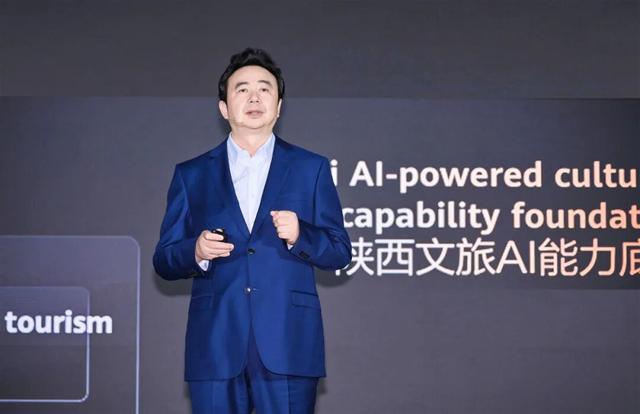
全国首个省级文旅大模型“博观”发布
Shan Xi Ri Bao· 2025-09-21 00:34
Core Insights - The "Boguang" AI model, developed by Shaanxi Cultural Investment Group in collaboration with Huawei, is the first provincial-level cultural tourism AI model in China [1][2] - The model enhances content understanding and generation in the cultural tourism sector, leveraging high-quality data and flexible local deployment capabilities [1] - The "Boguang" model has already led to the development of four major AI applications in the cultural tourism sector, including a one-stop AI short video creation platform and a personalized travel assistant [1][2] Group 1 - "Boguang" was officially launched at the Huawei Connect Conference in Shanghai on September 18 [1] - The model is based on mainstream open and closed-source models and high-quality cultural tourism datasets, significantly improving content generation efficiency [1] - The AI travel assistant has reached over 4 million users, providing customized travel plans based on user preferences and budget [1] Group 2 - The AI model "Boguang" has completed registration with the National Cyberspace Administration and is currently undergoing upgrades to a 2.0 multimodal model [2] - The Shaanxi Cultural Investment Group aims to build a comprehensive "Cultural Tourism + AI" innovation system and establish standardized products for commercial solutions [2] - The initiative is part of Shaanxi's strategy to strengthen its cultural sector and expand the trillion-yuan cultural tourism industry cluster [2]
陕文投集团多款“文旅+AI”创新研发应用亮相华为全联接大会
Huan Qiu Wang Zi Xun· 2025-09-19 23:36
Core Insights - The event "Huawei Connect 2025" was held in Shanghai, where the Shaanxi Cultural Investment Group and Huawei announced the launch of several "Cultural Tourism + AI" innovative applications and the establishment of the first national "Cultural Tourism Artificial Intelligence Innovation Center Ecological Alliance" to promote the deep integration of cultural tourism and AI [1][3]. Group 1 - The Shaanxi Cultural Investment Group and Huawei have developed a high-quality dataset specific to Shaanxi's cultural tourism and a national-level trusted data space, training the "Boguang Cultural Tourism" large model to create an intelligent brain for the cultural tourism industry [3]. - Since September of the previous year, the two companies have closely collaborated to implement the "Artificial Intelligence + Cultural Tourism" strategy, establishing the first national "Cultural Tourism Artificial Intelligence Joint Innovation Center" [3][4]. - The focus is on building a comprehensive "Cultural Tourism + AI" technology innovation system, including a market-oriented, sustainable operation mechanism for research, incubation, application, and operation [3][4]. Group 2 - The cultural tourism industry is currently experiencing significant growth potential and market opportunities, entering a golden window period [4]. - The collaboration aims to create a national "Cultural Tourism + AI" industry hub, with five key areas of focus: building a technology innovation system, establishing application and ecological platforms, standardizing and productizing business model solutions, creating a talent training base, and implementing a cultural export strategy [4]. - The alliance includes multiple innovative entities such as Huawei Cloud, Xi'an Jiaotong University, China Mobile, and others, aiming for deeper cooperation in technology research and development, application promotion, talent cultivation, and cultural export [4].