斯泰度塔单抗注射液

Search documents
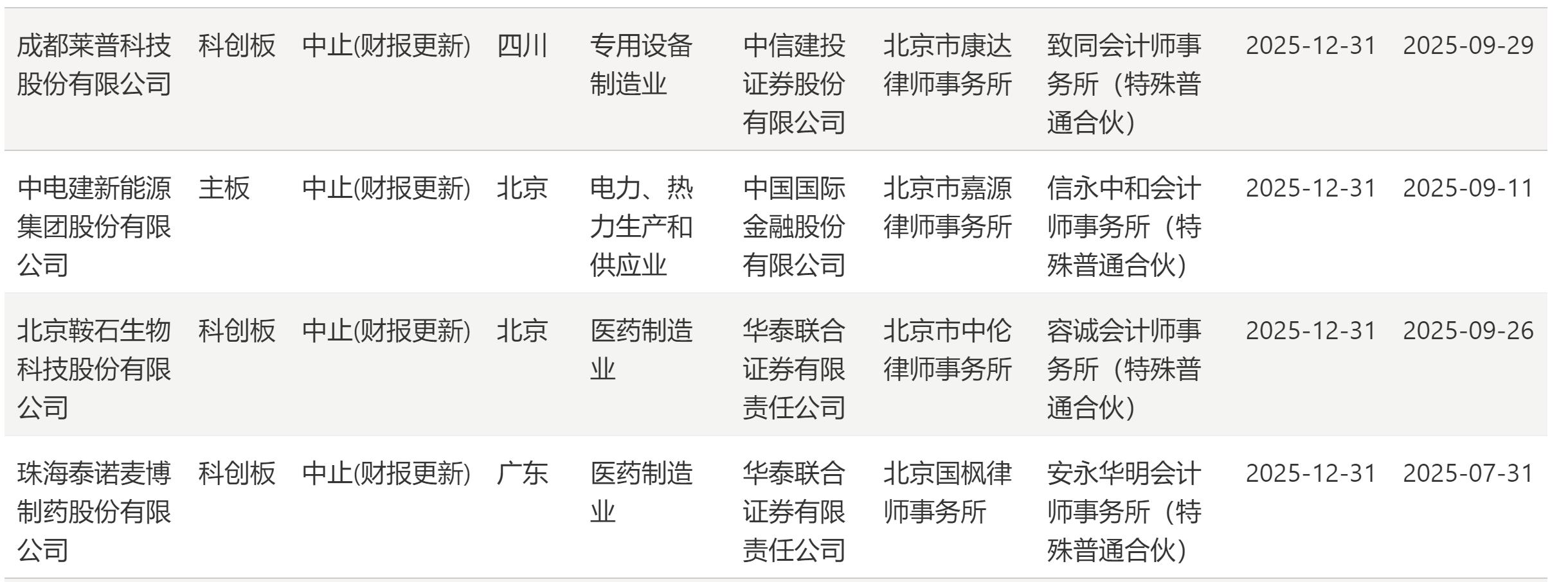
莱普科技等4家企业上交所IPO审核状态变更为“中止(财报更新)”
Zhi Tong Cai Jing· 2025-12-31 11:41
Group 1: 莱普科技 (Lepu Technology) - Lepu Technology focuses on advanced precision laser technology and semiconductor innovation processes, primarily engaged in the R&D, production, and sales of high-end semiconductor equipment, along with related technical services [1] - The company's equipment has been successfully applied in cutting-edge applications such as advanced process 3D NAND Flash storage chips, advanced process DRAM storage chips, and SiC power chips [1] Group 2: 电建新能源 (China Electric Power Construction New Energy) - China Electric Power Construction New Energy specializes in the development, investment, operation, and management of wind and solar power projects within China, with a focus on expanding its wind and solar power business [2] - As of the end of the reporting period, the company has a total installed capacity of 21.2461 million kilowatts, including 9.8909 million kilowatts from wind power projects and 11.3552 million kilowatts from solar power projects [2] Group 3: 鞍石生物 (Anshi Biopharmaceutical) - Anshi Biopharmaceutical is an innovative biopharmaceutical company that has entered the commercialization stage, focusing on oncology and other diseases with significant unmet clinical needs [2] - The company has established a competitive and commercially viable multi-layered pipeline of innovative drugs targeting important tumor driver gene pathways such as MET, EGFR, and HER2 [2] Group 4: 泰诺麦博 (Tainuo Maibo) - Tainuo Maibo is an innovative biopharmaceutical company dedicated to blood product alternatives, with its core product, TNM002, being the first-in-class recombinant anti-tetanus toxin monoclonal antibody drug expected to be approved in China by February 2025 [3] - TNM002 has been recognized as a breakthrough therapy by China's CDE and included in the priority review process, marking a significant innovation in the field of infection prevention [3] - Another core product, TNM001, is a potential long-acting monoclonal antibody for RSV prevention in infants, currently undergoing Phase III clinical trials [3]

管线美国临床进展疑“吹牛”泰诺麦博遭问询后改口
Xin Lang Cai Jing· 2025-12-28 17:21
Core Viewpoint - Zhuhai Tainuo Maibo Pharmaceutical Co., Ltd. (Tainuo Maibo) is the first company to be accepted under the fifth set of listing standards of the Sci-Tech Innovation Board, attracting significant attention for its IPO process [1] Group 1: Product Development and Approval - Tainuo Maibo's core product, Staitoutata Monoclonal Antibody (TNM002), was approved for sale in China in February 2023 and completed its first shipment in March 2023 [1][3] - TNM002 has been designated as a "First-in-Class" recombinant anti-tetanus toxin monoclonal antibody and recognized as a breakthrough therapy by the National Medical Products Administration (NMPA) in China [3] - The product has been included in the FDA's Fast Track program, which facilitates accelerated drug development and review processes [2][3] Group 2: Clinical Trials and Regulatory Communication - The FDA's Fast Track designation allows for rolling submissions of application materials, which can shorten the approval time for new drug applications [2] - Tainuo Maibo clarified that the ability to conduct expedited clinical trials in the U.S. is based on communication with the FDA regarding their clinical development strategy, not a direct result of the Fast Track designation [2][4] - The company plans to initiate expedited clinical trials in the U.S. between 2026 and 2027, with specific plans contingent on future discussions with the FDA [4][5] Group 3: Financial Performance and Sales - Tainuo Maibo's revenue primarily comes from the sales of TNM002, with projected sales of 270,000 units in 2025, expected to generate approximately 156 million yuan [6] - The actual sales of TNM002 from March to September 2023 were 46,100 units, significantly below the initial expectation of 96,900 units, achieving only 47.6% of the target [7] - The company reported a net loss of approximately 177 million yuan in the first quarter of 2025, despite the product's recent market entry [6][8] Group 4: Market Challenges and Future Projections - Tainuo Maibo faces challenges in sales due to the high price of TNM002 compared to traditional competitors and the lack of inclusion in the medical insurance directory, which affects market penetration [7][8] - The company anticipates reaching a breakeven point by 2027, based on various factors including industry research reports and operational conditions [9]

管线美国临床进展疑“吹牛” 泰诺麦博遭问询后改口
Xin Lang Cai Jing· 2025-12-26 19:59
Core Viewpoint - Zhuhai Tainuo Maibo Pharmaceutical Co., Ltd. (Tainuo Maibo) is the first company to be accepted under the fifth set of listing standards of the Sci-Tech Innovation Board, and its IPO process is under close scrutiny [2] Group 1: Product Development and Approval - Tainuo Maibo's core product, Staitoutata Monoclonal Antibody (TNM002), was approved for sale in China in February 2023 and completed its first shipment in March 2023 [2][4] - TNM002 has been granted Fast Track designation by the FDA, which allows for expedited review and the possibility of rolling submissions of application materials [3][6] - The company has communicated with the FDA regarding the clinical development strategy for TNM002 in the U.S., indicating that it may proceed directly to Phase III clinical trials [3][5] Group 2: Financial Performance and Sales - Tainuo Maibo's revenue primarily comes from the commercialization of TNM002, with projected sales of 270,000 units in 2025, expected to generate approximately 156 million yuan [7] - The actual sales of TNM002 from March to September 2023 were 46,100 units, significantly below the initial expectation of 96,900 units, achieving only 47.6% of the target [8] - The company reported a net loss of approximately 177 million yuan in the first quarter of 2025, despite the product's recent market entry [9] Group 3: Market Potential and Future Projections - The company anticipates reaching a breakeven point by 2027, based on various factors including industry research reports and market conditions [10] - The Shanghai Stock Exchange has requested further details on the market penetration rates for TNM002 and the rationale behind the company's sales forecasts [10]

8家未盈利医药企业“竞速”科创板IPO
Xin Lang Cai Jing· 2025-12-25 17:24
Core Viewpoint - The article highlights the revival of the IPO market for pharmaceutical companies on the STAR Market, particularly focusing on the successful turnaround of Beixin Life Technology Co., Ltd. and the ongoing interest in companies meeting the fifth set of listing standards [1][3]. Group 1: Company Developments - Beixin Life has achieved profitability after previously reporting losses, with a revenue of 128 million yuan in Q1, representing a year-on-year increase of 104.9%, and a net profit of 20.61 million yuan [3][4]. - The company’s IPO was accepted on March 30, 2023, and it successfully registered on December 18, 2023, marking it as the closest to listing among the eight pharmaceutical companies currently in the IPO queue [3][6]. - Other companies in the queue include Tianomab and Xinnowei, with Tianomab being the first to be accepted under the new standards, focusing on blood product alternatives [4][5]. Group 2: Market Trends - A total of eight pharmaceutical companies are currently in the IPO queue, all applying under the fifth set of standards, indicating a renewed interest in the sector [3][6]. - Seven out of the eight companies have already launched products, showcasing a shift from previous years where uncommercialized products were more common among IPO applicants [9][10]. - The regulatory environment has evolved to support unprofitable pharmaceutical companies, focusing on their technological capabilities, market potential, and financial sustainability [10][11]. Group 3: Financial Insights - Tianomab's core product, a monoclonal antibody, was approved in February 2023 but has seen lower-than-expected sales, achieving only 47.6% of its projected sales volume from March to September [9]. - Xinnowei is the only company in the queue without a product on the market, with its first drug expected to be approved by 2026 [9][10]. - Hengrun Da's financial health is concerning, with an increasing debt ratio projected to reach 84.76% by 2024, highlighting the risks associated with prolonged IPO delays [7][9].

8家未盈利药企“竞速”科创板IPO
Bei Jing Shang Bao· 2025-12-25 16:02
Core Viewpoint - Shenzhen Beixin Life Technology Co., Ltd. has achieved profitability and is preparing for its IPO, marking a significant development in the medical device sector under the fifth set of listing standards on the STAR Market [1][2] Group 1: Company Developments - Beixin Life has registered its IPO as of December 18, 2023, and is focused on innovative medical devices for precise diagnosis and treatment of cardiovascular diseases [2] - The company reported a revenue of 128 million yuan in Q1 2023, a year-on-year increase of 104.9%, and achieved a net profit of 20.61 million yuan, indicating a turnaround from previous losses [2] - The IPO process for Beixin Life began on March 30, 2023, and it received approval on July 18, 2023, reflecting a shift in regulatory attitudes towards unprofitable medical enterprises [2][3] Group 2: Market Activity - As of December 25, 2023, there are eight pharmaceutical companies queued for IPO on the STAR Market, all applying under the fifth set of standards [2][4] - Five unprofitable pharmaceutical companies have received IPO acceptance this year, including Tianomab, which was the first to be accepted after the resumption of the fifth set of standards [3][4] - Among the queued companies, seven have already launched products, indicating a trend where unprofitable companies are not necessarily lacking in commercialization [7] Group 3: Financial Insights - Tianomab's core product, a monoclonal antibody, was approved in February 2023, but its sales performance has been below expectations, with only 47.6% of projected sales achieved from March to September 2023 [7] - The financial health of companies like Hengrun Da Sheng is concerning, with an increasing debt-to-asset ratio projected to reach 84.76% by 2024 [6] - The regulatory focus for unprofitable pharmaceutical companies includes assessing technological robustness, market potential, financial sustainability, and delisting risks [8]
8家未盈利医药企业“竞速”科创板IPO,恒润达生、思哲睿已排队超三年
Bei Jing Shang Bao· 2025-12-25 11:15
Core Viewpoint - Shenzhen Beixin Life Technology Co., Ltd. has achieved profitability and is preparing for its IPO, representing a significant case under the fifth listing standard of the Sci-Tech Innovation Board for pharmaceutical companies [1][4]. Group 1: Company Developments - Beixin Life has registered its IPO as of December 18, 2023, and is focused on innovative medical devices for precise diagnosis and treatment of cardiovascular diseases [4]. - The company reported a revenue of 128 million yuan in Q1 2023, a year-on-year increase of 104.9%, and a net profit of 20.61 million yuan, marking a turnaround from previous losses [4]. - Other companies in the IPO queue include Hengrun Dabiotech and Sizerui, both of which have been in the process for over three years, with Hengrun Dabiotech's IPO currently on hold due to outdated financial data [7][8]. Group 2: Market Activity - As of December 25, 2023, there are eight pharmaceutical companies in the IPO queue under the fifth listing standard, with six companies having received acceptance this year [4][5]. - The reactivation of the fifth listing standard has revitalized the IPO market for pharmaceutical companies, with five unprofitable companies receiving acceptance this year [5]. - Among the eight companies, seven have already launched products, indicating a shift in the regulatory environment towards unprofitable pharmaceutical firms [9]. Group 3: Regulatory Environment - The regulatory focus for unprofitable pharmaceutical companies includes the robustness of technology, market potential, financial sustainability, and risk of delisting [10]. - The approval process for unprofitable companies emphasizes clinical value and commercial viability, with a strong emphasis on innovation and compliance [10].
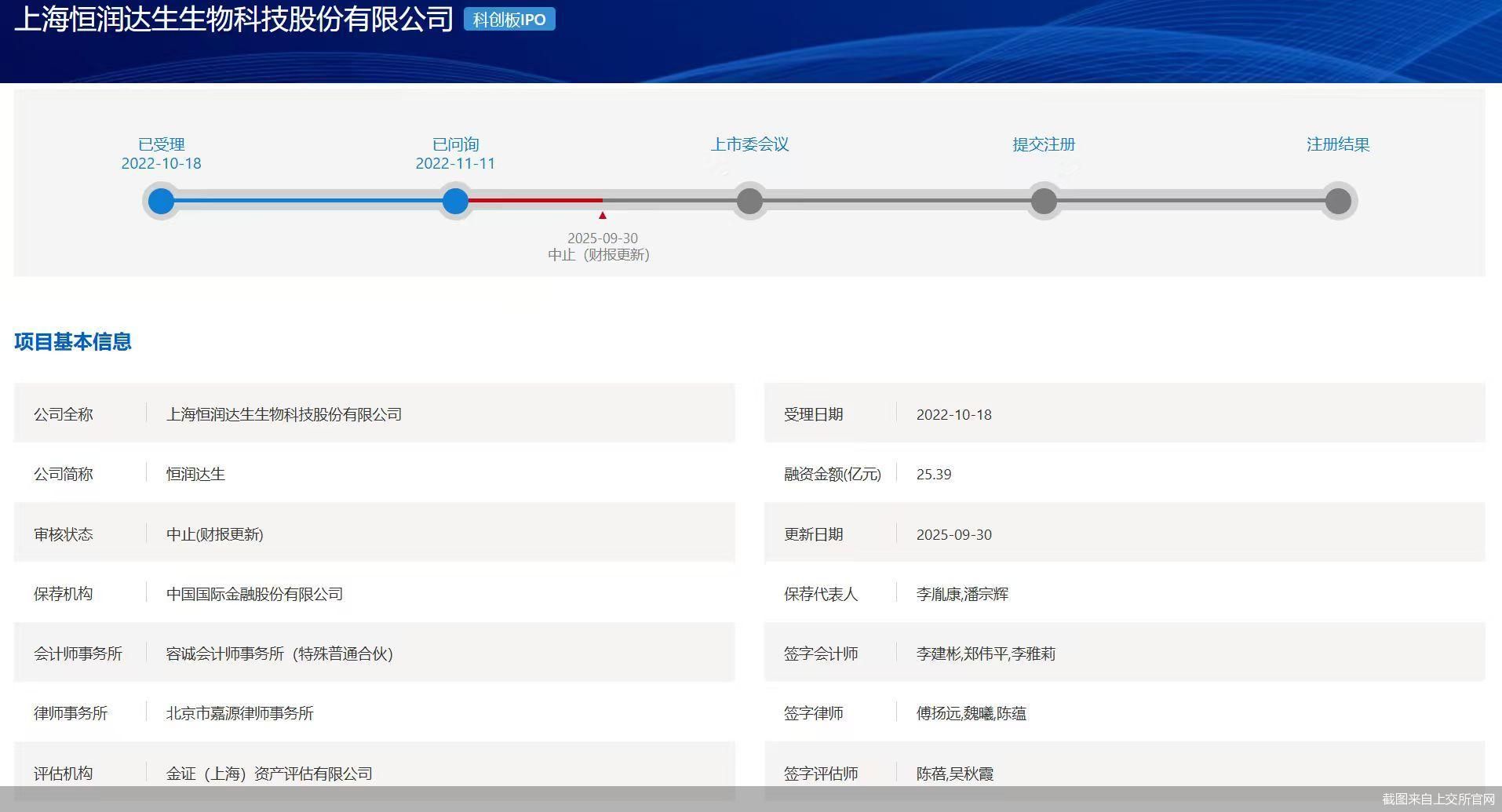
年终策划|8家未盈利医药企业“竞速”科创板IPO,恒润达生、思哲睿已排队超三年
Xin Lang Cai Jing· 2025-12-25 11:11
Core Viewpoint - Shenzhen Beixin Life Technology Co., Ltd. has achieved profitability and is preparing for its IPO, marking a significant development in the medical device sector under the fifth set of listing standards on the STAR Market [1][4]. Group 1: Company Developments - Beixin Life's IPO was accepted on March 30, 2023, and it entered the inquiry phase in April. The company received approval on July 18 and registered on July 25, 2023 [4]. - Beixin Life reported a revenue of 128 million yuan in Q1 2023, a year-on-year increase of 104.9%, and a net profit of 20.61 million yuan, indicating a turnaround from previous losses [4]. - As of December 25, 2023, there are eight pharmaceutical companies queued for IPO on the STAR Market, all applying under the fifth set of standards, with Beixin Life being the closest to listing [3]. Group 2: Industry Trends - The STAR Market has seen a revival in IPO activity for pharmaceutical companies, with six companies, including Zhuhai Tainuo Maibo Pharmaceutical Co., receiving acceptance for their IPOs this year [1][5]. - Five unprofitable pharmaceutical companies have been accepted for IPOs since the resumption of the fifth set of listing standards, indicating a shift in regulatory attitudes towards unprofitable firms [5][10]. - Among the eight companies in the queue, seven have already launched products, showcasing a trend where unprofitable companies are increasingly achieving commercialization [10]. Group 3: Regulatory Environment - The regulatory focus for unprofitable pharmaceutical companies includes assessing the robustness of technology, market potential, financial sustainability, and risks of delisting [11]. - The approval process for unprofitable companies emphasizes clinical value and commercial viability, with regulators looking for "true innovation, sustainability, and verifiability" [11].
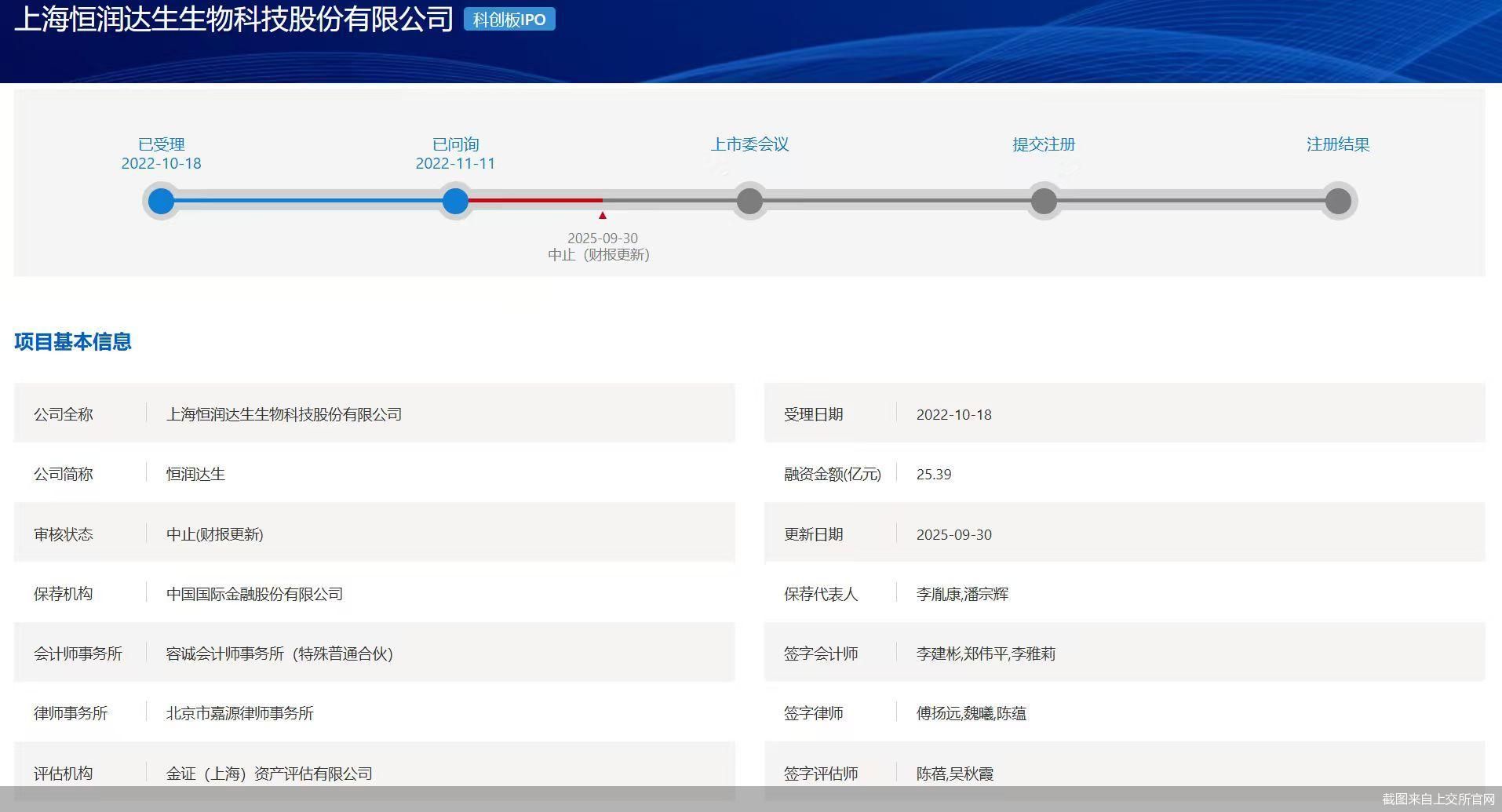
50款一类创新药在列 医保商保“双目录”发布
Bei Jing Shang Bao· 2025-12-07 15:28
Core Insights - The 2025 National Basic Medical Insurance, Maternity Insurance, and Work Injury Insurance Drug Catalog and the first Commercial Health Insurance Innovative Drug Catalog were officially released on December 7, highlighting significant advancements in drug accessibility and innovation support [1][6]. Summary by Sections Basic Medical Insurance Drug Catalog - A total of 114 new drugs were added, with 50 being first-class innovative drugs, achieving an overall success rate of 88%, an increase from 76% in 2024 [3][5]. - The total number of drugs in the National Medical Insurance Drug Catalog has increased to 3,253, including 1,857 Western medicines and 1,396 traditional Chinese medicines, with enhanced coverage for critical areas such as cancer, chronic diseases, mental illnesses, rare diseases, and pediatric medications [3][5]. - The new drug catalog will be implemented starting January 1, 2026, with a six-month transition period for drugs that were not successfully renewed [3][4]. Commercial Health Insurance Innovative Drug Catalog - The Commercial Health Insurance Innovative Drug Catalog includes 19 drugs from 18 innovative pharmaceutical companies, focusing on high clinical value and innovation, particularly in cancer, rare diseases, and chronic conditions [7][9]. - The catalog emphasizes three main characteristics: support for innovation, focus on key therapeutic areas, and a clear distinction between basic medical insurance and commercial insurance coverage [7][9]. - Notable inclusions are five CAR-T products and new treatments for Alzheimer's disease and Gaucher disease, reflecting a trend towards covering high-cost, innovative therapies through commercial insurance [8][9]. Innovation and Market Impact - The inclusion of a significant number of first-class innovative drugs in the basic medical insurance catalog demonstrates the government's commitment to enhancing drug accessibility and encouraging pharmaceutical innovation [6][9]. - The successful negotiation rates and the focus on innovative drugs in both catalogs are expected to stimulate further investment in drug research and development by pharmaceutical companies [6][9].

首版医保“双目录”出炉!新增药品超四成为一类创新药,CAR-T等19种药品进商保创新药目录
Bei Jing Shang Bao· 2025-12-07 07:26
Core Insights - The release of the 2025 National Basic Medical Insurance, Maternity Insurance, and Work Injury Insurance Drug Catalogs marks a significant step in enhancing drug accessibility and innovation in China, with a total of 114 new drugs added to the basic insurance catalog, including 50 innovative drugs, achieving an overall success rate of 88%, up from 76% in 2024 [1][5][9]. Summary by Sections Basic Medical Insurance Drug Catalog - A total of 114 new drugs were successfully added, with 50 classified as innovative drugs, reflecting an overall success rate of 88% [5][9]. - The total number of drugs in the national insurance catalog now stands at 3,253, including 1,857 Western medicines and 1,396 traditional Chinese medicines, with significant improvements in coverage for critical areas such as cancer, chronic diseases, mental health, rare diseases, and pediatric medications [5][9]. - The catalog includes drugs that fill gaps in basic insurance coverage, such as treatments for triple-negative breast cancer, pancreatic cancer, and other major diseases [9]. Commercial Health Insurance Innovative Drug Catalog - The first edition of the Commercial Health Insurance Innovative Drug Catalog includes 19 drugs, with a focus on high clinical value and innovation, particularly in oncology, rare diseases, and chronic conditions [11][12]. - Notable inclusions are CAR-T therapies and treatments for rare diseases like neuroblastoma and Gaucher disease, as well as Alzheimer's disease medications [11][12]. - The catalog emphasizes the distinction between basic insurance, which focuses on essential and proven therapies, and commercial insurance, which supports cutting-edge innovations [11][12]. Future Implications - The introduction of these catalogs is expected to enhance clinical medication standards and boost confidence in pharmaceutical R&D, ensuring better healthcare and injury treatment for the public [8]. - The ongoing adjustments to the drug catalogs reflect a commitment to improving the accessibility of innovative drugs and encouraging pharmaceutical companies to invest in research and development [10][11].
2025年中国破伤风被动免疫制剂行业壁垒、市场政策、产业链图谱、市场规模、竞争格局及发展趋势研判:新型产品不断涌现[图]
Chan Ye Xin Xi Wang· 2025-08-28 01:36
Core Viewpoint - The demand for tetanus passive immunization agents in China is increasing due to rising injury cases from industrial accidents and traffic incidents, alongside a growing public awareness of health and preventive vaccinations [1][6][7]. Market Overview - The market size of China's tetanus passive immunization agents reached 3.23 billion yuan in 2022, with a year-on-year growth of 17.45% [1][7]. - However, the market is projected to decline to 2.66 billion yuan by 2024 due to a slowdown in real estate development and a decrease in the number of construction workers, who are the primary consumers of these immunization agents [1][7]. Industry Policies - The Chinese government has implemented various policies to support the development of the biological products industry, including tetanus passive immunization agents, creating a favorable environment for industry growth [4]. Industry Chain - The upstream of the tetanus passive immunization agents industry includes plasma, cell culture media, and other biological materials, while the midstream focuses on research and production, and the downstream involves medical institutions and consumers [4][5]. Competitive Landscape - The tetanus passive immunization agents market is divided into four segments, with Jiangxi Biological Products Research Institute holding a significant market share of 65.8% in the tetanus antitoxin sector [7][8]. - The market for tetanus human immunoglobulin is more competitive, with numerous companies including Shenzhen Weiguang Biological Products Co., Ltd. and Hualan Biological Engineering Co., Ltd. [8]. Development Trends - Future advancements in the tetanus passive immunization agents field are expected to include the application of monoclonal antibodies and recombinant DNA technology, leading to more efficient production methods and improved product safety [10][11]. - The increasing coverage of cold chain logistics and the promotion of hierarchical medical policies will enhance the role of grassroots medical institutions in tetanus prevention and treatment, unlocking further market potential [10][11].