
雷尼基奥仑赛注射液

Search documents
8家未盈利医药企业“竞速”科创板IPO
Xin Lang Cai Jing· 2025-12-25 17:24
Core Viewpoint - The article highlights the revival of the IPO market for pharmaceutical companies on the STAR Market, particularly focusing on the successful turnaround of Beixin Life Technology Co., Ltd. and the ongoing interest in companies meeting the fifth set of listing standards [1][3]. Group 1: Company Developments - Beixin Life has achieved profitability after previously reporting losses, with a revenue of 128 million yuan in Q1, representing a year-on-year increase of 104.9%, and a net profit of 20.61 million yuan [3][4]. - The company’s IPO was accepted on March 30, 2023, and it successfully registered on December 18, 2023, marking it as the closest to listing among the eight pharmaceutical companies currently in the IPO queue [3][6]. - Other companies in the queue include Tianomab and Xinnowei, with Tianomab being the first to be accepted under the new standards, focusing on blood product alternatives [4][5]. Group 2: Market Trends - A total of eight pharmaceutical companies are currently in the IPO queue, all applying under the fifth set of standards, indicating a renewed interest in the sector [3][6]. - Seven out of the eight companies have already launched products, showcasing a shift from previous years where uncommercialized products were more common among IPO applicants [9][10]. - The regulatory environment has evolved to support unprofitable pharmaceutical companies, focusing on their technological capabilities, market potential, and financial sustainability [10][11]. Group 3: Financial Insights - Tianomab's core product, a monoclonal antibody, was approved in February 2023 but has seen lower-than-expected sales, achieving only 47.6% of its projected sales volume from March to September [9]. - Xinnowei is the only company in the queue without a product on the market, with its first drug expected to be approved by 2026 [9][10]. - Hengrun Da's financial health is concerning, with an increasing debt ratio projected to reach 84.76% by 2024, highlighting the risks associated with prolonged IPO delays [7][9].


8家未盈利药企“竞速”科创板IPO
Bei Jing Shang Bao· 2025-12-25 16:02
Core Viewpoint - Shenzhen Beixin Life Technology Co., Ltd. has achieved profitability and is preparing for its IPO, marking a significant development in the medical device sector under the fifth set of listing standards on the STAR Market [1][2] Group 1: Company Developments - Beixin Life has registered its IPO as of December 18, 2023, and is focused on innovative medical devices for precise diagnosis and treatment of cardiovascular diseases [2] - The company reported a revenue of 128 million yuan in Q1 2023, a year-on-year increase of 104.9%, and achieved a net profit of 20.61 million yuan, indicating a turnaround from previous losses [2] - The IPO process for Beixin Life began on March 30, 2023, and it received approval on July 18, 2023, reflecting a shift in regulatory attitudes towards unprofitable medical enterprises [2][3] Group 2: Market Activity - As of December 25, 2023, there are eight pharmaceutical companies queued for IPO on the STAR Market, all applying under the fifth set of standards [2][4] - Five unprofitable pharmaceutical companies have received IPO acceptance this year, including Tianomab, which was the first to be accepted after the resumption of the fifth set of standards [3][4] - Among the queued companies, seven have already launched products, indicating a trend where unprofitable companies are not necessarily lacking in commercialization [7] Group 3: Financial Insights - Tianomab's core product, a monoclonal antibody, was approved in February 2023, but its sales performance has been below expectations, with only 47.6% of projected sales achieved from March to September 2023 [7] - The financial health of companies like Hengrun Da Sheng is concerning, with an increasing debt-to-asset ratio projected to reach 84.76% by 2024 [6] - The regulatory focus for unprofitable pharmaceutical companies includes assessing technological robustness, market potential, financial sustainability, and delisting risks [8]
8家未盈利医药企业“竞速”科创板IPO,恒润达生、思哲睿已排队超三年
Bei Jing Shang Bao· 2025-12-25 11:15
Core Viewpoint - Shenzhen Beixin Life Technology Co., Ltd. has achieved profitability and is preparing for its IPO, representing a significant case under the fifth listing standard of the Sci-Tech Innovation Board for pharmaceutical companies [1][4]. Group 1: Company Developments - Beixin Life has registered its IPO as of December 18, 2023, and is focused on innovative medical devices for precise diagnosis and treatment of cardiovascular diseases [4]. - The company reported a revenue of 128 million yuan in Q1 2023, a year-on-year increase of 104.9%, and a net profit of 20.61 million yuan, marking a turnaround from previous losses [4]. - Other companies in the IPO queue include Hengrun Dabiotech and Sizerui, both of which have been in the process for over three years, with Hengrun Dabiotech's IPO currently on hold due to outdated financial data [7][8]. Group 2: Market Activity - As of December 25, 2023, there are eight pharmaceutical companies in the IPO queue under the fifth listing standard, with six companies having received acceptance this year [4][5]. - The reactivation of the fifth listing standard has revitalized the IPO market for pharmaceutical companies, with five unprofitable companies receiving acceptance this year [5]. - Among the eight companies, seven have already launched products, indicating a shift in the regulatory environment towards unprofitable pharmaceutical firms [9]. Group 3: Regulatory Environment - The regulatory focus for unprofitable pharmaceutical companies includes the robustness of technology, market potential, financial sustainability, and risk of delisting [10]. - The approval process for unprofitable companies emphasizes clinical value and commercial viability, with a strong emphasis on innovation and compliance [10].
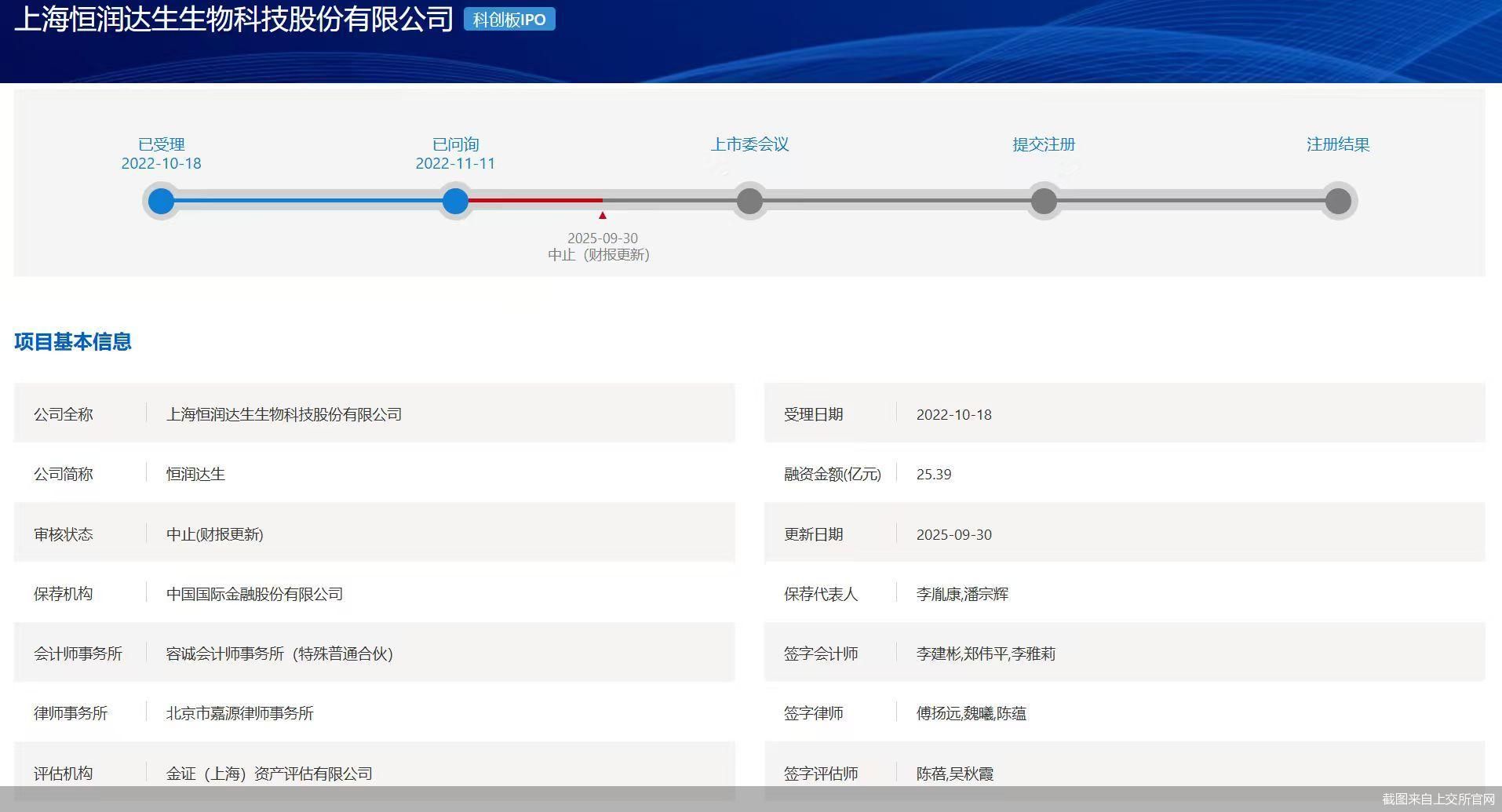
年终策划|8家未盈利医药企业“竞速”科创板IPO,恒润达生、思哲睿已排队超三年
Xin Lang Cai Jing· 2025-12-25 11:11
Core Viewpoint - Shenzhen Beixin Life Technology Co., Ltd. has achieved profitability and is preparing for its IPO, marking a significant development in the medical device sector under the fifth set of listing standards on the STAR Market [1][4]. Group 1: Company Developments - Beixin Life's IPO was accepted on March 30, 2023, and it entered the inquiry phase in April. The company received approval on July 18 and registered on July 25, 2023 [4]. - Beixin Life reported a revenue of 128 million yuan in Q1 2023, a year-on-year increase of 104.9%, and a net profit of 20.61 million yuan, indicating a turnaround from previous losses [4]. - As of December 25, 2023, there are eight pharmaceutical companies queued for IPO on the STAR Market, all applying under the fifth set of standards, with Beixin Life being the closest to listing [3]. Group 2: Industry Trends - The STAR Market has seen a revival in IPO activity for pharmaceutical companies, with six companies, including Zhuhai Tainuo Maibo Pharmaceutical Co., receiving acceptance for their IPOs this year [1][5]. - Five unprofitable pharmaceutical companies have been accepted for IPOs since the resumption of the fifth set of listing standards, indicating a shift in regulatory attitudes towards unprofitable firms [5][10]. - Among the eight companies in the queue, seven have already launched products, showcasing a trend where unprofitable companies are increasingly achieving commercialization [10]. Group 3: Regulatory Environment - The regulatory focus for unprofitable pharmaceutical companies includes assessing the robustness of technology, market potential, financial sustainability, and risks of delisting [11]. - The approval process for unprofitable companies emphasizes clinical value and commercial viability, with regulators looking for "true innovation, sustainability, and verifiability" [11].
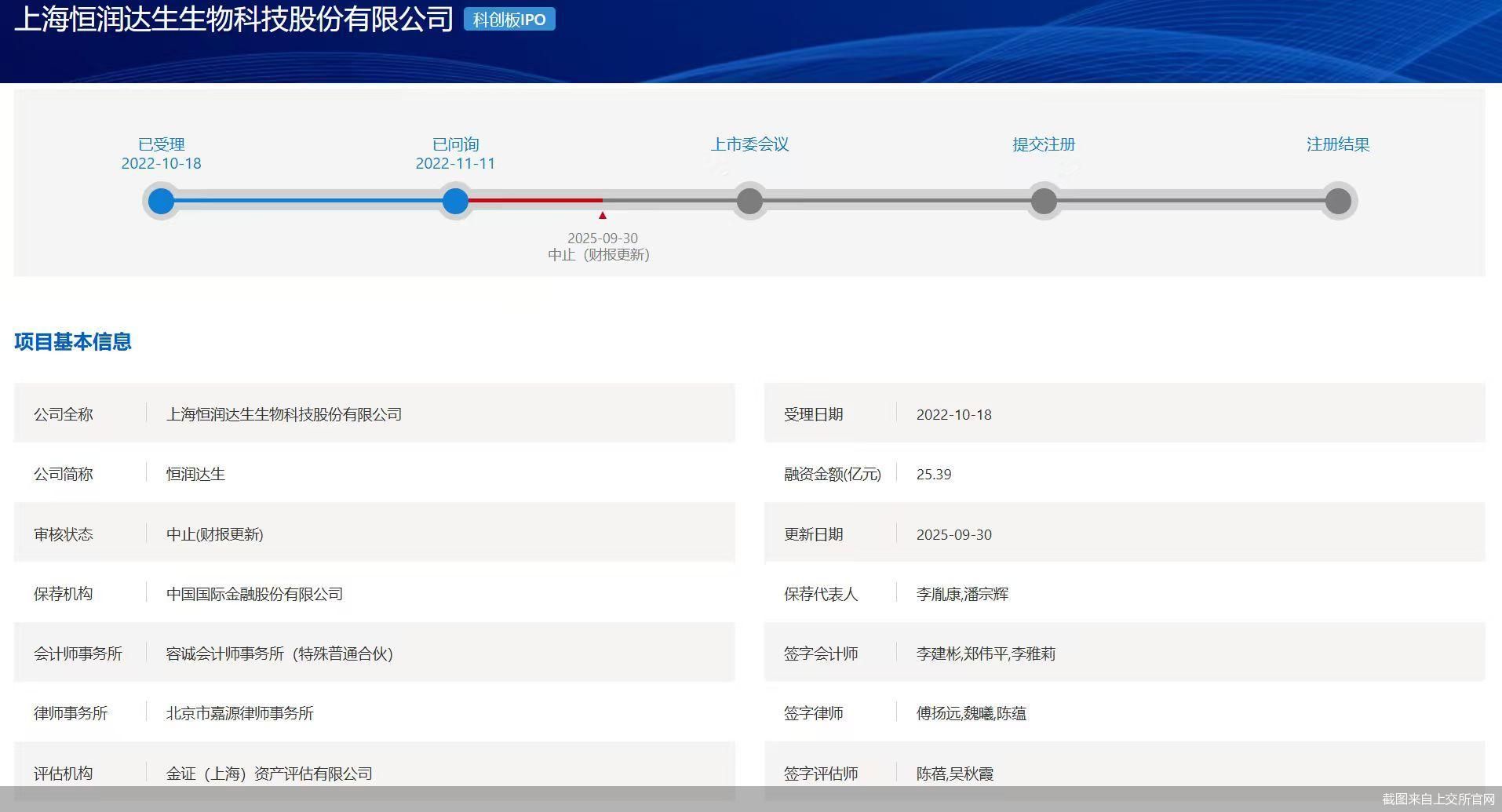
恒润达生:与华润双鹤就CD19CAR-T产品恒凯莱®达成商业化合作
Cai Jing Wang· 2025-12-23 08:51
Core Viewpoint - Shanghai Hengrunda Biotechnology Co., Ltd. has announced a commercialization partnership with China Resources Double Crane Pharmaceutical Co., Ltd. for the exclusive national agency rights of Renikiorunsai Injection (Hengkailai®) [1] Group 1: Company Collaboration - The partnership allows China Resources Double Crane to exclusively distribute Hengkailai®, which is China's first fully independently developed CD19 CAR-T product targeting relapsed or refractory large B-cell lymphoma (r/r LBCL) [1] - This collaboration is seen as a strong practice of social responsibility by China Resources Double Crane and highlights the mission of innovative biopharmaceutical private enterprises focusing on clinical needs and deepening innovative therapies [1] Group 2: Industry Implications - The cooperation represents a new exploration of collaborative development models in the field of tumor immunotherapy in China [1]

上海生物医药产业规模,突破万亿大关在即
3 6 Ke· 2025-10-22 03:35
Core Insights - Shanghai's manufacturing output in the three leading industries grew by 8.5% year-on-year in the first three quarters of this year, outpacing the overall industrial output growth by 2.8 percentage points [1] - The pharmaceutical sector, particularly the export of medicines and raw materials, saw significant growth, with exports increasing by 21.5% and 40.7% respectively [1] Group 1: Industry Growth and Development - Shanghai has positioned its biopharmaceutical industry as a pillar industry, with plans to develop a world-class biopharmaceutical cluster by 2025, aiming for an industry scale exceeding 1 trillion yuan [2] - The biopharmaceutical industry in Shanghai has shown consistent growth, with the scale increasing from 761.71 billion yuan in 2021 to an expected 984.70 billion yuan in 2024, reflecting a compound annual growth rate of 8.94% [2] - The manufacturing output in the biopharmaceutical sector is projected to grow from 171.20 billion yuan in 2021 to 201.17 billion yuan in 2024, with a compound annual growth rate of 6.9% [2] Group 2: Enterprise and Investment Landscape - By the end of 2024, Shanghai is expected to have 2,183 biopharmaceutical enterprises, with significant presence from global industry leaders [3] - Shanghai has established a biopharmaceutical industry mother fund with a total scale of 22.5 billion yuan, which has completed the selection of 13 sub-funds, achieving a leverage effect of 5.59 times [3] - In the biopharmaceutical sector, Shanghai has seen cumulative financing of 238.37 billion yuan from 2021 to 2024, with 255.31 billion yuan raised in the first nine months of this year alone [3] Group 3: Market Expansion and Innovation - As of September 2025, there are 102 biopharmaceutical companies listed on A-shares, Hong Kong stocks, and US stocks, indicating a growing capital market presence [4] - Shanghai's biopharmaceutical sector has a strong innovation output, with 7 first-class innovative drugs and 15 third-class innovative medical devices approved in 2024, ranking second and first nationally respectively [6] - The city has produced several first-in-class and first-in-China innovative products, including a long-acting GLP-1 receptor agonist and a gene therapy drug for hemophilia B [10][11] Group 4: Future Directions and Focus Areas - The biopharmaceutical industry in Shanghai is expected to continue focusing on cutting-edge innovations, particularly in areas such as dual antibodies, ADCs, cell gene therapy, and AI applications in medicine [12] - The industry aims to support disruptive innovations and cultivate benchmark products in both pharmaceuticals and medical devices [12]

双目录初审公示:6个药品发生变化 多款创新药、罕见病药引关注
2 1 Shi Ji Jing Ji Bao Dao· 2025-08-28 11:41
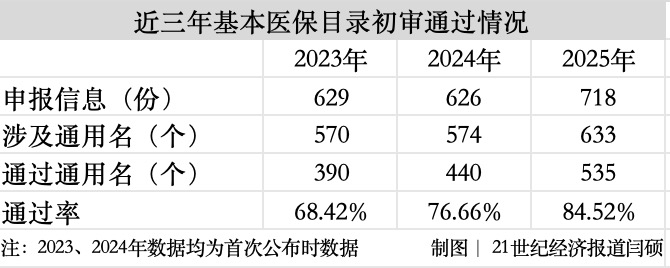
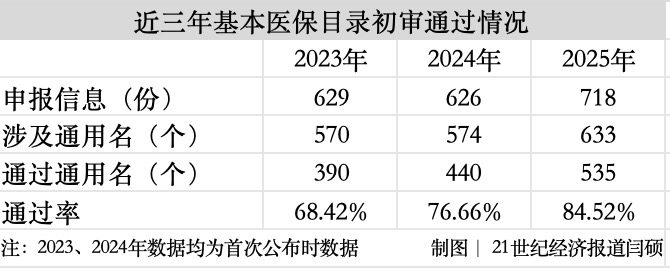
Core Insights - The National Healthcare Security Administration (NHSA) has published the preliminary review results for the 2025 medical insurance and commercial insurance innovative drug directory, with significant changes in the approval status of six drugs compared to the previous version [1][2]. Summary by Categories Drug Approval Changes - Six drugs have had their approval status changed, with two drugs (Injectable Risperidone Microspheres and Injectable Triptorelin Acetate) being disapproved, while two others (Levodopa Injection and Calcium Gluconate Sodium Chloride Injection) have been approved [1][3]. - The oral suspension of Ursodeoxycholic Acid remains approved, but the conditions for approval have been adjusted [1][3]. Application Statistics - For the 2025 directory adjustment, the NHSA received 718 applications, involving 633 drug generic names, with 535 passing the preliminary review [1][2]. - The approval rate has increased significantly, reaching 84.52% this year, compared to 68.42% in 2023 and 76.66% in 2024 [2]. Notable Drugs - Levodopa Injection, used for Parkinson's disease, has been approved and is not an exclusive product, indicating its potential for broader market access [4]. - Injectable Ceftriaxone Sodium Sulbactam, another approved drug, is noted for its broad antibacterial spectrum and safety profile [4]. - The oral suspension of Ursodeoxycholic Acid has had its approval conditions modified to include rare disease categories [6]. Innovative Drug Directory - The commercial insurance innovative drug directory has been introduced alongside the basic medical insurance directory, with 141 applications received, of which 121 passed the preliminary review [2]. - A significant number of drugs in both directories are new, with 303 in the basic medical insurance directory meeting specific conditions for approval [7]. Rare Disease Drugs - The directories include a total of 37 rare disease drugs in the basic medical insurance directory and 35 in the commercial insurance innovative drug directory, with 19 drugs approved in both [10][11]. - Notable rare disease drugs include those from Merck and other companies, which have gained attention for their potential market impact [11][12]. Market Trends - The introduction of the commercial insurance innovative drug directory is expected to enhance market access for several high-profile drugs, including CAR-T therapies that have previously struggled to gain approval [9][12]. - The performance of rare disease drug companies has seen significant stock price increases, indicating strong market interest and potential for growth [13].
双目录初审公示:6个药品发生变化,多款创新药、罕见病药引关注
2 1 Shi Ji Jing Ji Bao Dao· 2025-08-28 11:19
Core Viewpoint - The National Healthcare Security Administration (NHSA) has officially announced the preliminary review results for the adjustment of the 2025 medical insurance and commercial insurance innovative drug catalog, indicating an increase in the number of drugs passing the review and the overall approval rate compared to previous years [1][2]. Summary by Relevant Sections Drug Review Changes - Six drugs underwent changes in their review status, with two drugs, injectable risperidone microspheres and injectable triptorelin, being disapproved, while injectable levodopa and calcium gluconate sodium injection were approved [1][5][6]. - The injectable risperidone microspheres, an exclusive product of Shengzhao Pharmaceuticals, was first launched in mainland China in February 2025 for treating mental disorders [6][7]. - The injectable triptorelin, also an exclusive product, was launched in 2023 for treating prostate cancer and precocious puberty [7]. Approval Statistics - A total of 718 applications were received for the 2025 catalog adjustment, involving 633 drug generic names, with 535 passing the preliminary review, resulting in an approval rate of 84.52% [1][2]. - The approval rates have shown a significant increase over the past three years, with 68.42% in 2023, 76.66% in 2024, and 84.52% in 2025 [2]. Innovative Drug Catalog - The commercial insurance innovative drug catalog was introduced for the first time, with 141 applications received, involving 141 drug generic names, and 121 passing the review [3]. - Among the drugs, 79 were submitted for both the basic medical insurance catalog and the commercial insurance innovative drug catalog [3]. Notable Products - Several notable products are highlighted, including CAR-T products that have previously failed to enter the medical insurance catalog but are now included in the commercial insurance innovative drug catalog [11][12]. - Unique products such as the first and only AKT inhibitor and the only Trop-2 ADC for breast cancer treatment are also included in the catalogs, indicating a focus on innovative therapies [13][14]. Rare Disease Medications - The review process has also included rare disease medications, with 37 drugs in the basic medical insurance catalog and 35 in the commercial insurance innovative drug catalog, of which 19 are approved in both [15][16]. - The approval of rare disease drugs is seen as a significant development, with companies like Beihai Kangcheng gaining attention for their innovative products [20].
“国谈”价格保密进入第七年,引入创新药目录后将有哪些变化
Di Yi Cai Jing· 2025-08-05 12:21
Core Insights - The article discusses the challenges and opportunities faced by innovative drug companies in China, particularly in relation to pricing strategies and market access for CAR-T therapies [1][2][3] Pricing Strategies - Innovative drug companies are experiencing a significant pricing gap between domestic and international markets, with some drugs priced 20 to 30 times higher abroad compared to China [1][2] - The introduction of a dual directory system for insurance coverage, including a commercial insurance directory for innovative drugs, aims to enhance pricing confidentiality and improve patient access [9][11] Market Dynamics - There is a trend of local innovative drug companies shifting their focus to overseas markets, which may impact their competitiveness in China and the benefits to domestic patients [2][7] - The average time for innovative drugs to be included in the national insurance directory has decreased from around 5 years to approximately 1 year, with 80% of new drugs entering the directory within two years of launch [6][8] Regulatory Environment - The National Healthcare Security Administration (NHSA) has been implementing a price confidentiality mechanism since 2019, with the proportion of companies requesting non-disclosure of negotiation prices rising from under 50% in 2019 to over 70% in 2022 [3][4] - Despite the introduction of price confidentiality, there are concerns about the effectiveness of these measures in practice, particularly during the distribution and procurement phases [4][5] Future Outlook - The article highlights the need for improved regulatory frameworks to support innovative drug pricing strategies, especially as China becomes a more prominent market for new drug launches [7][10] - The potential for innovative payment models, such as risk-sharing agreements, is discussed as a way to enhance the sustainability of innovative drug pricing while maintaining confidentiality [10][11]
医药生物行业双周报2025 年第16 期总第139期:上半年中国创新药BD交易总额突破600亿美元,关注真创新平台化国际化企业-20250805
Great Wall Glory Securities· 2025-08-05 08:47
Investment Rating - The investment rating for the pharmaceutical and biotechnology industry is "Positive" and the rating has been maintained [2] Core Insights - The pharmaceutical and biotechnology industry index increased by 4.90%, ranking third among 31 primary industries, outperforming the CSI 300 index, which decreased by 0.09% [4][15] - The sub-industries of medical research outsourcing and vaccines saw significant gains of 12.70% and 6.59%, respectively, while blood products and offline pharmacies lagged with increases of only 0.35% and 2.41% [4][15] - As of August 1, 2025, the overall PE (TTM) for the pharmaceutical and biotechnology industry was 30.97x, up from 30.09x in the previous period, indicating an upward valuation trend [4][21] - The top three sub-industries by PE (TTM) are vaccines (62.06x), hospitals (38.94x), and other biological products (38.44x), while the lowest valuation is in pharmaceutical circulation (16.12x) [4][21] Industry Review - The National Medical Products Administration (NMPA) is seeking public opinion on the "Regulations on the Filing Management of Internet Drug and Medical Device Information Services" [6] - The State Council's news office held a press conference discussing multiple measures for drug price management [6] - Bristol-Myers Squibb's "Nivolumab Injection" combined with "Ipilimumab Injection" received NMPA approval, marking it as China's first approved dual immune therapy for lung cancer [6] - The total transaction amount for innovative drug BD in China exceeded 60 billion USD in the first half of 2025, indicating a significant market shift towards platform-based pipeline output [7] Investment Recommendations - The National Healthcare Security Administration (NHSA) has clarified a "reverse inward competition" direction in the 11th batch of centralized procurement, promoting a shift from price competition to a quality-first and reasonably priced ecosystem [7] - The report suggests focusing on companies with "true innovation" capabilities, strong barriers (complex formulations/high-end device domestic replacements), platform-based operations, and internationalization [7]
