早教机器人

Search documents
春晚后机器人卖爆了:科技表演引爆春节消费新浪潮
Sou Hu Cai Jing· 2026-02-17 09:42
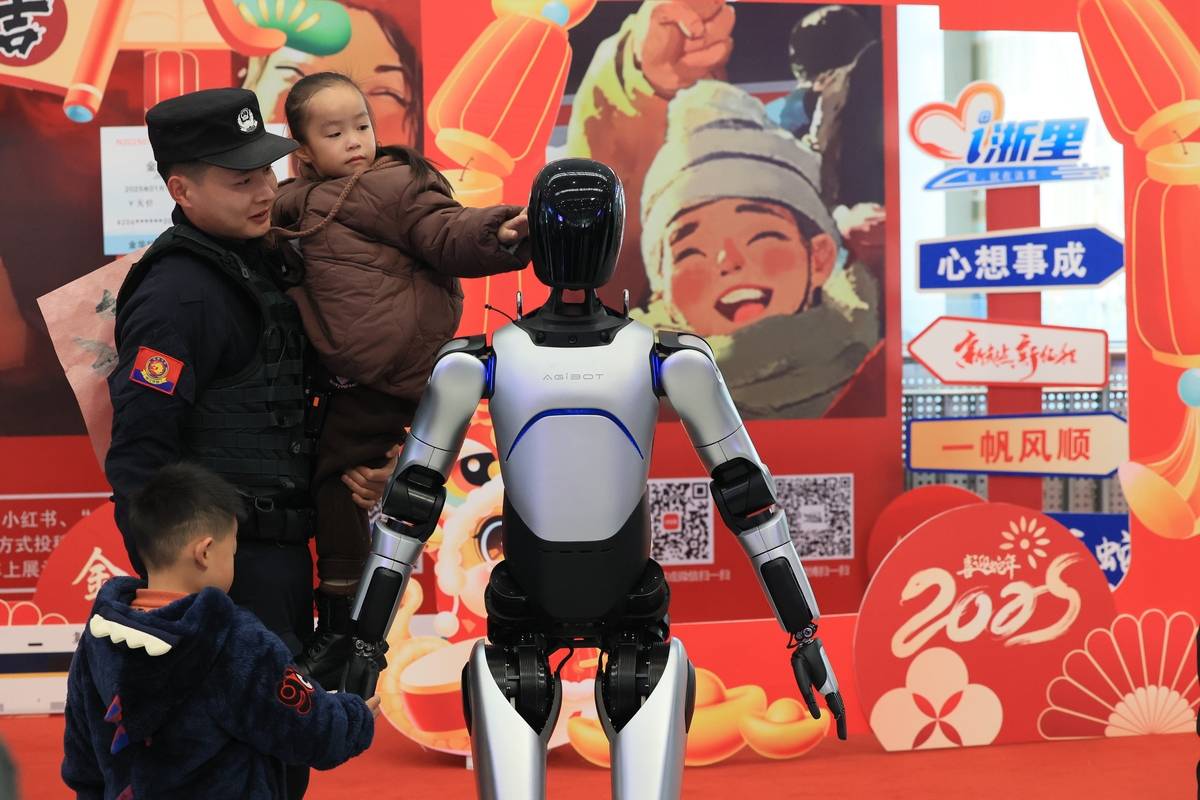
Group 1 - The Spring Festival Gala has triggered a significant surge in consumer interest in robotics, with a notable spike in search volume for robot categories on JD.com immediately following a performance featuring 128 humanoid robots [1] - The performance of the "Thousand-Hand Guanyin" robotic arms led to a simultaneous increase in pre-sales for similar educational robots, indicating a direct correlation between the gala's entertainment and consumer purchasing behavior [3] - The demand chain reaction created by the gala exceeded expectations, with a dramatic rise in inquiries for industrial robots and related DIY tools, as enthusiasts sought parts to create their own robots [5] Group 2 - The interaction between the audience and the robotic hosts resulted in over 120,000 requests for a specific performance from the robot customer service, showcasing a new form of human-robot interaction that was unexpected even for AI trainers [5] - The impact of the gala extended beyond online sales, as physical stores adapted their decorations to feature robot sculptures, indicating a shift in consumer engagement and marketing strategies during the festive season [5] - The combination of traditional cultural elements and advanced technology is reshaping the consumer landscape for the Spring Festival, highlighting a new paradigm in holiday spending [5]


当学习发生在屏幕、终端和交互机上:教育智能硬件改变了什么?
3 6 Ke· 2025-11-21 00:59
Core Insights - The rapid expansion of educational smart hardware is reshaping the organization of education, with hardware becoming a key entry point for learning across family, school, and community settings [1][12] - Recent funding of 200 million yuan in Pre-A round for Lingyuzhou highlights the trend of AI learning companions breaking through with scenario-based interactions [1][3] Family Segment - The family segment has seen the earliest and most concentrated changes, evolving from basic tools to comprehensive learning systems that address emotional support and cognitive development [1][2] - AI learning machines and tablets are integrating textbook synchronization, diagnostic exercises, and intelligent explanations, providing a complete learning path for families [2] - Specialized tools for specific subjects are rapidly gaining popularity, reflecting the shift from traditional to intelligent tools along the lines of "learning actions - function disassembly - technology reorganization" [2][3] School Segment - The transformation of educational hardware in schools is evident as it evolves from traditional tools to system-level facilities, enhancing teaching and management processes [6][8] - Smart blackboards and interactive devices are now central to classroom organization, enabling content access, interactive exercises, and real-time feedback [6][7] - The integration of smart grading devices and XR/VR teaching tools is reshaping the teaching process, allowing for quantifiable teaching behaviors and expanded understanding of abstract concepts [6][8] Community Segment - Community smart hardware must balance accessibility and low barriers while integrating educational functions [9][10] - Devices like smart reading machines and interactive whiteboards address the need for light educational experiences when parents cannot accompany their children [10] - Community education hardware is evolving from mere tools to comprehensive learning support systems, enhancing public education functions [11][12] Overall Trends - The evolution of educational smart hardware across family, school, and community settings signifies a shift from isolated tools to a cohesive learning support network [12] - The future competitiveness of educational hardware will focus on "scene adaptability" and "ecological synergy," enabling seamless data sharing and service integration across different educational environments [12]

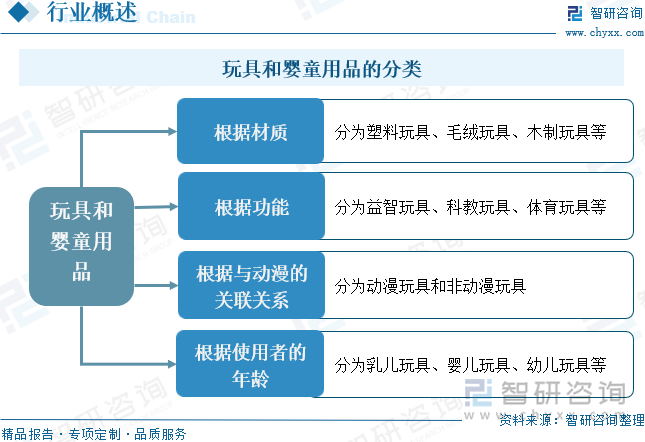
研判2025!中国玩具和婴童用品行业产业链、出口额、零售总额、竞争格局及未来展望:玩具和婴童用品行业加快高质量新质发展,出海拓市场成为行业发展必由之路[图]
Chan Ye Xin Xi Wang· 2025-05-02 02:39
Industry Overview - The toy and baby products industry is a significant part of the light industry, playing a crucial role in nurturing children and meeting family expectations [1][3] - The industry is experiencing growth, with the domestic toy retail sales expected to reach CNY 97.85 billion in 2024, a year-on-year increase of 7.9% [1][13] - The retail sales of children's strollers are projected to be CNY 16.98 billion, growing by 17.5%, while children's safety seats and bottles are expected to see increases of 13.2% and 8.1% respectively [1][13] Policy Support - The Chinese government has implemented various policies to support high-quality development and regulation in the toy and baby products sector [5][6] - Key policies include the "Guiding Opinions on Accelerating the Transformation and Upgrading of Traditional Manufacturing" and the approval of national standards for baby products [5][6] Market Dynamics - The industry is characterized by a diverse supply chain, including raw material suppliers, manufacturers, wholesalers, and retailers [7] - The macroeconomic environment, consumer disposable income, and preferences significantly influence demand for baby products [7] Export Performance - China is the largest toy producer and exporter globally, with toy exports (excluding games) projected to reach USD 39.87 billion in 2024 [9][10] - The United States remains the primary export destination, accounting for 26.39% of toy exports in early 2025 [10] Quality Control - The number of recalls for Chinese-made toys in the U.S. decreased by 6.4% in 2024, while the EU saw a 34.1% increase in recalls [15][17] - The Chinese government reported 1,121 batches of non-compliant products in 2024, reflecting increased regulatory scrutiny [17] Key Players - Major global players include Mattel, Hasbro, Bandai, and LEGO, while domestic companies like Aofei Entertainment and Pop Mart are significant in the Chinese market [19][21] - Aofei Entertainment reported a 4.85% increase in baby product revenue, while Pop Mart's revenue surged by 106.92% in 2024 [21][23] Future Trends - The integration of technology in toys is expected to accelerate, with a growing demand for smart toys and educational products [25] - Environmental concerns are driving the use of sustainable materials, with a focus on safety and compliance with international standards [26] - Personalization and IP collaborations are becoming key drivers for consumer engagement and product differentiation [27][28]