
黄骅面花

Search documents
影像记录|黄骅面花蒸出幸福年味
Xin Lang Cai Jing· 2026-02-23 00:09
Group 1 - The tradition of making steamed wheat flowers, known as "mianhua," in Huanghua has a history of over 200 years, symbolizing wishes for a bountiful harvest and happiness during the New Year [5] - The local farmers, such as Zhang Ruixia, have experienced significant improvements in wheat yields, with drought-resistant wheat achieving over 700 pounds per acre, contributing to the production of wheat flour for making mianhua [2][7] - The area of saline-alkali land in Hebei province is substantial, with over 5.8 million acres, and the city of Cangzhou, particularly Huanghua, has the highest degree of soil salinization [7] Group 2 - The production of Huanghua mianhua has expanded from local households to a broader market, utilizing modern technology and traditional methods to enhance quality and shelf life [9] - Hebei Dijiang Food Co., Ltd. employs smart equipment and combines 18 traditional processes with modern preservation techniques to produce mianhua, which is now sold through various channels including online platforms and supermarkets [9][12] - The integration of intangible cultural heritage, agriculture, and e-commerce has allowed the Huanghua mianhua industry to flourish, becoming a significant source of income for local farmers [9]

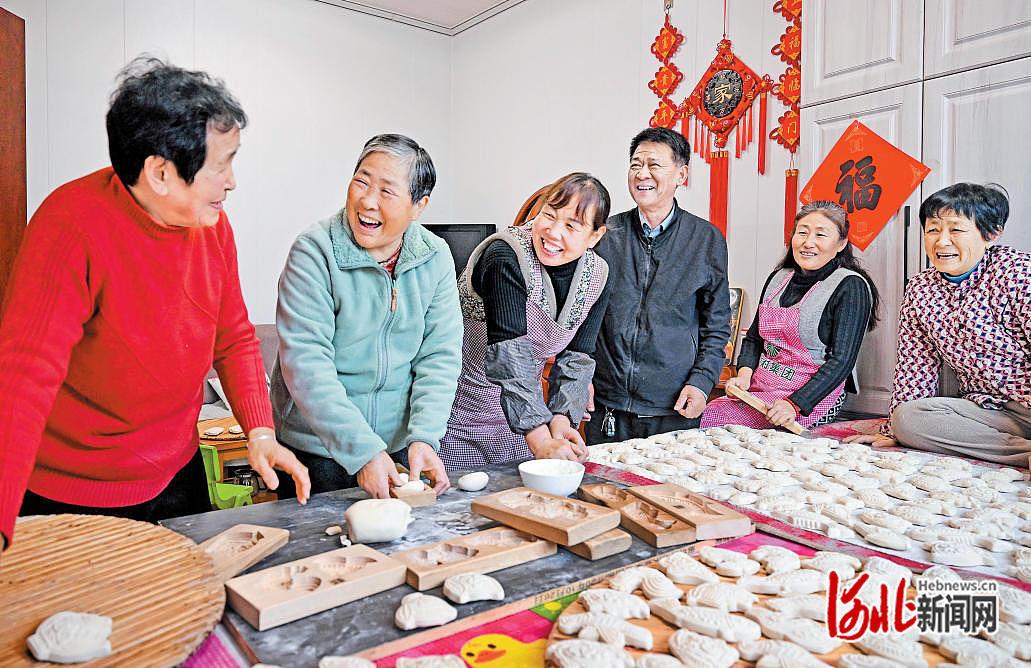
盐碱地上面花香
Xin Lang Cai Jing· 2026-02-03 22:55
Core Viewpoint - The article highlights the success of Hebei Yinhai Agricultural Technology Co., Ltd. in producing and selling traditional Huanghua wheat flower, especially during the peak demand period around the Chinese New Year, showcasing the company's growth and innovation in extending product shelf life and expanding market reach [1][2][4]. Group 1: Production and Demand - The company has seen a significant increase in orders for its wheat flower, with many customers placing orders two to three months in advance due to high demand during the festive season [2] - The production process involves over ten steps, ensuring the quality and freshness of the wheat flower, which is a traditional delicacy in the region [1][3] - The company has arranged for workers to work in shifts to meet the growing consumer demand, indicating a busy production schedule [2] Group 2: Quality and Innovation - The key ingredient for the wheat flower is drought-resistant wheat grown in saline-alkali soil, which is rich in minerals and has a higher protein content than national standards [3] - The company faced challenges with the short shelf life of traditional wheat flower, which could only be stored for two to three days at room temperature [3] - To address this issue, the company established a research and development center and collaborated with various research institutions to extend the shelf life of the product to one week through advanced preservation techniques [3][4] Group 3: Market Expansion and Sales Performance - The sales revenue from the company's products at the Renjilou department store has increased significantly, from around 30,000 to over 100,000 yuan per store [5] - The company has expanded its product line to include new offerings such as noodle dishes made from drought-resistant wheat, contributing to its growth [5] - The company has successfully penetrated markets beyond its local area, reaching cities like Beijing, Tianjin, and even southern markets such as Guangzhou and Shenzhen [6] Group 4: Product Development and Future Plans - The company currently offers over 100 varieties of drought-resistant wheat products, with several items receiving green food certification [6] - New products like vegetable dumplings and health-oriented steamed buns have been well-received in the market, reflecting the company's commitment to innovation [6] - The company plans to continue diversifying its product offerings and developing high-end, convenient products to attract more consumers [6]
荒草滩蝶变米粮川 河北加强盐碱地综合利用监督
Zhong Yang Ji Wei Guo Jia Jian Wei Wang Zhan· 2025-07-04 01:04
Core Viewpoint - The development of saline-alkali land agriculture in Hebei Province is being actively promoted to ensure national food security and increase farmers' income through comprehensive utilization and supervision measures [1][2][3]. Group 1: Agricultural Development and Support - Farmers in Huanghua City have received subsidies for grain planting, which have alleviated their economic burdens and led to increased income through the sale of diverse agricultural products [1]. - The Hebei Provincial Commission for Discipline Inspection and Supervision has established a research group to investigate the development of saline-alkali land agriculture, providing a basis for targeted supervision and effective measures [2][3]. Group 2: Supervision and Responsibility - The Hebei Provincial Commission has outlined six key areas for supervision, including responsibility implementation, breeding, land treatment, comprehensive utilization, specialty agriculture, and resource assurance [2]. - Local governments are being urged to prioritize the comprehensive utilization of saline-alkali land as a major initiative, with specific oversight from the Commission to ensure accountability [2][3]. Group 3: Monitoring and Improvement - The Commission is conducting joint supervision to enhance the effectiveness of agricultural departments in investigating saline-alkali land resources and improving soil quality [3][4]. - Specific issues such as slow project approvals and ineffective actions by personnel are being monitored to ensure timely support for agricultural projects [3][5].
河北加强盐碱地综合利用监督荒草滩蝶变米粮川
Zhong Yang Ji Wei Guo Jia Jian Wei Wang Zhan· 2025-06-22 01:27
Core Viewpoint - The article discusses the efforts of Hebei Province's disciplinary inspection and supervision agencies to promote the comprehensive utilization of saline-alkali land, enhance agricultural productivity, and increase farmers' income through targeted policies and supervision measures [2][3]. Group 1: Agricultural Development and Support - Farmers in Huanghua City have received subsidies for grain planting, which have alleviated their economic burdens and led to increased product variety and sales [2]. - The cooperative has developed 80 products across 11 series, including flour, steamed buns, noodles, and other items, contributing to higher farmer incomes [2]. Group 2: Supervision and Policy Implementation - The Hebei Provincial Discipline Inspection Commission has established a research group to investigate the development of saline-alkali agriculture, providing a basis for targeted supervision [3]. - The commission has outlined six key areas for supervision, including responsibility implementation, breeding, land treatment, comprehensive utilization, specialty agriculture, and resource assurance [3]. Group 3: Local Government Engagement - Local governments are being urged to prioritize the comprehensive utilization of saline-alkali land as a major initiative, with specific oversight from the discipline inspection agencies [3][5]. - The Tangshan Discipline Inspection Commission has issued supervision prompts and established direct reporting points to ensure local governments assess and utilize saline-alkali land resources effectively [3]. Group 4: Challenges and Recommendations - The article highlights challenges such as low yield and pricing issues in saline-alkali crop production, prompting recommendations for the development of salt-tolerant crop varieties and soil improvement techniques [6]. - The Cangzhou Discipline Inspection Commission has issued recommendations to enhance the conversion rate of scientific research achievements into practical applications, aiming to stimulate agricultural innovation [6].
河北沧州“黄骅旱碱麦”进京推介,与北京采购商现场达成合作
Xin Jing Bao· 2025-04-25 10:21
Core Insights - The event held on April 25 in Cangzhou, Hebei, promoted the Huanghua drought-resistant wheat brand, with 13 companies participating and 5 partnerships established with quality buyers from Beijing [1][2] - The unique qualities and production history of the drought-resistant wheat, which thrives in saline-alkali soil, were highlighted during the event [1] Group 1: Industry Overview - Huanghua drought-resistant wheat has over 2,600 years of cultivation history, with previous yields as low as 50 kilograms per mu due to saline-alkali land [2] - Recent agricultural advancements, including improved irrigation and organic fertilization, have led to the development of local varieties such as "Jiemai 19" and "Cangmai 6002," resulting in a significant increase in yield [2] Group 2: Production and Market Demand - In 2024, over 800,000 mu of Huanghua drought-resistant wheat achieved an average yield of 240 kilograms per mu, totaling over 190,000 tons, marking increases in yield, area, and total production [2] - The wheat has a high flour extraction rate of approximately 76% and is classified as high-gluten wheat, which is in high demand in the traditional noodle market of Beijing [2]