
时尚彩妆

Search documents
一年2415家海外企业开出首店,中国仍是全球品牌“试金石”
Huan Qiu Wang· 2026-01-28 11:56
Core Insights - The article highlights the structural changes in the entry of overseas brands into the Chinese consumer market, reflecting the evolving landscape of import consumption in China [2] Group 1: Brand Entry Strategies - The concept of "first store economy" is shifting from physical locations in key urban areas to online platforms, with e-commerce becoming the primary entry point for many overseas brands, especially smaller ones [2] - By establishing "online first stores," brands can conduct market testing and channel development at a lower cost, facilitated by platforms like Tmall International that provide essential infrastructure [2] - In 2025, brands from 52 countries are expected to enter China through this method, with the highest numbers from the US (555 brands) and South Korea, while countries like Cuba and Chile are also making their debut [2] Group 2: Competitive Strategies - New brands are increasingly focusing on niche markets rather than mass-market products, with health, beauty, and maternal and infant categories being the most attractive [3] - In the health sector, "precision nutrition" and "oral anti-aging" are emerging as key areas for new brand entries, while the maternal and infant sector sees a 128% increase in new baby food brands, indicating a growing demand for specialized dietary needs [3] - The beauty sector is witnessing a shift as overseas brands pivot towards personal care products, with a 37% increase in new personal care brands, many focusing on hair care [3] Group 3: Consumer Behavior Trends - The fastest-growing imported categories in 2025 include toys, outdoor gear, baby food, fashion cosmetics, and pet health, all showing growth rates exceeding 100% [4] - The growth in toy-related products is driven by fan economy and emotional consumption, while outdoor gear growth correlates with the rise of leisure lifestyles in China [5] - The high growth rates in baby food and pet health reflect families' increasing demand for quality in these areas, where imported brands hold a recognition advantage [5] Group 4: Platform Evolution - E-commerce platforms are evolving from mere entry points to providing operational support for overseas brands, as seen with Korean brands on Tmall International [7] - In 2023, eight of the top ten Korean brands by sales on Tmall International were beauty brands, but the platform is guiding these brands to diversify into apparel and other categories [7] - The structural shift in Korean brands from a beauty-centric focus to a broader distribution across various categories is supported by market insights and resources provided by the platform [7] Group 5: Market Attractiveness - The continuous entry of overseas brands is based on the stable demand from Chinese consumers for certain imported categories, particularly in health, maternal, and pet sectors [8] - Improved e-commerce infrastructure has lowered the cost for brands to test the market, allowing smaller brands to enter with manageable risks [9] - The segmentation and differentiation of the Chinese consumer market provide opportunities for brands with varying positioning, as evidenced by the growth of online first stores on Tmall International [10]

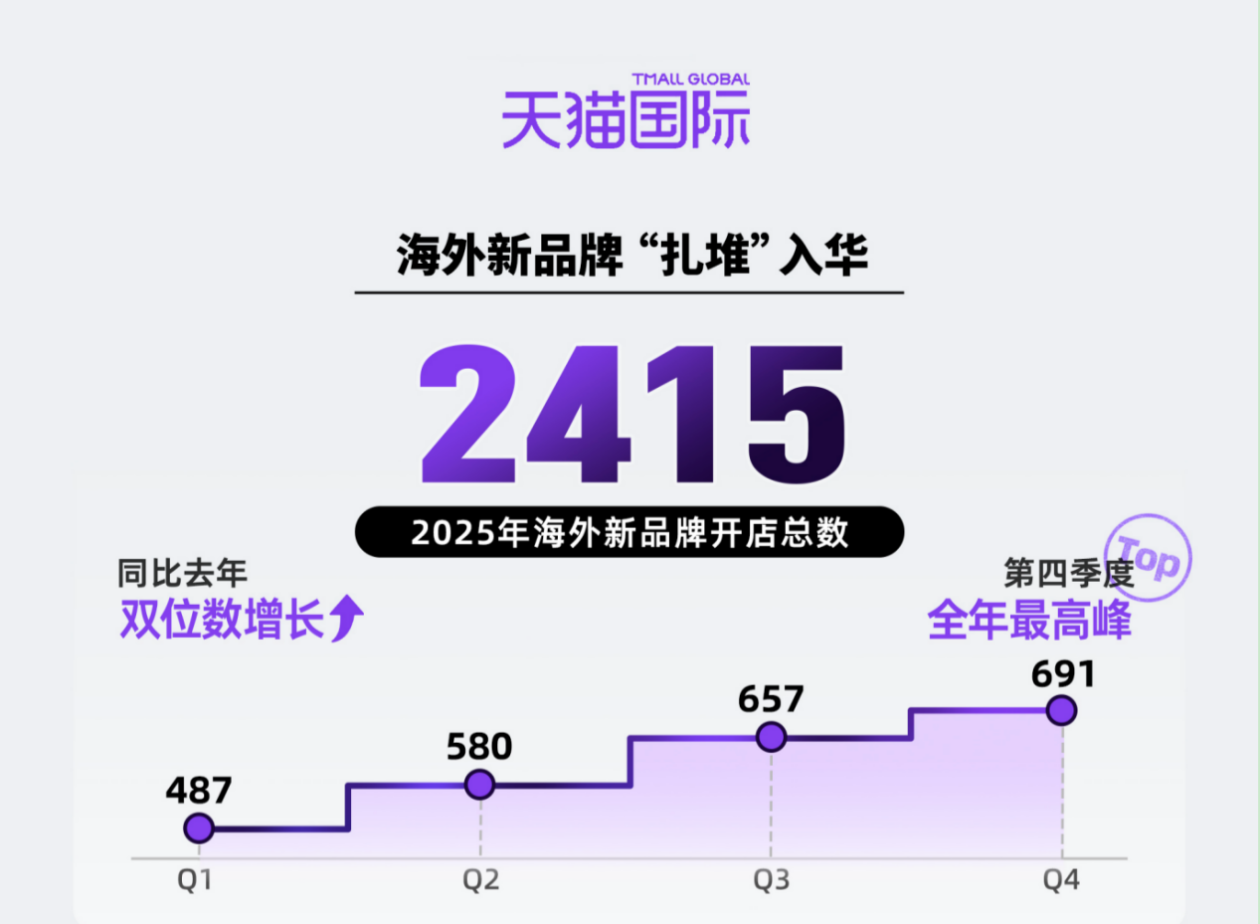
2415个海外新品牌在天猫国际开出中国首店
Xin Lang Cai Jing· 2026-01-27 03:41
Core Insights - Tmall International is set to welcome 2,415 new overseas brands in 2025, indicating a double-digit growth in the number of first stores opened, averaging over 6 new brands daily [1][3] - The top three new imported brands for 2025 include the South Korean fashion brand COVERNAT, the Australian nutrition brand herbs of gold, and the South Korean celebrity merchandise brand Weverse Shop [1][3] - The new brands span 52 countries and regions, with the highest number coming from the United States, Japan, and South Korea, while France, New Zealand, and Australia show the fastest growth [1][3] Industry Trends - The most concentrated influx of new overseas brands is in the health, beauty, and maternal and infant sectors, with the maternal and infant industry seeing a 128% increase in new brands, particularly in the baby food segment [1][3] - The fastest-growing categories in terms of transaction volume over the past year include toys, outdoor equipment, baby food, fashion cosmetics, and pet health, all of which have doubled in growth, reflecting consumer preferences for quality imports and family-oriented products [1][3] Brand Expansion - Tmall International currently hosts over 40,000 brands from more than 110 countries and regions, indicating a significant global reach and brand diversity [2][4]
