
星灵电子电气架构

Search documents
广汽集团董事长冯兴亚:以全栈自研与开放协同抢占未来竞争制高点
Zheng Quan Ri Bao· 2026-03-24 16:38
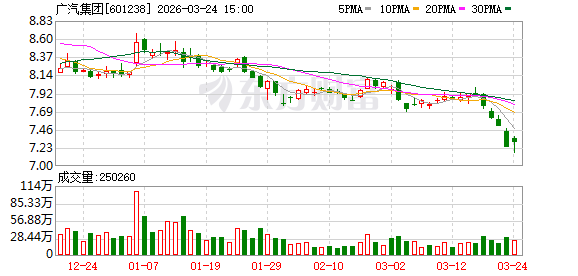
Core Viewpoint - The automotive industry is undergoing rapid restructuring driven by electrification, intelligence, and globalization, with a shift from high-speed growth to high-quality development in the Chinese market. GAC Group aims to leverage reform, technology, and globalization to navigate this transition [2]. Group 1: Reform and Strategy - GAC Group's "Panyu Action" focuses on organizational restructuring, process reengineering, and mechanism activation as part of its deepened state-owned enterprise reform. The goal is to transform from a traditional functional organization to a process-oriented one driven by user needs by 2025 [3]. - The year 2026 is designated as the critical phase for the "Panyu Action," emphasizing the transition from construction to efficient operation [3]. - In the first two months of the year, GAC Group's total sales reached 203,100 units, a 3% year-on-year increase, with its self-owned brands achieving a 43.25% increase in sales [3][4]. Group 2: Technological Innovation - GAC Group is committed to building a technological moat through long-term investments in R&D, with over 62 billion yuan invested and more than 24,900 patent applications filed [5]. - The company has established a comprehensive R&D framework with over 6,800 global R&D personnel and centers in multiple cities, focusing on core technologies in battery, motor, and control systems [5]. - GAC Group emphasizes safety in smart electric vehicles, implementing a multi-layered safety defense system that exceeds national standards [5]. Group 3: Global Expansion - GAC Group aims to enhance its global presence, with a target of nearly 130,000 units in overseas sales by 2025, reflecting a 47% year-on-year increase [8]. - The company plans to expand its market footprint in Europe, Australia, New Zealand, South Africa, and Southeast Asia, while establishing over 1,000 new channel outlets this year [8]. - The "ONE GAC 2.0" strategy will guide the company's overseas operations, focusing on collaboration across the supply chain, ecosystem, digitalization, and financial systems [8]. Group 4: Future Directions - GAC Group will leverage technological innovation, systemic reform, open cooperation, and global layout as its strategic directions during the 14th Five-Year Plan period [9]. - The company aims to enhance its local partnerships, strengthen its independent brand capabilities, and foster new growth curves through ecosystem development [9].


网点互通,品质不减,昊铂埃安 BU 融合全链路服务升级
Qi Lu Wan Bao· 2026-02-05 01:09
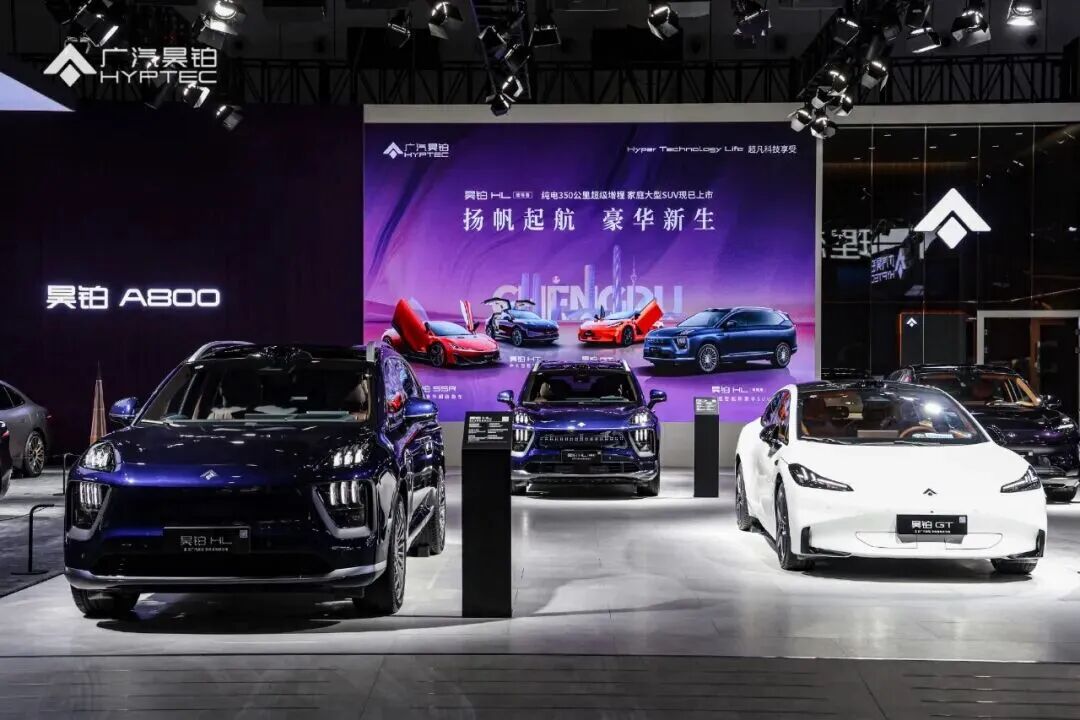
Core Viewpoint - The integration of the BU between Haobo and Aion aims to address consumer concerns regarding brand confidence and vehicle maintenance convenience, creating a more reliable and accessible service system for electric vehicle users [1][17]. Group 1: Channel Integration and User Experience - The previous single-channel layout of Haobo limited store coverage and user accessibility, which affected brand recognition. The BU integration has upgraded both the purchasing and service networks, enhancing user experience during the peak travel season [3][10]. - Haobo models are now available in numerous Aion stores across the country, significantly expanding user touchpoints for viewing and purchasing vehicles. By January 2026, 254 service points have been integrated, covering 147 cities, with plans to expand to around 1,000 stores [3][10]. - The service network is fully interconnected, allowing Haobo owners to access maintenance services at over a thousand Aion service points, effectively resolving previous maintenance challenges [5][8]. Group 2: Service Quality and Customer Assurance - Haobo owners can now receive maintenance at Aion locations, drastically reducing the time and effort required for service. For example, a customer reported a significant improvement in their maintenance experience, reducing travel time from one hour to just ten minutes [7][8]. - The brand has assured customers that existing service rights and standards will remain unchanged and will continue to be optimized. All Aion service points handling Haobo services have undergone professional training to ensure service quality [7][8][13]. Group 3: Strategic Positioning and Market Performance - The BU integration is not merely a channel overlap but a dual empowerment strategy, leveraging Aion's extensive user base to reach more potential customers while enhancing Haobo's high-end brand value [10][13]. - As of January 2026, the combined BU sales reached 23,591 units, reflecting a 63.9% year-on-year increase, attributed to improved service and user confidence [10][19]. - The integration aligns with the strategic focus of GAC Group, maintaining Haobo's high-end positioning while enhancing resource efficiency and service quality [13][15]. Group 4: Future Product and Service Development - Haobo plans to continue focusing on high-end products, with new models and upgrades in the pipeline. The integration will allow for the application of advanced technologies in Haobo vehicles, ensuring a competitive edge [15][19]. - The service system will retain high-end service standards while incorporating the convenience of Aion's network, enhancing user trust in the brand [15][19].
广汽埃安联手滴滴自动驾驶 Robotaxi R2正式交付
Nan Fang Du Shi Bao· 2026-01-23 16:29
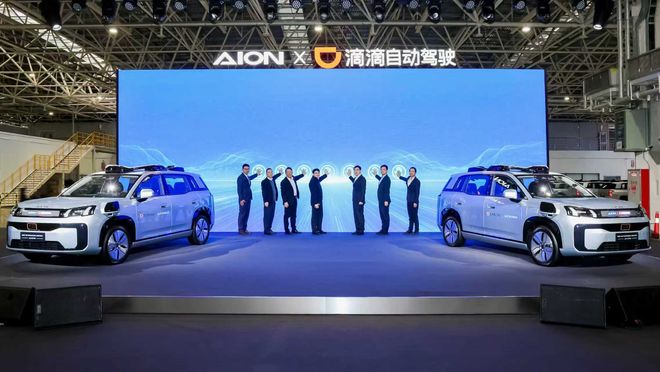
Group 1 - The core viewpoint of the news is the successful delivery of the R2 Robotaxi, a collaboration between GAC Aion and Didi Autonomous Driving, marking a significant step in the commercialization of autonomous driving technology [2][4]. - The R2 is designed for commercial operation with three main goals: unmanned operation, mass production, and commercialization, achieving breakthroughs in technology configuration, safety assurance, passenger experience, and operational efficiency [2][4]. - The R2 features 33 high-precision sensors and the industry's first mass-produced three-domain fusion computing brain, with a computing power exceeding 2000 TOPS, while reducing costs by 74% [2][4]. Group 2 - The R2 is equipped with advanced features such as an interactive front bumper screen, a 17.3-inch ceiling-mounted entertainment screen, and smart voice control, enhancing user experience [4]. - GAC has developed the GIVA intelligent driving platform since 2018, providing a secure and open platform for autonomous driving research and development [4]. - The collaboration leverages Didi's latest L4 full-stack autonomous driving hardware and software solutions, accelerating the R2's market introduction and enhancing GAC's brand image as a technology leader [4][5]. Group 3 - By 2026, the R2 Robotaxi is planned to be deployed in cities like Guangzhou and Beijing, gradually becoming a valuable addition to urban smart transportation [5]. - GAC and Didi Autonomous Driving will continue to deepen their collaboration, focusing on vehicle lifecycle management, scenario expansion, and iterative upgrades of the Robotaxi models [5].

广汽埃安联手滴滴自动驾驶,Robotaxi R2正式交付
Nan Fang Du Shi Bao· 2026-01-23 14:55
Core Insights - GAC Aion and Didi Autonomous Driving have successfully delivered the new generation Robotaxi, R2, marking a significant milestone in the commercial operation of autonomous driving technology [1][3] - The R2 aims to achieve three core goals: unmanned operation, mass production, and commercialization, with significant advancements in technology, safety, passenger experience, and operational efficiency [1][3] Group 1: Vehicle Specifications and Technology - The R2 is equipped with 33 high-precision sensors and the industry's first mass-produced three-domain fusion computing brain, boasting a computing power exceeding 2000 TOPS while reducing costs by 74% [1] - The vehicle features an interactive front bumper screen, a 17.3-inch ceiling-mounted entertainment screen, and smart voice control, enhancing user experience [3] - GAC's GEP 3.0 platform integrates electric vehicle architecture, an open control platform, electronic steering, and redundant braking systems, providing robust support for autonomous driving [3] Group 2: Strategic Collaboration and Future Plans - The collaboration between GAC and Didi Autonomous Driving has accelerated the rollout of the Robotaxi model, enhancing GAC's brand image as a technology-driven company [3][4] - The successful delivery of R2 and its road testing signify a new phase in the mass production of autonomous driving, aiming to improve user experience and value [3] - By 2026, R2 is planned to be deployed in cities like Guangzhou and Beijing, gradually becoming a valuable addition to urban smart mobility solutions [3][4] Group 3: Future Development - GAC and Didi Autonomous Driving will continue to deepen their collaboration, focusing on vehicle lifecycle management, scenario expansion, and iterative upgrades of the Robotaxi model [4] - The partnership aims to transition autonomous driving from technology validation to practical commercial applications [4]
广汽埃安与滴滴自动驾驶联手打造 Robotaxi R2正式交付
Zheng Quan Shi Bao Wang· 2026-01-23 11:12
Core Insights - GAC Aion and Didi Autonomous Driving have jointly launched the next-generation Robotaxi, R2, marking a significant milestone in the autonomous driving sector in China [1][2] - The successful delivery of R2 signifies the establishment of a complete commercial closed loop for autonomous driving, encompassing technology research and development, intelligent manufacturing, and commercial operations [1] Group 1: Vehicle Specifications and Technology - The Robotaxi R2 is designed for commercial operation with three core objectives: unmanned operation, mass production, and commercialization [1] - R2 is equipped with 33 high-precision sensors and the industry's first mass-produced three-domain fusion computing brain, achieving over 2000 TOPS of computing power while reducing costs by 74% [1] - The vehicle meets both Chinese and European five-star safety standards, featuring a comprehensive safety redundancy system validated through rigorous functional safety tests and all-scenario testing [1] Group 2: Strategic Collaboration and Future Plans - GAC Group plans to deepen its strategic cooperation with Didi, leveraging their complementary strengths in vehicle manufacturing, autonomous driving technology development, mobility ecosystem, and scenario operations [1] - The R2 is built on the GAC GEP 3.0 platform, known for its high degree of interface openness and stability, integrating electric vehicle platform, open control platform, electronic steering, and redundant braking systems [2] - By 2026, R2 is expected to be deployed in a phased manner in cities like Guangzhou and Beijing, contributing to urban smart mobility [2]