显示驱动IC

Search documents
AI强驱动IC回温 晶圆代工厂第1季可望“淡季不淡”
Jing Ji Ri Bao· 2026-02-08 23:13
Core Viewpoint - The first quarter of the year is traditionally a slow season for foundries, but strong demand for artificial intelligence (AI) and a recovery in demand for display driver ICs are expected to lead to better-than-usual performance for major foundries like TSMC [1] Group 1: TSMC Performance - TSMC is projected to achieve a revenue of between $34.6 billion and $35.8 billion in Q1 2026, marking a historical high and a 4% quarter-over-quarter increase, driven by strong demand for advanced processes related to AI applications [1] - TSMC is expected to be one of the best-performing foundries in Q1 [1] Group 2: World Advanced Performance - World Advanced is experiencing strong shipments of server power management chips, with a recovery in demand for display driver ICs due to inventory replenishment in the TV and e-book markets, leading to a projected 1% to 3% quarter-over-quarter increase in wafer shipments for Q1 [1] - However, due to changes in product mix, the average selling price is expected to decline by approximately 3% to 5%, with Q1 revenue projected to be flat to down 4% compared to Q4 2025 [1] Group 3: UMC Performance - UMC is expected to maintain stable operations in Q1, with wafer shipments remaining flat and average selling prices holding steady, leading to a projected flat revenue performance, which is better than the typical seasonal decline of 8% to 9% [1] - Growth in UMC's 22nm process, driven by increased market share in smartphone image processors and AMOLED driver ICs, is anticipated to be a key driver of overall performance growth [1]

最高涨 20%!8 英寸晶圆代工开启全行业涨价
是说芯语· 2026-01-14 03:30
Core Viewpoint - The global 8-inch wafer foundry capacity is expected to decrease by 2.4% in 2026 due to TSMC and Samsung Electronics reducing their production capacity, while demand for AI-driven power management chips remains strong, leading to an anticipated increase in capacity utilization rates to 90% this year [2][8]. Group 1: Company-Specific Insights - TSMC plans to gradually exit the 6-inch wafer manufacturing business within two years and continue to reduce 8-inch wafer capacity, with a current monthly capacity of approximately 528,000 wafers [4]. - Samsung Electronics will also reduce its 8-inch wafer production starting in the second half of 2025, aiming to allocate more resources to the 12-inch wafer market, with a similar monthly capacity of 528,000 wafers [4]. - UMC's 8-inch wafer monthly capacity was previously over 360,000 wafers, with a current utilization rate of about 70%, and the company is optimistic about continued growth in 2026 [5]. - SMIC has a monthly capacity of approximately 355,000 8-inch wafers, with a utilization rate of 95.8% as of Q3 2025, and has raised prices by about 10% due to high demand [5]. - Hua Hong Semiconductor's 8-inch wafer foundry utilization rate reached 109.5%, indicating overcapacity, and the company is expanding its production capacity [6]. - Powerchip's 8-inch wafer monthly capacity is around 120,000 wafers, benefiting from the tight supply of memory chips and the recovery of logic process products [6]. - GlobalFoundries is focusing on expanding its 12-inch wafer production, with a projected decline of about 0.3% in global 8-inch wafer foundry capacity in 2025 [7]. Group 2: Market Trends and Projections - The average capacity utilization rate for global 8-inch wafer foundries is expected to rise to 85% to 90% in 2026, significantly better than the 75% to 80% range in 2025 [8]. - Some foundries are notifying customers of price increases ranging from 5% to 20% due to tightening capacity, marking a shift from previous selective price adjustments [8].


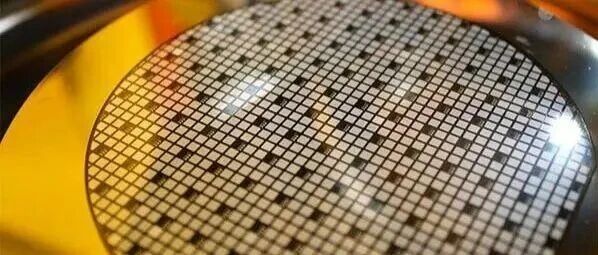
八英寸晶圆厂,酝酿涨价!
半导体芯闻· 2026-01-13 10:21
Core Insights - The recent changes in the 8-inch wafer supply-demand landscape are driven by TSMC and Samsung's gradual production cuts, alongside robust growth in AI-related power IC demand and preemptive inventory stocking by customers due to concerns over rising IC costs in the second half of the year [1][2] Group 1: Supply and Demand Dynamics - TSMC has officially begun to reduce its 8-inch capacity starting in 2025, with plans for some facilities to cease operations by 2027, while Samsung is also adopting a more aggressive reduction strategy [1] - TrendForce forecasts a 0.3% decline in global 8-inch capacity in 2025, entering a negative growth phase, with a further expected reduction of 2.4% in 2026 despite minor expansions from companies like SMIC and Vanguard [1] - The demand side is bolstered by increased orders for AI server power ICs and a trend towards localizing IC production in China, leading to higher capacity utilization rates among Chinese wafer foundries [1] Group 2: Price Adjustments and Market Outlook - In 2026, the demand for power-related ICs driven by AI applications is expected to support an increase in global 8-inch average capacity utilization rates to 85-90%, significantly higher than the 75-80% in 2025 [2] - Some wafer foundries anticipate a tightening of 8-inch capacity in 2026 and have notified customers of planned price increases ranging from 5% to 20% across all customer segments and process platforms [2] - The actual price increase for 8-inch wafers may be moderated due to concerns in consumer electronics and rising costs from memory and advanced process technologies [2] Group 3: TSMC's Capacity Reallocation - TSMC is adjusting its mature process capacity configuration, which reflects a shift towards advanced processes and packaging resources, benefiting 8-inch platforms and long-term customers in automotive and industrial control sectors [4] - The company has begun transferring equipment to its subsidiary, World Advanced, in preparation for the anticipated demand shift in mature processes, with a transaction value of approximately $20-23 million [5] - TSMC's exit from the high-voltage GaN foundry market has released capacity and customer demand, allowing other companies like Powertech to step in and capitalize on the AI power supply chain [6]

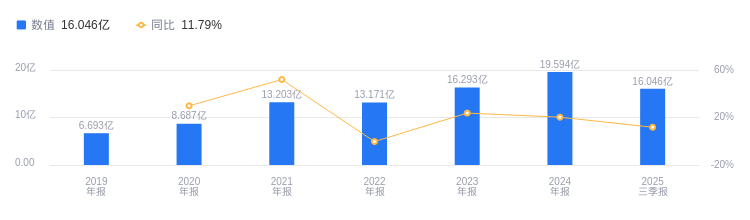
颀中科技的前世今生:2025年Q3营收16.05亿行业第五,净利润1.85亿行业第六
Xin Lang Zheng Quan· 2025-10-30 13:35
Core Viewpoint - Qizhong Technology, established in 2018 and listed on the Shanghai Stock Exchange in 2023, is a leading provider of advanced packaging and testing services for integrated circuits, ranking first in the domestic display driver chip testing market and third globally [1] Group 1: Business Performance - In Q3 2025, Qizhong Technology reported revenue of 1.605 billion yuan, ranking 5th in the industry, significantly lower than the top competitor Changjiang Electronics' 28.669 billion yuan and second-place Tongfu Microelectronics' 20.116 billion yuan [2] - The company's net profit for the same period was 185 million yuan, ranking 6th in the industry, again lower than Tongfu Microelectronics' 999 million yuan and Changjiang Electronics' 951 million yuan [2] Group 2: Financial Ratios - As of Q3 2025, Qizhong Technology's debt-to-asset ratio was 17.51%, significantly below the industry average of 40.98%, indicating strong solvency [3] - The gross profit margin for the same period was 28.60%, higher than the industry average of 20.20%, reflecting robust profitability [3] Group 3: Leadership and Shareholder Structure - The chairman, Chen Xiaobei, took office in June 2023, with a background in investment and multiple directorships [4] - As of September 30, 2025, the number of A-share shareholders increased by 14.73% to 23,800, with an average holding of 15,400 shares, a decrease of 12.84% [5] Group 4: Future Projections - Huashan Securities forecasts Qizhong Technology's revenue for 2025-2027 to be 2.27 billion, 2.62 billion, and 3.04 billion yuan, with corresponding net profits of 330 million, 400 million, and 510 million yuan [6] - Zhongyou Securities also projects similar revenue and profit figures for the same period, highlighting the expected growth in both display and non-display chip testing businesses [7]

一张图看清2025中国大陆各晶圆厂产能及技术节点
材料汇· 2025-10-05 15:09
Core Viewpoint - The article provides an overview of the semiconductor manufacturing capacity distribution in mainland China, highlighting key players, their production capacities, and technological focuses in various regions [6]. Group 1: Capacity Distribution - The total semiconductor production capacity in mainland China is significant, with major contributions from companies like SMIC (19.8 billion), Hua Hong Semiconductor (15.4 billion), and Changxin Storage (11.0 billion) [6]. - The Yangtze River Delta region has a total capacity of 91.7 billion, accounting for 42.1% of the national total, with a focus on advanced processes (14nm and below) and power devices [6]. - The Pearl River Delta region has a total capacity of 23.3 billion, focusing on mature processes (28nm to 180nm) and automotive power devices [6]. Group 2: Key Players and Technologies - Key players in the semiconductor industry include Intel in Dalian (9.0 billion), Longsys in Wuhan (1.5 billion), and Yangtze Memory Technologies (12.0 billion) [6]. - The article mentions various technological focuses, such as NAND storage, power devices, and automotive electronics, indicating a diverse range of applications across different manufacturers [6]. - Emerging technologies like MRAM and SiC (Silicon Carbide) are also highlighted, showcasing the industry's shift towards advanced materials and processes [6].
坚持自主研发与产业协同 新相微绘就显示芯片发展新蓝图
Zheng Quan Shi Bao Wang· 2025-08-08 13:56
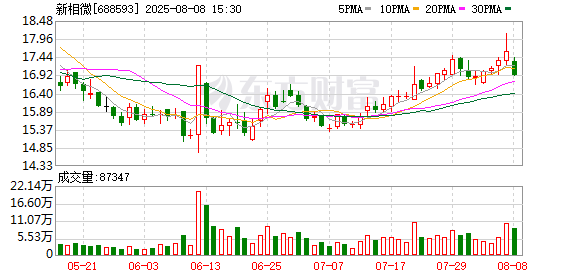
Group 1 - The core viewpoint of the articles highlights the strategic focus of the company on high-end display chip domestic substitution and innovation in advanced display technologies [1][2] - The company has established a comprehensive product matrix covering over a hundred types of new display driver ICs and power ICs for various applications including smart wearables, mobile phones, and automotive displays [1] - The company has maintained long-term collaborations with leading manufacturers such as BOE, Huike, Tianma Microelectronics, Visionox, Huawei, and Xiaomi, ensuring a stable supply of high-quality products and services [1] Group 2 - The company is committed to increasing R&D investment and has implemented a tiered R&D system to ensure continuous technological innovation and leadership in the field [1] - Recent capital operations include the establishment of the "Chongqing Liangjiang New Display Venture Capital Fund" in collaboration with the Chongqing Liangjiang New Area government, aimed at nurturing high-end technical talent and projects in the display chip industry [2] - The company aims to leverage global display technology iterations and accelerated domestic substitution opportunities to enhance market penetration and international competitiveness [2] Group 3 - The company announced the termination of a previously planned major asset restructuring with Shenzhen Aisheng Technology Co., Ltd., stating that this adjustment will not affect normal operations or strategic progress [4]

中颖电子20250610
2025-06-10 15:26
Summary of Zhongying Electronics Conference Call Company Overview - Zhongying Electronics aims to become an international semiconductor company by emulating the growth models of American companies, focusing on both organic growth and external mergers and acquisitions [2][5] Strategic Goals - The company has set two main strategic goals for 2023 to address challenges from the US-China tech and trade wars: 1. Organic growth through product depth enhancement and expansion into high-end markets, targeting global operations [4] 2. External mergers and acquisitions to find suitable partners and create a platform for sustainable operations [4] Mergers and Acquisitions - Zhongying Electronics is actively seeking suitable acquisition targets, inspired by the growth patterns of companies like Microchip and TI [5][6] - The company has partnered with Intelligent Power Supply to establish an acquisition platform to overcome challenges faced in previous mergers [10] - The actual control stake of Zhongying Electronics has decreased from 18.5% to approximately 9.2%, with voting rights entrusted to Intelligent Power Supply for 24 months [12] Market Challenges - The company faces subjective barriers in the Chinese capital market, such as resistance from potential acquisition targets and regulatory requirements regarding actual control [7] - Maintaining actual control during acquisitions can lead to complications, including stock pledges that affect daily operations and increase the difficulty of finding suitable capital market platforms [8][9] Financial Performance - In 2025, the company anticipates slight sales growth but faces significant pressure on profitability due to inventory adjustments affecting gross margins [14] - The company expects improvements in gross margin conditions by 2026 [14] Global Market Expansion - Zhongying Electronics is expanding its global footprint, with established bases in Japan and plans for further expansion in Europe and Southeast Asia [17] - The company has initiated production collaborations in various regions, including Japan and Turkey, and is actively seeking talent for operations in India [17] Product Development and Focus Areas - The strategic direction remains centered on chip design, including DMC modules, IGBT, and related technologies such as Power and MOSFET [3][15] - The company is also exploring opportunities in the MCU sector, particularly in high-end applications and AI MCU integration [22] Impact of Tariffs - Tariffs have a minimal impact on the company, with direct business in North America accounting for less than 10% of total operations [16][18] Future Acquisition Plans - Zhongying Electronics is open to acquiring overseas companies, particularly in Europe, while facing challenges in acquiring Japanese firms [19] Automotive Chip Development - The change in controlling shareholders is expected to accelerate the development of automotive chips, with the company focusing on three segments: electronic control, motors, and battery management [20] MCU Development - The company is currently focused on developing battery protection technologies in the automotive MCU sector, with no immediate plans for collaboration between its invested companies [21] Conclusion - Zhongying Electronics is strategically positioning itself for growth through mergers, global expansion, and product innovation while navigating the complexities of the Chinese capital market and international trade dynamics.

现有产能利用率低于可比同行,燕东微为何再欲募资40亿元建设12英寸新产线?
Mei Ri Jing Ji Xin Wen· 2025-04-16 15:00
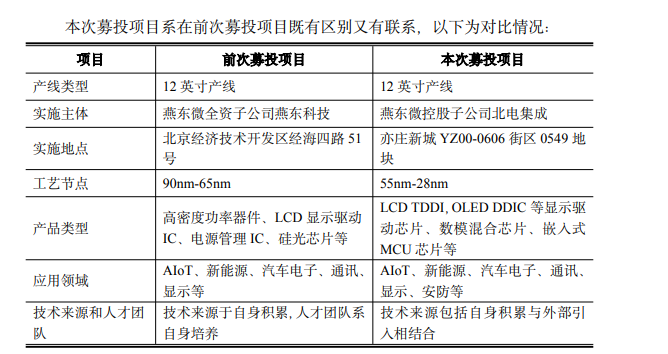
Core Viewpoint - Yandong Micro plans to raise 40.2 billion yuan through a private placement, fully subscribed by its controlling shareholder, Beijing Electric Control, to fund the construction of a 12-inch production line and supplement working capital [1] Group 1: Fundraising and Investment Projects - The fundraising will support the construction of a 12-inch production line by Beidian Integrated, a subsidiary of Yandong Micro, along with working capital [1] - Yandong Micro's subsidiaries and partners plan to increase capital for Beidian Integrated, with contributions of 49.9 billion yuan from Yandong Technology, 20 billion yuan from Tianjin BOE, and 25 billion yuan each from Yizhuang Guotou and Beijing Guoguan [1] Group 2: Technology and Production Capacity - The previous fundraising project focused on a 90nm-65nm process, while the new project targets a 55nm-28nm process, expanding product offerings to include OLED display driver chips and mixed-signal chips [2][4] - The first phase of the previous project is expected to reach production capacity of 20,000 wafers per month by July 2024, with the second phase aiming for 40,000 wafers per month by July 2025 [3] Group 3: Financial Performance and Market Conditions - Yandong Micro's wafer manufacturing gross margin has declined significantly, with margins of 21.79%, 10.80%, -19.72%, and -26.99% from 2021 to the first nine months of 2024 [5] - The company's capacity utilization rates have also decreased, recorded at 93.14%, 79.11%, 78.35%, and 80.82% for the same periods [7][11] - Despite the overall downturn in the wafer foundry industry, Yandong Micro's margins remain lower than comparable peers, which have higher capacity utilization rates [6][10]

爱协生两度出售:新相微能否成就产业整合?
IPO日报· 2025-03-08 07:17
星标 ★ IPO日报 精彩文章第一时间推送 几个月内,两家上市公司先后公告拟并购同一标的公司。 2024年11月,英唐智控和爱协生科技公司(下称"爱协生")未能协商一致终止收购后。3月,新相微快速接上,向并购标的伸出橄榄枝。 近期,新相微公告称,公司正在筹划以发行股份及支付现金的方式购买爱协生控制权并同时募集配套资金。经初步沟通,本次交易预计构成重大资产重 组。公司股票已于2025年3月3日开市起停牌,并将于2025年3月4日继续停牌,预计停牌时间不超过5个交易日。 当前半导体显示行业竞争激烈,但行业整合趋势明显,这或是新相微在行业整合上的新方向。 | 证券代码 | 证券简称 | 停复牌类型 | 停牌起始日 | 停牌 期间 | 停牌终止日 | 复牌日 | | --- | --- | --- | --- | --- | --- | --- | | 688593 | 新相微 | A 股 停牌 | 2025/3/4 | | | | 制图:佘诗婕 业务协同 近年来,新相微也一直在推动产业生态布局和业务发展,此次收购爱协生是其战略布局的一部分。 据悉,新相微是国内领先的显示芯片设计企业,专注于显示驱动IC的研发和销售。 ...
汇顶终止收购云英谷,英集芯收购辉芒微,新相微收购爱协生
半导体行业观察· 2025-03-04 00:53
Core Viewpoint - The article discusses the termination of the acquisition of Yunyinggu Technology by Huizhi Technology, highlighting the reasons behind the decision and the financial status of Yunyinggu Technology [2][3][5]. Group 1: Termination of Acquisition - Huizhi Technology announced the termination of the acquisition of 100% shares of Yunyinggu Technology due to failure to reach an agreement on the transaction price and commercial terms [2][3]. - The decision was made after thorough analysis and discussions with the transaction parties, aiming to protect the interests of the company and its shareholders [3]. Group 2: Yunyinggu Technology Overview - Yunyinggu Technology specializes in OLED display driver chips (DDIC) and is classified under the "new generation information technology industry" as a strategic emerging industry [3][4]. - The company operates a Fabless model, focusing on integrated circuit design, quality control, and sales, while outsourcing manufacturing and testing [4]. Group 3: Financial Performance - As of September 30, 2024, Yunyinggu Technology reported total assets of 1.27 billion, total liabilities of 170 million, and a revenue of 704 million with a loss of 162 million for the first three quarters of the year [5]. - The losses are attributed to high early-stage R&D investments, which exceed 100 million annually, but are expected to improve as commercial applications scale up [5][6]. Group 4: Competitive Landscape - Yunyinggu Technology's main competitors are South Korean and Taiwanese firms, and it is currently in a revenue growth phase with relatively high production costs [6]. - The company has established stable partnerships with leading Micro-OLED panel manufacturers, positioning itself as a key supplier in the market [5].