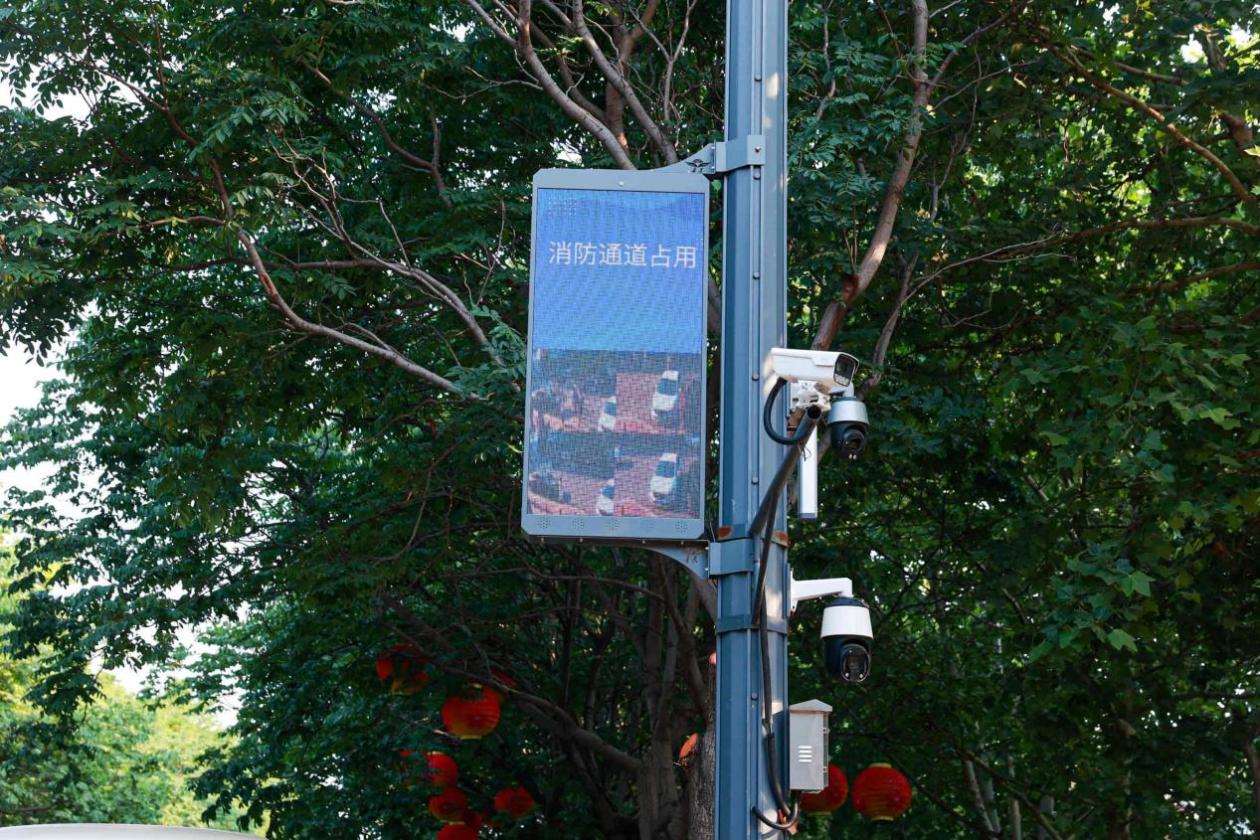
智慧合杆

Search documents
四中全会精神在基层丨中原农谷:藏在一根杆里的智慧农业
Xin Hua She· 2025-12-30 07:02
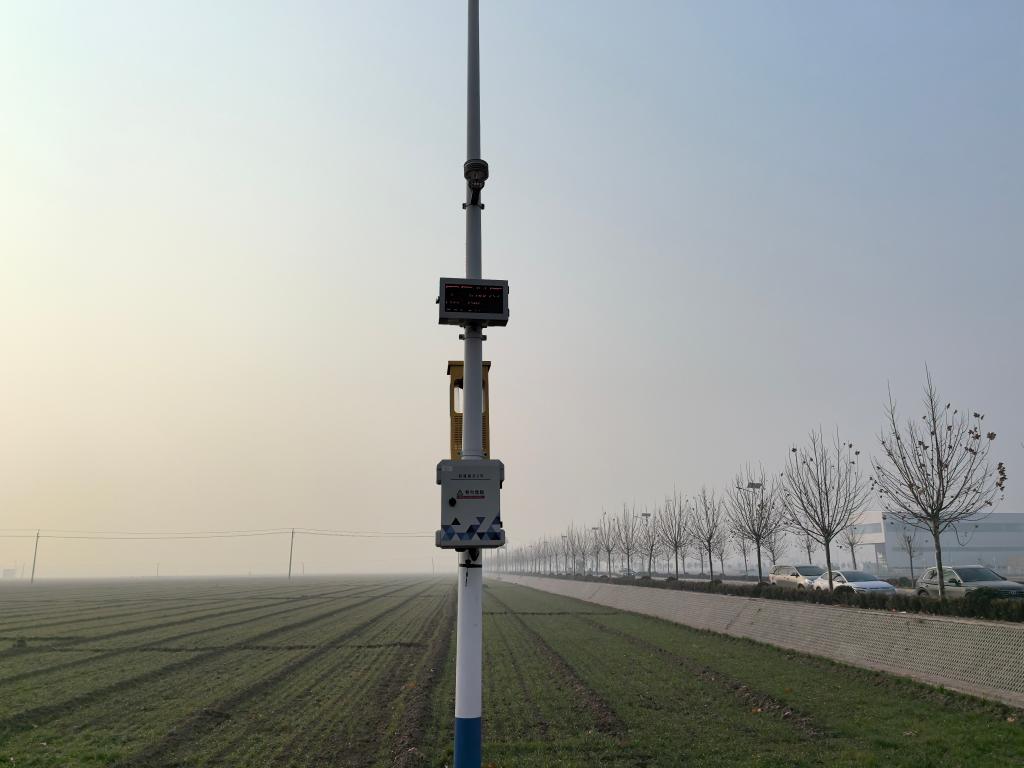
Core Insights - The article highlights the implementation of smart agricultural technology in the Central Plains Agricultural Valley, particularly through the use of "smart poles" that monitor various environmental factors such as temperature, humidity, and soil moisture [1][2][4]. Group 1: Smart Agricultural Technology - The "smart poles" equipped with solar panels, atmospheric sensors, and soil moisture monitoring devices allow farmers to receive real-time data on their crops, enabling more precise irrigation and pest management [1][2]. - In 2024, over 100 "smart poles" were installed in Huixian City, contributing to a total of more than 200 poles in the Central Plains Agricultural Valley [2]. Group 2: Data Integration and Analysis - The data collected from the "smart poles" and monitoring stations is transmitted to the "Central Plains Agricultural Valley Smart Brain," which processes this information to provide insights on weather, soil conditions, and crop health to farmers and agricultural departments [4][5]. - The "Smart Brain" currently holds over 200 million data points and utilizes four data models focused on weather, soil, fertility, and plant transpiration, although these models are still under development [5]. Group 3: Policy and Future Directions - The article references the 20th Central Committee's Fourth Plenary Session, which emphasizes enhancing agricultural production capacity and quality, promoting technological, green, quality, and brand agriculture [5][8]. - The project manager indicates a commitment to optimizing agricultural big data and training agricultural models to provide more accurate and scientific production information to farmers [8].


【智能化在企业】路灯是如何学会“思考”的?
Xin Lang Cai Jing· 2025-12-22 20:23
Core Insights - The article highlights the transformation of traditional streetlights into intelligent components of smart cities, driven by advanced technologies from Jinghe Technology [1][2] - Jinghe Technology specializes in LED energy-saving lighting and smart lighting solutions, utilizing Energy Management Contracts (EMC) to provide comprehensive services for urban lighting [1][3] Group 1: Company Overview - Jinghe Technology is a high-tech enterprise under China Energy Conservation and Environmental Protection Group, focusing on LED energy-saving and smart lighting [1] - The company has accumulated over 200 authorized patents and is recognized as a "little giant" enterprise in the national specialized and innovative category [1] Group 2: Energy Management Contracts (EMC) - EMC allows cities to transform streetlights from energy consumers into revenue-generating assets by using saved energy costs to fund energy-saving projects [3] - The model involves upfront investment by Jinghe Technology for upgrading existing lighting, with shared savings between the government and the service company [3] - In Ordos, Inner Mongolia, the replacement of high-pressure sodium lamps in 2023 resulted in an annual energy savings of approximately 5.35 million kWh, achieving a total energy saving rate of 74% [3] Group 3: Smart Lighting Solutions - Jinghe Technology has implemented over 50 EMC projects nationwide, managing more than 750,000 streetlights across over 40 cities, including Yinchuan, Nanchang, Hangzhou, and Hefei [4] - The company customizes solutions based on specific road conditions, integrating smart control systems to enhance lighting efficiency [4] Group 4: Smart Poles and IoT Integration - The introduction of smart poles in Jiangxi Ganjiang New Area redefines the role of streetlights, integrating multiple functions such as lighting, video surveillance, traffic management, and environmental monitoring [5][6] - Smart poles collect data on traffic and environmental conditions, which is transmitted to Jinghe Technology's management platform for real-time analysis and operational efficiency [6] Group 5: Operational Efficiency and Workforce Development - The transition to a smart lighting management platform has reduced the operational maintenance workforce from 9-10 people to just 3 for managing thousands of lights [7] - Jinghe Technology has evolved from a product sales company to a project operation service company, leveraging digital platforms and advanced technologies for efficient management [7] Group 6: Skills Training and Development - The establishment of the LED Craftsmanship Academy in Nanchang aims to enhance the skill levels of workers in the LED industry, focusing on practical training in smart operations and fault diagnosis [8][10] - The academy serves as a key base for talent cultivation and technological innovation, aligning with regional manufacturing modernization initiatives [8][10]
中国芯力量|藏粮于技的“芯”应用
Xin Hua She· 2025-09-12 09:42
Core Insights - The article emphasizes the importance of food security and agricultural productivity, highlighting the transition from traditional farming to technology-driven precision agriculture [1] Group 1: Soil Management - Soil quality is crucial for crop growth, with 95% of global food coming from soil, which provides 15 out of 18 essential nutrients for plants [2] - The new microfluidic chip developed by the Chinese Academy of Sciences allows for rapid and accurate soil nutrient detection, significantly reducing the time and cost of traditional soil testing methods [2][3] - This technology enables farmers to make informed decisions on fertilization, improving crop yield and reducing waste [3] Group 2: Crop Protection - Smart agricultural management is becoming a trend, utilizing technology to monitor and manage crop health [4] - A new device developed by Jiangsu University can detect fungal spores that cause crop diseases, achieving an 85% identification rate and allowing for precise pesticide application [4] Group 3: Digital Agriculture - The Pingyuan Urban-Rural Integration Demonstration Zone in Xinxiang, Henan Province, employs spatial geographic information technology for comprehensive monitoring of various agricultural conditions [5] - The "Smart Combined Pole" integrates multiple sensors to provide real-time data on soil, weather, and pest conditions, enabling farmers to manage large areas efficiently through mobile applications [6] Group 4: Grain Storage - Grain storage is essential for food security, with new technologies reducing losses and ensuring safe storage [7] - The development of autonomous robots and AI-driven monitoring systems enhances the efficiency of grain storage operations, allowing for real-time adjustments to environmental conditions [7][8] - Integrated pest management systems are being developed to monitor and control grain pests, significantly reducing labor and improving storage safety [7]
鹤壁携手华为将智慧合杆覆盖全城 5.5万个“数字神经元”让城市更聪明
He Nan Ri Bao· 2025-07-05 23:27
Group 1 - The core idea of the news is the collaboration between Hebi City and Huawei to implement a smart urban management system that utilizes real-time data to enhance traffic flow and energy efficiency through intelligent traffic lights and other smart devices [1][2]. - The initiative aims to create a comprehensive "sky-ground" integrated sensing system that incorporates satellite remote sensing, drone surveillance, and ground sensor data, leading to 17 smart application scenarios that directly impact citizens' daily lives [2]. - The smart poles, equipped with various devices such as cameras and radar, can adjust lighting based on traffic conditions and seasonal changes, achieving a 62% energy-saving rate in street lighting [2]. Group 2 - The deployment of 55,000 smart terminals acts as "digital neurons" for the city, enabling real-time data integration across 33 types of AI algorithms, which facilitates a four-dimensional urban data system [1]. - The system allows for automatic adjustments of traffic light durations based on vehicle flow, immediate alerts for parking violations, and rapid responses to urban flooding, showcasing a paradigm shift in urban governance [2]. - The integration of Huawei's HarmonyOS enhances the functionality of smart devices, enabling features like drone deliveries and vehicle-to-infrastructure communication for autonomous driving [3].
聚焦新质生产力系列之五:智慧城市、低空经济与盾构巨龙共谱河南发展新篇
Huan Qiu Wang· 2025-06-27 10:20
Core Viewpoint - The article highlights the transformation of Henan province through the integration of new productive forces driven by technology, showcasing advancements in smart city initiatives, low-altitude economy, and digital manufacturing capabilities. Group 1: Smart City Development - Hebi city is recognized for its leading position in the application of IoT perception, having established a comprehensive urban digital foundation that integrates various support platforms for city management [4][6] - The city has implemented smart traffic solutions, reducing peak travel times significantly, with travel time on major roads cut from 25 minutes to 13 minutes, improving efficiency by 48% [4][6] - The local government has developed a city-level IoT perception platform that collects data from 27,000 sensing devices, providing real-time analysis for urban management [2][4] Group 2: Low-altitude Economy - The Henan provincial government has initiated a plan to promote the high-quality development of the low-altitude economy, focusing on the application of drones in logistics and delivery services [7][10] - A demonstration base for drone logistics has been established in Zhengzhou, facilitating various delivery scenarios and enhancing the integration of modern logistics with low-altitude operations [8][10] - The development of a comprehensive drone management platform aims to ensure safety and efficiency in low-altitude operations, incorporating advanced technologies for airspace management and risk prevention [10][11] Group 3: Digital Manufacturing - China Railway Engineering Equipment Group, a leading manufacturer of shield tunneling machines, has achieved over 95% localization of core components and is advancing digital transformation in manufacturing [11][14] - The company has implemented a "5G transparent factory" platform, enhancing production efficiency by 33.3% and reducing operational costs by 20% through the integration of digital twin technology and automation [14] - The advancements in manufacturing capabilities position the company as a benchmark for digital transformation in the underground engineering equipment sector [14]