智慧睡眠产品

Search documents
新华社|促进银发经济发展!8部门发文培育养老服务经营主体
Sou Hu Cai Jing· 2026-01-14 15:31
Core Insights - The Ministry of Civil Affairs and seven other departments have jointly issued measures to cultivate elderly care service operators and promote the silver economy, focusing on brand development, supply-demand platform construction, and optimizing the development environment [1] Group 1: Brand Development - The cultivation of trademark brands in elderly care services is crucial for the high-quality development of the silver economy, with measures to support the establishment of distinctive brand signage and encourage provincial civil affairs departments to standardize names and signage for various elderly care service operators [4] - The document outlines several initiatives to encourage elderly care service operators to enhance their brands, providing comprehensive guidance on brand creation, protection, and promotion to foster well-known brands in the elderly care sector and strengthen leading enterprises [4] Group 2: Supply-Demand Platform Construction - Various regions are working to eliminate barriers in the supply-demand connection for silver consumption, with Zhejiang's silver economy industrial park generating nearly 2.8 billion yuan and Shaanxi's initiatives driving consumption close to 1.2 billion yuan [5] - The document emphasizes the need to further unleash the consumption potential of the elderly population and create a senior-friendly consumption environment, proposing the development of community-supported home care through chain operations and encouraging the creation of suitable products for the elderly [5] Group 3: Development Environment Optimization - The document highlights the rapid growth of private and public-private partnership elderly care institutions, with 41,700 elderly care facilities and 722,000 employees projected by the end of 2025, where private and public-private institutions account for 71.9% [7] - To create a more regulated and vibrant elderly care service market, the document proposes measures to ensure fair competition, improve government services, and support stable operations, including eliminating hidden barriers for external quality elderly care institutions and exploring electronic licensing applications [7]


促进银发经济发展!8部门发文培育养老服务经营主体
Bei Jing Ri Bao Ke Hu Duan· 2026-01-13 11:13
Core Insights - The Ministry of Civil Affairs and seven other departments have jointly issued measures to cultivate the elderly care service industry and promote the silver economy, focusing on brand development, supply-demand platform construction, and optimizing the development environment [1] Group 1: Brand Development - The cultivation of trademark brands in elderly care services is crucial for the high-quality development of the silver economy, with measures to support the establishment of distinctive brand signage and encourage provincial civil affairs departments to standardize names and signage for various elderly care service providers [5] - The document outlines initiatives to encourage elderly care service providers to enhance their brand visibility and reputation, providing clear policy pathways for cultivating well-known brands and strengthening leading enterprises in the sector [5] Group 2: Supply-Demand Platform - Various regions are working to eliminate barriers in the supply-demand connection for silver consumption, with examples such as the establishment of a provincial silver economy industrial park in Zhejiang, generating nearly 2.8 billion yuan, and the release of an elderly care product directory in Shaanxi, driving consumption close to 1.2 billion yuan [5] - The need to further unleash the consumption potential of the elderly population and create a senior-friendly consumption environment is emphasized as a critical challenge [5][6] Group 3: Development Environment Optimization - The document highlights the rapid growth of private and public-private partnership elderly care institutions, with a total of 41,700 elderly care facilities and 722,000 employees by the end of 2025, where private and public-private institutions account for 71.9% [10] - A series of practical measures are proposed to create a fair competitive environment, improve government services, and support stable operations in the elderly care market, including eliminating hidden barriers for quality external service providers and exploring electronic certificate applications for the sector [10]

新华鲜报丨促进银发经济发展!8部门发文培育养老服务经营主体
Xin Hua Wang· 2026-01-13 10:59
Core Viewpoint - The Ministry of Civil Affairs and seven other departments have jointly issued measures to cultivate the elderly care service industry and promote the silver economy, focusing on brand development, supply-demand platform construction, and optimizing the development environment [1][4]. Group 1: Brand Development - The cultivation of trademark brands in elderly care services is crucial for the high-quality development of the silver economy. Specific measures include supporting chain-operated elderly care services to establish distinctive brand signage and encouraging provincial civil affairs departments to standardize the names and signs of various elderly care service providers [4][6]. - The document outlines initiatives to encourage elderly care service providers to enhance their brand visibility and reputation, providing clear policy pathways for cultivating well-known brands and strengthening leading enterprises in the sector [4]. Group 2: Supply-Demand Platform Construction - Efforts are being made to build supply-demand matching platforms to facilitate consumption. For instance, in Zhejiang, a provincial silver economy industrial park has been established, generating nearly 2.8 billion yuan in output, while in Shaanxi, the release of a silver economy industry directory has driven consumption by nearly 1.2 billion yuan [5][6]. - The document emphasizes the need to optimize the supply of elderly care services and suitable products, encouraging the development of community-supported home care through chain operations and the creation of elderly-friendly consumption zones in large commercial complexes and chain supermarkets [6]. Group 3: Development Environment Optimization - The document highlights the rapid growth of private and public-private partnership elderly care institutions, with 41,700 institutions and 722,000 employees projected by the end of 2025, where private and public-private institutions account for 71.9% [8]. - To create a more regulated and vibrant elderly care service market, the document proposes measures to ensure fair competition, improve government services, and support stable operations, including eliminating hidden barriers for external quality elderly care institutions and exploring electronic licensing applications [8].

新华鲜报|促进银发经济发展!8部门发文培育养老服务经营主体
Xin Hua She· 2026-01-13 10:57
Core Insights - The Ministry of Civil Affairs and seven other departments have jointly issued measures to cultivate the elderly care service industry and promote the silver economy, focusing on brand development, supply-demand platform construction, and optimizing the development environment [1] Group 1: Brand Development - The cultivation of trademark brands in elderly care services is crucial for the high-quality development of the silver economy, with measures to support the establishment of branded signage for chain elderly care service providers [3] - The document encourages provincial civil affairs departments to standardize the names and signage of various elderly care service providers and to include outstanding elderly care brands in the China Consumer Brand List [3] - Comprehensive support will be provided for brand creation, protection, and promotion to foster well-known brands in the elderly care sector and strengthen leading enterprises [3] Group 2: Supply-Demand Platform Construction - Various regions are working to eliminate bottlenecks in the supply-demand connection for silver consumption, with Zhejiang establishing a provincial silver economy industrial park generating nearly 2.8 billion yuan [3] - In Shaanxi, the release of a silver economy industry directory for two consecutive years has included nine categories of age-friendly products in the old-for-new exchange program, driving consumption close to 1.2 billion yuan [3] - The document proposes guiding elderly care institutions to develop community-supported home care through chain operations and encourages the development of age-appropriate cosmetics and food products [3] Group 3: Development Environment Optimization - The number of elderly care institutions in China is projected to reach 41,700 by the end of 2025, with 722,000 employees, of which 71.9% are private or public-private institutions [5] - The document outlines measures to create a fair competitive environment, improve government services, and support stable operations in the elderly care market [5] - Specific actions include eliminating hidden barriers for high-quality external elderly care institutions, exploring electronic certificate applications, and standardizing administrative inspection methods for elderly care institutions [5]
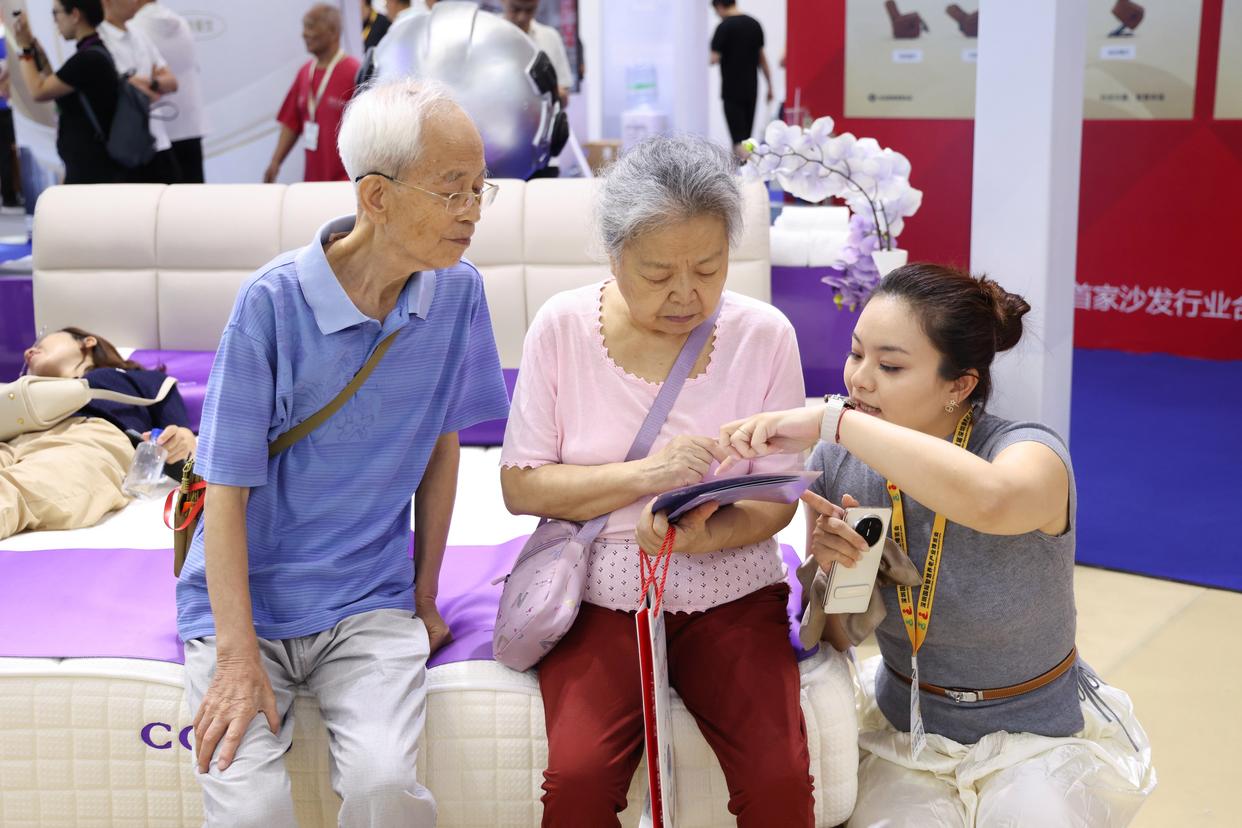
第56届中国家博会(上海)启幕 助推大家居行业高质量发展
Zhong Guo Xin Wen Wang· 2025-09-10 06:36
Group 1 - The 56th China International Furniture Fair (Shanghai) opened on September 9, showcasing over 1,500 domestic and international brands across a 300,000 square meter exhibition area, emphasizing the theme "Design Across Boundaries" [2][4] - The fair features ten major exhibition halls covering eight key themes, including design furniture, soft sofas, sleep solutions, and new retail, highlighting the integration of digital and experiential innovations [4][5] - The event focuses on three core highlights: design leadership, high-end product launches, and internal-external circulation, showcasing China's originality and consumer vitality while enhancing the industry's global competitiveness [4][5] Group 2 - Design serves as the core driving force of the fair, bringing together pioneering and international brands, showcasing the fusion of Eastern aesthetics and global trends [5] - The exhibition includes significant new product launches from top design brands and emerging talents, emphasizing health and intelligence in living experiences through material innovation and AI empowerment [5][6] - The fair's foreign trade section aims to enhance the global competitiveness and brand value of Chinese furniture, supported by cross-border e-commerce and business matching platforms [7] Group 3 - The first day of the fair saw a vibrant turnout, with diverse participants contributing to a successful industry event, including forums featuring leading designers sharing insights on lifestyle and industry trends [7] - Various trade matching events facilitated direct connections between exhibitors and global retailers, distributors, and e-commerce buyers, enabling precise matching of procurement needs [7] - The fair also hosted high-level forums and exchange activities covering industry strategies, design trends, digital empowerment, and international cooperation, presenting cutting-edge thoughts and practices in the home furnishing industry [7]