
适合老年人的化妆品

Search documents
下好养老服务品牌先手棋
Jing Ji Ri Bao· 2026-01-18 22:20
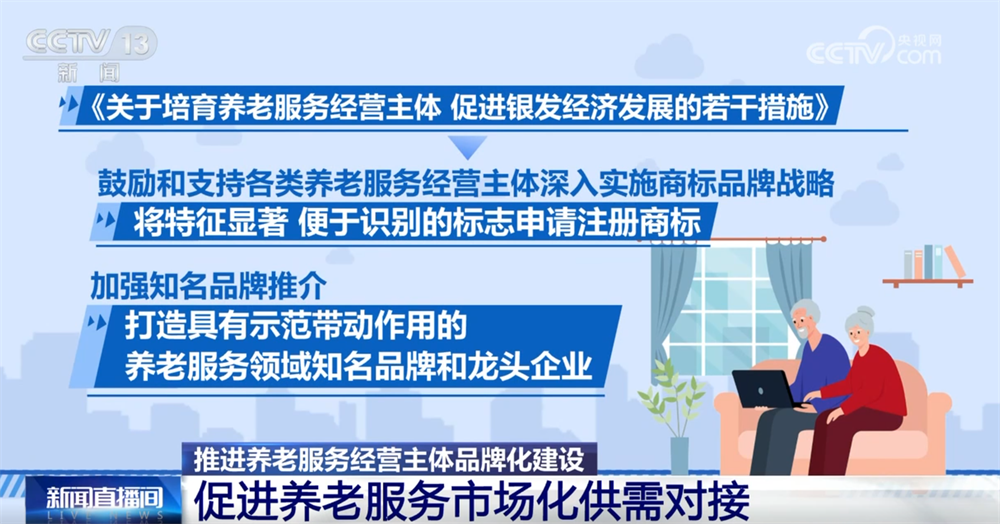
Core Viewpoint - The Ministry of Civil Affairs and seven other departments have jointly issued measures to cultivate elderly care service operators and promote the silver economy, focusing on brand building and supply-demand platform development [1] Group 1: Brand Development - The cultivation of trademark brands in elderly care services is crucial for promoting high-quality development of the silver economy [1] - There is a clear policy path to encourage elderly care service operators to enhance and promote their brands, aiming to foster well-known brands in the sector and strengthen leading enterprises [1] Group 2: Supply Optimization - Optimizing the supply of elderly care services and age-friendly products is a key support measure [1] - The development of community-supported home care is encouraged, along with the promotion of products suitable for the elderly, such as cosmetics, food, and dedicated consumption areas [1] Group 3: Competitive Environment - Creating a fair competitive environment and improving government services are essential for supporting stable operations in the elderly care sector [1]
新华社|促进银发经济发展!8部门发文培育养老服务经营主体
Sou Hu Cai Jing· 2026-01-14 15:31
Core Insights - The Ministry of Civil Affairs and seven other departments have jointly issued measures to cultivate elderly care service operators and promote the silver economy, focusing on brand development, supply-demand platform construction, and optimizing the development environment [1] Group 1: Brand Development - The cultivation of trademark brands in elderly care services is crucial for the high-quality development of the silver economy, with measures to support the establishment of distinctive brand signage and encourage provincial civil affairs departments to standardize names and signage for various elderly care service operators [4] - The document outlines several initiatives to encourage elderly care service operators to enhance their brands, providing comprehensive guidance on brand creation, protection, and promotion to foster well-known brands in the elderly care sector and strengthen leading enterprises [4] Group 2: Supply-Demand Platform Construction - Various regions are working to eliminate barriers in the supply-demand connection for silver consumption, with Zhejiang's silver economy industrial park generating nearly 2.8 billion yuan and Shaanxi's initiatives driving consumption close to 1.2 billion yuan [5] - The document emphasizes the need to further unleash the consumption potential of the elderly population and create a senior-friendly consumption environment, proposing the development of community-supported home care through chain operations and encouraging the creation of suitable products for the elderly [5] Group 3: Development Environment Optimization - The document highlights the rapid growth of private and public-private partnership elderly care institutions, with 41,700 elderly care facilities and 722,000 employees projected by the end of 2025, where private and public-private institutions account for 71.9% [7] - To create a more regulated and vibrant elderly care service market, the document proposes measures to ensure fair competition, improve government services, and support stable operations, including eliminating hidden barriers for external quality elderly care institutions and exploring electronic licensing applications [7]

促进银发经济发展 推进品牌化建设 八部门发文培育养老服务经营主体
Sou Hu Cai Jing· 2026-01-14 09:32
Core Insights - The Ministry of Civil Affairs and seven other departments have jointly issued measures to cultivate the elderly care service sector and promote the silver economy, focusing on brand development, supply-demand platform construction, and optimizing the development environment [1][2] Group 1: Brand Development - The cultivation of trademark brands in elderly care services is crucial for the high-quality development of the silver economy, with specific measures to support the establishment of branded signage and encourage provincial civil affairs departments to standardize service provider names [2] - The document outlines initiatives to enhance brand recognition and support for well-known brands in the elderly care sector, providing a clear policy path for nurturing leading enterprises [2] Group 2: Supply-Demand Platform - Efforts are being made to build supply-demand matching platforms to facilitate consumption, with examples from Zhejiang and Shaanxi demonstrating significant economic contributions from the silver economy [3] - The document emphasizes the need to optimize the supply of elderly care services and age-friendly products, encouraging community-supported home care and the development of suitable food and cosmetic products for the elderly [3] Group 3: Development Environment Optimization - The document highlights the rapid growth of private elderly care institutions, which now account for 71.9% of the total, supported by various favorable policies in land, taxation, talent, and funding [4] - Measures are proposed to create a fair competitive environment and improve government services, including eliminating hidden barriers for quality service providers and implementing electronic licensing for the elderly care sector [4]
养老消费“时尚潮品”催生银发经济新蓝海 扶持再加码激发经营主体新活力
Yang Shi Wang· 2026-01-14 02:22
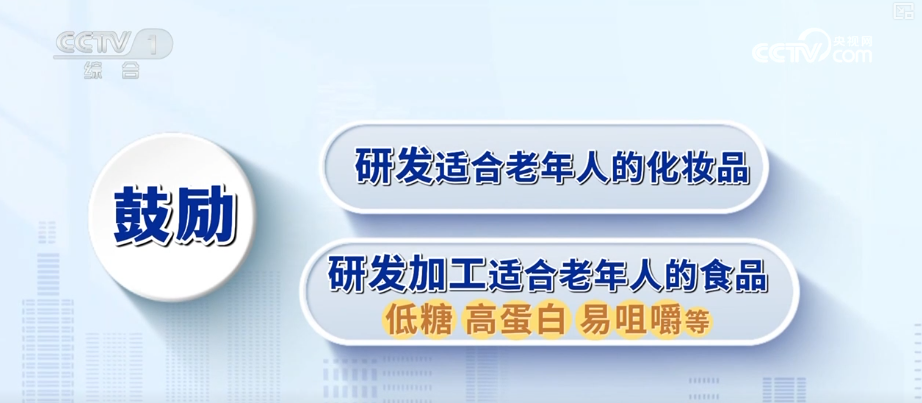
Core Viewpoint - The aging population in China, exceeding 310 million people aged 60 and above, necessitates the development of a suitable elderly care service system and the promotion of the silver economy as a means to stimulate economic growth and expand domestic demand [1] Group 1: Silver Economy Development - The Ministry of Civil Affairs and eight other departments have jointly issued measures to cultivate elderly care service operators and promote the silver economy [1] - The measures encourage the development of age-appropriate cosmetics and foods that are low in sugar, high in protein, and easy to chew for the elderly [4] - There is a push for clothing companies to create product lines for seniors, focusing on safety features, warmth, and specific functionalities [4] Group 2: Enhancing Elderly Consumer Experience - Plans are in place to establish specialized shopping districts for the elderly and rental/sale points for age-friendly products to facilitate local consumption [8] - E-commerce platforms are encouraged to optimize "senior modes" and create dedicated channels for elderly consumers, simplifying the purchasing process [8] Group 3: Technological Integration in Elderly Care - The measures promote the development of elderly care robots to meet the daily care, emotional support, and social needs of seniors [12] - There is an emphasis on exploring advanced technologies such as brain-machine interfaces and exoskeleton robots to assist elderly individuals with declining physical functions [12] Group 4: Support for Elderly Care Service Providers - By the end of 2025, there will be approximately 41,700 elderly care institutions in China, with private and public-private institutions making up 71.9% of the total [16] - The measures provide substantial support for elderly care service operators in terms of land, funding, and operational environment, ensuring fair competition [16][17] - Administrative inspections of elderly care institutions will be rationalized to minimize disruptions to normal operations, addressing issues like excessive fees and inspections [21]
八部门发文促进银发经济发展
Mei Ri Jing Ji Xin Wen· 2026-01-13 12:33
Core Viewpoint - The Ministry of Civil Affairs and eight other departments have jointly issued measures to stimulate the vitality of various elderly care service providers, promote the development of the silver economy, and better meet the diverse needs of the elderly population [1] Group 1: Policy Measures - The measures aim to create a favorable environment for investment and entrepreneurship in the elderly care sector, encouraging the development of community-based services through chain operations [1][2] - The initiative emphasizes the importance of home care services for the elderly, promoting the integration of resources within communities to enhance service delivery [2] Group 2: Market Dynamics - By the end of 2025, there will be approximately 41,700 elderly care institutions in China, with 722,000 employees, reflecting a year-on-year growth of 12.2% [3] - Private elderly care institutions account for 52.2% of the total, indicating that social forces are becoming the mainstay of diversified elderly care service supply [3] Group 3: Technological Support - The measures encourage technological advancements in elderly care, including the application of big data, cloud computing, and artificial intelligence for health monitoring and personalized services [4] - There is a focus on developing smart elderly care products and robotics to meet the daily care and emotional support needs of the elderly [4] Group 4: Investment Opportunities - The push for technology-enabled elderly care services is expected to create new investment opportunities in the capital market [5] - Research indicates that the demand for smart elderly care products is increasing, driven by policy support and the advancement of AI technology [6]
促进银发经济发展!8部门发文培育养老服务经营主体
Bei Jing Ri Bao Ke Hu Duan· 2026-01-13 11:13
Core Insights - The Ministry of Civil Affairs and seven other departments have jointly issued measures to cultivate the elderly care service industry and promote the silver economy, focusing on brand development, supply-demand platform construction, and optimizing the development environment [1] Group 1: Brand Development - The cultivation of trademark brands in elderly care services is crucial for the high-quality development of the silver economy, with measures to support the establishment of distinctive brand signage and encourage provincial civil affairs departments to standardize names and signage for various elderly care service providers [5] - The document outlines initiatives to encourage elderly care service providers to enhance their brand visibility and reputation, providing clear policy pathways for cultivating well-known brands and strengthening leading enterprises in the sector [5] Group 2: Supply-Demand Platform - Various regions are working to eliminate barriers in the supply-demand connection for silver consumption, with examples such as the establishment of a provincial silver economy industrial park in Zhejiang, generating nearly 2.8 billion yuan, and the release of an elderly care product directory in Shaanxi, driving consumption close to 1.2 billion yuan [5] - The need to further unleash the consumption potential of the elderly population and create a senior-friendly consumption environment is emphasized as a critical challenge [5][6] Group 3: Development Environment Optimization - The document highlights the rapid growth of private and public-private partnership elderly care institutions, with a total of 41,700 elderly care facilities and 722,000 employees by the end of 2025, where private and public-private institutions account for 71.9% [10] - A series of practical measures are proposed to create a fair competitive environment, improve government services, and support stable operations in the elderly care market, including eliminating hidden barriers for quality external service providers and exploring electronic certificate applications for the sector [10]
新华鲜报|促进银发经济发展!8部门发文培育养老服务经营主体
Xin Hua She· 2026-01-13 10:57
Core Insights - The Ministry of Civil Affairs and seven other departments have jointly issued measures to cultivate the elderly care service industry and promote the silver economy, focusing on brand development, supply-demand platform construction, and optimizing the development environment [1] Group 1: Brand Development - The cultivation of trademark brands in elderly care services is crucial for the high-quality development of the silver economy, with measures to support the establishment of branded signage for chain elderly care service providers [3] - The document encourages provincial civil affairs departments to standardize the names and signage of various elderly care service providers and to include outstanding elderly care brands in the China Consumer Brand List [3] - Comprehensive support will be provided for brand creation, protection, and promotion to foster well-known brands in the elderly care sector and strengthen leading enterprises [3] Group 2: Supply-Demand Platform Construction - Various regions are working to eliminate bottlenecks in the supply-demand connection for silver consumption, with Zhejiang establishing a provincial silver economy industrial park generating nearly 2.8 billion yuan [3] - In Shaanxi, the release of a silver economy industry directory for two consecutive years has included nine categories of age-friendly products in the old-for-new exchange program, driving consumption close to 1.2 billion yuan [3] - The document proposes guiding elderly care institutions to develop community-supported home care through chain operations and encourages the development of age-appropriate cosmetics and food products [3] Group 3: Development Environment Optimization - The number of elderly care institutions in China is projected to reach 41,700 by the end of 2025, with 722,000 employees, of which 71.9% are private or public-private institutions [5] - The document outlines measures to create a fair competitive environment, improve government services, and support stable operations in the elderly care market [5] - Specific actions include eliminating hidden barriers for high-quality external elderly care institutions, exploring electronic certificate applications, and standardizing administrative inspection methods for elderly care institutions [5]
八部门出台措施促进银发经济向“新”向“优”发展 托起老年人“稳稳”的幸福
Yang Shi Wang· 2026-01-13 03:22
Group 1 - The core viewpoint of the news is the introduction of measures by the Ministry of Civil Affairs and eight other departments to foster the development of the elderly care service industry and promote the silver economy through brand building and supply-demand matching platforms [1][10]. Group 2 - The measures encourage various elderly care service providers to implement trademark brand strategies and register distinctive logos, aiming to strengthen brand promotion and create leading enterprises in the elderly care sector [1][10]. - There is a focus on optimizing the supply of elderly care services and age-friendly products, promoting the expansion of the "15-minute convenient living circle," and encouraging community-based service integration through chain operations [3][5]. Group 3 - Support is provided for the cultivation of specialized medical escort services and mobile bathing services, as well as the development of age-appropriate cosmetics, food, and clothing [5]. - The initiative emphasizes the importance of technology in enhancing elderly care services, encouraging the development of elderly care robots and smart home technologies [7]. Group 4 - There is a push for the rapid establishment of national standards for elderly products and services, along with the implementation of a certification system for silver products and services [9][10]. - Local civil affairs departments are tasked with regularly publishing information on the elderly population, distribution of care facilities, and existing support policies, while also promoting cross-regional service integration through digital platforms [12].
八部门鼓励养老服务机器人产业发展,为老年人提供全方位智能化养老支持
Jin Rong Jie· 2026-01-13 02:32
Core Viewpoint - The Ministry of Civil Affairs and seven other departments have introduced measures to cultivate the elderly care service industry and promote the silver economy, focusing on technological innovation and market-oriented solutions to meet the diverse needs of the elderly population [2][6]. Group 1: Brand Development - Strengthening brand recognition by supporting chain-based elderly care service providers to establish distinctive branding [3]. - Encouraging the registration of trademarks for elderly care service providers to enhance brand protection and recognition [3]. - Promoting well-known brands through various initiatives to create exemplary brands in the elderly care sector [3]. Group 2: Market Supply and Demand - Optimizing the supply of elderly care services and age-friendly products by integrating community resources and encouraging home care services [4]. - Establishing platforms for supply and demand matching to enhance resource utilization in elderly care services [5]. - Encouraging e-commerce platforms and supermarkets to create dedicated sections for elderly products to facilitate consumption [5]. Group 3: Technological Empowerment - Promoting technological advancements in elderly care, including the use of big data, AI, and robotics for health monitoring and personalized services [6][7]. - Supporting the development of innovative technologies such as exoskeleton robots and brain-machine interfaces to assist elderly individuals with declining physical functions [6][7]. Group 4: Development Environment - Creating a fair competitive environment by reforming the classification of elderly care institutions and optimizing support policies [8]. - Establishing a standard certification system for elderly products and services to guide procurement and ensure quality [8]. - Protecting the rights of the elderly by implementing educational programs and regulating the elderly care service market to prevent exploitation [8][9]. Group 5: Support Measures - Improving government services by providing information on elderly demographics and available support policies to service providers [10]. - Streamlining the licensing process for elderly care institutions to facilitate easier access to necessary permits [10]. - Supporting stable operations of elderly care facilities through land supply and financial assistance for construction and operation [10].

民政部等八部门:促进养老服务市场化供需对接
Xin Lang Cai Jing· 2026-01-13 02:01
Core Viewpoint - The article emphasizes the need to optimize elderly care services and the supply of age-friendly products, promoting community-based solutions and innovative service models for the aging population [1] Group 1: Elderly Care Services - The initiative encourages the expansion of community-based elderly care services through chain operations of care institutions, integrating local resources to provide comprehensive services [1] - Support is provided for the development of specialized medical accompaniment services for the elderly, ensuring regulated assistance during medical visits [1] - The introduction of mobile bathing services to communities is encouraged, offering convenient in-home assistance for elderly individuals [1] Group 2: Age-Friendly Products - The promotion of fashionable elderly care consumer products, including smart rehabilitation aids and lifestyle care items, is highlighted [1] - There is encouragement for the development of cosmetics suitable for older adults, as well as food products that are low in sugar, high in protein, and easy to chew [1] - The initiative supports clothing companies in launching elderly product lines, focusing on safety features, warmth retention, and specific functionalities [1] Group 3: Market Integration and Support - A platform for supply and demand matching is to be established, enhancing the efficiency of regional elderly care resource utilization [1] - Local governments are encouraged to utilize existing expos and fairs to create dedicated sections for the silver economy, facilitating connections among manufacturers, service providers, and consumers [1] - E-commerce platforms and large supermarkets are urged to host themed shopping festivals and create dedicated interfaces for elderly consumers, promoting both online and offline shopping experiences [1]