
智慧雪场管理系统

Search documents
3个月、10万游客、1000万增收:冰雪经济让小镇“热”出新高度
Xin Lang Cai Jing· 2026-01-25 14:08
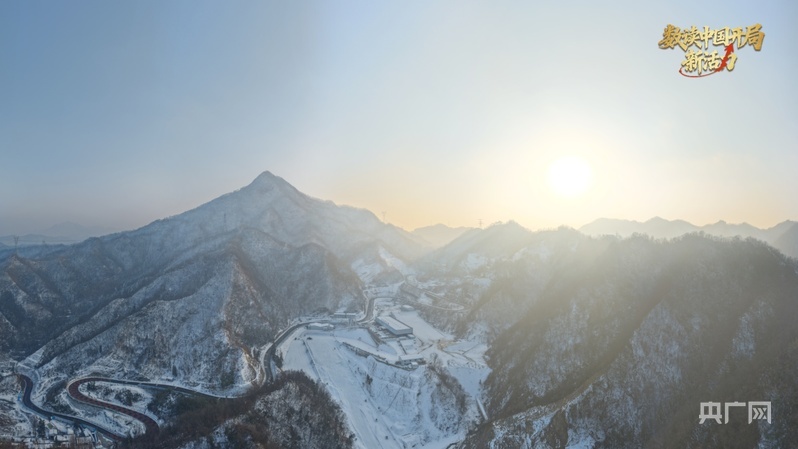
Core Insights - The article highlights the emergence of the "ice and snow economy" in Dazhong Town, Shiyan City, showcasing its potential to transform local resources into a vibrant tourism economy [1][10] - The integration of various industries around the ice and snow theme is driving new consumption patterns and enhancing the local economy [3][10] Industry Development - Dazhong Town has positioned itself as an "ice and snow economic tourism belt," focusing on the development of the Wudang Ski Resort, which is expected to attract 100,000 visitors and generate approximately 10 million yuan in additional income [1][10] - The ski resort has led to a diversification of consumer experiences, evolving from traditional ice sports to a "snow+" model that includes various recreational activities [3][10] Consumer Experience Enhancement - New facilities such as a self-service hot pot area and a coffee shop have been introduced at the ski resort to improve visitor experience [5][7] - Local businesses, such as the Xiaodou Town Parent-Child Paradise, have reported significant revenue increases due to the influx of visitors from the ski resort, with winter earnings rising by about 100,000 yuan [8][10] Technological Integration - The ski resort has implemented an intelligent snow-making system that optimizes snow production based on real-time weather data, enhancing operational efficiency and snow quality [12] - The smart management system allows for real-time monitoring of snow quality and visitor flow, significantly improving safety and operational efficiency [12]

让冷资源激活经济热效应
Jing Ji Ri Bao· 2025-12-15 22:02
Core Insights - The Chinese ice and snow industry is projected to exceed 1 trillion yuan in scale this year, driven by the vision of "300 million people participating in ice and snow sports" becoming a reality [1] - The ice and snow economy integrates various sectors such as tourism, culture, manufacturing, technology, and sports, creating a modern consumption economy [1] - New business models and industries are rapidly developing within the ice and snow economy, forming a comprehensive industrial chain that includes equipment manufacturing, event operation, training, tourism, and derivative consumption [1] Group 1 - The "ice and snow +" model is emerging, combining ice and snow elements with local culture and arts, exemplified by Harbin Ice and Snow World [1] - The integration of ice and snow sports with wellness and traditional Chinese medicine is rapidly developing, showcasing the "ice and snow + health" model [1] - Technological innovations such as 5G, artificial intelligence, and virtual reality are reshaping the ice and snow industry, introducing new products like virtual skiing equipment and smart wearable devices [1] Group 2 - Regional coordination in the development of the ice and snow economy is crucial, with tailored development plans based on local resources and strengths [2] - The Northeast region can leverage its ice and snow resources to build world-class ski resorts, while North China can utilize Winter Olympic resources to create brands like Beijing-Zhangjiakou [2] - Southern regions should focus on developing indoor ice and snow venues to provide diverse experiences, overcoming climate limitations [2] Group 3 - Strengthening the research and development of ice and snow equipment is essential for activating economic growth through cold resources [2] - Collaboration between enterprises, universities, and research institutions is encouraged to enhance innovation capabilities and apply advanced technologies in the ice and snow industry [2] - A diverse ice and snow event system should be established to enrich the connotation of the ice and snow economy [2] Group 4 - Further amplification of the ice and snow economy's effects requires deep integration with tourism, culture, wellness, and education sectors [3] - The development of "ice and snow + tourism" should focus on creating premium ice and snow tourism routes and resorts [3] - The "ice and snow + culture" initiative aims to develop unique cultural products and ice and snow cultural IPs [3] - The "ice and snow + wellness" approach involves integrating wellness facilities in ice and snow resorts to serve a broader consumer base [3] - The "ice and snow + training" strategy seeks to enhance service quality and create new growth points [3]
今年产业规模将破万亿元 冰雪经济迈入黄金发展期
Jing Ji Ri Bao· 2025-11-24 00:35
Core Insights - The ice and snow industry in China is entering a golden development period, with the market size expected to exceed 1 trillion yuan, reaching 1005.3 billion yuan in 2023, marking it as a significant emerging force in the economy [1] - The industry has achieved the goal of engaging 300 million people in ice and snow sports, providing continuous internal momentum for development [1] - The industry is transitioning from rapid growth to high-quality development, necessitating discussions on how to achieve this shift [1] Industry Development - The ice and snow industry has established a complete industrial chain covering upstream equipment manufacturing, midstream event operation and skill training, and downstream tourism and leisure [1] - New technologies such as 5G, artificial intelligence, and virtual reality are driving high-quality development in ice and snow equipment, enhancing user experience [2] - The market for ice and snow equipment is vast, with a focus on cultivating internationally competitive domestic brands and increasing R&D investment [2] Market Trends - The industry is evolving from pure ice and snow sports to a "snow + " multi-composite experience, integrating tourism, culture, and wellness [2] - The "snow + tourism" model is maturing, with ski resorts enhancing their offerings with hotels, dining, and commercial streets [2] - The "snow + culture" trend is emerging, with ice sculptures, performances, and themed museums enriching the industry [2] Regional Development - Traditional regions like Northeast and North China leverage natural snow resources and deep ice and snow culture to create world-class ski resort destinations [3] - Southern regions are effectively expanding the ice and snow market through indoor ski facilities [3] - Addressing regional development imbalances is crucial, with recommendations for coordinated policy efforts and leveraging local competitive advantages [3]
冰雪经济迈入黄金发展期
Jing Ji Ri Bao· 2025-11-23 21:53
Core Insights - The report indicates that China's ice and snow industry is projected to exceed 1 trillion yuan, reaching 1005.3 billion yuan in 2023, highlighting its emergence as a significant force in the economy [1] - The industry aims to transition from rapid growth to high-quality development, focusing on meeting diverse consumer needs and enhancing product offerings [1] Industry Development - The goal of engaging 300 million people in ice and snow sports has been achieved, providing a strong internal driving force for industry growth [1] - The consumer base has expanded from professional enthusiasts and youth training groups to include families and seniors, prompting market innovation in products and services [1] - New offerings include dedicated children's skiing areas, night skiing, electronic music parties, and snow camping to cater to various demographics [1] Supply Chain and Infrastructure - Experts emphasize the need for improvements in the quality and quantity of ice and snow venue facilities and product supply systems [1] - Recommendations include upgrading venue facilities with smart technology, establishing regulatory frameworks for a well-ordered market, and innovating product matrices using digital technology [1] Industry Chain Structure - Since the 14th Five-Year Plan, the ice and snow industry has developed a comprehensive value chain encompassing upstream equipment manufacturing, midstream event operations and skills training, and downstream tourism and leisure [1] Technological Advancements - New technologies such as 5G, AI, and VR are driving high-quality development in ice and snow equipment, leading to new products and enhanced user experiences [2] - Smart snowfield management systems have improved operational safety and efficiency through real-time monitoring and intelligent scheduling [2] - The application of new materials and processes in equipment manufacturing has optimized the performance of products like skis and ice skates [2] Emerging Trends - The industry is evolving from a focus solely on ice and snow sports to a "snow + " multi-dimensional experience, integrating tourism, culture, and wellness [2] - The "snow + tourism" model is maturing, with ski resorts enhancing their offerings with hotels, dining, and commercial areas [2] - Cultural aspects such as ice sculptures, performances, and themed museums are enriching the industry, with notable cultural IPs like Harbin Ice and Snow World gaining international recognition [2] Regional Development - Traditional regions like Northeast and North China leverage natural snow resources and rich ice and snow culture to create world-class ski destinations [3] - Xinjiang is rapidly developing as China's "third pole" for ice and snow, capitalizing on its unique powder snow resources [3] - Southern regions are expanding the market through indoor ski facilities, addressing regional disparities in development [3] - Recommendations for balanced regional development include coordinated policy efforts and leveraging local competitive advantages, such as promoting the "Beijing-Zhangjiakou" winter sports model [3]