
智能家居用品

Search documents
海外大促季收官!东南亚爱买潮玩盲盒欧洲人喜欢智能家居
Yang Zi Wan Bao Wang· 2025-12-08 03:49
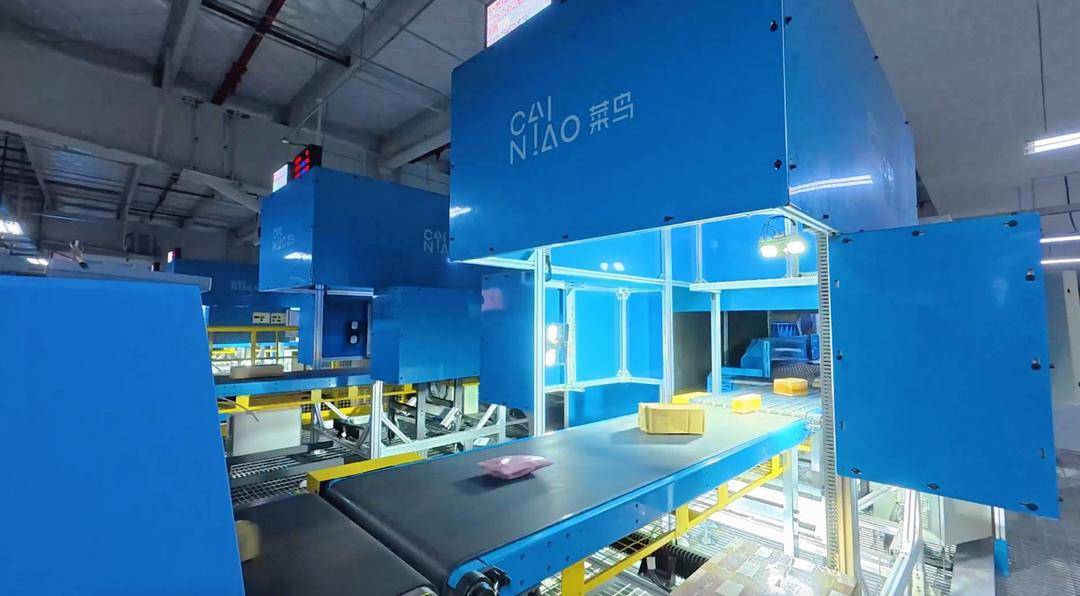
Core Insights - The global cross-border logistics sector is experiencing a peak in transportation volume following the conclusion of the Black Friday sales season, with significant increases in shipping orders across key overseas markets [1][3] Group 1: Shipping Volume Growth - Cainiao's data indicates that shipping order volumes in Europe, North America, South America, the Middle East, and Southeast Asia have all achieved triple-digit percentage growth compared to average daily volumes [1] - In Europe, all 11 fast lanes of Cainiao saw a surge in shipping orders, with the UK maintaining a delivery time of five natural days during the sales period, leading in local delivery efficiency [3] - The Netherlands and Sweden experienced explosive growth in shipping volumes, leading among the European fast lanes [3] Group 2: Consumer Preferences and Market Trends - The surge in shipping demand is driven by the ongoing trend of domestic brands expanding overseas, particularly during the Black Friday sales period [3] - Different regional markets displayed distinct consumer preferences, with Southeast Asian consumers favoring blind box toys, 3C electronic accessories, and luggage products, while the African market preferred domestic gaming hardware and home goods [3] - In Europe, the Christmas season has boosted sales of smart home products, holiday decorations, and daily consumer goods [3] Group 3: Market Expansion Initiatives - Cainiao has expanded into emerging markets by launching a cross-border small package service to Africa, currently covering eight countries, with plans to extend to South Africa and Egypt by the end of December [3] - This expansion aims to tap into the top five countries in Africa by e-commerce penetration, providing new growth opportunities for merchants [3]

注重以质取胜、强化数智赋能 轻工业优化供给扩消费
Jing Ji Ri Bao· 2025-10-29 00:59
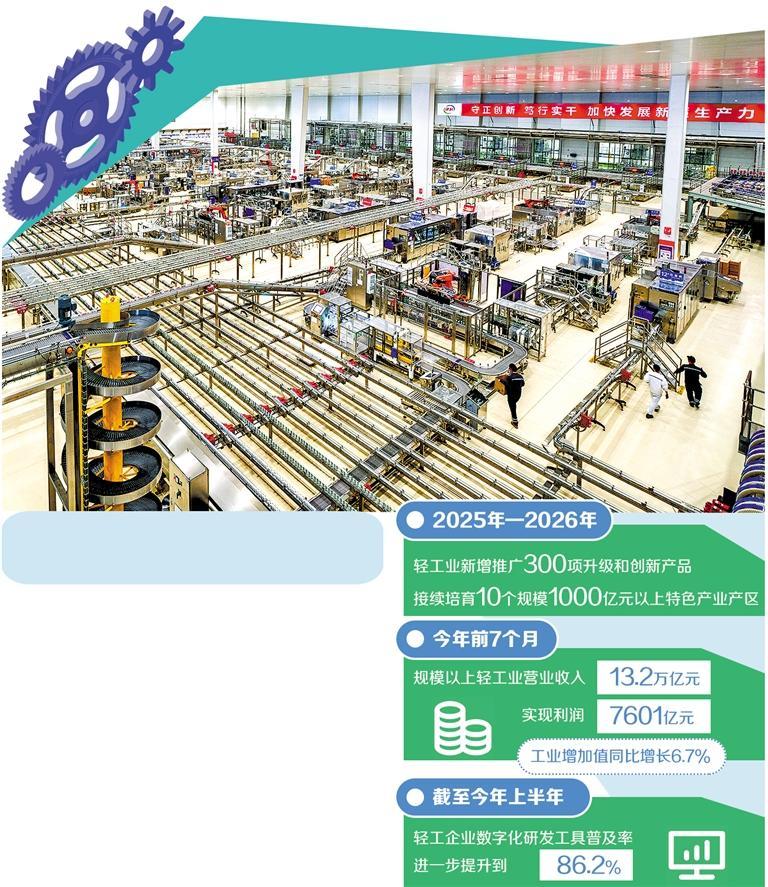
Core Insights - The Ministry of Industry and Information Technology, the Ministry of Commerce, and the State Administration for Market Regulation jointly released the "Light Industry Stabilization and Growth Work Plan (2025-2026)", emphasizing the role of light industry in stabilizing growth, promoting consumption, and benefiting people's livelihoods [1][2] - The plan aims to address structural contradictions in consumption supply and enhance the quality and reasonable growth of light industry, providing strong support for industrial stability and consumption recovery [1][2] Summary by Sections Economic Performance - In the first seven months of this year, the revenue of large-scale light industry reached 13.2 trillion yuan, with profits of 760.1 billion yuan, and an industrial added value growth of 6.7% year-on-year [2] - The plan sets a growth target focused on stability, which is crucial for responding to complex international situations, while the industry possesses the capability to achieve these goals [2] Product Supply Optimization - The light industry is a major production sector in China, but it faces challenges such as supply structure imbalance and insufficient high-quality supply [3] - The plan proposes three key measures: accelerating product innovation, enhancing quality assurance, and strengthening brand cultivation [3] Digital Transformation - Companies like Luhua Group and Shandong Haihua are leveraging digital transformation to enhance operational efficiency and overall benefits [4] - The digitalization rate of light industry enterprises for R&D design tools reached 86.2%, with management digitalization at 82.3%, indicating a solid foundation for intelligent transformation [5] Consumer Demand Activation - The light industry is closely linked to the daily lives of over 1.4 billion people, making it a key player in promoting consumption and benefiting livelihoods [7] - The plan identifies new growth points in smart home products, elderly and infant goods, and health-related products, focusing on meeting the new consumer demands driven by AI and digital transformation [7][8] Future Development Trends - The plan emphasizes the importance of enhancing consumer experience through new application scenarios and promoting AI in product design and manufacturing [8] - It encourages the development of high-value-added products and the expansion of international market shares for key industries like home appliances and toys [8]
轻工业优化供给扩消费
Jing Ji Ri Bao· 2025-10-28 22:17
Core Viewpoint - The "Light Industry Stabilization and Growth Work Plan (2025-2026)" aims to enhance the role of light industry in stabilizing growth, promoting consumption, and benefiting people's livelihoods, with a focus on quality improvement and reasonable growth [3][4][5]. Group 1: Industry Overview - Light industry is a significant sector in China's economy, contributing to consumption, exports, and employment, with a revenue of 13.2 trillion yuan and a profit of 760.1 billion yuan in the first seven months of this year [5]. - The plan emphasizes stable growth in key industries and the development of new growth points, particularly in smart home products, elderly and infant goods, and sports leisure fashion products [3][4]. Group 2: Strategic Goals - The plan sets a growth target focused on stability, addressing structural contradictions in consumption supply, and aims for qualitative improvements alongside reasonable quantitative growth [4][5]. - It highlights the need for optimizing product supply, addressing issues like supply structure imbalance and insufficient quality assurance [6]. Group 3: Digital Transformation - The plan promotes digital transformation in light industry, with a focus on AI integration and operational intelligence, moving from resource management to knowledge creation [7][9]. - By 2024, the digital design tool penetration rate in light industry is expected to reach 84.9%, with significant advancements in AI applications across various sectors [8]. Group 4: Consumer Engagement - The plan aims to enhance consumer experience through new applications of AI, promoting personalized production and improving the overall consumption environment [10][11]. - It identifies key growth areas such as smart home products and health-related goods for the elderly and infants, aligning with emerging consumer demands [10][11].

张家湾设计小镇发布时尚产业发展三年实施方案
Xin Jing Bao· 2025-08-22 06:08
Core Viewpoint - The "Zhangjiawan Design Town Fashion Industry Development Three-Year Implementation Plan (2025-2027)" has been officially released, marking the first regional fashion industry special plan following the "Beijing Fashion Industry High-Quality Development Implementation Plan (2025-2027)" [1] Group 1 - The plan aims to establish Zhangjiawan Design Town as a significant growth pole for the city's fashion industry, integrating it into Beijing's strategy to become a global fashion innovation source and trendsetter [1] - By 2027, the goal is to create a new highland for fashion industry development in Beijing, fostering a clustering effect and attracting more fashion enterprises and talent [2] - By 2030, the plan envisions Zhangjiawan as a national innovation source for the fashion industry, providing innovative ideas, technologies, and models to promote overall industry progress [2] Group 2 - By 2035, the objective is to develop an internationally influential hub for fashion elements, showcasing unique charm and competitiveness on the global fashion stage [3] - The plan focuses on four key areas: fashion research and development, creative design, smart manufacturing, and cultural experience and communication [3] - In fashion research and development, the plan proposes establishing platforms like the China Apparel Industry Technology Innovation Base and the International Workwear Innovation Center, targeting key technology breakthroughs [3] - In the creative design sector, the plan aims to cultivate sub-industries such as clothing design and digital media design, while developing emerging fields like virtual fashion and IP incubation [3] - In smart manufacturing, the focus is on six categories including apparel, digital fashion, and smart home products, promoting the application of technologies like AI pattern making and virtual fitting [3] - In cultural experience and communication, the plan will leverage the Beijing International Design Week as a permanent venue, hosting over 50 fashion events annually to build a multi-level communication system [3]