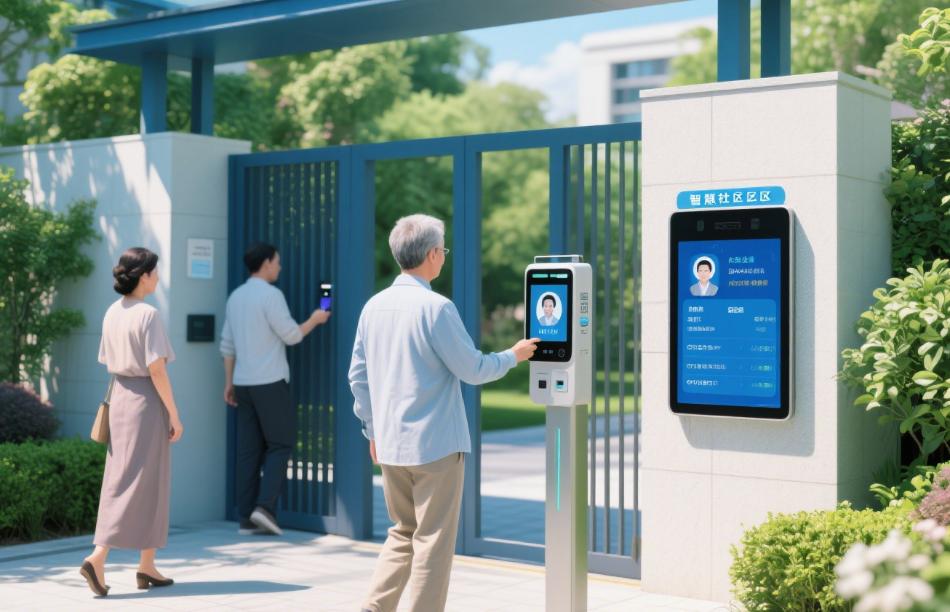
智能门禁系统

Search documents
一份行动方案下的未来建造
Hang Zhou Ri Bao· 2025-12-10 01:48
Group 1 - The Zhejiang Provincial Department of Housing and Urban-Rural Development has issued the "Artificial Intelligence + Housing and Urban-Rural Construction Work Plan (2025-2027)", aiming to accelerate the application of AI in the construction sector and enhance high-quality development [1] - The plan includes a "512N" work system covering five major areas: urban construction, building, housing, regulation, and services, with 12 key application scenarios and numerous innovative practice cases [1] - Specific measures include promoting intelligent construction through automation, robotics, and 3D printing, and encouraging smart community upgrades with intelligent property management systems [1] Group 2 - Hangzhou has proactively positioned itself in the smart construction sector, with the release of the "Guiding Opinions on Accelerating Smart Construction", focusing on the application of Building Information Modeling (BIM) and smart construction technologies [2] - By 2027, Hangzhou plans to implement over 60 pilot smart construction projects and cultivate more than six key enterprises and three technology innovation centers [2] - Smart construction practices have already been implemented in various projects across Hangzhou, enhancing efficiency and precision in construction processes [2]
高新区开启心与“新”双向奔赴
Su Zhou Ri Bao· 2025-11-24 05:28
Core Perspective - The "Haitang Warm Sun" public welfare project launched in Suzhou High-tech Zone aims to provide comprehensive support for new employment groups through a multi-dimensional service system, enhancing care coverage and service precision [1] Group 1: Project Overview - The project includes six major initiatives: delivery support, housing assistance, rights protection, station enhancement, career planning, and cultural tourism services [1] - The project is designed to respond to the needs of new employment groups, such as delivery workers and riders, by providing a "winter warm gift" [1] Group 2: Service Network - A digital service network has been established through WeChat groups, covering over 10,000 riders and drivers, allowing for efficient communication and rapid response to their needs [2] - The introduction of 13 battery swap stations in commercial areas allows riders to quickly recharge their vehicles, addressing concerns about battery life during deliveries [2] Group 3: Housing and Cultural Support - The housing support initiative offers exclusive affordable housing options for new employment groups, with monthly rents as low as 200 yuan per person for shared accommodations [3] - The project will distribute 10,000 tickets to cultural attractions, allowing new employment groups to enjoy local cultural resources [4] Group 4: Community Engagement and Training - The project has resolved over 70 issues related to access and parking for new employment groups, creating 150 friendly community scenarios [4] - Training programs have been initiated, with over 3,000 participants in various skill development courses, enhancing career prospects for new employment groups [7] Group 5: Technological Integration - Smart access systems are being installed in service stations to facilitate easier access for new employment groups, with 10 stations already equipped [6] - The integration of technology aims to streamline services and enhance the overall experience for new employment groups [6] Group 6: Community Governance - The establishment of party organizations within the new employment groups aims to transform them from service recipients to active participants in community governance [8] - The "Shulong Brother Studio" serves as a model for grassroots governance, successfully mediating over 80 disputes since its inception [9]
2025年中国智能门禁系统行业发展历程、产业链、市场规模、竞争格局及发展前景研判:应用领域不断拓展,智能门禁系统规模达236亿元[图]
Chan Ye Xin Xi Wang· 2025-09-02 01:23
Core Insights - The Chinese access control market has evolved from traditional key and keypad systems to more diversified and personalized solutions, driven by urbanization and increased property management demands [1] - The market for smart access control systems in China is projected to grow from 8.4 billion yuan in 2015 to 23.6 billion yuan in 2024, with a compound annual growth rate (CAGR) of 12.16% [1][15] - The integration of technologies such as IoT, AI, and big data is expected to further enhance the development prospects of the smart access control industry [1] Industry Overview - Smart access control systems utilize modern electronic and identification technologies to manage entry points effectively, enhancing security and convenience [4] - The systems can be categorized by recognition methods (password, card, RFID, biometric) and design principles (integrated or separate controllers and readers) [4][6] Industry Development History - The smart access control industry has undergone significant evolution over the decades, transitioning from simple electronic locks in the 1980s to advanced biometric systems in the early 2000s, and now to intelligent systems incorporating IoT and AI [9] Industry Value Chain - The value chain consists of hardware manufacturing (controllers, readers, locks) and software development (management software, recognition algorithms), with system integration and application in smart buildings and communities as downstream activities [10] Market Size and Growth - The smart community market in China is projected to grow from 348 billion yuan in 2017 to approximately 752.8 billion yuan in 2024, with a CAGR of 12.34% [12][13] Competitive Landscape - The smart access control industry in China is characterized by high market concentration, with leading companies leveraging technology and service innovation to strengthen their competitive edge [15] - Key players include both international brands (e.g., Johnson Controls, Siemens) and domestic firms (e.g., Jieshun Technology, Dahua Technology) [15] Key Companies - Jieshun Technology focuses on smart parking and access control systems, with projected revenue of 151 million yuan for its access control segment in 2024, down 30.42% year-on-year [16] - Lifan Holdings specializes in integrated access control solutions, with expected revenue of 91 million yuan for its smart access control systems in 2024, a decline of 26.02% year-on-year [16] Future Trends - The industry is expected to see increased application in diverse scenarios beyond traditional settings, such as schools and hospitals, necessitating customized solutions [17] - The integration of AI will enhance the intelligence of access control systems, enabling features like behavior analysis and anomaly detection [18] - Enhanced security measures will be implemented to counteract rising cybersecurity threats, including multi-factor authentication and blockchain technology [20] - User experience will be prioritized, with systems designed for ease of use across different demographics, including features like mobile access and voice prompts for elderly users [21]





年入超8亿,浙江湖州跑出超级隐形冠军:AI+社区,已临近爆发前夜
3 6 Ke· 2025-07-01 12:16
Core Insights - The company focuses on AI applications in small, specific life scenarios, particularly in elderly care, rather than large-scale models or heavy investments [2][5][17] - The founder emphasizes the importance of understanding user needs and maintaining a balance between emotional and rational aspects in AI entrepreneurship [5][30] Business Overview - The main business segments of the company include smart community management, outdoor advertising, local e-commerce, and global expansion [3][4] - The smart community segment is centered around security management and convenience services for residents, utilizing a SaaS platform for remote management [3] Investment Philosophy - The company prefers investing in small, profitable projects with a focus on specific user lifestyles rather than chasing large market opportunities [5][13] - The founder believes that AI will not significantly impact O2O (online-to-offline) traffic in the short term, as physical infrastructure remains a barrier [6][29] Market Position and Growth - The company has installed smart access screens in over 4,000 communities, covering more than 2.7 million households, with projected revenue of $114 million (approximately 818 million yuan) for 2024 [8][26] - The current market share is only 1%, indicating substantial growth potential as the company aims to increase its coverage to 10% [43] Future Opportunities - The founder sees potential in AI applications for home life, particularly in elderly care, and believes that many small teams can achieve significant revenue while maintaining profitability [12][37] - The company is focused on enhancing its existing business model through AI, particularly in data security, coverage, and international expansion [40][41] Challenges and Considerations - The founder acknowledges that many AI technologies are still in the integration phase and does not expect significant breakthroughs in the short term [7][29] - The company aims to maintain a diversified revenue model to mitigate risks associated with market fluctuations [44]