
建筑机器人

Search documents
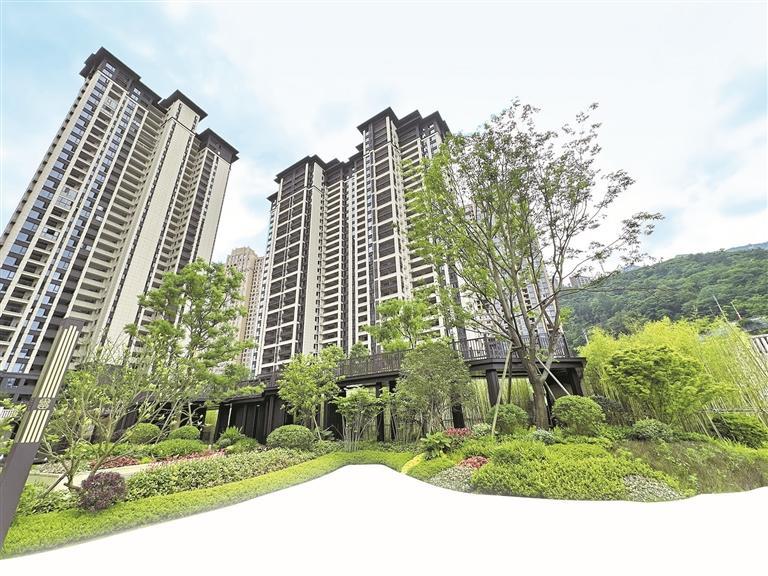
我省绘就2026住房城乡建设新图景
Xin Lang Cai Jing· 2026-02-24 22:23
Group 1 - The core objective for the province this year is to add 1,000 residential community owner committees and to implement around 50 "good housing" projects and 40 tourism real estate projects [2][3] - The province aims to promote the transformation of real estate development by guiding companies towards low debt, low leverage, and reasonable return business models, while enhancing the role of urban real estate financing coordination mechanisms [3] - A focus will be placed on developing tourism real estate by identifying quality land and project resources, establishing lists of ongoing, under negotiation, and planned projects, and actively engaging various business entities to implement quality projects [3] Group 2 - The province plans to integrate housing and urban construction work with multiple industries, including expanding the application of clean energy and promoting green and prefabricated buildings [4] - There will be an emphasis on smart construction and the use of advanced manufacturing equipment, as well as the full-process application of BIM technology to enhance construction efficiency [4] - The integration of emerging industries, particularly artificial intelligence, will be pursued to enhance applications in smart cities and construction processes, as well as in safety and property services [5]

智商比不过机器人,人类怎么办?三名行业记者这样说丨两会碰碰头
Xin Lang Cai Jing· 2026-02-02 15:55
Core Viewpoint - The discussion emphasizes the evolving relationship between humans and artificial intelligence (AI), suggesting that AI should be seen as a collaborator rather than a replacement, enhancing human capabilities and redefining various industries [1][3][6]. Group 1: AI and Human Collaboration - Xu Ke, a prominent figure in the tech industry, predicts that AI, represented by humanoid robots, will surpass human intelligence and capabilities, urging humans to evolve alongside AI [1]. - The conversation highlights that while AI can perform tasks more efficiently, it still requires human direction, positioning AI as a sophisticated tool rather than a direct substitute for human labor [3][4]. - Various sectors, including construction and healthcare, are already integrating AI to enhance safety and efficiency, indicating a trend towards using AI for high-risk or labor-intensive tasks [3][4]. Group 2: Expanding Human Potential - The integration of AI into everyday life is expected to redefine living conditions, making processes faster, cheaper, and more personalized, particularly in construction [5]. - AI is seen as a collaborator that can extend human capabilities across multiple fields, including education, healthcare, and elder care, aiming for a more intelligent and equitable society [5][6]. - The ongoing dialogue emphasizes the need for humans to maintain their unique qualities, such as curiosity and creativity, to thrive in a future where AI plays a significant role [6].

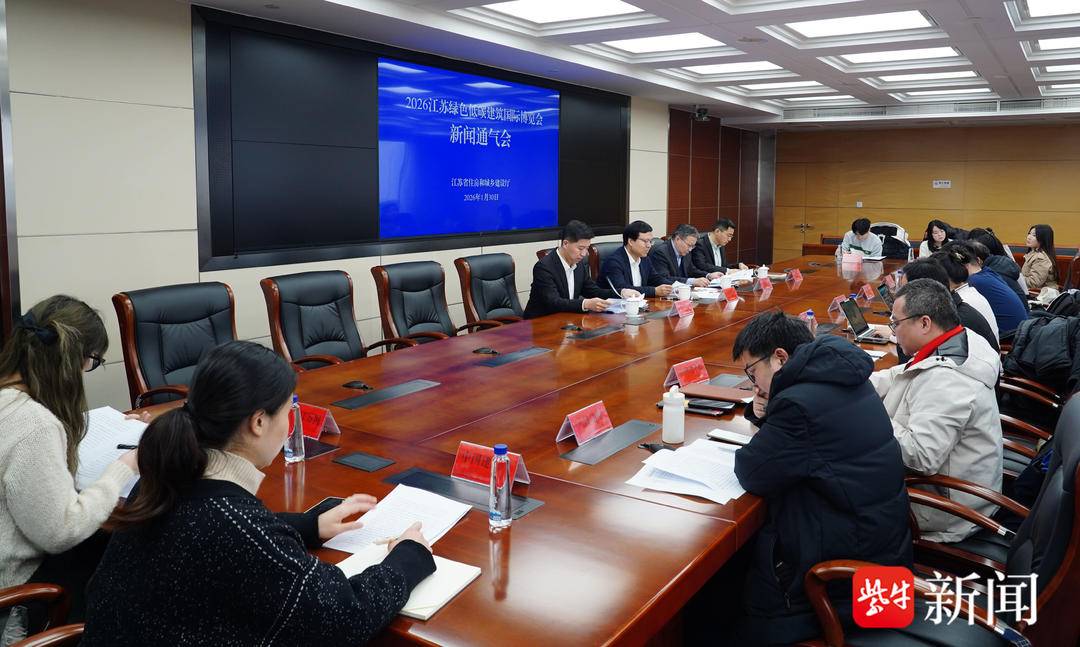
2026江苏绿建国际博览会筹备启动 科技创新赋能城乡高质量发展
Yang Zi Wan Bao Wang· 2026-01-30 12:46
Core Viewpoint - The 2026 Jiangsu Green Low-Carbon Building International Expo will focus on "Technological Innovation Empowering High-Quality Urban and Rural Development," scheduled for April 9-11 in Nanjing, aiming to integrate technological innovation with industry development [1][4]. Group 1: Previous Expo Achievements - The previous expo in 2025 showcased nearly 15,000 square meters, attracting 119 renowned domestic and international enterprises, and hosted around 50 events with 17,000 attendees, effectively promoting the integration of the "four chains" [3]. - Notable technological displays included smart home solutions and construction robots from companies like Huawei and China State Construction Engineering Corporation [3]. - Financial collaborations resulted in 14 billion yuan in cooperation intentions, a fourfold increase from the previous year, with Jiangsu Bank and Pacific Insurance offering targeted financial and insurance services [3]. Group 2: Current Expo Preparations - The 2026 expo aligns with national strategic deployments and emphasizes the cultivation of new productive forces in the housing and urban-rural construction sector [4]. - Key areas of focus include the latest technologies and products in artificial intelligence, urban renewal, and smart construction, alongside various activities such as talent recruitment and public science education [4]. - Preparations are progressing well, with a dedicated exhibition team engaging with nearly 300 companies, including over 50 leading enterprises and several Fortune 500 companies [4]. Group 3: Innovative Exhibition Features - The expo will feature an innovative exhibition model with a "1+3" guest city approach, showcasing Nanjing, Suzhou, Yangzhou, and Yancheng, along with a dedicated theme area for "Artificial Intelligence + Housing and Urban-Rural Construction" [5]. - Activities will promote deep integration of policy dissemination, technical exchanges, and industrial upgrades, facilitating cross-border promotion of technological achievements [5]. - The event aims to enhance service precision by aligning supply and demand, incorporating exhibition attendance into continuing education for registered professionals, and optimizing scheduling for public access [5].
“文武双全”的钢铁尖兵全面上线
Ke Ji Ri Bao· 2026-01-26 00:45
Core Insights - The conference showcased various special robots and applications that enhance industrial production and safety, highlighting their role as important carriers of new productive forces in China [1][2][3] - The focus on domestic core component localization is a significant highlight, with robots now featuring 100% self-controlled core parts that meet domestic scene requirements [1][2] Group 1: Technological Advancements - The "Wukong II" robot family from China General Nuclear Power Group can perform "minimally invasive surgery" on generators, reducing repair time by 5 days compared to traditional methods [2] - Special robots are evolving from generalization to deep scene customization, significantly improving operational efficiency and safety in high-risk environments [1][3] Group 2: Industry Applications - Intelligent inspection robots can achieve over 98% fault detection accuracy and improve operational efficiency by five times compared to manual methods [2] - The integration of aerial drones, ground robots, and underground detection devices in pipeline maintenance has transformed traditional inspection methods into real-time unmanned monitoring, significantly reducing operational costs [3] Group 3: Market Dynamics - The conference facilitated a supply-demand matching platform, accelerating the implementation of technological achievements and fostering collaboration among various stakeholders [3] - Companies like Henan Delang Intelligent Technology are experiencing stable operations and increasing order volumes in sectors such as ports and power generation [3]
广东:加强智能建造技术装备和建筑机器人的研发应用
Zheng Quan Shi Bao Wang· 2026-01-21 08:31
Core Viewpoint - The Guangdong Provincial Government has issued policies to enhance the quality of transportation development through artificial intelligence, focusing on smart road construction and operations [1] Group 1: Smart Road Construction - The initiative promotes the construction of smart roads by integrating artificial intelligence with domestic BIM technology, creating a new model of "digital surveying + digital design + intelligent construction" [1] - There is an emphasis on the research and application of intelligent construction technologies and building robots, utilizing smart perception and IoT for real-time monitoring and efficient collaboration during construction [1] - The development of "smart factories" and "smart construction sites" is a key focus area [1] Group 2: Smart Maintenance - The policies advocate for the application of unmanned machine inspections and data fusion analysis to conduct intelligent analysis and monitoring of infrastructure issues [1] - There will be a focus on intelligent matching of improvement measures and continuous monitoring to evaluate governance effectiveness, forming a closed-loop management system [1] Group 3: Smart Operations - The integration of multi-source perception data aims to build models for assessing road network operational status, video intelligent analysis, and traffic situation simulation [1] - The initiative seeks to enhance the ability to analyze the causes of traffic congestion, manage emergency resource allocation, and improve collaborative control [1] - There is a plan to develop real-time perception and judgment models to dynamically open emergency lanes under safe conditions to alleviate congestion [1] Group 4: Smart Services - The policies promote the intelligent upgrade of toll stations and service areas, exploring intelligent judgment and multi-method guidance to achieve resource sharing between service facilities along highways [1] - The integration of travel service data resources aims to continuously upgrade and improve the "Yue Tongxing" public travel service operation system [1]
上海这个智能建造产业孵化基地启用,将研发建筑机器人、培育专业人才
Xin Lang Cai Jing· 2025-12-30 10:57
Core Viewpoint - The Shanghai Construction Group has officially launched the Shanghai Intelligent Construction Industry Incubation Base on December 30, which aims to create a comprehensive demonstration platform for building robot research and development, professional talent training, and innovative industry incubation [1] Group 1 - The incubation base is located at 1433 Military Road and has a total construction area of 5,800 square meters [1] - The facility consists of six individual buildings [1] - Several well-known technology companies in the industry are among the first batch of enterprises to settle in the base [1]

三星首款三折叠手机Z Trifold正式在韩开售;传台积电熊本二厂考虑改为生产更先进4nm芯片丨智能制造日报
创业邦· 2025-12-13 03:05
Group 1 - Samsung's first tri-fold smartphone, Galaxy Z Trifold, officially launched in South Korea at a price of 3.5904 million KRW (approximately 17,200 CNY) and will be released in other regions including mainland China, Taiwan, Singapore, UAE, and the USA [2] - TSMC is considering changing the production process at its Kumamoto factory from 6nm and 7nm chips to more advanced 4nm technology due to declining demand from major clients like NVIDIA, which may delay the planned mass production originally set for the end of 2027 [2] - CounterPoint Research predicts that global shipments of foldable smartphone panels will increase by 46% year-on-year in 2026, driven by strong demand from Apple's first foldable iPhone, with Samsung Display expected to capture over 50% of the market share [2] Group 2 - The Shenzhen Construction Robot Alliance has been established, aiming to create a collaborative platform focusing on policy implementation, technological innovation, application promotion, market branding, and industrial ecosystem development [2]


一份行动方案下的未来建造
Hang Zhou Ri Bao· 2025-12-10 01:48
Group 1 - The Zhejiang Provincial Department of Housing and Urban-Rural Development has issued the "Artificial Intelligence + Housing and Urban-Rural Construction Work Plan (2025-2027)", aiming to accelerate the application of AI in the construction sector and enhance high-quality development [1] - The plan includes a "512N" work system covering five major areas: urban construction, building, housing, regulation, and services, with 12 key application scenarios and numerous innovative practice cases [1] - Specific measures include promoting intelligent construction through automation, robotics, and 3D printing, and encouraging smart community upgrades with intelligent property management systems [1] Group 2 - Hangzhou has proactively positioned itself in the smart construction sector, with the release of the "Guiding Opinions on Accelerating Smart Construction", focusing on the application of Building Information Modeling (BIM) and smart construction technologies [2] - By 2027, Hangzhou plans to implement over 60 pilot smart construction projects and cultivate more than six key enterprises and three technology innovation centers [2] - Smart construction practices have already been implemented in various projects across Hangzhou, enhancing efficiency and precision in construction processes [2]
2026年值得期待的十大技术应用都有啥?
Huan Qiu Wang Zi Xun· 2025-12-04 06:38
Core Insights - The article highlights the rapid advancements in technology expected by 2026, including emotional AI, wearable health devices, renewable energy innovations, and more, which are set to transform daily life and work environments [1]. Group 1: Emotional AI and Personalization - Emotional AI assistants are evolving beyond traditional voice assistants like Siri and Alexa, becoming capable of understanding human emotions through tone and expression, thus providing personalized support [2]. - These AI systems are increasingly being integrated into mental health support and personal development, marking a significant shift in the role of technology in daily life [2]. Group 2: Wearable Health Technology - Next-generation wearable devices are anticipated to monitor vital health metrics in real-time, shifting healthcare from reactive to proactive approaches [3]. - Innovations such as smart skin patches and AI watches are expected to provide early warnings for health risks, contributing to personalized health management [3]. Group 3: Renewable Energy Innovations - New night-time solar panels that capture infrared radiation are expected to overcome previous limitations of solar energy, enabling continuous power supply even in darkness [4]. - Advances in lithium-sulfur and solid-state battery technologies are projected to enhance energy storage, significantly improving electric vehicle performance and promoting sustainable transportation [4]. Group 4: Brain-Computer Interfaces - Brain-computer interface technology is moving from medical applications to everyday use, allowing users to control devices through thought, which could revolutionize rehabilitation and enhance daily life [6]. - This technology is expected to play a role in various fields, including prosthetics and augmented reality [6]. Group 5: Space Economy - The space economy is poised for growth, with reduced costs for suborbital flights and the emergence of zero-gravity hotels, indicating a new era of space exploration and commercial opportunities [7]. - Companies are exploring asteroid mining, suggesting a potential new frontier for resource acquisition [7]. Group 6: AI in Education - AI-driven personalized education is set to replace standardized teaching methods, adapting to individual learning styles and enhancing engagement for both children and adults [8]. - This transformation in education is expected to significantly impact workforce adaptability in response to industry changes [8]. Group 7: Quantum Computing - Quantum computing is anticipated to become practical by 2026, potentially solving complex problems beyond the capabilities of classical computers [9]. - Applications in pharmaceuticals and supply chain optimization could drastically reduce costs and timeframes in various industries [9]. Group 8: Smart Cities - The integration of AI and IoT technologies is expected to create smarter cities, improving traffic management, waste collection, and security systems [10]. - These advancements aim to enhance urban living by making cities cleaner, safer, and more efficient [10]. Group 9: Robotics - Robotics technology is expected to permeate everyday life, with applications in kitchens, construction, and elder care, making robots an integral part of daily routines [11]. - The decreasing costs and advancements in AI are driving this trend, leading to widespread adoption of robotic solutions [11]. Group 10: Bioprinting - The bioprinting field is projected to experience significant advancements, enabling the creation of disease models and personalized medical treatments [12]. - This technology could revolutionize organ transplantation and food production, addressing future challenges in healthcare and food security [12].
2026年值得期待的十大技术应用
Ke Ji Ri Bao· 2025-12-04 00:55
Core Insights - The article highlights the rapid advancements in technology expected by 2026, including emotional AI, wearable health devices, renewable energy innovations, and more, which are set to transform daily life and work environments. Group 1: Emotional AI - The next generation of emotional AI assistants is surpassing traditional ones like Siri and Alexa by understanding human emotions through tone, expression, and wording, providing personalized relaxation recommendations and enhancing customer care [2] - Emotional AI is becoming a partner in daily life, playing a significant role in mental health support and personal growth [2] Group 2: Wearable Devices - By 2026, wearable devices are expected to evolve into "life guardians," with smart skin patches monitoring hydration, stress hormones, and nutrition levels, while AI watches can predict heart disease risks days in advance [3] - These innovations are shifting healthcare from reactive treatment to proactive prevention [3] Group 3: Renewable Energy - New night-time solar panels will capture infrared radiation, allowing for continuous power supply even in darkness, while advancements in lithium-sulfur and solid-state battery technologies will enhance energy storage for electric vehicles [4] - 2026 may mark a historical turning point for the decline of fossil fuels as the dominant energy source [5] Group 4: Brain-Computer Interfaces - Brain-computer interface technology is moving from medical applications to everyday use, enabling paralyzed patients to control devices with their thoughts and enhancing work efficiency through instant data retrieval [6] - By 2026, these interfaces will be integrated into daily life, impacting prosthetics, rehabilitation, and augmented reality experiences [6] Group 5: Space Economy - The space economy is set to flourish, with suborbital flight prices dropping below $100,000 and companies developing zero-gravity hotels, indicating a new era of space exploration and commercialization [7] Group 6: AI in Education - AI-driven personalized education is emerging, adapting courses to individual learning styles and helping adults with career transitions, fundamentally reshaping educational approaches [9] Group 7: Quantum Computing - Quantum computing is expected to solve complex problems beyond the capabilities of classical computers, significantly reducing drug development timelines and optimizing supply chains [10] Group 8: Smart Cities - Cities will become smarter by 2026, with AI traffic systems alleviating congestion, IoT-enabled waste management, and predictive security systems enhancing urban living [11] Group 9: Robotics - Robotics will become ubiquitous in households and various work environments, with cooking robots, construction robots, and personal care robots transforming daily tasks [12][13] Group 10: Bioprinting - The bioprinting field is anticipated to achieve significant advancements, enabling the creation of disease models, personalized medicine, and potentially addressing organ donation shortages [14]