
有机硅皮革

Search documents
全景价格研判系列电话会-有机硅专家
2026-03-09 05:18
Summary of Organic Silicon Industry Conference Call Industry Overview - The organic silicon industry is facing an oversupply situation in 2025, with DMC average prices dropping to a historical low of 11,900 CNY/ton, leading to widespread losses and increased safety and environmental incidents due to extreme cost-cutting measures [1][2] - Major companies like Hoshine Silicon Industry have initiated a "reverse involution" strategy, reducing production by approximately 30% starting November 2025, which has helped DMC prices recover to around 14,300 CNY/ton, with net profits per ton improving to about 2,000 CNY [1][9] Supply and Demand Dynamics - China's production capacity accounts for 70%-80% of the global total, while overseas production is shrinking due to higher costs (3,000-4,000 CNY/ton more than domestic) [1][8] - The demand side shows structural differentiation: while the real estate sector is declining, emerging sectors like photovoltaics (20%+ growth), new energy vehicles (8kg+ per vehicle), and organic silicon leather are becoming key growth drivers [1][17] - By 2026-2027, there is no clear new capacity expected domestically, and if the collaborative production cuts continue, supply and demand may reach a temporary balance by the second half of 2027 [1][2] Price and Profitability - The average price of DMC in 2025 is projected to be around 11,900 CNY/ton, a decrease of 1,900 CNY/ton (13.8%) from 2024, marking a historical low [2] - Despite the recovery in prices, there are constraints on price increases, with a consensus cap around 15,000 CNY/ton to avoid triggering new entrants or regulatory scrutiny [1][10] Safety and Environmental Concerns - The industry has seen a rise in safety and environmental incidents due to reduced investment in safety measures during the cost-cutting phase [3][4] - The high-risk nature of the organic silicon production process has exacerbated these issues, leading to increased operational pressures on companies [4] Export Performance - The export performance in 2024 was strong, with a growth rate of over 30%, but is expected to slow to around 2% in 2025 due to high export volumes in 2024 leading to demand pull-forward [6][7] - The low-cost raw materials from China have provided competitive advantages for overseas companies, but also pressured their domestic production capacities [7][8] Global Supply Chain Changes - The ongoing geopolitical tensions, such as the Russia-Ukraine conflict, have led to increased energy and raw material costs in Europe, causing significant production challenges for overseas companies like Dow and Wacker [8][15] - Dow plans to close some overseas factories by 2026, further concentrating supply in China [1][8] Industry Collaboration and Future Outlook - The "reverse involution" strategy has gained traction, with significant participation from state-owned enterprises, leading to improved compliance and production cuts [9][18] - The industry is expected to remain in an oversupply situation until at least 2027, with potential for price stabilization if collaborative efforts continue [18][19] Key Risks and Uncertainties - The sustainability of industry collaboration remains uncertain, especially as profitability improves, which may lead to internal conflicts among companies [18][19] - The overall market sentiment is cautious, with concerns about potential price volatility due to safety incidents or other disruptions [18][26] Conclusion - The organic silicon industry is navigating a complex landscape of oversupply, price recovery, and emerging demand from new sectors, while facing significant operational and environmental challenges. The collaborative efforts among major players may provide a pathway to stabilize the market, but uncertainties remain regarding the sustainability of these initiatives and the overall health of the industry moving forward.

有机硅专家20260303
2026-03-04 14:17
Summary of the Conference Call on Organic Silicon Industry Industry Overview - The organic silicon industry has reached a consensus on a price increase of 300 RMB, with the mainstream price of DMC rising to 14,200-14,300 RMB. Future price adjustments will follow a rolling increase strategy of 300-500 RMB per instance [2][3] - The supply side is shifting from "production for sale" to "sales determine production," with no major new capacity expected in 2026. A reduction execution rate of 35% is needed to achieve supply-demand balance [2][3] - The global capacity of organic silicon is expected to increase from 77% to 85% in China by 2026 due to the accelerated exit of overseas capacities, such as Dow's planned shutdown of certain facilities [2][11] Demand Dynamics - Demand is characterized by "traditional steady growth + emerging explosive growth," with core increments coming from photovoltaic adhesives, electronic adhesives, and liquid silicone rubber for robotics. Traditional demand accounts for approximately 70% [2][24] - The cost side is supported by rising methanol prices, while industrial silicon remains stable due to reductions in the photovoltaic chain, with prices around 9,300-9,600 RMB. The complete cost for monomer plants is estimated at 10,500-11,000 RMB [2][24] Price Adjustments and Market Reactions - The cancellation of export tax rebates on April 1 has increased costs by approximately 1,200 RMB per ton, leading to a short-term rush in orders for March and pushing the industry towards high-value-added product transformation [2][22] - The next meeting is expected to be held between late April and early May, with price adjustments based on inventory levels, downstream inquiries, and procurement intensity [3] Cost Structure and Competitive Landscape - Major companies like Hesheng and Luxi have cost advantages of 300-700 RMB/ton through integration, low electricity prices, or energy efficiency of new facilities [2][24] - The procurement frequency for raw materials has increased from every 2-3 months to approximately 1-1.5 months due to a buyer's market [9] Future Price and Demand Projections - The price mechanism has significantly strengthened since November 2025, with prices no longer strictly following traditional seasonal logic. The ability to increase prices will depend on downstream acceptance and the rolling increase strategy [10] - The demand growth in 2026 is expected to be around 5%-7% for traditional sectors, while emerging sectors like photovoltaic adhesives and electronic adhesives will see faster growth [14][15] Emerging Applications and Innovations - The demand for photovoltaic adhesives is projected to grow significantly, with new installations estimated at 180-240 GW in 2026 [14] - The robotics sector is transitioning from R&D to commercialization, with expected global shipments of over 50,000 units in 2026 [16] Export Dynamics and Policy Impacts - China's organic silicon exports are projected to grow from 187,800 tons in 2021 to approximately 280,000 tons by 2025, with a compound annual growth rate of about 10.50% [22] - The cancellation of export tax rebates is seen as a double-edged sword, potentially reducing export volumes while pushing for a shift towards higher-value products [22] Conclusion - The organic silicon industry is undergoing significant changes in supply dynamics, pricing strategies, and demand structures. The focus on high-value products and the impact of external factors like export policies will shape the industry's future trajectory.
兴发集团董事长李国璋:锚定新材料板块 夯实第二增长曲线
Zheng Quan Shi Bao· 2026-01-19 18:12
Core Viewpoint - Xingfa Group is transforming from a resource-dependent cyclical enterprise to an innovation-driven, diversified technology materials platform, aiming to exceed 100 billion yuan in revenue during the 14th Five-Year Plan period [2][3]. Resource Base - The company has approximately 800 million tons of phosphate rock reserves, making it one of the few phosphate chemical leaders with high self-sufficiency in resources [3]. - Plans to double phosphate mining capacity in the next 3 to 5 years, focusing on regions like Hubei and Sichuan, while also exploring overseas markets such as Egypt [3]. Demand Dynamics - The rapid development of the lithium iron phosphate industry is reshaping phosphate demand, with an estimated annual increase of over 6 million tons in phosphate demand due to lithium iron phosphate production [4]. - Overall, conservative estimates suggest an annual increase in phosphate demand of about 8 million tons, which aligns with the expected supply growth [4]. Traditional Business Strengths - The company has established significant scale and integration advantages in traditional chemical sectors such as glyphosate, phosphate fertilizers, and organosilicon [6]. - Glyphosate production capacity stands at 230,000 tons per year, ranking first in China and second globally, providing resilience against price fluctuations [7]. Emerging Business Segments - The company is focusing on cultivating new energy materials and specialty chemicals as core engines for industrial upgrading and value growth [9]. - A recent contract with BYD for 80,000 tons per year of lithium iron phosphate processing is expected to enhance profitability and secure a place in the core supply chain of leading battery manufacturers [9]. Innovation and R&D - The company invests over 1 billion yuan annually in R&D, with a team of 800, leading to advancements in new materials and a focus on black phosphorus, which is nearing commercialization [12]. - The company is also expanding its production capacity for lithium-related products, with plans to increase lithium dihydrogen phosphate capacity from 100,000 tons to 150,000 tons by mid-2026 [10]. Market Position and Future Outlook - The specialty chemicals segment achieved a revenue share of 17% in the first three quarters of 2025, with a gross margin exceeding 25% [11]. - The company aims for the new energy materials segment to exceed 30 billion yuan in revenue during the 14th Five-Year Plan, driven by integrated supply chain advantages [11].


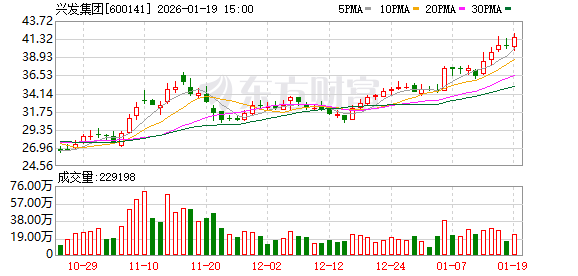
研报掘金丨长江证券:维持兴发集团“买入”评级,新能源、新材料多点开花
Ge Long Hui A P P· 2026-01-06 08:50
Core Viewpoint - The report from Changjiang Securities highlights that Xingfa Group focuses on developing new energy materials centered around "phosphorus" and "silicon," indicating strong growth potential in these sectors [1] Group 1: New Energy Materials - Xingfa Group's key products include LFP battery cathode materials such as iron phosphate and lithium iron phosphate, high-pressure solid iron phosphate raw materials, and solid-state battery materials like phosphorus pentasulfide [1] - The company is also expanding its product line with phosphorus agents and organic silicon leather, which are in the ramp-up phase and expected to contribute to performance growth [1] Group 2: Market Conditions and Growth Potential - The cyclical products of the company, including phosphate fertilizer, glyphosate, and organic silicon, are currently at the bottom of the market cycle and are expected to benefit from improved supply-demand dynamics [1] - The growth segments of new energy materials and high-end new materials are showing significant promise and are anticipated to continuously contribute to performance growth [1] Group 3: Financial Projections - The projected net profit attributable to the company for the years 2025, 2026, and 2027 is estimated to be 1.74 billion, 2.44 billion, and 3.03 billion yuan respectively [1] - The report maintains a "buy" rating for the company, reflecting confidence in its future performance [1]
有机硅行业专家会议
2025-11-24 01:46
Summary of the Organic Silicon Industry Conference Industry Overview - The organic silicon industry is responding to weak demand by implementing a production cut of 30% as decided in the November meeting, aiming to raise DMC prices to 13,500-14,000 RMB/ton, although previous unsuccessful cuts may affect execution effectiveness [1][3][9] - The industry is experiencing increased costs due to rising electricity prices during the dry season, impacting the pricing strategy as downstream customers remain cautious about high quotes of 13,200 RMB/ton [1][6] Key Points and Arguments - **Production Cuts and Price Adjustments**: The industry plans to maintain a balance between supply and demand by controlling inventory to within 45 days, with DMC prices expected around 13,200 RMB/ton and profit margins between 1,000-1,200 RMB [2][16] - **Market Participation**: High participation from companies in the recent meetings, particularly led by He Sheng's chairman, has positively influenced the industry, although previous maintenance and restarts may hinder the effectiveness of the production cuts [1][8] - **Demand Dynamics**: Traditional demand from the real estate sector is declining, affecting construction sealant needs, while emerging sectors like electric vehicles and battery sealants are providing growth opportunities [1][12][13] - **Strategic Focus of Companies**: Companies like Luxi Chemical are focusing on downstream extension and high-end product development, indicating a shift towards higher value-added products [1][12] Additional Important Insights - **International Market Expansion**: Domestic demand for organic silicon may decline, prompting companies to explore overseas markets, especially as foreign firms like Dow and Bluestar gradually withdraw from overseas capacities due to EU carbon tariffs [1][14][16] - **Future Capacity Plans**: Several companies plan to increase production capacity, such as Yunnan Energy Investment with a planned 400,000 tons and Xinjiang Qiya aiming for the world's largest organic silicon single unit with 1.5-1.6 million tons [11][19] - **Challenges in Execution**: The effectiveness of the production cut plan is contingent on establishing a robust supervision mechanism, as previous attempts faced challenges due to trade tensions and inventory pressures [4][5] - **Market Price Formation**: Current market prices are influenced by raw material costs, particularly industrial silicon, which has seen price increases due to rising electricity costs [6][18] - **Emerging Product Opportunities**: New products like organic silicon leather show potential in various applications, indicating a diversification strategy within the industry [13] Conclusion The organic silicon industry is navigating a complex landscape of declining traditional demand and rising costs while seeking to capitalize on emerging opportunities. The focus on production cuts, strategic market expansion, and high-value product development will be crucial for maintaining profitability and market stability in the coming years.
兴发集团(600141):Q3净利环比高增,草甘膦景气度提升
Huaan Securities· 2025-11-04 06:20
Investment Rating - Investment Rating: Buy (Maintain) [1] Core Views - The company reported a significant increase in net profit quarter-on-quarter, driven by improved market conditions for glyphosate [5] - The company achieved a revenue of 23.781 billion yuan in the first three quarters of 2025, a year-on-year increase of 7.8%, with a net profit attributable to shareholders of 1.318 billion yuan, a year-on-year increase of 0.3% [4][5] - The third quarter saw revenue of 9.161 billion yuan, a year-on-year increase of 6.0% and a quarter-on-quarter increase of 23.9%, with a net profit of 0.592 billion yuan, a year-on-year increase of 16.2% and a quarter-on-quarter increase of 42.1% [5] Summary by Sections Financial Performance - The company’s revenue and net profit showed steady growth, with significant quarter-on-quarter improvement in Q3, primarily due to the optimized supply-demand dynamics of glyphosate and the profit contribution from phosphate fertilizer exports [5] - Glyphosate market prices have risen, with current average prices at 26,546 yuan/ton, reflecting increases of 14% and 17% compared to Q1 2025 [5] Industry Outlook - The phosphate industry remains robust, with the company enhancing its mining integration and exploration efforts, increasing phosphate resource reserves to 580 million tons [6] - The company is actively pursuing acquisitions to strengthen its integrated layout in the phosphate chemical industry [6] New Materials Business - The company has successfully turned around its new energy products to profitability and is expanding its special chemicals and silicone businesses, which are crucial for high-quality development [7] - New projects in the organic silicon sector are expected to become new profit growth points, with significant investments planned for industrial silicon production [8] Investment Recommendations - The company is projected to achieve net profits of 1.825 billion, 2.078 billion, and 2.366 billion yuan for 2025, 2026, and 2027 respectively, with corresponding P/E ratios of 17, 15, and 13 times [9]
兴发集团(600141):二季度业绩符合预期;拟收购桥沟矿业,持续夯实资源优势
Huachuang Securities· 2025-08-29 11:53
Investment Rating - The report maintains a "Strong Buy" rating for the company, expecting it to outperform the benchmark index by over 20% in the next six months [7][18]. Core Views - The company's H1 2025 performance met expectations, with revenue of 14.62 billion yuan, a year-on-year increase of 9.07%, while net profit attributable to shareholders decreased by 9.72% to 727 million yuan [1]. - The company plans to acquire a 50% stake in Qiaogou Mining for 855 million yuan, which will enhance its resource advantages by increasing its phosphate resource reserves from 39.5 million tons to 58 million tons [1][7]. - The report highlights the recovery in prices for glyphosate and the concentration of phosphate ammonium export opportunities, which are expected to support continued profit recovery in Q3 [7]. Financial Performance - In Q2 2025, the company achieved revenue of 7.39 billion yuan, with a year-on-year increase of 13.44% and a quarter-on-quarter increase of 2.25%. The net profit for the same period was 416 million yuan, showing a year-on-year decrease of 1.72% but a quarter-on-quarter increase of 34% [1]. - The company's gross margin for H1 2025 was 16.44%, down 0.94 percentage points year-on-year, while the net profit margin was 5.39%, down 0.64 percentage points year-on-year [7]. - The report projects adjusted net profit forecasts for 2025-2027, with estimates of 2.078 billion yuan, 2.500 billion yuan, and 2.826 billion yuan respectively, reflecting a growth rate of 29.8% in 2025 [8]. Market Position and Strategy - The company is focusing on enhancing its upstream control in the phosphate chemical industry through the acquisition of Qiaogou Mining, which has a phosphate resource reserve of approximately 18.5 million tons [7]. - The report emphasizes ongoing projects in fine chemical products and key projects that are expected to create new profit growth points for the company [7]. - The target price for the company's stock is set at 34.05 yuan, based on a 15x PE ratio for 2026, indicating significant upside potential from the current price of 27.31 yuan [3][8].
泉果基金调研兴发集团,公司特种化学品业务经营态势总体稳健
Xin Lang Cai Jing· 2025-08-04 09:27
Core Viewpoint - The recent research conducted by QuanGuo Fund on Xingfa Group highlights significant developments in the glyphosate market, fertilizer exports, phosphate mining capacity, specialty chemicals, and new energy business performance. Glyphosate Market - The glyphosate market has seen a notable price increase of over 2,000 yuan/ton compared to Q1, driven by low industry inventory, seasonal export demand to South America, and concerns over supply stability due to rumors surrounding Monsanto's bankruptcy. The price is expected to continue rising due to strong demand and low inventory pressure among major domestic enterprises [1][2]. Fertilizer Export - In Q2, the company exported over 70,000 tons of fertilizers and is actively seeking a second phase of export quotas while ensuring stable domestic supply and pricing for phosphate fertilizers [2]. Phosphate Mining Capacity - The company currently has an annual phosphate ore mining capacity of 5.85 million tons, with plans to double this capacity within five years through various projects, including a subsidiary with proven reserves of 315 million tons and ongoing mining operations [3]. Specialty Chemicals - The specialty chemicals business has shown stable performance, with new products such as organic silicon leather and phosphonates achieving good market results. Sales volumes have increased, and better profitability is anticipated in the future [4]. New Energy Business - The new energy segment has established projects for lithium iron phosphate and lithium dihydrogen phosphate, with the lithium iron phosphate product achieving full production and sales since March. The company is also advancing research on next-generation products to enhance market competitiveness [5][6]. DMC Production and Profit Impact - The actual production capacity of DMC is approximately 300,000 tons/year. A price increase of 1,000 yuan/ton in organic silicon is expected to boost profits by around 300 million yuan annually, although this is subject to various market factors [6]. Shareholder Information - As of July 18, the total number of shareholders for the company is 59,812 [7].