
机器人硬件

Search documents
浙海德曼拟不超15.17亿定增 扣非净利2024年降至0.18亿
Zhong Guo Jing Ji Wang· 2026-01-27 03:33
Core Viewpoint - Zhejiang Haideman (688577.SH) plans to raise a maximum of 1.517 billion yuan through a private placement of shares, with proceeds allocated to high-end composite machine tool industrialization, high-end precision machine tool and robot hardware manufacturing R&D, and working capital supplementation [1][3]. Fundraising Details - The total amount to be raised is 151,700,000 yuan, with the net proceeds after deducting related issuance costs to be fully utilized for the following projects: - High-end composite machine tool industrialization project: 91,739,950 yuan - High-end precision machine tool and robot hardware manufacturing R&D project: 24,960,050 yuan - Supplementing working capital: 35,000,000 yuan [2]. Share Issuance Information - The number of shares to be issued will not exceed 30% of the company's total share capital prior to the issuance, amounting to a maximum of 33,383,918 shares [3]. - The pricing for the shares will be based on 80% of the average stock price over the 20 trading days prior to the pricing date [3]. Shareholder Structure - As of the announcement date, the controlling shareholders are Gao Changquan, Guo Xiuhua, and Gao Zhaochun, holding a combined 60.93% of the shares [4]. - The issuance will not change the control of the company, as the actual controllers will still maintain their majority stake post-issuance [4]. Historical Fundraising - Zhejiang Haideman previously raised 447 million yuan, with a net amount of 382 million yuan after costs, exceeding the original plan by 60.82 million yuan [5]. - The company has conducted two rounds of fundraising totaling 585 million yuan [7]. Financial Performance - The company has experienced a decline in net profit and net profit excluding non-recurring gains and losses for three consecutive years, with revenues of 5.41 billion yuan, 6.31 billion yuan, 6.64 billion yuan, 7.65 billion yuan, and 6.08 billion yuan from 2021 to the first three quarters of 2025 [7]. - The net profit attributable to shareholders was 73 million yuan in 2021, dropping to 31 million yuan in the first three quarters of 2025 [7].


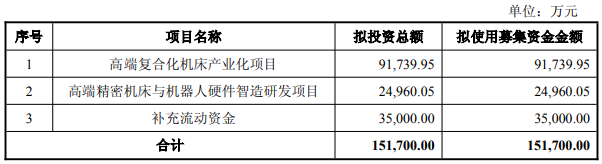
浙海德曼(688577.SH)拟定增募资不超15.17亿元
智通财经网· 2026-01-26 13:37
Core Viewpoint - Zhejiang Haideman (688577.SH) plans to issue shares to specific investors, aiming to raise a total of no more than 1.517 billion yuan, which will be used for various projects and working capital [1] Group 1 - The company intends to utilize the raised funds for the high-end composite machine tool industrialization project [1] - The funds will also support the research and development of high-end precision machine tools and robotic hardware manufacturing [1] - A portion of the funds will be allocated to supplement working capital [1]
浙海德曼(688577.SH):拟定增募资不超15.17亿元
Ge Long Hui A P P· 2026-01-26 12:37
Group 1 - The company Zhejiang Haideman (688577.SH) announced a plan to issue A-shares to specific targets in 2026, aiming to raise a total of no more than 1.517 billion yuan (including the amount) [1] - The net proceeds from the fundraising, after deducting related issuance costs, will be fully allocated to projects including high-end composite machine tool industrialization, high-end precision machine tools and robotics hardware intelligent manufacturing R&D, and supplementing working capital [1]
浙海德曼:拟定增募资不超15.17亿元 用于高端复合化机床产业化项目等
Zheng Quan Shi Bao Wang· 2026-01-26 12:00
Core Viewpoint - Zhejiang Haideman (688577) plans to issue shares to specific investors, raising a total of no more than 1.517 billion yuan for high-end composite machine tool industrialization projects, high-end precision machine tools and robotics hardware manufacturing R&D projects, and to supplement working capital [1] Group 1 - The company intends to raise funds through a targeted stock issuance [1] - The total amount to be raised is capped at 1.517 billion yuan [1] - The funds will be allocated to specific projects including high-end composite machine tools and robotics [1]
浙海德曼:拟定增募资不超15.17亿元
Di Yi Cai Jing· 2026-01-26 11:47
Core Viewpoint - The company plans to issue shares to specific investors, raising a total of no more than 1.517 billion yuan for high-end composite machine tool projects, high-end precision machine tool and robot hardware manufacturing R&D projects, and to supplement working capital [1] Group 1 - The total amount to be raised through the share issuance is capped at 1.517 billion yuan [1] - The funds will be allocated to high-end composite machine tool industry projects [1] - The financing will also support R&D projects for high-end precision machine tools and robot hardware manufacturing [1] - A portion of the raised funds will be used to supplement the company's working capital [1]
大摩:预测2050年全球机器人硬件销售额突破25万亿美元,中国掌控超六成供应链!马达、轴承、稀土、AI芯片供应商将迎来黄金十年
Sou Hu Cai Jing· 2025-12-16 02:22
Core Insights - Morgan Stanley predicts global robot hardware sales will surge from $100 billion in 2025 to $500 billion by 2030, $9 trillion by 2040, and exceed $25 trillion by 2050, with the market size potentially doubling when including software services and maintenance revenue [1] - By 2050, it is estimated that 1.4 billion robots will be sold globally, with a total operational volume of 6.5 billion robots, driven by five key factors: scenario explosion, cost reduction, policy support, labor replacement, and AI empowerment [1] Group 1 - The demand for upstream components will see a significant increase, with the need for 5.7 billion cameras (a 95-fold increase from 2025), 27 billion motors (a 260-fold increase), 41 billion bearings (a 200-fold increase), 1.7 million tons of rare earth magnets (a 480-fold increase), and 26 terawatt-hours of battery capacity (a 1450-fold increase) by 2050 [3] - Motor, bearing, rare earth, and AI chip suppliers are expected to experience a golden decade due to this surge in demand [3] Group 2 - China is positioned to leverage its manufacturing capabilities, rare earth resources, and policy support to achieve large-scale production in industrial robots, drones, and autonomous driving, projected to account for 26% of global robot sales by 2050, with even higher market shares in industrial robots and drones [3] - Chinese companies dominate the global humanoid robot supply chain with a 63% market share, particularly excelling in motors, sensors, and structural components [3]


大摩:预测2050年全球机器人硬件销售额突破25万亿美元,中国掌控超六成供应链
Ge Long Hui· 2025-12-16 02:21
Core Insights - Morgan Stanley predicts global robot hardware sales will surge from $100 billion in 2025 to $500 billion by 2030, $9 trillion by 2040, and exceed $25 trillion by 2050. Including software services and maintenance, the actual market size will double [1] Group 1: Market Growth Factors - The growth will be driven by five key factors: scenario explosion, cost reduction, policy support, labor replacement, and AI empowerment [1] - By 2050, it is expected that 1.4 billion robots will be sold globally, with a total operational volume of 6.5 billion units [1] Group 2: Component Demand - The demand for upstream components will see a significant increase, requiring 5.7 billion cameras (a 95-fold increase from 2025), 27 billion motors (a 260-fold increase), 41 billion bearings (a 200-fold increase), 1.7 million tons of rare earth magnets (a 480-fold increase), and 26 terawatt-hours of battery capacity (a 1450-fold increase) by 2050 [1] - Suppliers of motors, bearings, rare earth materials, and AI chips are expected to experience a golden decade [1] Group 3: China's Position - China, leveraging its manufacturing capabilities, rare earth resources, and policy support, is set to achieve large-scale production in industrial robots, drones, and autonomous driving, projected to account for 26% of global robot sales by 2050 [1] - In the global humanoid robot supply chain, Chinese companies dominate with a 63% market share, particularly excelling in motors, sensors, and structural components [1]
宇树科技CEO王兴兴:错失AI是我做过最后悔的一件事
Sou Hu Cai Jing· 2025-09-11 07:03
Core Viewpoint - The CEO of Yushu Technology, Wang Xingxing, highlighted the opportunities and challenges in the robot industry during the era of large models, emphasizing that while AI has surpassed 99.99% of human capabilities in writing and art, practical applications in robotics remain underdeveloped [1][3]. Group 1: AI and Robotics Integration - The integration of AI and robotics is giving rise to a new industry focused on embodied intelligence, enabling robots to possess AGI capabilities for autonomous perception, planning, and action [3]. - Current challenges in the development of embodied intelligence include issues related to high-quality data and model algorithms, particularly in data collection and utilization [3][4]. - The alignment of model and control modalities in robotics remains a significant challenge, as exemplified by the difficulty in teaching robots household tasks through video generation [3][4]. Group 2: Organizational Management in AI Era - As Yushu Technology grows, the increase in personnel may lead to reduced collaboration efficiency, necessitating the exploration of more effective organizational management strategies [4]. - The company remains optimistic about the future, believing that the lowered barriers to innovation and entrepreneurship present a favorable environment for young innovators [4]. Group 3: Future Outlook - Wang Xingxing expressed excitement about the imminent explosive growth of AI applications, stating that the current era is fair and offers opportunities for those willing to learn and innovate [5]. - He encourages the younger generation to forget past experiences, embrace new knowledge, and fully engage with the opportunities presented by the new era [5].
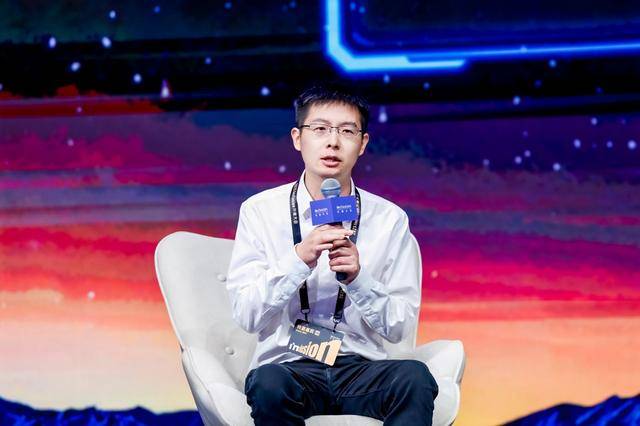
宇树科技官宣IPO后王兴兴现身外滩大会 现在是“AI干活”大规模爆发的前夜
Zheng Quan Shi Bao Wang· 2025-09-11 06:33
Core Insights - The CEO of Yushu Technology, Wang Xingxing, highlighted the advancements in AI capabilities, stating that AI can outperform 99.99% of humans in writing and art, but the practical application of AI in real-world tasks remains underdeveloped [1][2] - Wang expressed optimism about the integration of AI and robotics, which is giving rise to a new industry focused on embodied intelligence, enabling robots to possess AGI capabilities [1] - Despite existing challenges in data quality and model algorithms, Wang believes that the current era presents significant opportunities for innovation and entrepreneurship, particularly for younger innovators [2] Company Insights - Yushu Technology is recognized for its impressive performance in the robotics sector and is currently planning an IPO [1] - The company primarily focuses on hardware products, and as it scales, it may face challenges related to organizational management and collaboration efficiency [2] - Wang emphasized the importance of adapting to new knowledge and embracing the current technological landscape for aspiring entrepreneurs [2] Industry Insights - The fusion of AI and robotics is seen as a catalyst for the development of embodied intelligence, which allows robots to autonomously perceive, plan, and act [1] - Key challenges in the industry include data collection and quality issues, as well as the alignment of model algorithms with robotic control modalities [2] - The current environment is viewed as favorable for innovation, with lower barriers to entry for new entrepreneurs, suggesting a potential surge in small organizations leveraging AI tools [2]
深圳30岁以下创业先锋青年都在干什么?最年轻的仅26岁“二代”已接任董事长,深圳高校又跑出一个领军人物!深圳未来一个大趋势来了!
Sou Hu Cai Jing· 2025-05-11 15:46
Group 1 - Shenzhen's Zhao Xintong won the 2025 Snooker World Championship, marking him as the first champion from China and Asia, inspiring a new generation of young entrepreneurs [1] - The "Hurun U30 China Entrepreneur Pioneers" list features 131 young entrepreneurs aged 30 and below, with 18 from Shenzhen, surpassing Beijing, Shanghai, and Guangzhou for the first time [1][41] - The average age of the entrepreneurs on the list is 28, with 95 being first-generation entrepreneurs and 36 being second-generation successors [1][43] Group 2 - The top three sectors favored by U30 entrepreneurs are software and services (including AI+Energy data services), education and training (such as online vocational education), and consumer goods (like VR and MR headsets) [1][41] - The average startup capital for these entrepreneurs is 12 million yuan, with an average company valuation of 280 million yuan [1][43] - 63% of startup funding comes from personal or family sources, while 54% comes from venture capital [1] Group 3 - The Shenzhen government supports young entrepreneurs with initiatives like "1 yuan innovation workshops" and "zero-rent acceleration camps," promoting a "only dreams, no rent" policy [2] - Shenzhen has established a talent innovation and entrepreneurship fund of 30 billion yuan, investing in 926 projects [2] - The city offers 15 days of free accommodation for recent graduates, extending support for job-seeking [2] Group 4 - The average number of employees in the listed companies is 250, with some companies employing over 2000 people [41] - 35% of first-generation entrepreneurs have overseas study backgrounds, with the US, UK, and Australia being the most popular destinations [41][43] - 36 second-generation successors are involved in family business strategic decisions, with 70% having studied abroad [43] Group 5 - Cheng Tian International, founded by Feng Lingju, has grown to an annual revenue of over 700 million yuan within six years, focusing on cross-border logistics [5][6] - The company has developed a supply chain management service system that integrates big data, AI, and blockchain technology, improving customs efficiency by 40% and reducing logistics costs by 20% [5][6] - Wei Er Technology, established in 2021, focuses on agricultural AI robots and has received significant funding for product development and commercialization [16][19] Group 6 - The company "Because of Skin" focuses on dermatology and has rapidly expanded its operations, achieving a monthly revenue of 15 million yuan [21][26] - Linglu Education specializes in developing and promoting educational products, successfully serving over 2000 mid-to-high-end clients [27] - Xingtian Guangnian, led by CEO Wei Dehao, focuses on hardware design for robotics, emphasizing the integration of AI algorithms with hardware [28][29]

