
林畜

Search documents
植绿护林,点石成金
Xin Lang Cai Jing· 2026-01-27 04:21
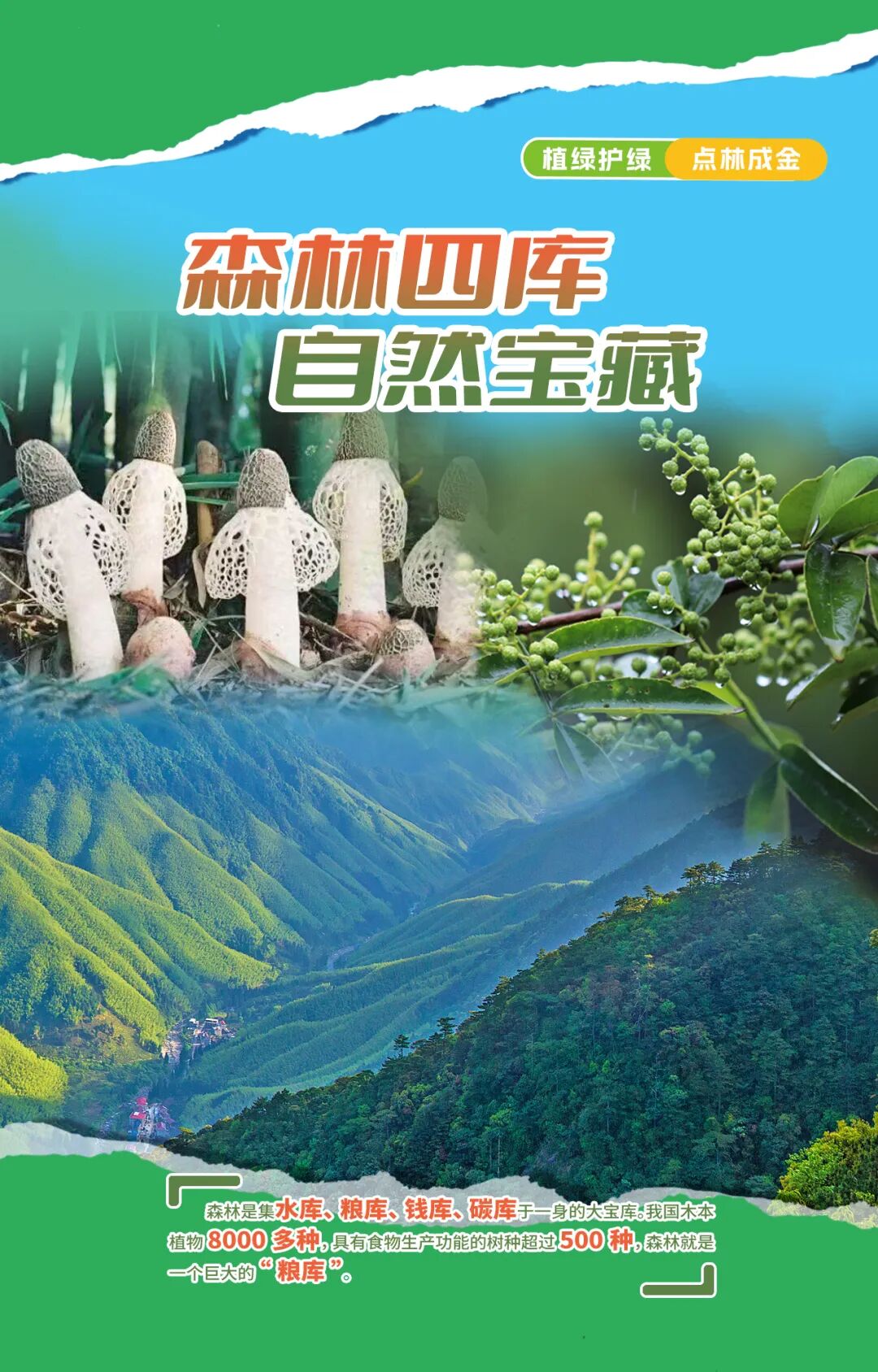
Core Viewpoint - The development of economic forests and under-forest economies is crucial for enhancing food production, increasing income, and promoting rural revitalization in China. Group 1: Economic Forests - China has over 8,000 species of woody plants, with more than 500 species capable of food production, highlighting the potential of economic forests as a significant resource [1][3]. - The total area of economic forests in China is approximately 700 million acres, with 600 million acres utilized for economic purposes, contributing to a food production output of 200 million tons annually, making it the third-largest agricultural product after grains and vegetables [4][9]. Group 2: Economic Impact - Economic forests generate an annual output value exceeding 2 trillion yuan, benefiting over 2,400 counties and lifting millions out of poverty [9][10]. - The under-forest economy, which includes activities like under-forest planting, breeding, and processing, provides high-quality green food products, significantly enriching the diet of the population [10][11]. Group 3: Development Initiatives - There are currently 677 national key forestry leading enterprises, 75 national forestry industry demonstration parks, and 649 national under-forest economy demonstration bases established across the country [14]. - The government has initiated various projects, including a central financial subsidy project for the development of the oil tea industry, aimed at enhancing the quality and efficiency of economic forests and under-forest economies [14].

云南向林下要什么?
Xin Lang Cai Jing· 2025-12-29 08:55
Core Viewpoint - Yunnan is focusing on developing the under-forest economy to enhance economic value, benefits, and income, aligning with national strategies for sustainable development and ecological protection [1][5]. Group 1: Importance of Under-Forest Economy - The under-forest economy does not compete with traditional agriculture for land and resources, offering new opportunities for income through various sectors such as planting (e.g., medicinal plants, vegetables), animal husbandry, and eco-tourism [3]. - This approach aligns with the philosophy that "lucid waters and lush mountains are invaluable assets," promoting a sustainable development model that benefits both the economy and the environment [3]. Group 2: National and Local Support - The national government has emphasized the development of the under-forest economy in its 14th Five-Year Plan, recognizing it as a key area for increasing farmers' income and enhancing the quality of the forestry and grassland industry [5]. - Yunnan boasts significant advantages with 370 million acres of forest land and over 560 billion yuan in total forestry and grassland industry output, positioning it uniquely for growth in this sector [5]. Group 3: Current Developments in Yunnan - Yunnan has made notable progress in the under-forest economy, particularly in the medicinal plant and mushroom sectors, with the county of Pingbian expected to produce 14,000 tons of sand ginger in 2024, accounting for 40% of national production [6]. - The province is also recognized as the "Kingdom of Wild Mushrooms," with a projected total output value of 47.249 billion yuan in 2024, covering exports to 40 countries and regions [9]. Group 4: Future Directions for Development - Despite current achievements, challenges such as technological bottlenecks and funding shortages remain, necessitating a strategic approach to identify key counties and focus on specific advantageous industries [11]. - The integration of agriculture with culture, tourism, and health services is essential for creating new consumption scenarios and enhancing the value chain of the under-forest economy [12]. - Strengthening the "benefit chain" through cooperative models involving farmers, enterprises, and cooperatives is crucial for ensuring sustainable income and participation in the under-forest economy [14].
年产量超2亿吨!我国多地森林食物迎来夏季采收
news flash· 2025-07-01 21:02
Core Viewpoint - Forest food has become the third largest agricultural product in China, following grains and vegetables, with significant growth in production due to government support and local initiatives [1] Group 1: Production and Economic Impact - In Jiangxi Province, a cooperative has established a sprinkler irrigation system covering over 1,000 acres, resulting in a 10% increase in edible mushroom production [1] - In Yunnan Province, local residents have cultivated 20 acres of bamboo fungus under rubber trees, tapping into the potential of the forest economy [1] - The diverse supply of woody oil and food, along with various high-quality forest products such as forest poultry, livestock, mushrooms, and honey, has greatly enriched the diet of the population [1] Group 2: Scale and Distribution - Over 2,400 out of more than 2,800 counties in China are engaged in the cultivation of economic forests, contributing to an annual production of over 200 million tons of various forest foods [1]