
核电钢

Search documents
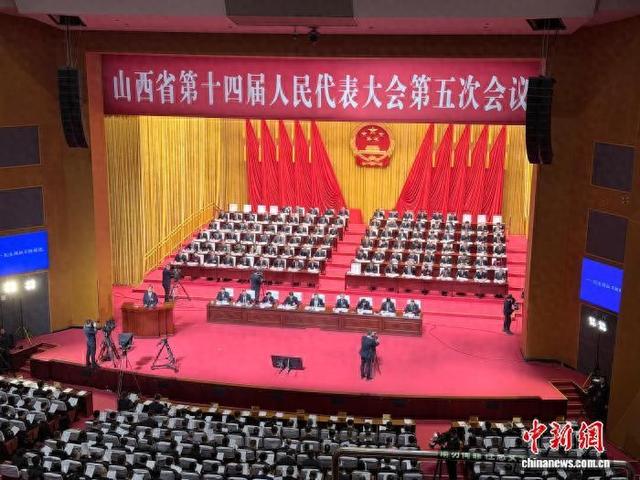
传统能源大省的科技转型:山西系统布局实验室体系与人才战略
Xin Lang Cai Jing· 2026-02-02 12:50
Group 1 - The core viewpoint of the article highlights the significant advancements in technological innovation in Shanxi Province during the "14th Five-Year Plan" period, including breakthroughs in new technologies and products such as hand-tear steel and polar renewable energy systems [1][3] - Shanxi's innovation system has been systematically strengthened, with over 4,500 high-tech enterprises and a notable increase in the number of academicians, indicating a positive talent aggregation effect [3] - The government report sets quantitative goals for the "15th Five-Year Plan," aiming to increase the number of national laboratories by 2 to 4, with annual R&D expenditure growth of over 10%, and a target of 60 billion yuan in technology contract transaction volume by 2030 [3] Group 2 - The action plan for 2026 includes the establishment of 20 provincial key laboratories, technology innovation centers, and engineering research centers, as well as 70 doctoral innovation stations [3] - Shanxi aims to cultivate over 1,400 new high-tech enterprises annually and actively pursue major national science and technology projects related to coal and smart grids [3] - The province will enhance talent attraction initiatives through branding efforts like "People in Shanxi Enjoy Beautiful Scenery" and "Wisdom Gathers in Shanxi," focusing on providing robust support for talent [4]

今日视点:以资本之“韧”筑科技之“基”
Zheng Quan Ri Bao· 2026-01-27 23:08
Group 1 - The core viewpoint of the articles emphasizes the importance of nurturing "patient capital" to support hard technology research and development, highlighting the need for long-term investment strategies in the industry [1][2][3] - The recent launch of the "Nuximon" software marks a significant step in building an independent industrial software ecosystem in China, showcasing advancements in various sectors such as materials and technology applications [1] - The article discusses the necessity for investment institutions to establish a multi-track due diligence system that includes industry experts, ensuring a deep understanding of the technology and its market potential [2] Group 2 - It is suggested that leading companies should actively leverage their capital to support smaller tech firms, creating opportunities for collaboration and reducing market risks for innovative technologies [2] - The concept of "risk laboratories" is introduced, where capital, research institutions, and enterprises can collaborate to explore cutting-edge technologies, sharing the burden of funding and potential rewards [2] - The articles call for recognition of the "patient capital" that supports innovation and the need for a cohesive effort across the industry chain to foster a robust innovation engine for China's modernization [3]
以资本之“韧”筑科技之“基”
Zheng Quan Ri Bao· 2026-01-27 16:25
Group 1 - The core viewpoint of the articles emphasizes the importance of nurturing "patient capital" to support hard technology research and development, highlighting the need for long-term investment strategies that align with the high-risk, high-reward nature of technological innovation [1][2][3] - The recent launch of the "Nuximon" software marks a significant step in building an independent industrial software ecosystem in China, showcasing advancements in various fields such as materials and technology applications [1] - The article discusses the necessity for investment institutions to develop a multi-track due diligence system that includes industry experts, ensuring that capital is effectively aligned with the technological needs of the industry [2] Group 2 - It is suggested that leading companies should actively leverage their capital to support smaller tech firms, creating opportunities for collaboration and reducing market risks for innovative technologies [2] - The concept of "risk laboratories" is introduced, where capital, research institutions, and enterprises can collaborate to explore cutting-edge technologies, sharing the burden of funding and the benefits of technology commercialization [2] - The articles stress that there are no shortcuts in the journey of technological innovation, advocating for a steadfast commitment to deep investment in core technologies and the transformation of industrial models and ecosystems [3]
多方面因素助力部分钢铁公司中报盈利改善
Zheng Quan Ri Bao· 2025-08-26 16:40
Group 1 - As of August 26, 2025, 22 listed companies in the steel industry reported their mid-year results, with 12 companies achieving over 100% year-on-year growth in net profit, despite 11 of them experiencing a decline in operating revenue [1] - For instance, Tianjin Youfa Steel Pipe Group Co., Ltd. reported a revenue of 24.888 billion yuan, a decrease of 5.81% year-on-year, while net profit reached 287 million yuan, an increase of 160.36% [1] - The main reasons for the revenue decline but profit improvement include significant reductions in raw material costs, industry self-discipline in production control, and optimization of product structure towards high-end products, with high-value-added products accounting for 35% to 40% of the industry [1] Group 2 - In the first half of 2025, prices for raw materials such as iron ore and coking coal saw significant declines, with the 62% Australian fines index at $93.55 per dry ton, down 7.28% from the beginning of the year, and coking coal prices dropping by 19.70% [2] - Companies have managed to reduce supply pressure through self-discipline in production, which has provided some support for steel prices, while optimizing product structures has led to lower inventory and improved profitability [2] - Looking ahead, the steel industry is expected to experience a "turning point," with the overall market potentially improving, contingent on effective production control and the recovery of domestic demand, particularly from the manufacturing sector [2]