欧元债

Search documents
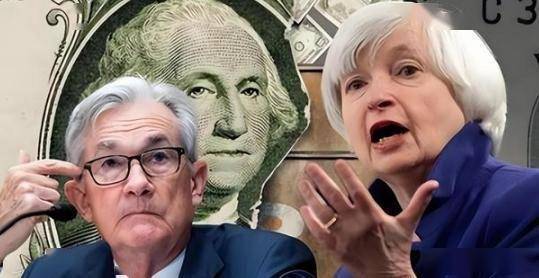
美联储现在巴不得中国能早点抛售美债?为啥他们一直不降息,因为他们很清楚,中国迟早会卖掉手里那7800亿美元的美债。市场上能接过这么大一笔美债的,恐怕只有美联储自己,所以他们一直在等这个机会。 先说说中国为啥买这么多美债。 其实道理很简单,中国这么多年贸易顺差,赚了不少外汇,这些钱得...
Sou Hu Cai Jing· 2025-12-24 04:10
Group 1 - The Federal Reserve is waiting for China to sell its $780 billion in U.S. Treasury bonds, as it may need to step in as a buyer to stabilize the market [1][11][12] - China has accumulated a significant amount of U.S. debt due to trade surpluses, seeking a safe and profitable place to store its foreign exchange reserves [2][3][4] - However, holding U.S. debt carries risks, particularly with the increasing U.S. national debt nearing $38 trillion, which raises concerns about the dollar's credibility [6][15] Group 2 - If China were to sell its U.S. bonds, it could create market volatility, prompting other countries to follow suit, which would negatively impact the U.S. financial market [9][10][21] - The Federal Reserve's role is to maintain economic stability, and while it may see an opportunity in buying the bonds, it would also face increased debt pressure and interest rate risks [8][15][16] - China is likely to reduce its U.S. bond holdings gradually, considering the impact on its own economy and the importance of U.S. debt in its foreign exchange reserves [17][19][20]

不缺外汇,为何要发美元债、欧元债?误解背后是我国“精明布局”
Sou Hu Cai Jing· 2025-11-09 03:43
Core Viewpoint - The issuance of foreign currency bonds by China, despite having substantial foreign exchange reserves, is a strategic move aimed at establishing a pricing benchmark for domestic enterprises, enhancing global trust, and expanding financial networks [2][3][5][6]. Group 1: Foreign Currency Bond Issuance - China recently issued $4 billion in bonds in Hong Kong and plans to issue €4 billion in Luxembourg, raising questions about the necessity of such actions given its ample foreign exchange reserves [1]. - The total external debt of China, as of June, stands at approximately $24,368 billion, with RMB debt constituting 52% of this total, indicating a significant presence of RMB in the external debt structure [2]. - The issuance of foreign currency bonds serves to set favorable interest rates for Chinese enterprises in international markets, thereby reducing their financing costs [2][3]. Group 2: Strategic Considerations - Issuing foreign currency bonds is a method of credit management and gaining global trust, as evidenced by the high demand for recent bond offerings, including over $100 billion in subscriptions for the Hong Kong bonds [3][5]. - The choice of locations for bond issuance, such as Hong Kong and Luxembourg, is intended to deepen connections with local financial markets and attract diverse international investors [5][6]. - The issuance of foreign currency bonds is also a strategic gesture to facilitate the internationalization of the RMB, as it helps to gain acceptance in major financial centers [5][6]. Group 3: Long-term Implications - Regular issuance of foreign currency bonds maintains cooperation with the international financial ecosystem, ensuring that China remains relevant in global capital markets [6][8]. - The trust established through foreign currency bonds can be leveraged to promote RMB-denominated products in the future, creating a pathway for the internationalization of the RMB [8][9]. - The long-term goal is to convert the established trust into demand for RMB assets, potentially leading to a gradual process of currency substitution [11].

“去美元化”趋势下 亚洲本币债券发行创纪录高位
Xin Lang Cai Jing· 2025-07-23 14:49
Core Insights - The unpredictable policy moves by President Trump are driving investor demand for Asian local currency bonds, sparking renewed interest in the region [1] - The issuance of local currency bonds in the Asia-Pacific region has reached approximately $1.5 trillion in 2025, marking a 6% increase and setting a record for the period [1] - The trend of de-dollarization is shifting focus towards local currency credit bonds, particularly in markets with AAA sovereign ratings like Australia and Singapore [2] Group 1 - The issuance of local currency bonds in the Asia-Pacific region has reached a record high, with the second quarter seeing the highest issuance volume [1] - There has been an increase in buyers of Asian local currency bonds, particularly from pension funds and sovereign wealth funds seeking diversification away from dollar assets [1] - The Bloomberg Asia-Pacific Composite Index tracking various local currency bonds has risen by 3.9% this year, outperforming the U.S. equivalent index which has returned 3.5% [1] Group 2 - Indian companies raised a record 6.6 trillion rupees (approximately $764 million) through local currency bond issuance in the first half of 2025, reflecting a 29% year-on-year increase [2] - China has issued over $1 trillion in local currency bonds this year, with lower borrowing costs making financing more attractive for domestic companies [3] - The gap between the fiscal conditions of the Asia-Pacific region and the U.S. has widened due to tariff policies, with Australia maintaining a AAA rating from major credit agencies [3] Group 3 - The issuance of dollar bonds in Asia is recovering from a slump caused by record defaults among Chinese real estate developers, with Japanese companies leading in issuance this year [4] - The euro-denominated bond issuance from Asia-Pacific borrowers has exceeded €49 billion (approximately $57.6 billion) this year, surpassing the total for the previous year [4] - There is a growing preference among Asian investors for issuers to frequently issue bonds in euros, offshore renminbi, or other currencies [4]
每日债市速递 | 2025全国两会即将召开
Wind万得· 2025-03-02 22:40
Market Overview - The central bank conducted a 7-day reverse repurchase operation of 284.5 billion yuan at a fixed rate of 1.5% on February 28, resulting in a net injection of 102 billion yuan for the day, as 182.5 billion yuan of reverse repos matured [2] - On the last trading day of the month, the interbank market experienced a tight funding environment in the morning, which gradually improved to a more balanced state as large banks increased supply, leading to a decrease in the weighted average repo rates [2] Interest Rates and Bonds - The latest overnight financing rate in the US is 4.33% [3] - The one-year interbank certificates of deposit are trading around 2%, showing little change from the previous day [5] - The yields on major interbank bonds are as follows: - 1Y government bond yield at 1.6100% - 2Y government bond yield at 1.4400%, down 2 basis points - 3Y government bond yield at 1.5200%, down 1.5 basis points - 5Y government bond yield at 1.6025%, down 3.75 basis points - 10Y government bond yield at 1.7250%, down 3 basis points [6] Government Bonds and Futures - The closing prices for government bond futures indicate a rise: - 30-year main contract up 0.54% - 10-year main contract up 0.2% - 5-year main contract up 0.12% - 2-year main contract up 0.05% [8] Economic Indicators - The National Bureau of Statistics reported that the GDP for 2024 is projected at 13,490.84 billion yuan, reflecting a growth of 5.0% year-on-year. The total national income is estimated at 13,396.72 billion yuan, with a growth of 5.1% [10] - Real estate development investment for the year is reported at 1,002.8 billion yuan, a decrease of 10.6%, with residential investment at 760.4 billion yuan, down 10.5% [10] Corporate Actions - Industrial Bank has launched the first "Southbound Pass" direct connection for Euro-denominated bond investments [14] - GAC Group plans to issue up to 18 billion yuan in asset-backed securities (ABS) [14] - Longguang Group has received support from over 80.8% of creditors for a comprehensive creditor support agreement [14] - Guoyuan Securities has been approved to publicly issue corporate bonds totaling no more than 7.5 billion yuan [14]