
比亚迪大唐EV

Search documents
2026/2/2-2026/2/8汽车周报:理想、比亚迪均有技术催化,板块轮动+科技成长双轮驱动-20260210
Shenwan Hongyuan Securities· 2026-02-10 07:20
Investment Rating - The report maintains a positive outlook on the automotive industry, particularly on companies like Li Auto, Xpeng, BYD, and Great Wall Motors, driven by technological advancements and new product cycles [2]. Core Insights - The automotive market is experiencing a shift towards new technologies, with a focus on AI and smart vehicles, which is expected to drive growth in 2026 [2]. - The report highlights the importance of overseas market opportunities for companies like BYD and Geely, especially in light of domestic cost pressures [2]. - The report notes a significant decline in retail sales in January, with a year-on-year decrease of 22% and a month-on-month decrease of 31% [2]. - The report emphasizes the potential of the robot industry and the valuation flexibility within the supply chain, particularly with Tesla's Optimus V3 [2]. - The report identifies key players in the smart vehicle sector, including companies like Desay SV, Jingwei Hirain, and Bertel, which are expected to benefit from the growth in intelligent vehicles [2]. Industry Updates - The report indicates that the average daily retail sales of passenger vehicles in China were 50,000 units in the second week of January, marking a 22% decline compared to the same period last year [2]. - The report mentions a decrease in raw material prices for both traditional and new energy vehicles, with traditional vehicle raw material prices down by 2.8% week-on-week and 1.0% month-on-month, while new energy vehicle raw material prices fell by 6.7% week-on-week and 2.7% month-on-month [2]. - The total transaction value in the automotive industry for the week was 530.7 billion yuan, reflecting a 22.58% decrease compared to the previous week [2]. - The automotive industry index rose by 0.32% during the week, outperforming the Shanghai and Shenzhen 300 index, which fell by 1.33% [10]. Monthly Sales Updates - In January 2026, the sales of new energy vehicle companies showed a mixed trend, with BYD's sales at 210,510 units, down 30% year-on-year, while companies like Zeekr and NIO reported significant increases in sales [6][8]. - The report provides a detailed breakdown of sales figures for various new energy vehicle brands, highlighting the overall market contraction of 8% year-on-year and a 45% month-on-month decline [6][8]. Key Models Announced - The report lists several notable new vehicle models announced in the latest batch of vehicle approvals, including the Li Auto L9 Livis, Xpeng GX, and BYD Tang EV, among others [3][4][5].

理想L9 Livis、小鹏GX领衔 2月工信部公示新车盘点
Zhong Guo Zhi Liang Xin Wen Wang· 2026-02-10 04:13
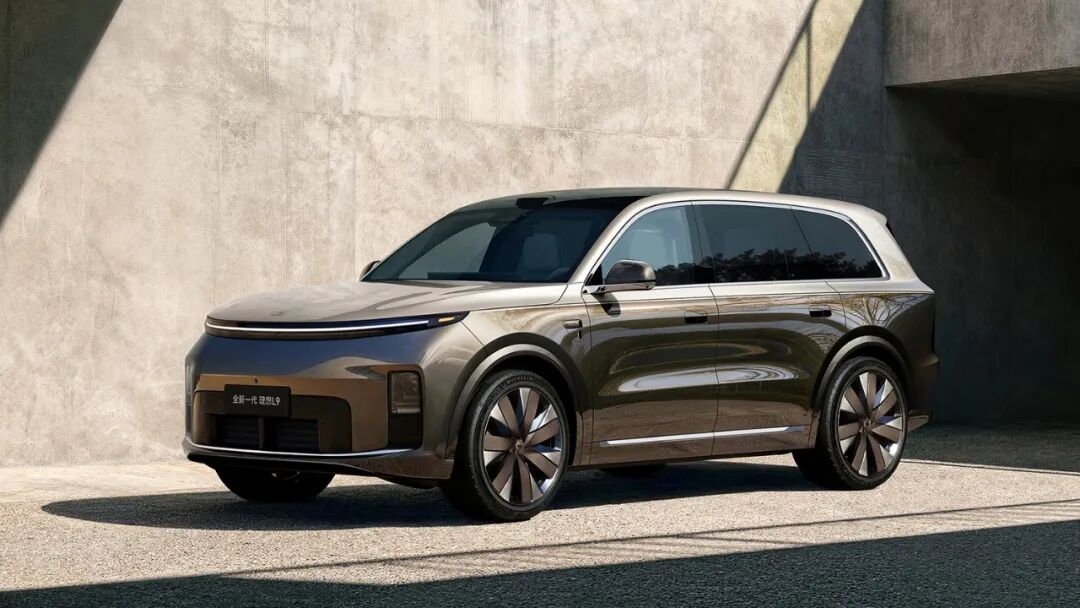
Core Viewpoint - The Ministry of Industry and Information Technology (MIIT) has announced the 404th batch of vehicle production enterprises and product announcements, featuring several new models including the Li Auto L9 Livis, Xiaopeng GX, and BYD Tang EV, with many set to launch in the second quarter of 2026 [1] Group 1: Li Auto L9 Livis - The Li Auto L9 Livis is positioned as a full-size SUV, with dimensions of 5255×2000×1810mm and a wheelbase of 3125mm [2] - It features a new 1.5T range extender engine, a 72.7kWh ternary lithium battery from CATL, and supports 5C fast charging, with a WLTC pure electric range of 340km, an increase from the current model's 235km [4] - The vehicle is equipped with advanced features such as an 800V fully independent active suspension, steer-by-wire, and the self-developed Mach 100 chip with a computing power of 2560 TOPS, priced at 559,800 yuan [4] Group 2: Xiaopeng GX - The Xiaopeng GX, internally coded G01, is a flagship six-seat SUV built on a new large vehicle platform, measuring 5265×1999×1800mm with a wheelbase of 3115mm [4] - It is powered by four Turing chips with a total computing power of 3000 TOPS, featuring steer-by-wire and rear-wheel steering [6] - The vehicle offers both range-extended and pure electric versions, with the pure electric version providing a 270kW single motor and dual motor options, while the range-extended version has a power output of 160/210kW [6] Group 3: BYD Tang EV - The BYD Tang EV, part of the "Tang 9 Series," has been officially announced, showcasing decades of technological accumulation from BYD [7] - The vehicle dimensions are 5263(5302)×1999×1790(1800)mm with a wheelbase of 3130mm, and it will be available in three power configurations: single motor versions with 300kW and 370kW, and a dual motor version with 215kW front and 370kW rear [9] Group 4: Other New Models - The new Xiaomi YU7 GT is an SUV with dimensions of 5015×2007×1597mm and a wheelbase of 3000mm, featuring a dual-motor all-wheel-drive system with a maximum speed of 300km/h [11] - The Wei brand V9X is a large SUV with dimensions of 5299×2025×1825mm and a wheelbase of 3150mm, powered by a 2.0T engine and available with two battery capacities [12][14] - The new Volvo ES90 and EX90 are mid-to-large pure electric vehicles based on the SPA2 platform, with various power configurations and battery options [15]

汽车周报:理想、比亚迪均有技术催化,板块轮动+科技成长双轮驱动-20260210
Shenwan Hongyuan Securities· 2026-02-10 03:43
Investment Rating - The report maintains a positive outlook on the automotive sector, highlighting the potential for growth driven by technological advancements and market dynamics [2]. Core Insights - The report emphasizes the importance of new vehicle announcements and the upcoming Q1-Q2 product cycles, particularly for companies like Li Auto, Xpeng, BYD, Great Wall Motors, and others, driven by enhanced product capabilities due to new technologies [2]. - Tesla's AI transformation is noted as a significant market expectation, with a focus on the valuation flexibility within the robotics supply chain [2]. - The report identifies smart technology as a key growth area for the year, with expectations for Full Self-Driving (FSD) technology to gain traction in China, benefiting companies like Desay SV, Jingwei Hirain, and others [2]. - Domestic cost pressures are acknowledged, leading to a cautious stance on annual profit forecasts, while overseas export opportunities for companies like BYD and Geely are viewed positively [2]. Industry Updates - According to the China Passenger Car Association, the average daily retail sales of passenger cars in the first week of January were 50,000 units, representing a 22% year-on-year decline and a 31% month-on-month decline [2]. - Recent weeks have seen a decrease in traditional and new energy raw material price indices, with traditional vehicle raw material prices down by 2.8% week-on-week and 1.0% month-on-month, and new energy vehicle raw material prices down by 6.7% week-on-week and 2.7% month-on-month [2]. - The total transaction value in the automotive sector for the week was 530.697 billion yuan, a 22.58% decrease from the previous week, while the automotive industry index rose by 0.32% [2][11]. Market Situation - The automotive industry index closed at 8023.01 points, outperforming the Shanghai Composite Index, which fell by 1.33% [11]. - A total of 141 automotive stocks rose, while 127 fell, with the largest gainers being Kailong High-Tech, Xingmin Zhitong, and Yinlun, which saw increases of 72.8%, 21.3%, and 17.1% respectively [16]. - Key events included the release of the 404th batch of new vehicle approvals by the Ministry of Industry and Information Technology, which included several notable models from various manufacturers [3][4]. Investment Analysis - The report suggests focusing on companies that are leveraging AI and smart technology, particularly new entrants like Xpeng and NIO, as well as established players with overseas business support like BYD and Geely [2]. - It highlights the potential for significant changes driven by state-owned enterprise reforms, with attention on SAIC and Dongfeng [2]. - In the components sector, companies involved in robotics and data center cooling are expected to transition from thematic investments to industry trends, with a focus on firms with strong performance and valuation potential [2].


