民用飞机及零部件

Search documents
巴西民众抗议美“关税霸权”,法媒:这是美巴关系恶化的迹象
Huan Qiu Shi Bao· 2025-08-03 22:31
Group 1 - The U.S. government's tariffs on Brazilian goods are causing widespread protests in Brazil, indicating significant discontent among various sectors including unions, farmers, and small businesses [1] - The protests are a response to the U.S. imposing tariffs as high as 50% on certain Brazilian products, which protesters view as a serious infringement on Brazil's economic sovereignty [1] - Analysts suggest that both the U.S. and Brazil will incur losses due to the trade tensions, reflecting a deterioration in relations between the two countries [1][2] Group 2 - President Trump announced exemptions for 694 products, including civilian aircraft, cars, and fossil fuels, which accounted for $18.4 billion in exports from Brazil to the U.S. last year, representing 43.4% of Brazil's total exports to the U.S. [2] - Despite the exemptions, approximately 35.9% of Brazil's exports to the U.S. could still be affected if the tariffs are fully implemented, prompting the Brazilian government to prepare a response plan involving financial and tax measures [2] - A recent survey indicates that 23% of Brazilians view China as a more trustworthy trade partner compared to 19% who trust the U.S., highlighting a shift in public perception regarding trade relationships [3]
中国从美国进口的商品主要有哪些?未来还会继续买吗?
Sou Hu Cai Jing· 2025-05-06 10:10
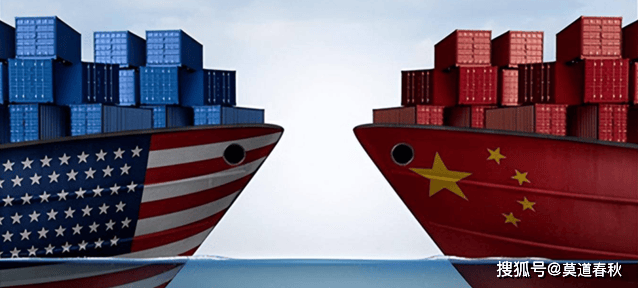
Core Viewpoint - The escalating US-China trade war, driven by Trump's imposition of high tariffs, aims to reduce the trade deficit with China, but achieving this goal appears challenging due to the interdependent nature of both countries' trade dynamics [2]. Trade Balance and Structure - In 2024, the total bilateral trade volume between China and the US reached $688.28 billion, a year-on-year increase of 3.7%, with China exporting $524.66 billion to the US (14.6% of total exports, up 4.9%) and importing $163.62 billion from the US (6.3% of total imports, down 0.1%), resulting in a trade surplus of $361 billion for China, accounting for 36.4% of its total surplus [2]. - The trade imbalance is largely due to the structural differences in the types of products traded, with China primarily exporting consumer electronics and labor-intensive goods, while the US exports high-tech products [2][4]. Competitive Advantage of Chinese Products - China's complete industrial chain and abundant production capacity give its products a strong competitive edge in the US market, making them difficult to replace in the long term [3]. US Exports to China - The main categories of US exports to China include high-end semiconductors, machinery, and civil aircraft, with significant imports in 2024: $50.8 billion in integrated circuits, $4.5 billion in semiconductor equipment, $7.5 billion in engines and parts, $5.2 billion in civil aircraft, and $15.3 billion in electric vehicles and audio equipment [4]. - Despite the demand for high-end products in China, US restrictions on exports, particularly in high-end chips and military-related products, limit the potential for increased trade [5]. Agricultural and Energy Products - Agricultural and energy products account for approximately 40% of China's imports from the US, with significant imports including $33.8 billion in soybeans, $6.05 billion in meat and cotton, and $17.7 billion in crude oil and propane/butane [6]. - The US is responding to China's tariff measures by seeking alternative markets for its agricultural and energy products, which are politically sensitive due to their impact on Trump's voter base [6].