
汇率风险管理产品

Search documents
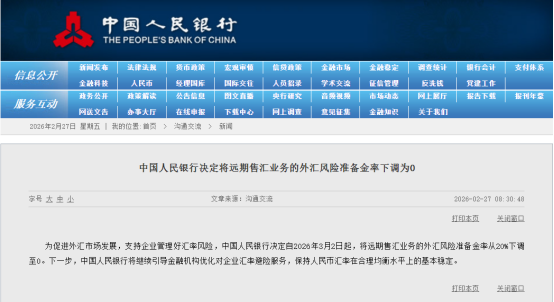
20%→0!央行,最新动作
Jing Ji Wang· 2026-02-28 01:56
Core Viewpoint - The People's Bank of China (PBOC) has decided to lower the foreign exchange risk reserve requirement for forward foreign exchange sales from 20% to 0% starting March 2, 2026, to promote the development of the foreign exchange market and support enterprises in managing exchange rate risks [1]. Group 1: Policy Changes - The reduction in the foreign exchange risk reserve requirement is aimed at lowering the forward purchase costs for enterprises and increasing their willingness to engage in foreign exchange hedging [1]. - This marks the first use of this tool by the PBOC in nearly three and a half years, indicating a rational exit from previous measures and a return to a neutral foreign exchange policy [1]. Group 2: Impact on Enterprises - The adjustment is expected to help financial institutions provide cost-effective foreign exchange risk management products to enterprises, aligning with a broader policy initiative announced on January 15 [1]. - By 2025, it is anticipated that the hedging ratio for enterprises will increase to 30%, and the proportion of trade settled in RMB will also rise to nearly 30%, suggesting that around 60% of enterprises will be less affected by exchange rate risks in foreign trade [1]. Group 3: Market Conditions - Since the beginning of the year, the RMB has appreciated against the USD by approximately 2%, influenced by a weakening US dollar index [2]. - The PBOC plans to continue guiding financial institutions to optimize exchange rate hedging services for enterprises, aiming to maintain the RMB exchange rate at a reasonable and balanced level [2].

时隔3年半央行再次使用这一工具,用意何在?
Sou Hu Cai Jing· 2026-02-27 08:59
Core Viewpoint - The People's Bank of China (PBOC) announced a reduction in the foreign exchange risk reserve ratio for forward foreign exchange sales from 20% to 0% effective March 2, 2026, to promote the development of the foreign exchange market and support enterprises in managing exchange rate risks [1][3]. Group 1: Policy Implications - The reduction in the foreign exchange risk reserve ratio is a macro-prudential management tool aimed at lowering the cost of forward foreign exchange purchases for enterprises and encouraging them to engage in foreign exchange hedging [1][3]. - This policy is part of a broader set of measures announced by the PBOC to enhance the level of exchange rate risk management services provided by financial institutions [3]. Group 2: Market Context - Since the beginning of the year, the Chinese yuan has appreciated against the US dollar, influenced by a weakening dollar index [3]. - The current international environment is complex, with increasing geopolitical conflicts and uncertainties that could lead to greater volatility in the global foreign exchange market and affect the yuan's exchange rate [3]. Group 3: Future Outlook - By 2025, the hedging ratio for enterprises is expected to rise to 30%, and the proportion of trade settled in renminbi is also projected to increase to nearly 30%, indicating that a significant number of enterprises will be less affected by exchange rate risks [3]. - The PBOC emphasizes the importance of maintaining a neutral stance on exchange rate risks and encourages enterprises and financial institutions to manage these risks effectively amid potential fluctuations in the yuan's value [3].
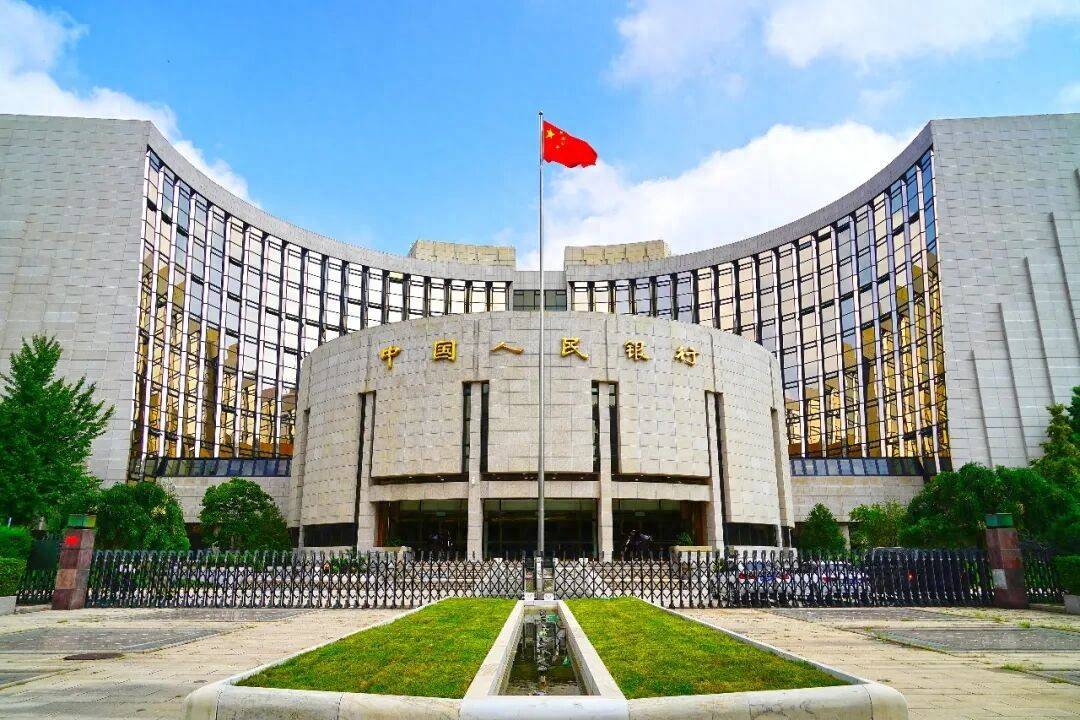
央行下调远期售汇风险准备金率至零 助力企业汇率风险管理
Xin Lang Cai Jing· 2026-02-27 03:59
Group 1 - The People's Bank of China announced a reduction in the foreign exchange risk reserve ratio for forward foreign exchange sales from 20% to 0%, effective March 2 [1] - This is the first use of this tool by the central bank in nearly three and a half years, aimed at promoting a neutral return of foreign exchange policies [1] - Experts indicate that this move will lower the forward purchase costs for enterprises and enhance their willingness to engage in foreign exchange hedging [1] Group 2 - The reduction in the risk reserve ratio is expected to support enterprises in better managing exchange rate risks and utilizing foreign exchange derivatives [1] - The central bank's recent policies encourage financial institutions to improve their exchange rate hedging services for enterprises [1] - By 2025, it is anticipated that the hedging ratio for enterprises will increase to 30%, with nearly 30% of goods trade settled in RMB, reflecting an enhanced awareness and capability in exchange rate risk management [1] Group 3 - The current international environment is complex, with increasing geopolitical conflicts that may exacerbate fluctuations in the global foreign exchange market and impact the RMB exchange rate [1] - Future RMB exchange rates may experience both appreciation and depreciation, with a dual-directional floating mechanism [2] - The People's Bank of China will continue to guide financial institutions in optimizing exchange rate hedging services for enterprises, aiming to maintain the RMB exchange rate at a reasonable and balanced level [2]
金融助力稳外贸再加码 更多支持政策在路上
Xin Hua Wang· 2025-08-12 06:26
Group 1 - The People's Bank of China (PBOC) has implemented multiple measures to stabilize foreign trade, including reducing financing costs for the real economy and providing targeted support for foreign trade enterprises affected by the pandemic [1] - As of the end of April this year, the balance of inclusive small and micro loans increased by 23.4% year-on-year, supporting a 41.5% year-on-year growth in the number of small and micro business entities [1] - The PBOC, along with the Ministry of Commerce and the State Administration of Foreign Exchange, has taken steps to help enterprises manage the impact of exchange rate fluctuations, including providing more foreign exchange risk management products and reducing transaction fees for small and micro enterprises [1] Group 2 - The demand for export credit insurance has increased due to various risks faced by foreign trade enterprises, with the scale of insurance underwritten by China Export & Credit Insurance Corporation exceeding $350 billion, a year-on-year increase of 12.7% [2] - Export credit insurance plays a significant role in reducing risks for enterprises and stabilizing foreign trade, with suggestions for preferential rates and improved claims processing to enhance the experience for small and micro foreign trade enterprises [2] - The Ministry of Commerce plans to further leverage export credit insurance to bolster risk protection and enhance financing support for foreign trade enterprises, aiming to boost their confidence in receiving orders [3] Group 3 - The PBOC will continue to guide the downward trend of financing costs for the real economy and increase financial support for stabilizing foreign trade [3] - The PBOC aims to open up the financial market further, simplify procedures for foreign investors, and improve the business environment to create favorable macroeconomic policies for foreign trade enterprises [3] - The Ministry of Commerce expresses confidence in maintaining stable growth in foreign trade while improving its quality [3]