泰小保

Search documents
“AI+金融”系列专题研究(二):应用场景打开,AI助推金融机构内部效率与外部价值双升
Haitong Securities International· 2025-11-25 14:02
Investment Rating - The report suggests a positive investment outlook for the AI and financial services sector, highlighting the potential for significant advancements and cost reductions due to the release of DeepSeek R1 in 2025, which is expected to be a turning point for localized AI deployment in financial institutions [7]. Core Insights - AI applications are rapidly penetrating core business areas and back-office functions of various financial institutions, enhancing both internal efficiency and external value [1][7]. - The report identifies that most financial institutions are currently in the exploration and accumulation phase of AI application, with deep application being an inevitable trend [14]. - AI is expected to transform financial business processes and organizational structures, ushering in a new era of digital intelligence in finance [7]. Summary by Sections Investment Recommendations - The report recommends focusing on several sectors within the financial industry, including: 1. Financial information services with key stocks like Tonghuashun, Jiufang Zhitu Holdings, and Guiding Compass [8]. 2. Third-party payment services, recommending stocks such as Newland and Newguodu, with related stocks like Lakala [9]. 3. Banking IT, with recommended stocks including Yuxin Technology, Jingbeifang, and Guodian Yuntong [9]. 4. Securities IT, recommending stocks like Hengsheng Electronics and Jinzhen Shares [10]. 5. Insurance IT, with recommended stocks including Xinzhi Software and Zhongke Software [11]. Application Stages - Financial institutions' AI applications are categorized into three stages: 1. Initial exploration of large model applications. 2. Development of certain model application capabilities with data accumulation. 3. Achieving deep application of large models [14]. Application Value - AI applications provide value through: 1. Internal cost reduction and efficiency improvement, optimizing operational management and core business processes [21]. 2. External value extraction, enhancing marketing and customer service to improve sales conversion and customer value [21]. Application Pathways - Different types of financial institutions exhibit varied pathways for AI application deployment: 1. Large institutions leverage strong self-research capabilities for deep AI application penetration. 2. Smaller institutions focus on cost-effective solutions, utilizing lightweight models and integrated systems for agile development [26]. AI Empowerment in Banking - AI is enhancing front-office quality and efficiency, optimizing back-office processes across various banking functions [43]. - In credit risk management, AI models can analyze financial data to identify potential risks and improve decision-making processes [47]. AI Empowerment in Securities - The number of securities firms exploring large models is rapidly increasing, with applications extending across various business functions, including investment advisory and research [58][59].
中国平安跻身深圳科技“四姐妹”?
Nan Fang Du Shi Bao· 2025-05-15 23:17
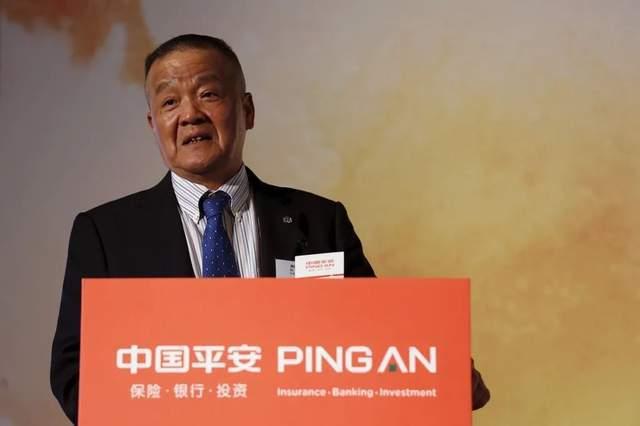
Core Viewpoint - The annual shareholder meeting of China Ping An highlighted the significant role of artificial intelligence (AI) in the company's future strategy, with a focus on digital transformation and technological integration in the financial sector [4][5]. Group A: AI and Digital Strategy - China Ping An aims to enhance its competitive edge through a comprehensive digital strategy, emphasizing the integration of AI, big data, and open-source models [4][5]. - The company has been recognized as one of the "Four Sisters of Technology" in Shenzhen, alongside Tencent, Huawei, and BYD, indicating its commitment to a technology-driven image [5]. - The term "AI" appeared over 20 times in the company's annual report, reflecting its centrality to the business strategy [4]. Group B: Financial Performance - In Q1 2025, China Ping An reported a revenue of 232.8 billion yuan, a decrease of 5.2% compared to the same period in 2024 [5]. - The net profit attributable to shareholders was 27.0 billion yuan, down 26.4% year-on-year, while the operating profit increased by 2.4% to 37.9 billion yuan [5]. Group C: AI Implementation and Impact - The company has established a robust AI infrastructure known as "953," which includes nine databases, five technology labs, and three tech subsidiaries, enhancing its data and scenario capabilities [6]. - In 2024, AI service interactions reached approximately 1.84 billion, covering 80% of customer service operations, demonstrating the extensive application of AI across various business functions [7]. - The cost of car insurance policies is decreasing by about 10% annually, while the premium scale continues to grow, showcasing the efficiency gains from technology [8]. Group D: Industry Trends - The insurance industry is increasingly adopting AI technologies, with companies like Xinhua Insurance and Taikang Life also launching AI-driven initiatives [8]. - The shift towards AI in the insurance sector represents a collective challenge and opportunity for all players in the industry, marking the beginning of a new era powered by technology [8].


马明哲再提人工智能,中国平安如何扮演深圳科技“四姐妹”?
Nan Fang Du Shi Bao· 2025-05-14 13:13
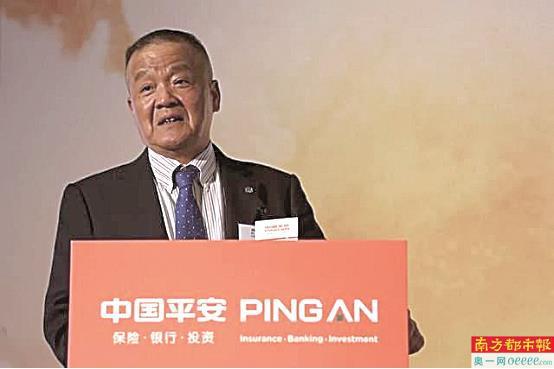
Core Viewpoint - The integration of artificial intelligence (AI) into China Ping An's operations is a key focus, with the company emphasizing its commitment to a comprehensive digital strategy by 2025, aiming to enhance competitiveness in the financial sector [1][3][5]. Group 1: AI Integration and Strategy - China Ping An's chairman, Ma Mingzhe, highlighted that AI has been fully integrated into various aspects of the company's core business, with significant advancements in customer service and risk management [1][6]. - The company has established a "953" AI technology foundation, which includes nine major databases, five advanced technology laboratories, and three technology subsidiaries, creating a competitive barrier in the AI space [5][6]. - The company reported that in 2024, AI service interactions reached approximately 1.84 billion, covering 80% of total customer service volume [6]. Group 2: Financial Performance - In Q1 2025, China Ping An's total revenue was 232.8 billion yuan, a decrease of 5.2% compared to the same period in 2024 [4]. - The operating profit attributable to shareholders was 37.9 billion yuan, reflecting a year-on-year increase of 2.4%, while net profit decreased by 26.4% to 27.0 billion yuan [4]. Group 3: Industry Context - The insurance industry is increasingly adopting AI technologies, with competitors like Xinhua Insurance and Taikang Life also launching AI-driven initiatives, indicating a broader industry shift towards technology empowerment [6][7]. - Analysts suggest that the insurance sector is entering a new era characterized by technological integration, presenting both opportunities and challenges for companies [7].