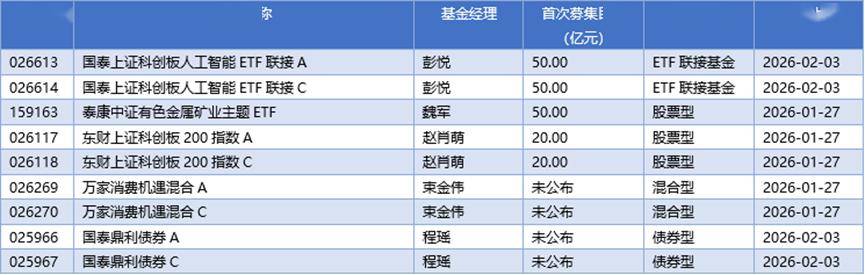
泰康中证有色金属矿业主题ETF

Search documents
稀有金属领涨市场,机构维持对有色行业乐观预期丨ETF基金日报
2 1 Shi Ji Jing Ji Bao Dao· 2026-02-12 02:44
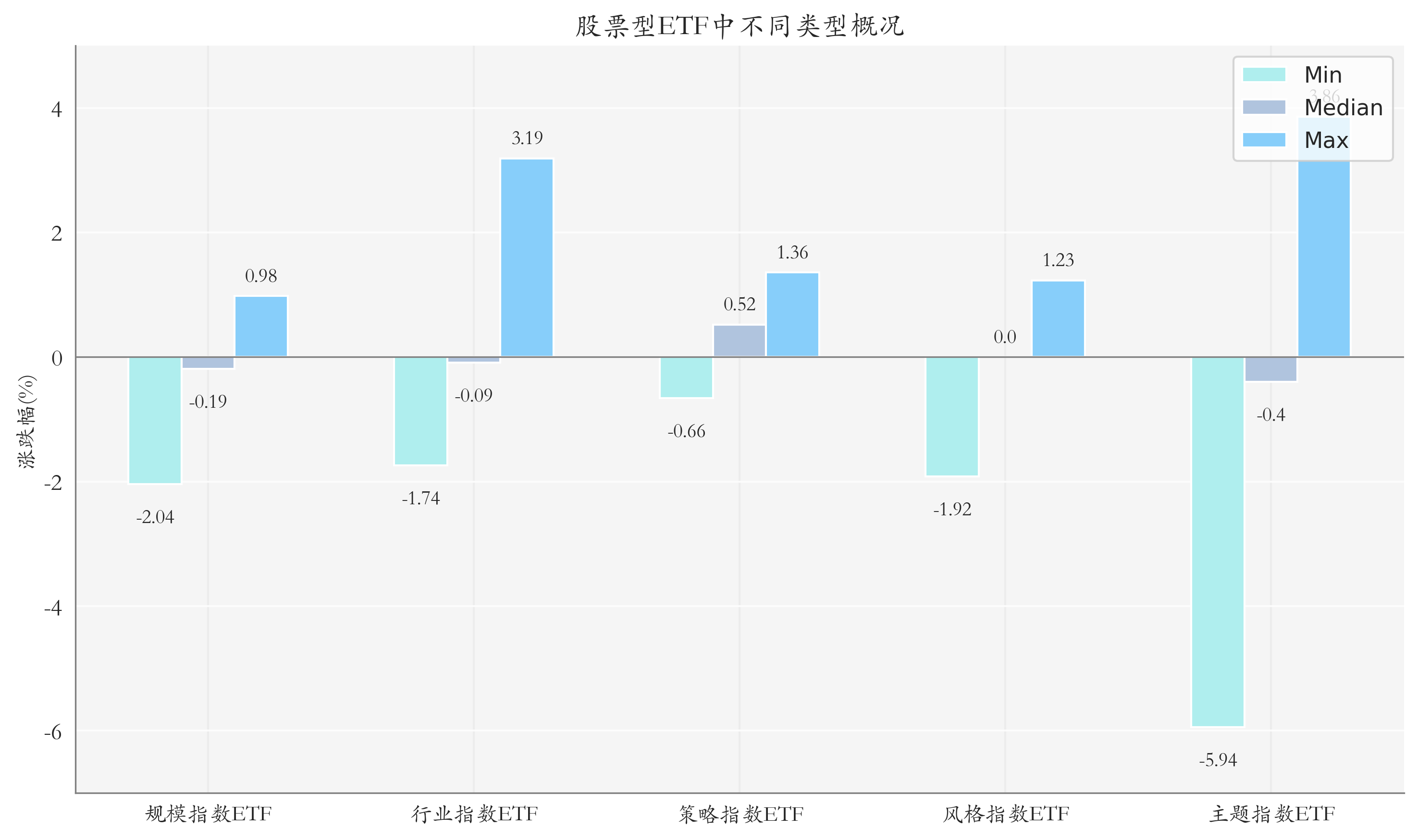
Market Overview - The Shanghai Composite Index rose by 0.09% to close at 4131.98 points, with a daily high of 4142.56 points [1] - The Shenzhen Component Index fell by 0.35% to close at 14160.93 points, with a daily high of 14250.34 points [1] - The ChiNext Index decreased by 1.08% to close at 3284.74 points, with a daily high of 3324.18 points [1] ETF Market Performance 1. Stock ETF Overall Performance - The median return of stock ETFs was -0.17% [2] - The highest return among scale index ETFs was from the Wanji Zhongzheng 800 Free Cash Flow ETF at 0.98% [2] - The highest return among industry index ETFs was from the Taikang Zhongzheng Nonferrous Metal Mining Theme ETF at 3.19% [2] - The highest return among strategy index ETFs was from the Huatai Zhongzheng 800 Free Cash Flow ETF at 1.36% [2] - The highest return among style index ETFs was from the Yinhua Zhongzheng 500 Value ETF at 1.23% [2] - The highest return among theme index ETFs was from the Jiashi Zhongzheng Rare Metal Theme ETF at 3.86% [2] 2. Stock ETF Performance Rankings - The top three stock ETFs by return were: - Jiashi Zhongzheng Rare Metal Theme ETF (3.86%) [6] - ICBC Credit Suisse Zhongzheng Rare Metal Theme ETF (3.79%) [6] - Guangfa Zhongzheng Rare Metal Theme ETF (3.78%) [6] 3. Stock ETF Fund Flows - The top three stock ETFs by fund inflow were: - E Fund ChiNext ETF (inflow of 1.065 billion) [9] - Southern Zhongzheng 1000 ETF (inflow of 510 million) [9] - Yongying Guozheng Commercial Satellite Communication Industry ETF (inflow of 394 million) [9] - The top three stock ETFs by fund outflow were: - Huatai Shanghai Stock Exchange Dividend ETF (outflow of 496 million) [10] - Huatai Bairui CSI 300 ETF (outflow of 489 million) [10] - Huaxia Shanghai Stock Exchange 50 ETF (outflow of 476 million) [10] 4. Stock ETF Margin Trading Overview - The top three stock ETFs by margin buying were: - E Fund ChiNext ETF (buying amount of 465 million) [12] - Huaxia Shanghai Stock Exchange Sci-Tech 50 ETF (buying amount of 365 million) [12] - Southern Zhongzheng 500 ETF (buying amount of 227 million) [12] - The top three stock ETFs by margin selling were: - Southern Zhongzheng 500 ETF (selling amount of 16.4511 million) [14] - Huatai Bairui CSI 300 ETF (selling amount of 13.3722 million) [14] - E Fund ChiNext ETF (selling amount of 3.2206 million) [14] Institutional Insights - Guotai Junan Securities emphasizes the investment opportunities in nonferrous metals after stabilization, noting that market risk appetite is declining and precious metal prices are adjusting [15] - CITIC Securities observes significant fluctuations in gold prices, suggesting that the market may have overestimated the hawkish stance of Kevin Warsh, while geopolitical uncertainties remain high [15]

E目了然丨资源为王时代,有色指数投资该如何参与?
Xin Lang Cai Jing· 2026-02-09 05:13
Core Insights - The global demand for non-ferrous metals is expanding, driven by industries such as new energy, artificial intelligence, and high-end manufacturing, leading to a strategic shift in these metals from traditional cyclical commodities to essential assets in emerging technologies [1] - The supply of mineral resources is constrained due to long extraction cycles and low supply elasticity, resulting in a growing supply-demand gap [1] - The restructuring of global supply chains and adjustments in resource pricing power have made the non-ferrous metal sector a focal point for capital market investments [1] Summary by Category Definition and Categories of Non-Ferrous Metals - Non-ferrous metals encompass all metals except for iron, manganese, and chromium, forming a diverse family with extensive applications across various sectors of the economy [2] - They can be categorized into five core types based on their properties and applications, with distinct price-driving logic: precious metals (gold, silver) are driven by safe-haven attributes and inflation resistance; industrial metals (copper, aluminum, zinc, lead) are linked to macroeconomic recovery; energy metals (lithium, cobalt, nickel) are essential for new energy technologies; rare metals (rare earths, tungsten, molybdenum) are critical for high-end manufacturing and defense; and minor metals (germanium, gallium, antimony) are vital in niche high-tech applications [2] A-Share Non-Ferrous Metal Indices Overview - Multiple non-ferrous metal indices exist in the A-share market, each covering different dimensions from upstream mining to the entire industry chain [3][4] - The CSI Non-Ferrous Metal Mining Theme Index focuses on upstream resources, selecting 40 companies with non-ferrous metal reserves, reflecting investment value in resource assets [3] - The CSI Segmented Non-Ferrous Metal Industry Theme Index includes 50 companies across industrial, precious, energy, and minor metals, providing a balanced representation of the sector [3] - The CSI Non-Ferrous Metal Index covers 60 large, liquid companies across the entire non-ferrous metal value chain, while the CSI Shenwan Non-Ferrous Metal Index includes 50 companies from mining to application [4] - The CSI 800 Non-Ferrous Metal Index selects 37 large-cap stocks, providing a comprehensive view of the industry's development across all key segments [4] Choosing the Right Non-Ferrous Metal Index - Investors should align their choices with their investment goals and risk tolerance, focusing on indices that match their outlook on economic recovery, new energy growth, or resource scarcity [6] - For high elasticity, indices with fewer components and higher concentration in top weights are recommended; for balanced exposure, indices covering the entire industry chain are preferable; for a mix of growth and risk, the CSI Non-Ferrous Metal Mining Theme Index is suitable [6] Investment Opportunities - The recently launched Taikang CSI Non-Ferrous Metal Mining Theme ETF (Fund Code: 159163) is highlighted as a quality tool for investors looking to capitalize on the long-term value of resource scarcity in the non-ferrous metal sector [7][8]
次新基金:看好后市 快速进场
Shang Hai Zheng Quan Bao· 2026-02-04 18:28
Core Insights - New funds are actively entering the market, with several newly established active equity funds showing significant fluctuations in net value and some ETFs quickly reaching full positions [1][2] - Many new funds are shortening their fundraising periods to seize investment opportunities, leading to substantial inflows into certain new funds [1][4] Group 1: Fund Performance - The Xinhua Low Carbon Economy Mixed Fund, established on December 23, 2025, achieved a return of 18.52% by February 3, 2026 [2] - The Morgan Huikai Growth Mixed Fund, with a fundraising scale of 1.53 billion yuan, reported a return of 8.47% since its establishment on December 2, 2025, as of January 30, 2026 [2] - The Yongying Industry Opportunity Smart Selection Mixed Fund, established on January 28, 2026, recorded a return of 4.3% by February 3, 2026 [2] - The Guotai Haitong Low Carbon Economy Smart Selection Mixed Fund, established on January 20, 2026, achieved a return of nearly 3% within less than half a month [2] Group 2: ETF Activity - The Taikang CSI Nonferrous Metal Mining Theme ETF, established on January 27, 2026, had an equity investment ratio of 98.8% of total assets by February 2, 2026, ahead of its listing on February 9, 2026 [3] - The Invesco Great Wall CSI Nonferrous Metal Mining Theme ETF, established on January 26, 2026, reported an equity investment ratio of 42.59% of total assets by January 30, 2026, before its listing on February 6, 2026 [3] Group 3: Fundraising Trends - Some new funds are attracting significant inflows after opening for regular subscriptions, with the Penghua Qihang Quantitative Stock Selection Mixed Fund receiving over 3 billion yuan in effective subscription applications by February 2, 2026 [4] - The effective subscription confirmation ratio for the Penghua Qihang Quantitative Stock Selection Mixed Fund was 57.08% on February 2, 2026 [4] - The fundraising deadline for several new funds has been advanced, including the GF CSI 500 Index Quantitative Enhancement Fund, which moved its deadline from February 9 to February 6, 2026 [5]
新发ETF,背后“买主”浮出水面
Sou Hu Cai Jing· 2026-02-03 13:06
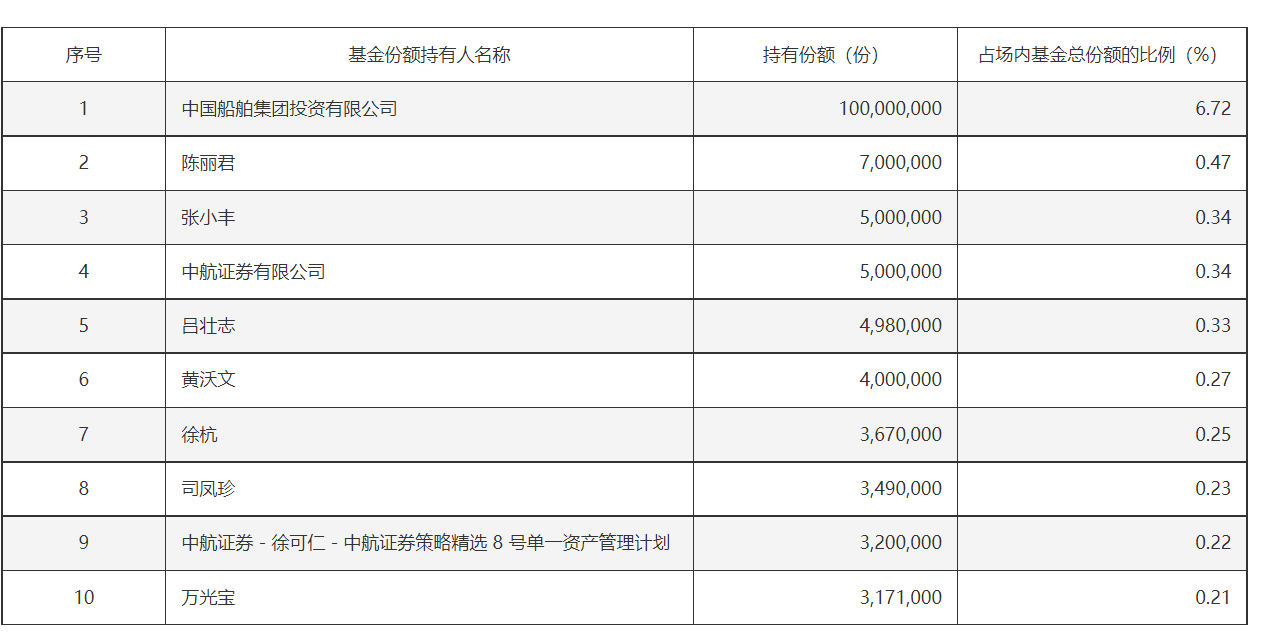
Group 1 - The core point of the article highlights the recent surge in newly launched ETFs, with significant investments from institutional players like China Shipbuilding Group Investment Co., which purchased 100 million yuan in the Fortune China Securities Intelligent Shipbuilding Industry ETF [2][3] - The Fortune China Securities Intelligent Shipbuilding Industry ETF is the first ETF focused on shipbuilding, comprising 40 representative listed companies in the shipbuilding industry, reflecting the overall performance of the sector [4][5] - As of February 2, 2023, the top ten holdings of the ETF include major companies such as China Power, China Shipbuilding, and China Ship Defense, indicating a strong focus on the industrial sector [5][7] Group 2 - Recent data shows a significant outflow from broad-based ETFs, with a net outflow of 16.349 billion yuan on February 2, 2023, particularly affecting the Southern CSI 500 ETF and Huatai-PB CSI 300 ETF [10] - In contrast, certain thematic industry ETFs have attracted substantial inflows, with the Guotai Communication ETF seeing a net inflow of 1.399 billion yuan on the same date [10] - From January 14 to February 2, 2023, stock-type ETFs experienced a cumulative net outflow exceeding 830 billion yuan, while some thematic ETFs attracted over 10 billion yuan each [10][11] Group 3 - The number of ETFs with assets exceeding 100 billion yuan has significantly decreased, with only three ETFs surpassing this threshold as of February 2, 2023 [11] - The market outlook suggests that sectors such as AI, solid-state batteries, robotics, and innovative pharmaceuticals are expected to present investment opportunities, with AI being a key focus area for 2026 [12]
基金早班车丨开年调研近千次,AI与商业航天抢占公募视野
Sou Hu Cai Jing· 2026-01-15 00:34
Group 1 - As of January 13, 145 public funds have conducted research on 154 companies, totaling 999 instances, indicating a significant increase compared to previous years. The top three sectors attracting attention are computer, electronics, and pharmaceutical biology, with emerging areas like digital RMB, artificial intelligence, robotics, brain-computer interfaces, and commercial aerospace receiving intensive focus [1] - The A-share market showed mixed performance on January 14, with the Shanghai Composite Index closing down by 12.67 points (0.31%) at 4126.09 points, while the Shenzhen Component Index rose by 79.2 points (0.56%) to 14248.6 points. The total trading volume in the two markets reached 3.94 trillion yuan, marking the third consecutive day of exceeding 3.5 trillion yuan [1] Group 2 - On January 14, nine new funds were launched, primarily equity and mixed funds, including the Guotai CSI Science and Technology Innovation Board Artificial Intelligence ETF with a fundraising target of 5 billion yuan. A total of 78 funds announced dividends, with the highest dividend payout being 1.00 yuan per 10 shares for the Changxin National Defense Military Industry Quantitative Flexible Allocation Mixed Securities Investment Fund [2] - The recent market upturn has led to accelerated capital inflows, prompting some high-performing equity funds to suspend subscriptions. This strategy aims to mitigate the impact of rapid capital inflows and maintain the fund managers' strategic focus for future market developments [2] - Over the past year, net subscriptions for non-gold metal theme ETFs exceeded 51 billion yuan, with 15 related products currently totaling nearly 80 billion yuan in scale. Recent trends indicate a concentration of new applications for color metal theme funds, driven by global supply-demand mismatches and the transition to green energy [2]