
有色金属投资

Search documents
紫金矿业:金铜收益充分释放,持续看好公司配置价值-20260331
China Post Securities· 2026-03-31 10:35
Investment Rating - The report maintains a "Buy" rating for the company, indicating a positive outlook for its stock performance in the near term [8][10]. Core Insights - The company achieved a net profit attributable to shareholders of 51.8 billion yuan in 2025, with total operating revenue reaching 349.1 billion yuan, reflecting a year-on-year growth of 15% [4]. - The production of copper and gold has increased significantly, with copper production exceeding 1 million tons and gold production reaching 90 tons in 2025, supported by high prices for these metals [5]. - The company plans to acquire Chifeng Gold, enhancing its position in the gold sector, with the acquisition expected to increase its shareholding to approximately 25.85% post-transaction [7]. - Profit forecasts for 2026-2028 suggest continued growth, with expected net profits of 77.8 billion yuan, 88.4 billion yuan, and 91.3 billion yuan respectively, translating to year-on-year growth rates of 50%, 14%, and 3% [8]. Financial Performance - In 2025, the company reported a total profit of 80.8 billion yuan, a 68% increase year-on-year, and operating cash flow of 75.4 billion yuan, up 54% from the previous year [4]. - The company's unit sales costs for gold and copper have increased slightly, attributed to factors such as declining ore grades and rising operational costs, but are expected to stabilize as production improves [6]. - The company's financial metrics indicate a price-to-earnings (P/E) ratio of 16.81, with projections for the next three years showing a decrease in P/E to 11.21, 9.86, and 9.55 respectively [11].

有色金属行业周报:中东冲突供应扰动频发,关注铝锂投资机会-20260330
Yin He Zheng Quan· 2026-03-30 08:10
Investment Rating - The report suggests a focus on investment opportunities in aluminum and lithium due to supply disruptions caused by Middle Eastern conflicts [4]. Core Viewpoints - The non-ferrous metals industry is experiencing price fluctuations, with a notable increase in aluminum and lithium prices driven by geopolitical tensions and supply chain disruptions [4][6]. - The report highlights the potential for gold prices to rise in the long term due to increased geopolitical risks and economic uncertainties, suggesting it as a favorable investment opportunity [4]. - The ongoing conflict in the Middle East has led to a significant increase in the supply gap for electrolytic aluminum, which may drive prices higher [4]. Summary by Sections 1. Non-Ferrous Metals Sector Market Review - As of March 28, the SW Non-Ferrous Metals Index increased by 2.78%, outperforming the Shanghai Composite Index and the CSI 300 Index, which decreased by 1.09% and 1.41% respectively [6][7]. - The non-ferrous metals sector has shown a year-to-date increase of 3.32%, while the Shanghai Composite Index and CSI 300 Index have decreased by 1.39% and 2.75% respectively [6]. 2. Non-Ferrous Metals Price Review (a) Base Metals - Prices for copper, aluminum, zinc, lead, nickel, and tin have shown increases of 1.62%, 0.21%, 2.48%, 1.13%, 3.01%, and 5.37% respectively compared to the previous week [17][18]. - The report provides specific price points for these metals, with copper at 95,930 CNY/ton and aluminum at 23,935 CNY/ton [17]. (b) Precious Metals - Gold and silver prices have decreased by 3.17% and increased by 0.23% respectively, with gold priced at 998.66 CNY/gram [46][47]. - The report notes a significant drop in gold prices due to market liquidity adjustments amid geopolitical tensions [4]. (c) Rare and Minor Metals - Lithium carbonate prices have increased by 8.47% for battery-grade and 7.96% for industrial-grade, with current prices at 160,000 CNY/ton and 156,000 CNY/ton respectively [57][59]. - The report indicates that supply disruptions from Zimbabwe and Australia may further impact lithium prices positively [4]. 3. Industry Dynamics - Barrick Mining has postponed the development of the Reko Diq copper project due to safety concerns in the Middle East, adding uncertainty to the project timeline [83]. - Rio Tinto announced that the Resolution copper mine is expected to start production in the mid-2030s, which could significantly impact U.S. copper supply [84].



永安期货有色早报-20260330
Yong An Qi Huo· 2026-03-30 05:53
1. Report Industry Investment Rating - No information provided in the report regarding the industry investment rating 2. Core Viewpoints - The report maintains a mid - term bullish view on copper, believing it has demand growth and supply constraints, and suggests buying and holding in the mid - term. It also expects aluminum to have relative advantages among non - ferrous metals, with an upward trend in the export processing prosperity of aluminum plants. Zinc has a general domestic fundamental situation, but there are risks of production cuts overseas. Nickel and stainless steel are expected to maintain range - bound oscillations. Lead is expected to have a weak and volatile price. Tin's price is greatly affected by global macro - liquidity, with strong upward elasticity under loose liquidity and large downward adjustment space under tightened liquidity. Industrial silicon's price is expected to fluctuate with costs in the short - term and oscillate at the cycle bottom in the long - term. Carbonate lithium's price is macro - driven in the short - term, and there is a high probability of spot shortage in the second quarter [1][2][4][7][9][12][15][17] 3. Summary by Metal Copper - **Price and Inventory**: This week, copper prices rebounded to the 95,000 - 96,000 RMB range. The domestic scrap copper supply is expected to remain tight, which may drive the further reduction of refined copper inventory. The inventory of Shanghai Futures Exchange decreased by 51,986 tons, and the bonded warehouse premium remained unchanged [1] - **Demand**: High - end consumption is strong after the Spring Festival. Although Goldman Sachs has significantly lowered the consumption growth rate of domestic electrolytic copper in 2026 to a negative value, the report believes that the progress of aluminum replacing copper is debatable [1] - **Outlook**: The recent decline in copper prices is due to inventory pressure and potential interest - rate hikes and liquidity pressure caused by the escalation of geopolitical conflicts. The report maintains a mid - term bullish view on copper and suggests paying attention to the support around 96,000 RMB next week [1] Aluminum - **Price and Inventory**: The price of aluminum ingots has increased, and the domestic aluminum ingot inventory has changed from rising to falling. The inventory of the Shanghai Futures Exchange increased by 2,527 tons, and the LME inventory decreased by 2,200 tons [1] - **Supply**: The production capacity of two aluminum plants in the UAE and Bahrain has been affected, and the global electrolytic aluminum production growth rate is expected to decline further, making supply the main trading idea in the short - term [1] - **Outlook**: Aluminum has relative advantages among non - ferrous metals. The overseas premium has risen further, and the fundamentals have improved marginally. The export processing prosperity of aluminum plants is expected to increase further [1] Zinc - **Price and Inventory**: The price of zinc ingots has increased, and the inventory of the Shanghai Futures Exchange decreased by 3,436 tons, while the LME inventory decreased by 275 tons [2] - **Supply and Demand**: The mid - term supply of zinc ore is expected to be tight. The domestic and imported TC is at a low level, and the resumption of production in northern mines in spring is expected to drive a rebound. The demand has recovered slightly after the lifting of environmental protection restrictions in the north, and the overall inventory has accumulated to over 250,000 tons [2] - **Outlook**: The domestic fundamentals of zinc are general, but there are risks of production cuts overseas due to limited long - term capital investment and supply disturbances in Iran [2] Nickel - **Price and Inventory**: The price of nickel has decreased slightly. The domestic inventory has continued to accumulate, and the LME inventory has decreased slightly [3][4] - **Supply and Demand**: The supply of pure nickel in February was 32,600 tons (a month - on - month decrease of 2,600 tons). The demand is mainly for rigid needs, and the premium of Jinchuan and Russian nickel has weakened [4] - **Outlook**: The short - term fundamentals are weak, but there are many disturbances in the supply of nickel ore. Under the policy of strengthened nickel price control in Indonesia, it is expected that the ore will remain in a tight state throughout the year. The nickel price is expected to maintain range - bound oscillations [4] Stainless Steel - **Price and Inventory**: The price of stainless steel has changed little, and the inventory has decreased slightly this week [7] - **Supply and Demand**: The steel mill's production schedule has decreased slightly month - on - month, and the downstream is gradually recovering. The ore price has pushed up the prices of ferronickel and ferrochrome [7] - **Outlook**: The fundamentals are generally weak. Affected by the supply - side policy and the weak fundamentals, it is expected to follow the nickel price and maintain range - bound oscillations [7] Lead - **Price and Inventory**: The price of lead has changed little, and the social inventory has decreased by nearly 20,000 tons this week [8][9] - **Supply and Demand**: The profit of primary lead is sufficient, and the start - up rate of concentrate in spring is expected to increase. The resumption of production of recycled lead is expected to be delayed in March. The battery start - up rate has recovered this week, and the inventory of battery finished products of dealers has decreased [9] - **Outlook**: Affected by the overseas inventory and the support of recycled lead profit, the lead price is expected to maintain a weak and volatile trend [9] Tin - **Price and Inventory**: The tin price has oscillated, and the liquidity pressure has suppressed it. The domestic processing fee has a slight upward trend, and the LME inventory has remained unchanged [12] - **Supply and Demand**: The supply in Wabang is expected to recover rapidly in the second quarter, and Indonesia has determined a quota of over 60,000 tons in 2026. The demand is relatively strong, but the contribution of new consumption needs to be continuously verified [12] - **Outlook**: The tin price is greatly affected by global macro - liquidity. If the liquidity is loose, the upward elasticity is strong; if the liquidity is tightened, the downward adjustment space is large [12] Industrial Silicon - **Price and Inventory**: The price of industrial silicon is expected to fluctuate with costs. The carbon base of different regions has changed, and the number of warehouse receipts has increased by 5 [13][15] - **Supply and Demand**: The overall start - up in the north has changed little, and most small and medium - sized manufacturers in the southwest are in a furnace - shutdown state. The supply and demand are close to a balanced state [15] - **Outlook**: In the long - term, the over - capacity of industrial silicon is still high, and the price is expected to oscillate at the cycle bottom based on the seasonal marginal cost [15] Carbonate Lithium - **Price and Inventory**: The price of carbonate lithium has increased, and the basis of the main contract has decreased. The number of warehouse receipts has decreased by 640 [17] - **Supply and Demand**: The export of Zimbabwe has not recovered, and the domestic supply of raw materials is tight. The lithium salt enterprises maintain a price - holding attitude, and the downstream purchases at a low level. The trading volume of futures and spot has decreased this week [17] - **Outlook**: In the short - term, the price is macro - driven. In the second quarter, there is a high probability of spot shortage, but the upward space needs the resonance of futures and spot or the realization of unexpected supply disturbances. It is recommended to pay attention to domestic automobile orders, the speed of warehouse receipt reduction, and the export policy of Zimbabwe [17]
流动性改善-有色怎么看
2026-03-26 13:20
Summary of Conference Call on Non-Ferrous Metals Sector Industry Overview - The non-ferrous metals sector has seen a significant reduction in financial attributes, with the marginal impact of Federal Reserve policies diminishing. Prices for gold and copper have entered a reasonable lower range [1][2][3]. Key Insights - **Copper Price Dynamics**: Copper prices are stable in the range of $11,000 to $12,000 per ton, with strong demand from downstream sectors. A shortage at the mining level supports supply rigidity [1][4]. - **Valuation Levels**: Leading companies in the sector are currently undervalued, with aluminum companies valued at less than 10 times earnings, copper companies around 12 times, and gold companies at approximately 14 times [1][4]. - **Lithium as a Preferred Commodity**: Lithium carbonate is highlighted as a top choice due to supply constraints from African mining policies, leading to a reduction of 100,000 to 150,000 tons, with inventory dropping below 100,000 tons [1][5]. - **Geopolitical Impact on Aluminum**: The ongoing conflict in the Middle East has affected aluminum production, with the region accounting for about 10% of global capacity. High oil prices are raising production costs, providing a defensive attribute to the sector [1][6]. Investment Recommendations - **Core Stocks to Watch**: - Lithium: Yongxing Materials, Salt Lake Co. - Copper: Zijin Mining - Aluminum: China Hongqiao [1][7]. - **Investment Strategy**: - Focus on lithium if avoiding macroeconomic judgments, as the sector's stock prices are under pressure from negative feedback expectations regarding storage demand [5][6]. - If geopolitical tensions persist but do not escalate, consider investing in electrolytic aluminum due to supply risks [6]. - In a scenario of easing geopolitical tensions, prioritize investments in precious metals and copper, as current prices reflect pessimistic market expectations [6][7]. Risks and Considerations - **Potential Risks**: A shift in U.S. policy towards a "war promotes peace" strategy could lead to macroeconomic expectations fluctuating, potentially causing a final price drop in commodities [1][4]. - **Market Sentiment**: The current market sentiment is heavily influenced by fear, with discussions around interest rate hikes being more of a reaction than a likely outcome [2][3]. Additional Insights - **Long-term Value**: The narrative supporting copper and gold as long-term investment assets remains intact, with strategic metals gaining importance as supply chains shift from cost prioritization to security prioritization [2][3]. - **Performance Expectations**: The first quarter of 2026 is expected to show strong performance for the non-ferrous metals sector, driven by higher average prices despite recent adjustments [4][5]. This summary encapsulates the key points from the conference call regarding the non-ferrous metals sector, highlighting current market conditions, investment opportunities, and associated risks.
有色金属行业双周报:地缘冲突持续扰动,有色金属全面下跌
Guoyuan Securities· 2026-03-25 05:24
Investment Rating - The report suggests a cautious approach to seeking investment opportunities in the non-ferrous metals sector due to ongoing geopolitical conflicts and fluctuating expectations regarding interest rate cuts by the Federal Reserve [5]. Core Insights - The non-ferrous metals industry index has decreased by 15.08% over the past two weeks, ranking last among 31 primary industries in the Shenwan index, indicating significant market concerns regarding supply and demand dynamics [2][12]. - Precious metals have experienced a notable decline, with COMEX gold prices falling by 13.30% and COMEX silver prices dropping by 19.94% in the same period, reflecting pressures from inflation concerns and a strong dollar [20]. - The tungsten market shows strong upward momentum, with black tungsten concentrate prices increasing by 11.44% over the past two weeks, driven by geopolitical tensions and domestic policy constraints [36]. Summary by Sections Market Review - The non-ferrous metals industry index fell by 15.08% from March 9 to March 20, 2026, with all sub-sectors, including small metals (-18.50%), precious metals (-12.52%), and industrial metals (-16.07%), showing declines [2][12]. Precious Metals - As of March 20, COMEX gold closed at $4,492.00 per ounce, down 13.30% over two weeks, while COMEX silver closed at $67.81 per ounce, down 19.94% [20]. - The report highlights the impact of geopolitical tensions and regulatory tightening on market liquidity, which has pressured precious metal prices [20]. Industrial Metals - LME copper prices were $12,021.50 per ton, down 6.14% over two weeks, while domestic copper prices averaged 95,470 yuan per ton, down 5.60% [30]. - The report anticipates a weak balance in copper prices due to macroeconomic pressures and cost support [30]. Small Metals - Black tungsten concentrate prices rose to 1,023,000 yuan per ton, up 11.44% over two weeks, with a year-to-date increase of 123.85% [36]. - The report notes that the tungsten market is influenced by global supply chain disruptions and domestic production constraints [36]. Rare Earths - The China Rare Earth Price Index was 255.31, down 13.58% over two weeks, but up 17.64% year-to-date [45]. - The report indicates that demand from downstream sectors is slowing, impacting the rare earth market [45]. Energy Metals - The average price of electrolytic cobalt was 431,000 yuan per ton, down 0.12% over two weeks, while lithium carbonate prices averaged 149,000 yuan per ton, down 4.03% [54]. - The report highlights the cautious market sentiment regarding the electric vehicle sector and supply chain dynamics [54].

【华宝期货】有色金属周报-20260316
Hua Bao Qi Huo· 2026-03-16 11:50
1. Report Industry Investment Rating - There is no information about the industry investment rating in the provided content. 2. Core Views of the Report Aluminum - Geopolitical conflicts are changeable, and the risk premium of the global aluminum supply chain still exists, with amplified price volatility. In the short term, the Middle - East situation is stalemated. With the continuous tightening of LME liquidity, overseas prices are strongly supported, and the Shanghai - London ratio is decreasing. It is expected to oscillate strongly at a high level overall [13]. Zinc - In the medium - and long - term, the increase in supply still exerts upward pressure, but it will take time to materialize. The price will be range - bound in the short term. Attention should be paid to macro - risk events and the trends of internal and external inventory consumption, and be vigilant against the phased impact brought by macro - sentiment [14]. Tin - The price trend is oscillating weakly [16]. Carbonate Lithium - The increase in supply suppresses the lithium price, and the low inventory limits a sharp decline. The lithium price is under pressure and oscillates weakly [18]. 3. Summary According to the Directory 01. Colorful Weekly Market Review - **Futures and Spot Prices**: The closing prices of copper, zinc, tin, and nickel futures decreased last week, with week - on - week declines of - 0.73%, - 0.49%, - 4.97%, and - 0.15% respectively. Aluminum futures rose by 0.99%. In the spot market, copper, zinc, and tin prices decreased, with week - on - week declines of - 0.50%, - 0.98%, and - 3.13% respectively. Aluminum and nickel prices rose, with week - on - week increases of 2.83% and 0.63% respectively [9]. 02. This Week's Non - ferrous Market Forecast Aluminum - **Logic**: Last week, aluminum prices were strong at a high level. The geopolitical situation in the Middle East is uncertain, and the market is still pricing in geopolitical risks. Domestically, the supply of bauxite is sufficient, and the price is stable. Due to the sharp fluctuations in freight rates and the rise in oil prices, the cost of sea transportation has increased, and the market is in a wait - and - see state. The weekly operating rate of domestic aluminum downstream processing leading enterprises increased by 2.4 percentage points to 61.9%, and all sectors increased. However, high aluminum prices and macro - uncertainties are suppressing the release of demand [13]. - **View**: Geopolitical conflicts are changeable, and the risk premium of the global aluminum supply chain still exists, with amplified price volatility. It is expected to oscillate strongly at a high level overall [13]. Zinc - **Logic**: Last week, zinc prices were weak. The domestic zinc concentrate processing fee was stable, and the overseas supply was disturbed. The operating rate of the galvanizing industry increased, but the terminal resumption of work was slow, and the finished product inventory increased [14]. - **View**: In the medium - and long - term, the increase in supply still exerts upward pressure, but it will take time to materialize. The price will be range - bound in the short term [14]. Tin - **Logic**: In December, the import volume of domestic tin ore increased. The supply from Myanmar is on the rise. In February 2026, the domestic refined tin production decreased. In March, the production increased seasonally, but the lack of raw materials in Yunnan and Jiangxi still restricts the increase in production. The demand has not changed much, and the high price of tin suppresses the release of demand, leading to an increase in inventory [16]. - **View**: The price trend is oscillating weakly [16]. Carbonate Lithium - **Logic**: Last week, the main contract of carbonate lithium futures rebounded after reaching the bottom and then fell under pressure. The supply is accelerating the recovery, the production of cathode materials is increasing, and the inventory is accumulating. The terminal sales of new energy vehicles have not improved significantly, but the energy storage maintains high prosperity. The total inventory is decreasing, but the inventory structure is differentiated. The cost of low - grade raw materials is weakening, and the macro - policy is positive but still uncertain [18]. - **View**: The increase in supply suppresses the lithium price, and the low inventory limits a sharp decline. The lithium price is under pressure and oscillates weakly [18]. 03. Variety Data Aluminum - **Bauxite**: The price of domestic high - grade bauxite in Henan decreased by 20 yuan/ton week - on - week and 65 yuan/ton year - on - year. The price of low - grade bauxite decreased by 20 yuan/ton week - on - week and 65 yuan/ton year - on - year. The average price of imported bauxite increased by 1.88 dollars/ton week - on - week and decreased by 29.33 dollars/ton year - on - year. The port arrival volume decreased by 10.91 tons week - on - week and increased by 149.05 tons year - on - year. The port departure volume decreased by 100.36 tons week - on - week and decreased by 60.55 tons year - on - year [23][26]. - **Alumina**: The domestic price in Henan increased by 40 yuan/ton week - on - week and decreased by 555.3 yuan/ton year - on - year. The full cost increased by 22.6 yuan/ton week - on - week and decreased by 610.6 yuan/ton year - on - year. The profit in Shanxi increased by 61.71 yuan/ton week - on - week and decreased by 151.46 yuan/ton year - on - year [29]. - **Electrolytic Aluminum**: The total cost increased by 64.49 yuan/ton week - on - week and decreased by 1099.75 yuan/ton year - on - year. The regional price difference between Foshan and SMM A00 aluminum increased by 10 yuan/ton week - on - week and decreased by 40 yuan/ton year - on - year [31]. - **Operating Rate**: The operating rate of aluminum cables increased by 2 percentage points to 65%. The operating rate of aluminum foil remained stable at 72.9%. The operating rate of aluminum plates and strips increased by 1 percentage point to 70%. The operating rate of aluminum profiles increased by 7.3 percentage points to 51.8%. The operating rate of primary aluminum alloy increased by 1.8 percentage points to 53%. The operating rate of recycled aluminum alloy increased by 2.5 percentage points to 58.8% [36][37]. - **Inventory**: The bonded area inventory in Shanghai increased by 700 tons week - on - week and decreased by 22600 tons year - on - year. The total bonded area inventory increased by 700 tons week - on - week and decreased by 30300 tons year - on - year. The social inventory increased by 5.5 tons week - on - week and increased by 46.4 tons year - on - year. The weekly outbound volume of aluminum ingots in the main consumption areas increased by 6.1 tons week - on - week and decreased by 1.85 tons year - on - year. The SHFE inventory increased by 21927 tons week - on - week and increased by 183185 tons year - on - year. The LME inventory decreased by 11575 tons week - on - week and decreased by 58250 tons year - on - year [42][43]. - **Basis and Spread**: The basis of the current month increased by 315 yuan/ton week - on - week and increased by 130 yuan/ton year - on - year. The basis of the main contract increased by 425 yuan/ton week - on - week and increased by 220 yuan/ton year - on - year. The basis of the third - consecutive contract increased by 375 yuan/ton week - on - week and increased by 45 yuan/ton year - on - year. The spread between the current month and the main contract increased by 110 yuan/ton week - on - week and increased by 65 yuan/ton year - on - year. The spread between the current month and the third - consecutive contract increased by 60 yuan/ton week - on - week and decreased by 95 yuan/ton year - on - year [49][50]. Zinc - **Zinc Concentrate**: The price of domestic zinc concentrate decreased by 56 yuan/metal ton week - on - week and increased by 1812 yuan/metal ton year - on - year. The domestic processing fee remained unchanged week - on - week and decreased by 1700 yuan/metal ton year - on - year. The imported processing fee decreased by 4.13 dollars/dry ton week - on - week [60]. - **Production Profit, Import Profit and Loss, and Inventory**: The enterprise production profit decreased by 56 yuan/metal ton week - on - week and increased by 1544 yuan/metal ton year - on - year. The import profit and loss increased by 151.3 yuan/ton week - on - week and increased by 291.25 yuan/ton year - on - year. The inventory of imported zinc concentrate in Lianyungang increased by 10,000 tons week - on - week and increased by 40,000 tons year - on - year [63]. - **Refined Zinc Inventory**: The social inventory of zinc ingots in SMM's seven regions increased by 1.36 tons week - on - week and increased by 13.7 tons year - on - year. The bonded area inventory remained unchanged week - on - week and decreased by 0.82 tons year - on - year. The SHFE refined zinc inventory increased by 12427 tons week - on - week and increased by 73820 tons year - on - year. The LME zinc inventory increased by 2925 tons week - on - week and decreased by 62425 tons year - on - year [67]. - **Galvanizing**: The production increased by 88725 tons week - on - week and decreased by 36850 tons year - on - year. The operating rate increased by 13.94 percentage points to 53%. The raw material inventory increased by 710 tons week - on - week and increased by 1905 tons year - on - year. The finished product inventory increased by 6400 tons week - on - week and decreased by 7400 tons year - on - year [71]. - **Basis and Spread**: The basis of the current month increased by 100 yuan/ton week - on - week and decreased by 5 yuan/ton year - on - year. The basis of the main contract increased by 50 yuan/ton week - on - week and decreased by 120 yuan/ton year - on - year. The basis of the third - consecutive contract increased by 55 yuan/ton week - on - week and decreased by 375 yuan/ton year - on - year. The spread between the current month and the main contract decreased by 50 yuan/ton week - on - week and decreased by 115 yuan/ton year - on - year. The spread between the current month and the third - consecutive contract decreased by 45 yuan/ton week - on - week and decreased by 370 yuan/ton year - on - year [75][80]. Tin - **Refined Tin Production and Operating Rate**: The combined production of refined tin in Yunnan and Jiangxi last week was 0.334 million tons, an increase of 0.053 million tons week - on - week and 0.0355 million tons year - on - year. The combined operating rate was 68.93%, an increase of 10.94 percentage points week - on - week and 7.33 percentage points year - on - year [86]. - **Tin Ingot Inventory**: The total SHFE tin ingot inventory last week was 12514 tons, an increase of 851 tons week - on - week and 3993 tons year - on - year. The social inventory of tin ingots in China's regions was 13357 tons, an increase of 275 tons week - on - week and 3207 tons year - on - year [90]. - **Tin Concentrate Processing Fee**: The processing fee for 40% tin concentrate in Yunnan was 16000 yuan/ton, remaining unchanged week - on - week and increasing by 3500 yuan/ton year - on - year. The processing fees for 60% tin concentrate in Guangxi, Hunan, and Jiangxi were 12000 yuan/ton, remaining unchanged week - on - week and increasing by 3500 yuan/ton year - on - year [94]. - **Tin Ore Import Profit and Loss**: The import profit and loss level of tin ore last week was 31947.02 yuan/ton, a decrease of 14937.28 yuan/ton week - on - week and an increase of 23291.32 yuan/ton year - on - year [95]. - **Spot Price**: The average price of 40% tin concentrate in Yunnan last week was 370600 yuan/ton, a decrease of 10350 yuan/ton week - on - week and an increase of 94600 yuan/ton year - on - year. The average prices of 60% tin concentrate in Guangxi, Hunan, and Jiangxi were 374600 yuan/ton, a decrease of 10350 yuan/ton week - on - week and an increase of 94600 yuan/ton year - on - year [101]. Carbonate Lithium - **Price and Trading Volume**: The closing price of the main contract decreased by 2.61% week - on - week and increased by 101.32% year - on - year. The trading volume increased by 26.44% week - on - week and 190.43% year - on - year. The open interest decreased by 5.07% week - on - week and increased by 24.17% year - on - year. The basis decreased by 860.44% week - on - week and 1102.90% year - on - year. The Guangzhou Futures Exchange's daily inventory warrant volume increased by 0.20% week - on - week and 1.25% year - on - year [104]. - **Supply**: The total weekly operating rate of carbonate lithium was 53.41%, an increase of 3.71% week - on - week and 7.03% year - on - year. The production of carbonate lithium from spodumene was 14534 tons, an increase of 4.46% week - on - week and 45.28% year - on - year. The production from salt lakes was 3495 tons, an increase of 0.58% week - on - week and 30.51% year - on - year. The production from lepidolite was 2937 tons, an increase of 3.71% week - on - week and a decrease of 28.01% year - on - year. The production from recycled materials was 2460 tons, an increase of 3.84% week - on - week and 50.18% year - on - year [109][110][111]. - **Demand**: The weekly production of lithium iron phosphate was 101,700 tons, an increase of 5.22% week - on - week. The weekly inventory of lithium iron phosphate plants was 105,800 tons, an increase of 5.22% week - on - week and 7.22% year - on - year. The weekly production of ternary materials was 16,900 tons, an increase of 2.46% week - on - week and 31.34% year - on - year. The inventory was 18,000 tons, an increase of 1.17% week - on - week and 36.28% year - on - year. The inventory days were 7.2 days, a decrease of 1.37% week - on - week. The weekly inventory of ternary precursor plants was 36,600 tons, an increase of 0.55% week - on - week. The inventory index was 13.1, a decrease of 1.5% week - on - week [117]. - **Inventory**: The social inventory of carbonate lithium in Shanghai, Jiangsu, Jiangxi, and Sichuan decreased by 1.14% week - on - week and 8.03% year - on - year. The total sample weekly inventory was 99,000 tons, a decrease of 0.42% week - on - week and 19.96% year - on - year. The inventory days were 27.8 days, a decrease of 0.36% week - on - week and 32.69% year - on - year [124]. - **Cost and Profit**: The average price of spodumene concentrate (6%, CIF China) was 2200.6
有色金属大宗金属周报(2026/3/2-2026/3/6):中东地缘形成供给冲击,铝价上行-20260308
Hua Yuan Zheng Quan· 2026-03-08 07:49
Investment Rating - The investment rating for the non-ferrous metals industry is "Positive" (maintained) [4] Core Views - The report highlights that geopolitical tensions in the Middle East have created supply shocks, leading to an increase in aluminum prices [3] - The copper market is experiencing a weak fluctuation due to continuous inventory accumulation and recession expectations stemming from the Iran conflict, with short-term price weakness anticipated [6] - The aluminum market is expected to see upward price movement due to supply disruptions from the Middle East, despite a generally oversupplied market [6] - Lithium prices are projected to continue rising as inventory levels decrease, despite recent price drops [6] - Cobalt prices are fluctuating with upcoming raw material arrivals, and there is a focus on downstream replenishment [6] Summary by Sections 1. Industry Overview - The U.S. manufacturing PMI for February exceeded expectations at 52.4, indicating a stable economic outlook [10] - The U.S. ADP employment figures for February also surpassed expectations, suggesting a robust job market [10] 2. Market Performance - The non-ferrous metals sector underperformed, with the Shenwan non-ferrous index declining by 5.47%, lagging behind the Shanghai Composite Index by 4.54 percentage points [12][13] - The top-performing stocks in the sector included Southern Manganese and Sichuan Gold, while the worst performers were companies like Yahua Group and Northern Rare Earth [12] 3. Valuation Changes - The PE_TTM for the Shenwan non-ferrous sector is 33.78, down by 3.10 from the previous week, while the PB_LF is 4.17, down by 0.39 [21][24] 4. Industrial Metals Copper - Copper prices have decreased, with LME copper down 4.76% and SHFE copper down 2.76% [26] - Inventory levels have increased significantly, with LME copper inventory rising by 12.07% [26] Aluminum - LME aluminum prices increased by 6.23%, while SHFE aluminum prices rose by 3.59% [38] - The aluminum industry is experiencing a profit increase, with margins rising to 8,930 CNY/ton [38] Lithium - Lithium carbonate prices have dropped by 9.74% to 155,250 CNY/ton, but the market is expected to recover as demand increases [78] Cobalt - Cobalt prices are fluctuating, with MB cobalt down 0.10% to 26.05 USD/pound, and domestic prices also declining [91]
金属行业周报:推荐涨价加速和底部金属,战争升级强化有色上涨-20260301
CMS· 2026-03-01 08:33
Investment Rating - The report maintains a "Buy" recommendation for the metals industry, particularly focusing on non-ferrous metals due to geopolitical tensions and supply-demand dynamics [1][2]. Core Insights - The report highlights that geopolitical conflicts, particularly in Iran, are expected to drive demand for precious metals as a safe haven, while also benefiting metals with high military demand such as tungsten, titanium, and rare earths [1]. - The report emphasizes a long-term bullish outlook on non-ferrous metals, driven by supply-demand narratives and nationalism, recommending a focus on metals like gold, silver, copper, aluminum, and lithium [1]. - Short-term recommendations include focusing on bottom metals and those experiencing accelerated price increases, alongside new materials related to technology growth [1]. Industry Overview - The industry comprises 235 listed companies with a total market capitalization of 8,845.5 billion and a circulating market value of 7,741.8 billion [2]. - The non-ferrous metals index showed a weekly increase of 6.09%, ranking third among various sectors, with energy metals leading at 9.32% [3]. Performance Metrics - The absolute performance of the industry over the past month, six months, and twelve months stands at 5.5%, 54.6%, and 102.0% respectively, indicating strong growth [3]. - The report notes that the largest gainers in the non-ferrous sector include Yunnan Germanium, which saw a weekly increase of 37.77%, while the largest decliner was Haomei New Materials, with a drop of 5.15% [3]. Metal-Specific Insights - Copper production from the top 20 global mining companies is projected at 3,526 thousand metric tons for Q4 2025, reflecting a 2.1% increase quarter-on-quarter but a 10.5% decrease year-on-year [1]. - Aluminum inventories in China reached 1,157,000 tons as of February 26, 2026, marking a 265,000-ton increase from the previous year, which is a significant high for the period [1]. - The report anticipates that geopolitical tensions may disrupt aluminum production in Iran, potentially leading to price increases [1][4]. Price Trends - The report indicates that silver prices have surged by 15.24% due to macroeconomic uncertainties and supply constraints, while silicon metal prices have decreased by 1.24% due to weak demand recovery [3]. - The report maintains a target price of $6,000 per ounce for gold in 2026, supported by geopolitical risks and increased demand for safe-haven assets [4].
聚焦“有矿”核心资产,把握有色配置窗口——有色ETF华安今日上市
Xin Lang Cai Jing· 2026-02-26 01:36
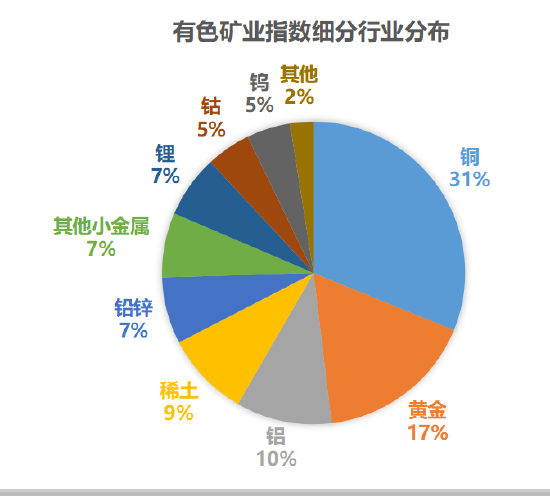
Core Viewpoint - The launch of the Huashan Nonferrous ETF (trading code: 512940) marks a significant opportunity for investors to engage with the nonferrous metals sector, which is seen as a long-term value proposition driven by industrial and technological demand [1][32]. Group 1: Nonferrous Metals as Industrial and Technological Foundations - Nonferrous metals play an irreplaceable role in the modern economy, serving as conductors in power networks, the heart of electric vehicles, and essential components in high-end equipment [1][17]. - The main categories of nonferrous metals include industrial metals (copper, aluminum, zinc), precious metals (gold, silver), energy metals (lithium, cobalt, nickel), and rare metals/rare earths (rare earths, tungsten, molybdenum) [2][3][4]. Group 2: Triple Cycle Resonance Reshaping Value Logic - The nonferrous metals industry is experiencing multiple driving factors that create a clearer and more diverse investment logic [5][22]. - Macroeconomic conditions are shifting favorably, with central banks transitioning from anti-inflation measures to economic support, leading to a more favorable liquidity environment for commodities [6][23][24]. - Supply constraints are intensifying due to insufficient exploration investments and changing policies in resource-exporting countries, while demand is being driven by green transitions and AI infrastructure, creating significant growth opportunities for metals like copper and lithium [7][25][26]. Group 3: Value High Ground in the Nonferrous Industry Chain - The value distribution in the nonferrous metals industry is uneven, with upstream mining companies experiencing the most significant profit elasticity as their revenues are directly linked to metal prices [9][27]. - Mining resources have inherent exclusivity and scarcity, providing a strong competitive advantage and long-term cash flow security for companies with resource reserves [10][27]. Group 4: Nonferrous Mining Index Focused on Resource Companies - The CSI Nonferrous Metals Mining Theme Index (code: 931892.CSI) is designed to reflect the performance of listed companies with actual nonferrous metal resource reserves, ensuring investment in the more valuable resource end of the industry chain [11][28]. - The index emphasizes balance across sub-sectors, including top companies in copper, gold, aluminum, lithium, and rare earths, allowing for diversified exposure and risk mitigation [11][28]. - Historical performance shows an annualized return of 14.95% over the past five years, with a Sharpe ratio of 0.70, indicating superior performance compared to other nonferrous metal indices [11][28]. Group 5: Current Market Timing and Value Proposition - The nonferrous sector has experienced a correction since late January, which is viewed as a healthy adjustment rather than a shift in long-term fundamentals [15][31]. - Valuation pressures have eased, and the trading structure has become healthier, indicating improved cost-effectiveness for potential investments in the sector [15][31]. Group 6: Huashan Nonferrous ETF as a Strategic Investment Tool - The Huashan Nonferrous ETF (trading code: 512940) closely tracks the CSI Nonferrous Metals Mining Theme Index, providing a streamlined way for investors to gain exposure to leading nonferrous metal companies [16][32]. - The product is backed by Huashan Fund's extensive experience in index and quantitative investment, ensuring professional support for stable operations [16][32].

有色早报-20260212
Yong An Qi Huo· 2026-02-12 02:58
Group 1: Report Industry Investment Rating - No relevant content provided Group 2: Core Views of the Report - The report maintains a bullish view on copper prices in the medium term, stating that copper fundamentals feature limited supply and increasing demand. In the short - to - medium term, the stabilization of copper prices depends on the stabilization of precious metals, and attention should be paid to the support levels of 97,000 and 99,000 for Shanghai copper [1]. - For aluminum, after the price increase, there is an unexpected increase in supply and weak terminal demand. It is advisable to go long after the supply - demand negative factors are realized. If the situation in Iran deteriorates, it may cause the aluminum price to rise [1]. - Regarding zinc, although the domestic fundamentals are average, due to limited long - term capital expenditure and about 100,000 tons of supply disturbances from Iranian zinc mines, the market is optimistic about the allocation flexibility of zinc. Attention should be paid to arbitrage opportunities [2]. - For nickel, the short - term real - world fundamentals are weak. The reduction of the Indonesian nickel ore quota has a disturbing effect, and the overall sentiment in the non - ferrous metals market dominates in the short term [5]. - Stainless steel's fundamentals remain weak. The news of the Indonesian quota continues to cause disturbances, and the overall sentiment in the non - ferrous metals market dominates in the short term [9]. - For lead, the supply - demand contradiction is alleviated, and the spot is expected to loosen. It is recommended to try short positions at high prices in the short term [12]. - For tin, in the short term, it is advisable to mainly observe due to large macro - sentiment fluctuations. In the long run, if there is a macro inflection point, the price may fluctuate downward significantly in the second half of the year [14]. - For industrial silicon, in the short term, the supply and demand are close to balance, and the price is expected to fluctuate with costs. In the long term, the price is expected to fluctuate at the bottom of the cycle based on the seasonal marginal cost [18]. - For lithium carbonate, in the short - term supply and demand, the fundamentals are strong, and the de - stocking trend is maintained in the off - season. If the inventory in the intermediate links further decreases to a low level, there is a large space for positive arbitrage between months [20]. Group 3: Summary by Metal Copper - **Price and Inventory Data**: From February 5th to 11th, the spot premium decreased by 25, the waste - refined copper spread decreased by 320, and the LME inventory increased by 3,000. The Shanghai copper spot price fluctuated, and the downstream point - pricing was obvious when the price fell below 100,000 to around 99,000 [1]. - **Market Outlook**: The US's ability to siphon inventory is disappearing, causing concerns about inventory delivery to LME or outflow from the US. However, global consumption is good, and copper has strong rigid demand support at the current price. The medium - term view is bullish, and the short - to - medium - term stabilization of copper prices depends on precious metals [1]. Aluminum - **Price and Inventory Data**: From February 5th to 11th, the Shanghai aluminum ingot price decreased by 30, the aluminum LME inventory decreased by 1,225, and the spot import profit decreased by 81.41 [1]. - **Market Outlook**: The aluminum price callback was significant, with weak demand. After the price increase, there was an unexpected increase in supply. It is advisable to go long after the supply - demand negative factors are realized. The deterioration of the Iranian situation may lead to an increase in the aluminum price [1]. Zinc - **Price and Inventory Data**: From February 5th to 11th, the spot premium increased by 10, the LME zinc inventory decreased by 1,500, and the Shanghai zinc spot import profit decreased by 430.55 [2]. - **Market Outlook**: On the supply side, the domestic and imported TC is accelerating downward, and it is expected to ease after the resumption of northern mines after the Spring Festival. On the demand side, domestic demand is seasonally weak, and the export window is currently closed. The market is optimistic about the allocation flexibility of zinc, and attention should be paid to arbitrage opportunities [2]. Nickel - **Price and Inventory Data**: From February 5th to 11th, the 1.5% Philippine nickel ore price increased by 0.0, the Shanghai nickel spot price increased by 3,450, and the LME inventory remained unchanged [5]. - **Market Outlook**: The supply of pure nickel decreased slightly, demand was weak, and domestic inventory was continuously delivered to the warehouse. The short - term fundamentals are weak, and the reduction of the Indonesian nickel ore quota has a disturbing effect [5]. Stainless Steel - **Price and Inventory Data**: From February 5th to 11th, the prices of 304 cold - rolled, 304 hot - rolled, 201 cold - rolled, 430 cold - rolled, and scrap stainless steel remained unchanged [9]. - **Market Outlook**: The steel mill production decreased slightly, demand entered the off - season, and inventory increased seasonally. The news of the Indonesian quota continued to cause disturbances, and the overall sentiment in the non - ferrous metals market dominated [9]. Lead - **Price and Inventory Data**: From February 5th to 11th, the spot premium remained unchanged, the LME lead inventory increased by 200, and the spot import profit decreased by 35.65 [10]. - **Market Outlook**: On the supply side, the primary lead production decreased seasonally, and some secondary lead producers took early holidays. On the demand side, the battery production rate decreased, and inventory increased. It is recommended to try short positions at high prices in the short term [12]. Tin - **Price and Inventory Data**: From February 5th to 11th, the spot import profit decreased by 1,091.77, the LME inventory increased by 120, and the tin position increased by 939 [13]. - **Market Outlook**: The tin price fluctuated downward due to the influence of precious metals and non - ferrous metals. On the supply side, there are differences in the resumption expectations of Wa State in the first quarter. On the demand side, the downstream replenishment willingness is divided. In the short term, it is advisable to observe, and in the long run, the price may fluctuate downward significantly if there is a macro inflection point [14]. Industrial Silicon - **Price and Inventory Data**: From February 5th to 11th, the 421 Yunnan basis increased by 5, the 421 Sichuan basis increased by 5, and the warehouse receipt quantity increased by 1,200 [18]. - **Market Outlook**: Southwest production enterprises are mostly in a shutdown state, and a large factory in Xinjiang has reduced production. The monthly supply is continuously shrinking, and the supply and demand are expected to decrease in February. In the short term, the supply and demand are close to balance, and in the long term, the price is expected to fluctuate at the bottom of the cycle [18]. Lithium Carbonate - **Price and Inventory Data**: From February 5th to 11th, the SMM electric carbon price increased by 2,000, the SMM industrial carbon price increased by 2,000, and the warehouse receipt quantity decreased by 10 [20]. - **Market Outlook**: The price and position of lithium carbonate continued to decline last week. The raw material lithium ore price continued to fall, and the upstream is mostly reluctant to sell. The downstream replenishment exceeded expectations. In the short - term supply and demand, the fundamentals are strong, and there is a large space for positive arbitrage between months if the intermediate inventory further decreases [20].