
深海勇士号

Search documents
砺剑深潜
Zhong Guo Zi Ran Zi Yuan Bao· 2026-01-06 04:36
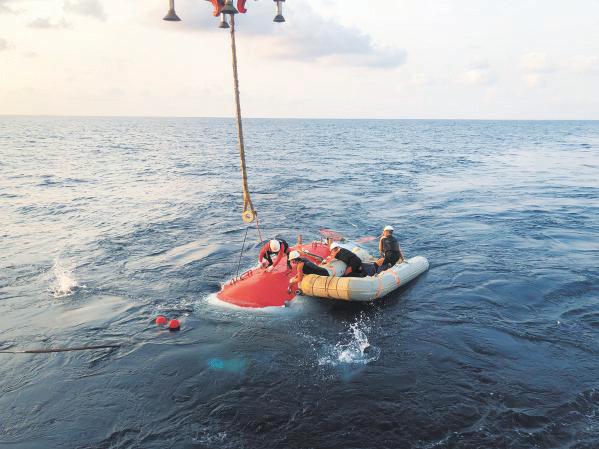
Core Insights - The "Jiaolong" manned submersible has undergone significant upgrades over the past decade, enhancing its capabilities and operational efficiency in deep-sea exploration [2][3][4] Group 1: Technological Advancements - The "Jiaolong" submersible has improved its propulsion system, now utilizing domestically produced thrusters, which have increased its maximum speed from 2.5 knots to 3 knots [2] - The submersible's observation system has been upgraded to a 10-channel 4K HD video system, allowing for better underwater visibility and observation capabilities [3] - The operational support team for "Jiaolong" has been reduced from around 17 personnel to approximately 10, significantly enhancing operational efficiency [3] Group 2: Achievements and Milestones - "Jiaolong" has set a record with a maximum diving depth of 7062 meters, marking a significant milestone in China's manned deep-sea exploration [4] - The submersible has been part of collaborative underwater operations with other submersibles, such as the "Fendouzhe," expanding China's deep-sea exploration capabilities [3][4] - During the "Fendouzhe" mission, China has established a strong presence in deep-sea exploration, with annual deep-sea missions accounting for over half of the global total [4] Group 3: Cultural Impact - The "Jiaolong" submersible has transcended its technological role to become a cultural symbol, inspiring stories and recognition within families and communities [5] - The emotional connection to "Jiaolong" is highlighted by personal stories, such as a child's drawing of the submersible, showcasing its significance beyond just a scientific instrument [5]

【新华社】探天探海探未来!这些进展值得期待
Xin Hua She· 2026-01-05 02:03
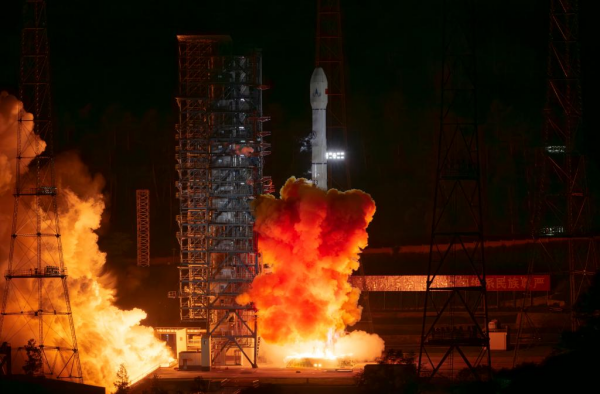
Group 1: Space Exploration and Technology - The successful launch of the Tianwen-2 mission marks China's first asteroid exploration and sample return journey, focusing on asteroid 2016 HO3 and later the main belt comet 311P [5] - The Chang'e 7 mission is expected to launch around 2026 to explore the lunar south pole and investigate water ice resources, carrying payloads from multiple countries [5] - China's new generation reusable crewed spacecraft, "Dream Chaser," is set for its first flight in 2026, designed for near-Earth space station operations and crewed lunar exploration [5][6] Group 2: Deep Sea Exploration - China's manned submersibles, including "Fendouzhe," "Shenhai Yongshi," and "Jiaolong," have completed over 1,700 dives, with expectations to surpass 2,000 by 2026 [9] - The "Fendouzhe" submersible successfully conducted manned deep-sea research in the Arctic, expanding China's deep-sea exploration capabilities [9] - The deep-sea research community anticipates increased international collaboration and scientific exploration during the 14th Five-Year Plan period [9] Group 3: Scientific Research and Innovation - China ranks prominently in global scientific research, with significant achievements in innovation and research output, described as entering an "innovation explosion period" [3] - The "first example of two-dimensional metal preparation" by a team from the Chinese Academy of Sciences was recognized as one of the top scientific breakthroughs of 2025 [10] - In the biopharmaceutical sector, 76 innovative drugs were approved in 2025, with total licensing transactions exceeding $130 billion, marking a historic high [10]
探天探海探未来!这些进展值得期待
Xin Lang Cai Jing· 2026-01-04 11:45
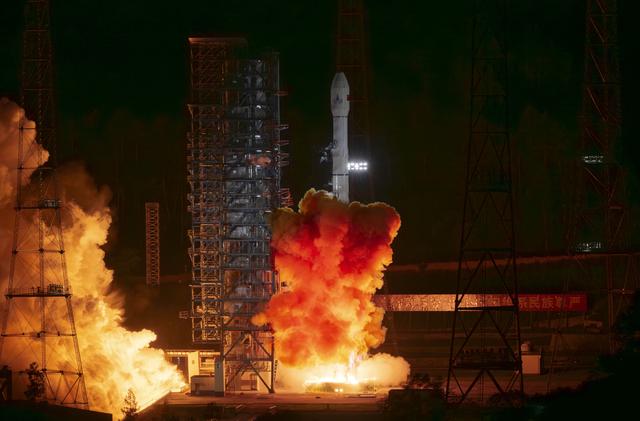
Group 1 - China ranks prominently in scientific research achievements, innovation, and urban clusters according to multiple international research platforms, with the UN Deputy Secretary-General describing it as entering an "innovation explosion period" [1] - The Chang'e 7 mission is expected to launch around 2026, focusing on lunar south pole exploration and carrying payloads from several countries [1] - The Tianwen-2 mission, aimed at asteroid exploration and sample return, successfully launched in May 2025, marking China's first mission to explore and return samples from an asteroid [1] Group 2 - The new generation of reusable crewed spacecraft, "Dream Boat," is set for its first flight in 2026, featuring a modular design and intended for near-Earth space station operations and crewed lunar missions [3] - The 2026 crewed spaceflight schedule includes the launch of Shenzhou-23 and Shenzhou-24 crewed spacecraft, as well as the Tianzhou-10 cargo spacecraft, with Shenzhou-23 featuring a crew member for a long-term stay [3] Group 3 - China's deep-sea exploration capabilities have expanded significantly, with the "Fendouzhe" manned submersible completing deep-sea scientific research in the Arctic, marking a shift from "full ocean depth" to "full ocean area" exploration [5][7] - By the end of 2025, China's deep-sea manned submersibles are expected to exceed 2,000 dives, enhancing international scientific cooperation and technological development in deep-sea research [5][7] Group 4 - The "2025 Top Ten Scientific Breakthroughs" list by the Institute of Physics includes a breakthrough in the preparation of the first two-dimensional metal, marking a significant achievement in the field of two-dimensional materials [8] - In the biopharmaceutical sector, 76 innovative drugs were approved in 2025, with total licensing transactions exceeding $130 billion, indicating a historic peak in China's pharmaceutical innovation [8]
科学与健康|探天探海探未来!这些进展值得期待
Xin Hua She· 2026-01-04 10:34
Group 1 - China ranks among the top in research output, quality, and innovative urban clusters, with the UN Deputy Secretary-General describing the country as entering an "innovation explosion period" [2] - A series of new technology projects and plans are expected to be unveiled in 2026, marking the beginning of the "14th Five-Year Plan" [2] Group 2 - The Chang'e 7 mission is scheduled for launch around 2026 to explore the lunar south pole environment and water ice resources, carrying payloads from multiple countries [3] - The Tianwen-2 mission, which aims to conduct the first asteroid exploration and sample return, successfully launched in May 2025 [3] Group 3 - The new generation of reusable crewed spacecraft, "Dream Boat," is set for its first flight in 2026, featuring a modular design for near-Earth space station operations and crewed lunar exploration [4] - The 2026 crewed spaceflight schedule includes the launch of Shenzhou-23 and Shenzhou-24 crewed spacecraft, as well as the Tianzhou-10 cargo spacecraft [4] Group 4 - The "Fendouzhe" manned submersible has expanded China's deep-sea exploration capabilities, completing significant missions including deep dives in the Arctic [5] - By the end of 2025, China's manned submersibles are expected to exceed 1,700 dives, with projections to surpass 2,000 dives in 2026 [5] Group 5 - The "2025 Top Ten Scientific Breakthroughs" list includes a significant achievement from the Chinese Academy of Sciences in producing the first example of two-dimensional metals, marking a notable advancement in material science [8] - In the biopharmaceutical sector, 76 innovative drugs were approved in 2025, with total licensing transactions exceeding $130 billion, setting historical records [8] - Technological innovations are increasingly integrated into various sectors, enhancing quality of life through advancements in robotics, medical applications, and computational technologies [8]

叩开北极冰封之海,和“奋斗者”号一起向深而行!
Yang Shi Xin Wen· 2026-01-04 06:06
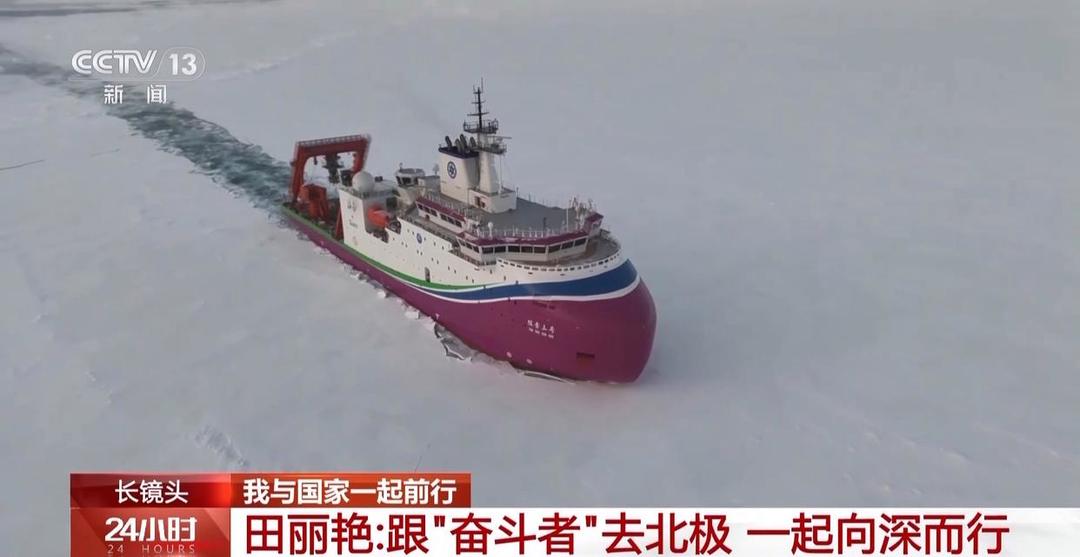
Core Insights - The "Fighter" manned submersible has embarked on an international mission under the United Nations Decade of Ocean Science for Sustainable Development, focusing on the global abyss exploration plan [1] - In 2025, China's three manned submersibles completed a total of 321 dives, with the "Fighter" achieving the highest number at 118 dives, marking a significant advancement in China's deep-sea exploration capabilities [1] - The mission to the Arctic involved a 98-day journey covering over 15,000 nautical miles, with 43 dives conducted, establishing China as the only country capable of continuous manned deep-sea dives in densely ice-covered Arctic regions [1][15] Submersible Operations - The "Fighter" submersible successfully reached the deepest point of the Arctic at 5,277 meters, collecting valuable rock, biological samples, and observational data crucial for studying Arctic climate change and deep Earth mantle activities [15] - The mission faced unprecedented challenges during the recovery of the submersible, taking nearly three hours due to ice coverage, highlighting the difficulties of operating in extreme conditions [4][6] - The research team adapted their strategy from "ship finding submersible" to "submersible finding ship" due to the lack of satellite signal coverage, utilizing domestic ice-breaking radar and acoustic communication systems [8] Technological Advancements - The "Fighter" has undergone multiple technological upgrades during the 14th Five-Year Plan period, including a secondary release device that allows it to hover at a depth of 300 meters before safely ascending, facilitating deep-sea exploration in extreme polar regions [17] - The operational capabilities of China's manned submersibles have significantly advanced over the past two decades, positioning the country at the forefront of global deep-sea exploration [17][19] Research Contributions - The exploration of the Gakkel Ridge, characterized by its ultra-slow expansion, provides a unique natural laboratory for studying Earth's deep structure, with the "Fighter" being the first manned submersible to conduct scientific research in this area [2][12] - The mission's success in achieving 32 dives within 29 days demonstrates the team's efficiency and adaptability in a challenging environment, contributing to a better understanding of geological processes [12][15]
【央视新闻】叩开北极冰封之海 和“奋斗者”号一起向深而行
Yang Shi Xin Wen· 2026-01-04 01:23
Core Insights - The "Fighter" manned submersible has embarked on an international mission under the United Nations Decade of Ocean Science for Sustainable Development, focusing on deep-sea exploration [2] - In 2025, China's three manned submersibles completed a total of 321 dives, with the "Fighter" achieving the highest number at 118 dives, marking a significant advancement in China's deep-sea exploration capabilities [2][5] - The mission included a historic journey to the Arctic, where the "Fighter" successfully conducted dives in areas with over 80% ice coverage, making China the only country capable of continuous manned deep-sea dives in such conditions [2][3] Submersible Operations - The "Fighter" submersible reached a depth of 5,277 meters in the Arctic, collecting valuable rock, biological samples, and observational data crucial for studying climate change and geological processes [5] - The mission faced unprecedented challenges during the recovery of the submersible, requiring innovative strategies to adapt to the harsh conditions of the Arctic ice [3][4] - The team successfully adjusted their approach from "ship finding submersible" to "submersible finding ship," utilizing domestic ice-breaking radar and acoustic communication systems to ensure safe recovery [3][4] Technological Advancements - The "Fighter" has undergone significant technological upgrades, including a secondary release device that allows it to hover at a depth of 300 meters before safely ascending, enhancing its operational capabilities in extreme environments [5] - The advancements in China's manned submersible technology have positioned the country at the forefront of global deep-sea exploration, transitioning from deep-sea to all ocean types within just five years [5] Research Contributions - The exploration of the Gakkel Ridge, characterized by its slow expansion rate, provides critical insights into Earth's deep mantle and evolutionary history, with the "Fighter" being the first manned submersible to conduct research in this area [3][4] - The mission's success is expected to yield a wealth of samples that will be valuable for both domestic and international scientific communities, highlighting China's growing capabilities in deep-sea research [5][6]
我与国家一起前行|“蛟龙”号国产化后海上零故障 十年砺剑三代深潜共舞
Xin Lang Cai Jing· 2026-01-03 07:56
Core Viewpoint - The "Jiaolong" submersible has undergone significant upgrades over the past decade, enhancing its capabilities and operational efficiency, which reflects China's advancements in deep-sea technology and research [1][6]. Group 1: Technological Advancements - The "Jiaolong" submersible has completed key component localization upgrades, allowing for fully automated communication with surface vessels, providing real-time status updates every minute [2][3]. - The propulsion system has been upgraded from imported three-blade propellers to domestically produced four-blade propellers, increasing the submersible's speed from 2.5 knots to potentially 3 knots, with zero maintenance and zero faults reported during operations [3][4]. - The visual and observation systems have been enhanced to include 10 channels of 4K high-definition video, improving underwater visibility significantly [4]. Group 2: Operational Achievements - The "Jiaolong" submersible has expanded its operational depth and scope, successfully conducting missions in the Arctic and collecting valuable scientific samples that contribute to climate change research [5][8]. - The number of dives has increased dramatically, with the "Jiaolong" completing 94 dives in 2025 alone, compared to an average of 20 dives per year from 2013 to 2017, indicating improved reliability and operational capacity [7][8]. - The collaboration between "Jiaolong" and other submersibles like "Fendouzhe" has established a new operational model for underwater tasks, enhancing the overall capabilities of China's deep-sea exploration [4][8]. Group 3: Team and Community Impact - The support team for the "Jiaolong" has been reduced from approximately 17 members to around 10, showcasing increased efficiency in operations [6]. - The emotional connection and pride associated with the "Jiaolong" are highlighted through personal stories of team members and their families, emphasizing the human aspect behind technological achievements [9][11]. - The narrative of the "Jiaolong" reflects a broader theme of national pride and technological self-reliance, symbolizing China's commitment to advancing its scientific capabilities [11].
我与国家一起前行丨“蛟龙”号国产化后海上零故障 十年砺剑三代深潜共舞
Yang Shi Xin Wen Ke Hu Duan· 2026-01-03 07:16
Core Viewpoint - The article highlights the advancements and achievements of China's manned submersible "Jiaolong" over the past decade, showcasing its technological upgrades and contributions to deep-sea exploration [1][14]. Group 1: Technological Advancements - "Jiaolong" has undergone significant upgrades, including the complete localization of its thrusters, which have improved its underwater speed from 2.5 knots to potentially 3 knots [5]. - The submersible's video system has been enhanced to 10 channels of 4K high-definition, providing better underwater visibility [8]. - The operational reliability of "Jiaolong" has increased, with zero maintenance and zero faults reported during its 91st dive in 2025 [5][12]. Group 2: Operational Achievements - In 2024, "Jiaolong" completed 68 dives, and in 2025, it achieved 94 dives, demonstrating a significant increase in operational capacity compared to previous years [10]. - The submersible has expanded its operational footprint from deep-sea exploration to various oceanic regions, including a successful dive in the Arctic ice zone [7][10]. - The support team for "Jiaolong" has been reduced from approximately 17 members to around 10, indicating improved efficiency in operations [10]. Group 3: Collaborative Efforts - "Jiaolong" has collaborated with another manned submersible, "Fendouzhe," to innovate underwater operation modes, enhancing the effectiveness of deep-sea missions [7][10]. - The integration of communication and navigation systems between "Jiaolong" and its support vessels has been improved, facilitating complex underwater operations [10]. Group 4: Cultural Impact - The story of "Jiaolong" resonates deeply with its crew members and their families, symbolizing dedication and pride in China's advancements in deep-sea technology [20][21]. - The emotional connection to "Jiaolong" is reflected in personal anecdotes, showcasing its significance beyond just a technological marvel [21].
我与国家一起前行|十年砺剑终成三代深潜共舞
Yang Shi Wang· 2026-01-02 22:19
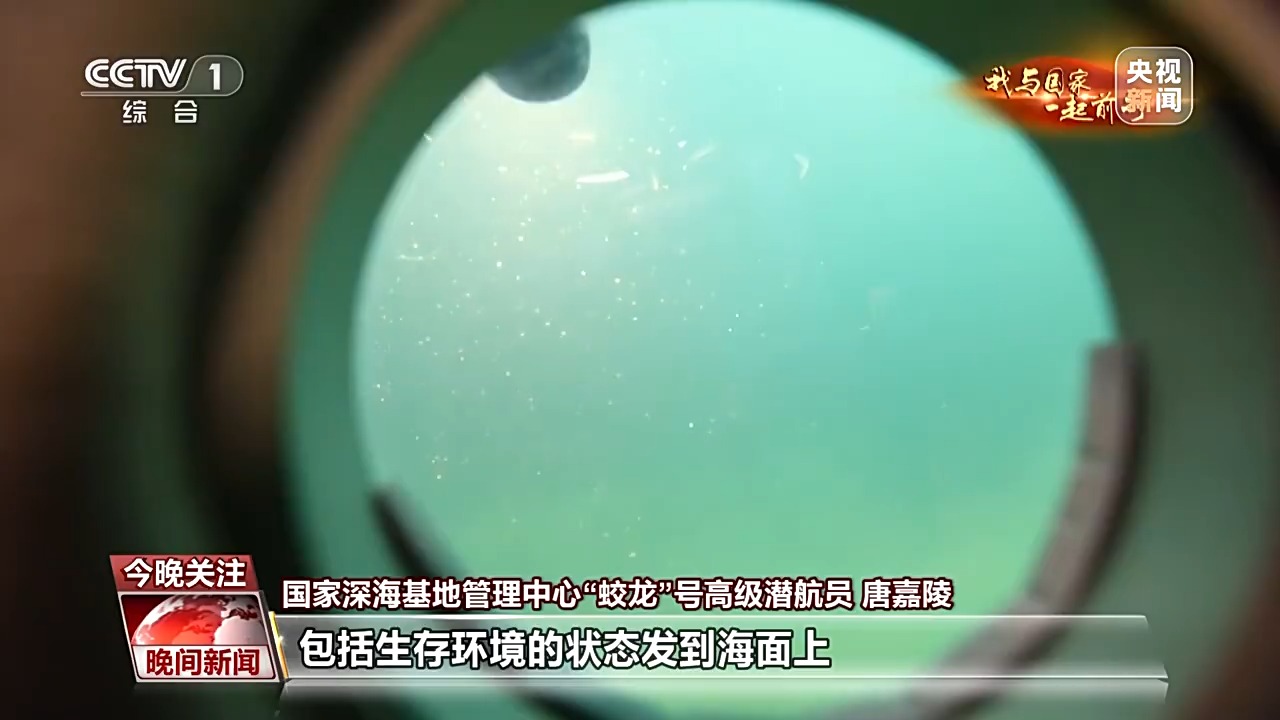
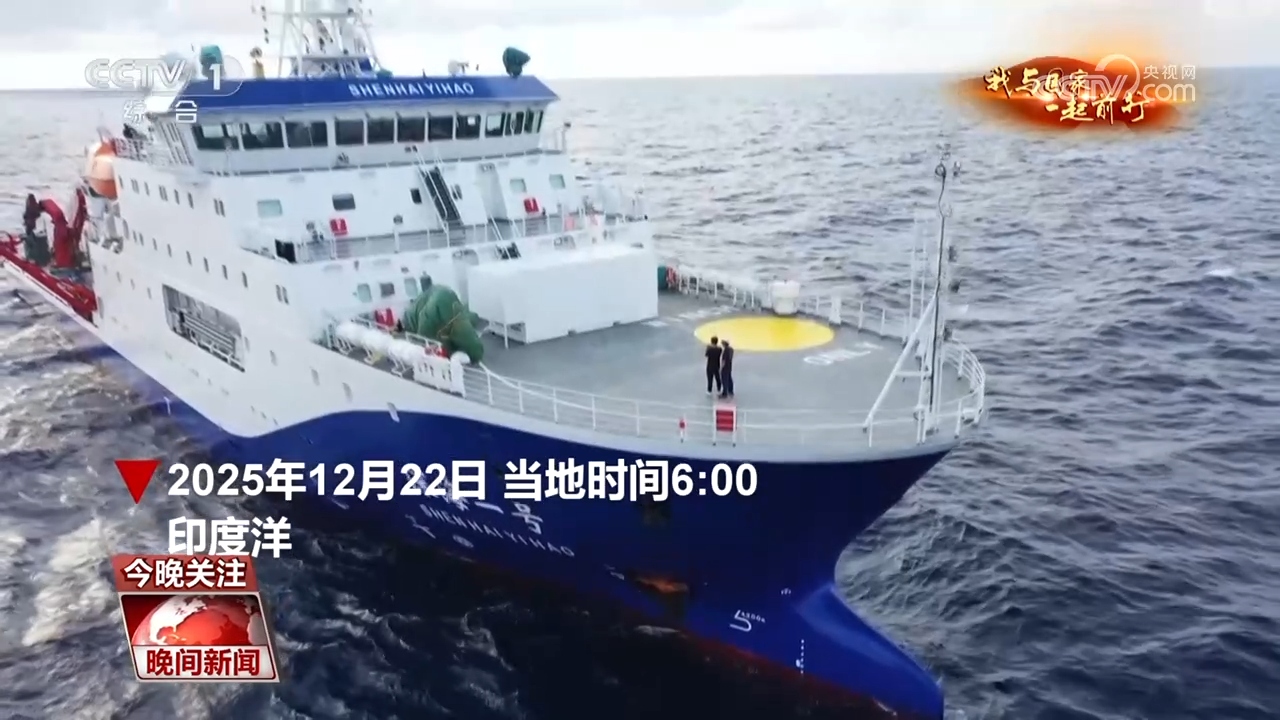
Core Viewpoint - The "Jiaolong" submersible has undergone significant upgrades over the past decade, enhancing its capabilities and contributing to China's deep-sea exploration efforts, including recent missions in the Indian Ocean and the Arctic [1][12][15]. Group 1: Technological Advancements - The "Jiaolong" submersible has completed 91 dives in 2025, showcasing its reliability and advanced technology [1][20]. - The submersible's propulsion system has been upgraded to fully domestic components, increasing its speed from 2.5 knots to a maximum of 3 knots, with zero maintenance required over 91 dives [7][20]. - The visual and observation systems have been enhanced, featuring 10 channels of 4K high-definition video, improving underwater visibility significantly [9][11]. Group 2: Mission Achievements - In August 2025, the upgraded "Jiaolong" achieved its first dive in the Arctic ice zone, collaborating with the "Fendou" submersible for coordinated underwater operations [12][14]. - The recent missions have expanded China's deep-sea exploration footprint from the full depth of the ocean to all oceanic regions, collecting valuable samples and data for climate change research [15][21]. Group 3: Operational Efficiency - The support team for the "Jiaolong" has reduced from approximately 17 personnel in 2017 to around 10, indicating improved operational efficiency [17][20]. - The number of dives has increased significantly, with 68 dives in 2024 and 94 dives in 2025, compared to nearly 100 dives over five years from 2013 to 2017 [19][20]. Group 4: Cultural Impact - The "Jiaolong" has become a symbol of national pride, inspiring personal stories and cultural expressions, such as children's drawings and family discussions [24][30]. - The emotional connection to the "Jiaolong" reflects a broader cultural appreciation for technological advancements in China, marking a transition from mere functionality to cultural significance [30].
【科技日报】从1746次深潜看中国深海科技的底气
Ke Ji Ri Bao· 2025-12-26 02:50
Core Insights - China's deep-sea manned submersibles, including "Deep Sea Warrior," "Fighter," and "Jiaolong," completed 314 deep dives in 2025, with a total of 1,746 dives, aiming for 2,000 dives in 2026, marking a significant advancement in deep-sea technology application [1] - The most notable breakthrough in 2025 was the first dual submersible collaborative operation in the Arctic ice zone, expanding operational capabilities to polar regions and establishing China as the only country capable of continuous manned deep-sea operations in densely ice-covered areas [1] - The deep-sea technology system has evolved to support diverse applications, transitioning from occasional operations to regular activities, enhancing equipment reliability and operational efficiency [1] Group 1 - In 2025, "Deep Sea Warrior" and "Fighter" served over 100 units and more than 2,000 personnel, creating an innovative network that integrates production, academia, research, and application [2] - The application fields have expanded from basic scientific research to include domestic equipment sea trials, emergency rescue, deep-sea archaeology, and environmental monitoring, contributing to underwater cultural heritage investigations and global climate research [2] - A virtuous cycle of "technology iteration—scene expansion—ecosystem improvement" continues to release the research and application value of deep-sea equipment, laying the foundation for enhancing China's international discourse power in deep-sea technology [2] Group 2 - China's increasing international discourse power is transitioning the country from a participant to a leader in deep-sea technology standards and research models, with international joint expeditions promoting the integration of "Chinese solutions" into global deep-sea governance [2] - Future plans for more domestic and international joint scientific expeditions are expected, showcasing China's commitment to building a global deep-sea cooperation platform [2] - Achieving future deep-sea dive targets will position China more prominently in deep-sea scientific research, technology standard formulation, and global marine ecological governance, contributing significantly to ocean exploration and ecological protection [3]