
载人深潜

Search documents
叩开北极冰封之海,和“奋斗者”号一起向深而行!
Yang Shi Xin Wen· 2026-01-04 06:06
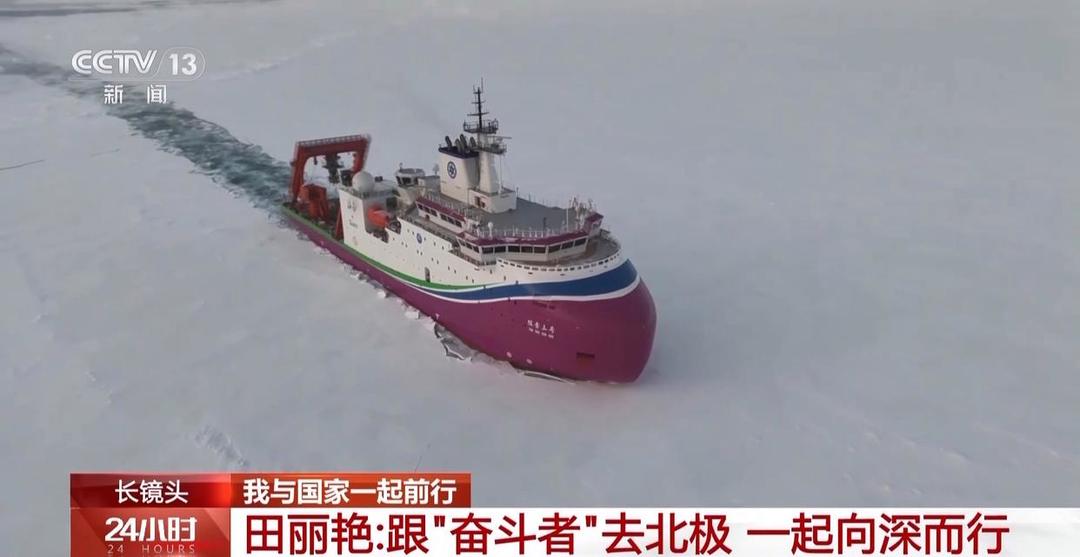
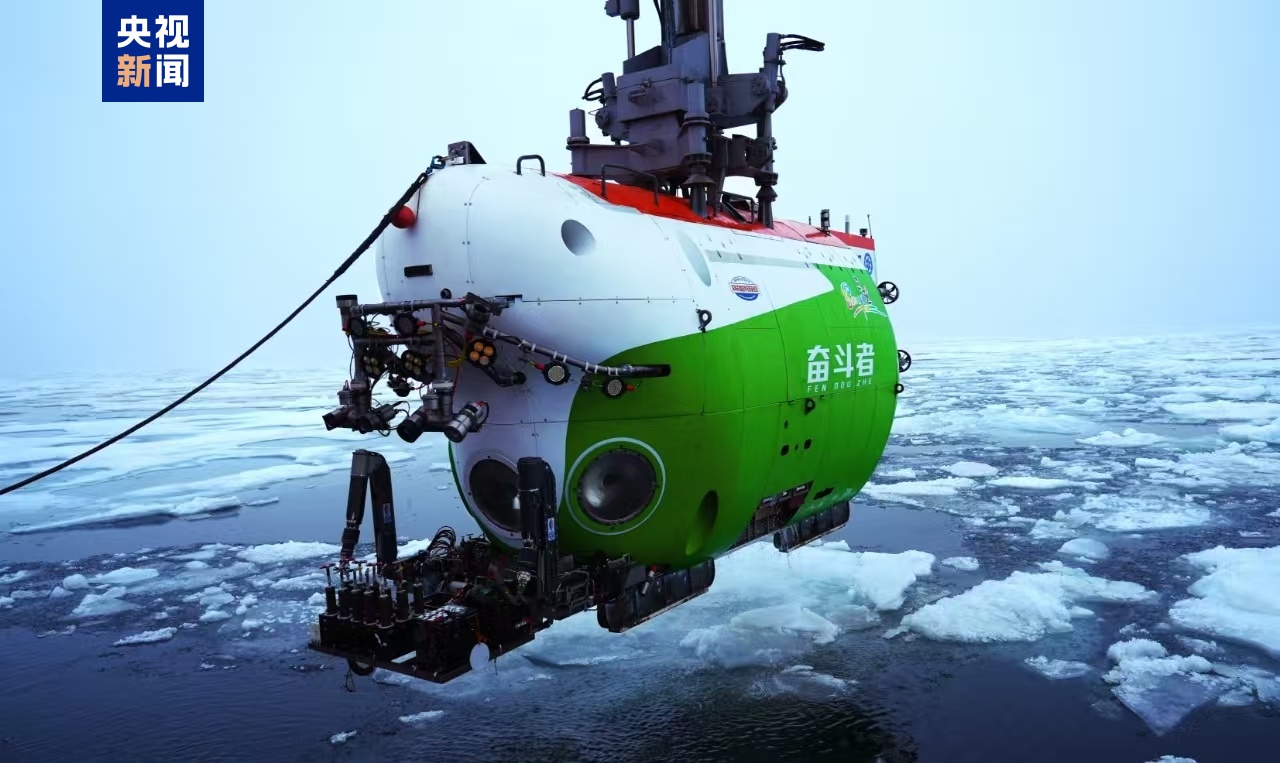
Core Insights - The "Fighter" manned submersible has embarked on an international mission under the United Nations Decade of Ocean Science for Sustainable Development, focusing on the global abyss exploration plan [1] - In 2025, China's three manned submersibles completed a total of 321 dives, with the "Fighter" achieving the highest number at 118 dives, marking a significant advancement in China's deep-sea exploration capabilities [1] - The mission to the Arctic involved a 98-day journey covering over 15,000 nautical miles, with 43 dives conducted, establishing China as the only country capable of continuous manned deep-sea dives in densely ice-covered Arctic regions [1][15] Submersible Operations - The "Fighter" submersible successfully reached the deepest point of the Arctic at 5,277 meters, collecting valuable rock, biological samples, and observational data crucial for studying Arctic climate change and deep Earth mantle activities [15] - The mission faced unprecedented challenges during the recovery of the submersible, taking nearly three hours due to ice coverage, highlighting the difficulties of operating in extreme conditions [4][6] - The research team adapted their strategy from "ship finding submersible" to "submersible finding ship" due to the lack of satellite signal coverage, utilizing domestic ice-breaking radar and acoustic communication systems [8] Technological Advancements - The "Fighter" has undergone multiple technological upgrades during the 14th Five-Year Plan period, including a secondary release device that allows it to hover at a depth of 300 meters before safely ascending, facilitating deep-sea exploration in extreme polar regions [17] - The operational capabilities of China's manned submersibles have significantly advanced over the past two decades, positioning the country at the forefront of global deep-sea exploration [17][19] Research Contributions - The exploration of the Gakkel Ridge, characterized by its ultra-slow expansion, provides a unique natural laboratory for studying Earth's deep structure, with the "Fighter" being the first manned submersible to conduct scientific research in this area [2][12] - The mission's success in achieving 32 dives within 29 days demonstrates the team's efficiency and adaptability in a challenging environment, contributing to a better understanding of geological processes [12][15]

视频|杜梦然 安徽毫州人 2021十大科学人物 载人深潜首席科学家
Xin Lang Cai Jing· 2025-12-31 03:09
Group 1 - The article discusses the emergence of unicorn companies and their impact on the investment landscape [1] - It highlights the increasing number of unicorns in various sectors, indicating a trend towards innovation and growth in the startup ecosystem [1] - The report emphasizes the importance of understanding market dynamics and investor sentiment towards these high-value startups [1] Group 2 - The article provides insights into the valuation metrics of unicorns, noting that many are achieving valuations exceeding $1 billion [1] - It mentions specific sectors that are seeing a surge in unicorn formation, such as technology and healthcare [1] - The analysis points out the potential for significant returns on investment in these companies, despite the inherent risks associated with early-stage investments [1]
2025年我国载人潜水器应用水平持续提升
Yang Shi Wang· 2025-12-25 12:38
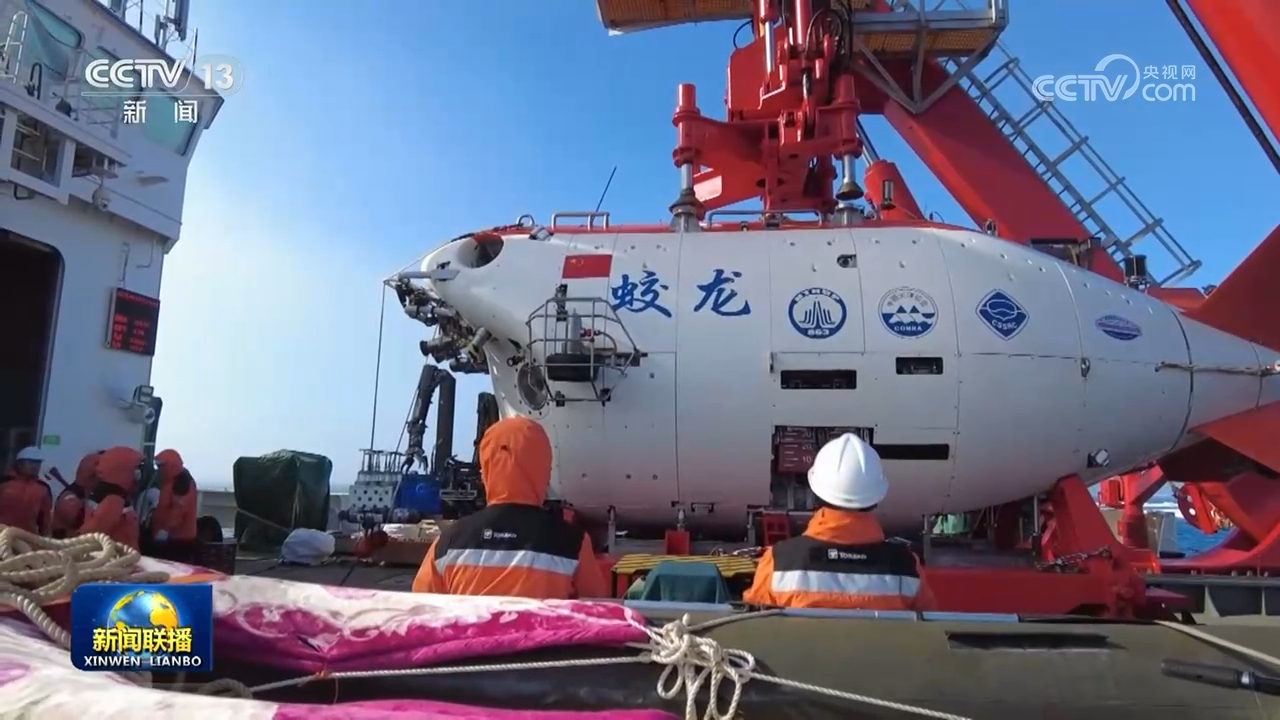
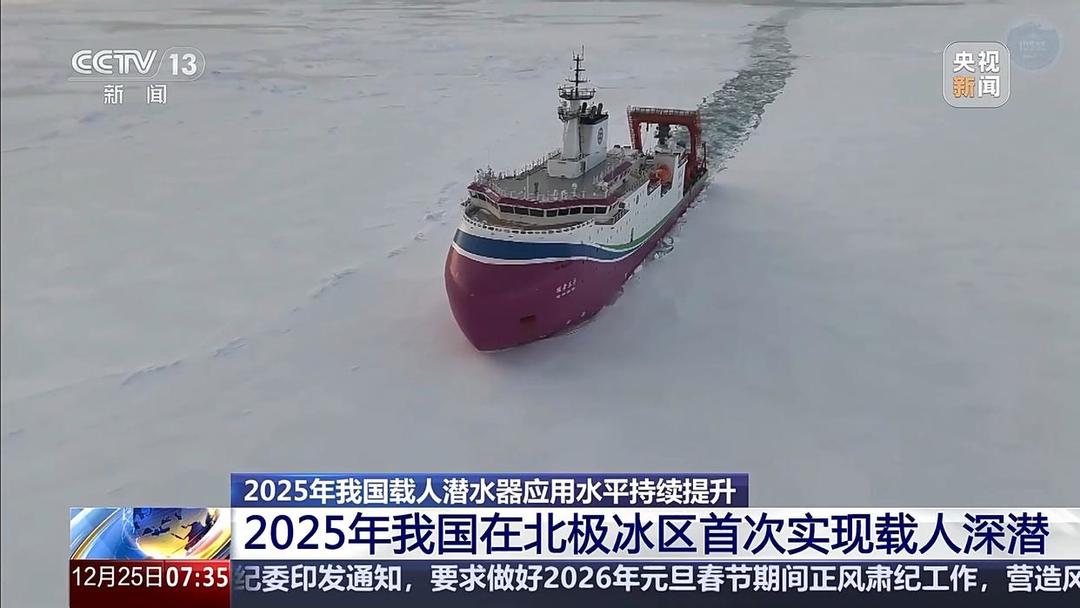
Core Viewpoint - China's manned submersibles are making significant progress in deep-sea exploration, with a focus on expanding operational capabilities and achieving new milestones in various marine environments [1][3]. Group 1: Manned Submersible Achievements - In 2025, the "Jiaolong" submersible successfully completed China's first descent in the Arctic ice zone, collaborating with the "Fendouzhe" submersible for dual operations [3]. - The "Fendouzhe" submersible, supported by China's first ice-capable mother ship "Tansuo 3," conducted the first manned scientific exploration in densely packed Arctic ice areas, expanding China's deep-sea capabilities from "full ocean depth" to "full ocean area" [3]. - The "Shenhai Yongshi" submersible performed the first coordinated operations with unmanned submersibles in the underwater cultural heritage protection area of the northwest slope of the South China Sea, leading to new discoveries in deep-sea archaeology [3]. Group 2: Operational Statistics - As of now, China's three manned submersibles have completed a total of 1,746 dives, with expectations to surpass 2,000 dives by 2026 [5]. - In 2023, the three submersibles are projected to complete a total of 314 manned deep-sea dives, indicating a continuous improvement in operational capabilities [1].
新突破!我国三大深海载人潜水器2025成绩单亮眼
Yang Shi Xin Wen Ke Hu Duan· 2025-12-25 09:10
Core Insights - In 2025, China's three manned submersibles are expected to complete a total of 314 manned deep-sea dives, indicating a continuous improvement in the application level of manned submersibles [1] - The "Jiaolong" submersible team achieved China's first manned deep dive in the Arctic ice zone in 2025, innovating a collaborative underwater operation model with the "Fendouzhe" submersible [2] - The "Fendouzhe" submersible team conducted China's first manned deep dive scientific expedition in densely packed Arctic ice, expanding the scope of manned deep diving from the ocean's bottom to all marine areas [4] - The "Deep Sea Warrior" submersible executed 18 deep-sea archaeological applications in the South China Sea, marking the first collaborative operation between manned and unmanned submersibles for efficient underwater shipwreck investigations [6] - By 2026, the cumulative number of dives by China's three manned submersibles is expected to exceed 2000, with plans for more domestic and international joint scientific expeditions during the 14th Five-Year Plan period [7]
2026年将突破2000次 我国载人深潜从“全海深”拓展至“全海域”应用水平提升
Yang Shi Wang· 2025-12-25 05:01
Core Insights - The user committee of China's major scientific infrastructure "Manned Submersibles and Offshore Operation Mother Ship" announced the annual application status of three manned submersibles for 2025 and preliminary plans for 2026 [1] Group 1: Manned Submersible Operations - In 2025, the "Jiaolong" manned submersible is expected to dive 93 times, while the "Deep Sea Warrior" and "Fighter" submersibles have already completed 106 and 115 dives respectively as of December 20, 2025, leading to a total of 314 manned deep-sea dives for the year [7] - The "Jiaolong" team achieved China's first manned dive in the Arctic ice zone in 2025, collaborating with the "Fighter" for underwater operations, thus innovating a dual-manned submersible operational model [10] Group 2: Research and Exploration Initiatives - The "Fighter" submersible is advancing the "Global Abyss Exploration Plan," organizing the first international joint scientific expedition to the Puysegur Trench for manned deep-sea dives [12] - The "Fighter" team completed China's first manned deep-sea scientific expedition in densely packed Arctic ice, expanding the scope of manned deep-sea operations from "full ocean depth" to "full ocean area" [12] Group 3: Future Projections - By 2026, the cumulative number of dives by China's three manned submersibles is expected to exceed 2000 [14] - In 2025, the "Deep Sea Warrior" conducted 18 dives in the South China Sea's northwest slope underwater cultural heritage protection area, marking the first collaborative operation between manned and unmanned submersibles for efficient underwater shipwreck investigations [13] - During the "14th Five-Year Plan" period, China aims to organize more domestic and international joint scientific expeditions leveraging manned and unmanned deep-sea equipment, enhancing international scientific cooperation and promoting deep-sea research and technology development [17]
我国今年预计完成314次载人深潜
Yang Shi Xin Wen· 2025-12-24 06:52
Core Viewpoint - The annual meeting of the user committee for China's major scientific infrastructure "Manned Submersible and Offshore Operation Mother Ship" was held, outlining the application status of three manned submersibles for 2025 and preliminary plans for 2026 [1] Group 1: Manned Submersible Operations - In 2025, it is expected that a total of 314 manned deep dives will be completed, with "Jiaolong" expected to dive 93 times, "Deep Sea Warrior" having already completed 106 dives, and "Fighter" having completed 115 dives [2] - The "Jiaolong" team completed China's first manned deep dive in the Arctic ice zone in 2025, innovating a collaborative underwater operation model with "Fighter" [4] - The manned deep diving capability has expanded from "full ocean depth" to "full ocean area," supported by the domestically designed ice-capable mother ship "Exploration No. 3" [6] Group 2: International Collaboration and Research - The "Fighter" submersible is advancing the "Global Abyss Exploration Plan," organizing the first international joint expedition for manned deep diving in the Puysegur Trench [8] - In 2025, "Deep Sea Warrior" conducted 18 deep-sea archaeological dives in the underwater cultural heritage protection area of the northwestern slope of the South China Sea, marking the first collaborative operation between manned and unmanned submersibles [9] Group 3: Future Projections - The cumulative number of dives by China's three manned submersibles is expected to exceed 2,000 by 2026, with a total of 1,746 dives completed to date [10] - During the 14th Five-Year Plan period, more domestic and international joint scientific expeditions are anticipated, promoting international scientific cooperation and advancing deep-sea research and technology development [10]
【新华社】“奋斗者”号回到三亚 载人深潜“双雄”在北极实现水下联合作业
Xin Hua She· 2025-10-28 01:08
Core Insights - The "Fendouzhe" manned submersible successfully completed 43 dive missions in the Arctic, collaborating with the "Jiaolong" submersible, marking a significant advancement in underwater cooperative operations for China [3][4]. Group 1: Mission Overview - The mission was organized by the Ministry of Natural Resources and the Chinese Academy of Sciences, utilizing the "Exploration No. 3" vessel and the "Fendouzhe" submersible for manned deep-sea exploration in the Arctic [3]. - The expedition lasted 56 days, during which the team conducted a series of scientific investigations and experiments in the Arctic Ocean [3]. - The maximum dive depth achieved was 5,277 meters, representing the first manned deep-sea exploration of the Gakkel Ridge in the Arctic [3]. Group 2: Scientific Contributions - The "Fendouzhe" submersible collected valuable samples of Arctic water, sediments, rocks, and biological specimens, providing significant observational data for research on rapid climate change in the Arctic and the evolution and adaptation mechanisms of life in extreme environments [3][4]. - The mission validated the operational capabilities and application value of the "Fendouzhe" submersible and the "Exploration No. 3" vessel in polar ice regions, achieving breakthroughs in domestic technology for deep-sea exploration [4]. Group 3: Technological Innovations - The expedition pioneered a new mobile ice-diving model of "ship-submersible cooperation" in dense ice areas, positioning China as the only country currently conducting continuous manned deep-sea dives in the Arctic's dense sea ice [4]. - The "Fendouzhe" submersible and the "Jiaolong" submersible completed over ten dive missions in the Arctic, engaging in underwater cooperative tasks such as positioning searches and underwater motion photography [4].
“深海本没有路,我们就是道路” 中国载人深潜“双子星”勇闯无人区
Huan Qiu Wang Zi Xun· 2025-10-04 09:24
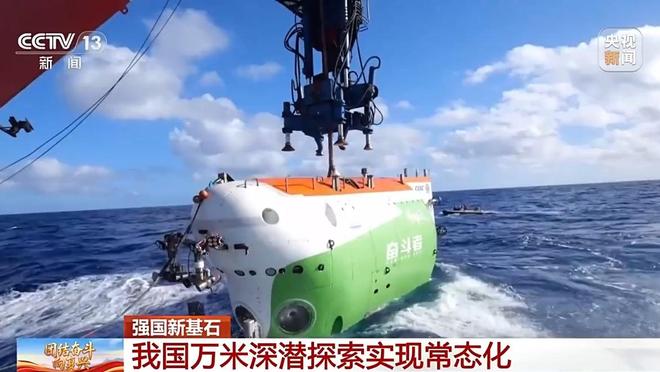
Core Insights - The deep sea holds untapped treasures that require advanced technology for exploration and development [1] Group 1: Technological Advancements - The "Deep Sea Warrior" and "Fighter" manned submersibles have significantly contributed to deep-sea archaeology and scientific research, with "Deep Sea Warrior" completing 858 dives and "Fighter" 441 dives as of September this year, showcasing international leadership in operational capacity [2][4] - The "Global Abyss Exploration Plan," initiated during the 14th Five-Year Plan, has attracted numerous domestic and international research teams, establishing a foundation for China's leadership in deep-sea science [4][11] Group 2: Research and Discoveries - The latest expedition of "Deep Sea Warrior" aims to conduct archaeological excavations at a shipwreck site in the South China Sea, utilizing a new universal mapping platform to enhance underwater detection efficiency [5][7] - The "Global Abyss Exploration Plan" has involved 145 scientists from 10 countries, leading to systematic research on nine major oceanic trenches and significant scientific discoveries [11][23] Group 3: International Collaboration - The recognition of the "Global Abyss Exploration Plan" by the United Nations as part of the "Ocean Decade" highlights China's manned submersible capabilities on the international stage [11][13] - Initial skepticism from international scientists regarding China's deep-sea equipment has been overcome through successful collaborations, leading to significant sample collections and research advancements [20][21] Group 4: Future Directions - The "Deep Sea Warrior" will focus on complex tasks such as deep-sea archaeology and rescue operations, while "Fighter" will lead international scientists in systematic studies of global abysses and polar underwater research [27]
新突破!我国探秘冰海不停步 蛟龙号“硬核破冰”更有“潜力”
Yang Shi Wang· 2025-10-04 02:33
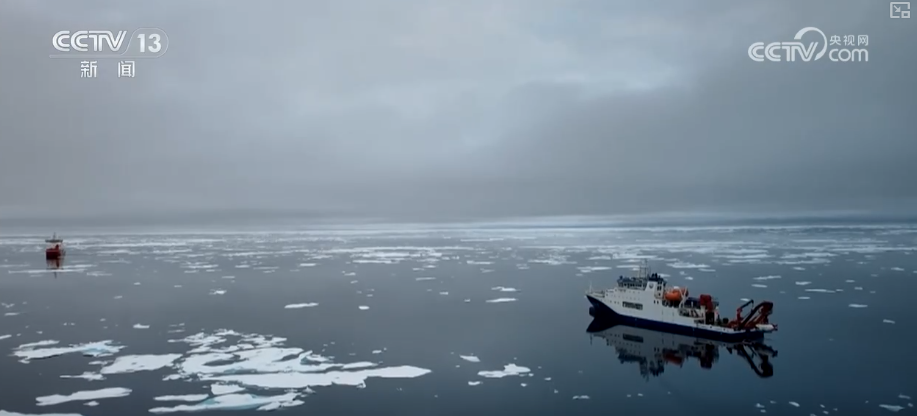
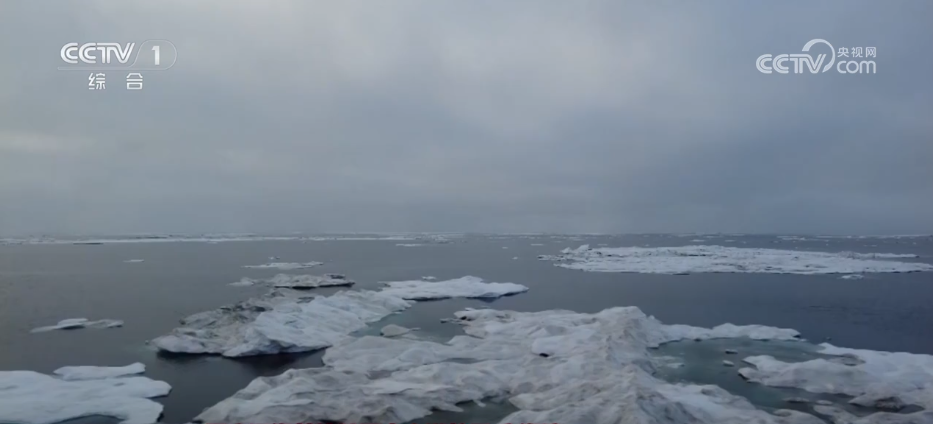
Core Insights - The article highlights China's successful completion of its 15th Arctic scientific expedition, marking the largest scale of such an endeavor to date [1][19] - A significant achievement during this expedition was the first manned deep-sea dive in the Arctic ice zone using the "Jiaolong" submersible, indicating a new phase in China's deep-sea exploration capabilities [3][5][7] Group 1: Expedition Overview - The expedition involved four vessels: "Snow Dragon 2," "Polar," "Deep Sea One," and "Exploration Three," showcasing China's commitment to Arctic research [1][19] - The expedition reached a record latitude of 77.5° North, filling a gap in high-latitude oceanic research for China [21] Group 2: Technological Innovations - The "Jiaolong" submersible's successful dive represents a breakthrough in China's deep-sea exploration, transitioning from "full ocean depth" to "full ocean area" operations [7] - The expedition featured the world's first underwater collaborative operation between manned and unmanned submersibles in the Arctic region, enhancing operational capabilities [8][10] Group 3: Scientific Discoveries - The expedition collected a diverse range of biological samples, including 183 specimens across 12 categories, contributing valuable data to marine biology [21] - AI technology was utilized for real-time biological identification during the expedition, combined with environmental DNA analysis to enhance accuracy [14][16] - The study revealed significant variations in benthic organism density and biodiversity across different spatial scales in the Arctic [18] Group 4: Environmental Insights - The expedition improved understanding of the formation mechanisms of "marine snow," a phenomenon observed in deep-sea environments, which is crucial for studying the Arctic ecosystem's response to climate change [23]
深海所运维载人潜水器下潜超1200次 推动中国载人深潜运维能力达世界先进水平
Hai Nan Ri Bao· 2025-05-11 01:03
Group 1 - The Deep Sea Research Institute has celebrated its 9th anniversary and awarded medals to its first batch of deep-sea divers, highlighting their contributions to deep-sea exploration [1] - The institute operates two manned submersibles, "Deep Sea Warrior" and "Fighter," with a total of 25 divers, averaging 32 years of age, primarily from engineering backgrounds [1] - A total of 1,204 dives have been conducted by the divers, with "Deep Sea Warrior" achieving 820 dives and "Fighter" 384 dives, including 25 dives to depths exceeding 10,000 meters [2] Group 2 - "Deep Sea Warrior" has set multiple records, including 12 dives in 8 days, while "Fighter" made history with 8 consecutive dives to depths of 10,000 meters [2] - The deep-sea exploration has led to significant discoveries, including two Ming Dynasty shipwrecks in the South China Sea and the first-ever deep-sea rock samples from depths of 10,000 meters [2] - The "Fighter" submersible has focused on deep-sea areas greater than 6,000 meters, conducting international collaborative dives in major oceanic trenches, yielding valuable scientific samples and data [3]