添可食万天工

Search documents
豆包手机声量登顶,豆包家电缘何锦衣夜行?
3 6 Ke· 2025-12-24 03:13
Core Insights - Doubao Mobile's "AI Custody" feature has become a phenomenon in the market, showcasing the practical application of AI terminals [1] - The device can simulate human-like finger movements to complete complex tasks across multiple applications, significantly enhancing user convenience [2] - Despite the popularity of Doubao Mobile, the AI home appliance sector remains relatively stagnant, raising questions about the disparity between mobile and home appliance AI adoption [3][4] Industry Analysis - The AI home appliance market is facing challenges due to hardware compatibility issues, as many appliances are not designed for advanced AI interactions [6] - The practical application of AI in home appliances is limited by the need for effective user demand matching and value communication [7] - The commercial monetization of AI home appliances is indirect, with current revenue models primarily focused on hardware sales rather than AI service monetization [11] Company Strategies - Major players like Midea and TCL are investing heavily in AI technology, with Midea integrating its "Meiyan" model into various appliances, while TCL focuses on enhancing user interaction through AI [12][13] - Emerging brands like Tineco are innovating in specific segments, such as cleaning appliances, by combining improved hardware design with proprietary AI models [14][16] - The industry is moving towards a more interconnected AI ecosystem, with companies exploring cross-platform and cross-device integration to enhance user experience [18][20] Cost and Market Dynamics - The introduction of AI technology in home appliances significantly increases hardware costs, which poses a barrier to widespread adoption [21][23] - Companies are exploring strategies to balance the high costs of AI integration with the need for practical, user-friendly applications [24] - The future of AI home appliances hinges on achieving cost-effective solutions, establishing industry standards, and effectively communicating the value of AI features to consumers [25]

ESG年报解读|科沃斯重研发年投入8.85亿;产品曾被爆信息安全漏洞,半年才修复
Sou Hu Cai Jing· 2025-08-20 12:07
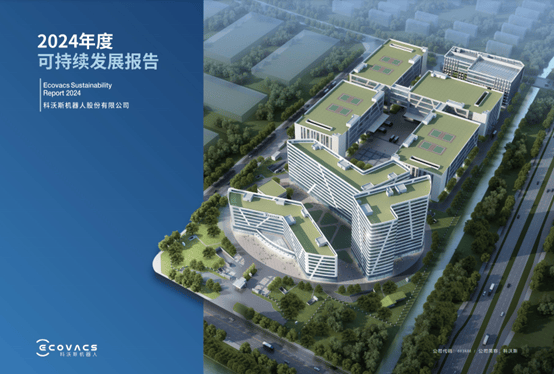
Core Viewpoint - The 2024 sustainability report of Ecovacs Robotics highlights significant investments in R&D and improvements in ESG performance, while also addressing challenges related to information security and customer service [2][4]. Group 1: ESG Performance - Ecovacs has achieved comprehensive ESG assessment coverage for its suppliers, with 320 suppliers for service robots and 366 for TINECO, ensuring sustainability in the supply chain [5][6]. - The company has established a full lifecycle management system for suppliers, with 100% of new suppliers evaluated based on ESG criteria, promoting local supplier partnerships to reduce logistics costs and emissions [5][6]. - However, there has been a notable increase in environmental indicators, such as greenhouse gas emissions, which rose to 51,144.84 tons CO₂e in 2024 from 27,315.71 tons in 2023, primarily due to the operations of a new subsidiary [7]. Group 2: Innovation and Employee Rights - In 2024, Ecovacs invested 885 million yuan in R&D, accounting for 5.35% of its revenue, and employed 1,667 R&D personnel, focusing on product innovation and service quality [9]. - The company has achieved a 100% signing rate for labor contracts and social insurance coverage for its employees, implementing a comprehensive compensation management system [9][10]. - Despite these advancements, the company faced criticism regarding information security, with a reported vulnerability in the Deebot X2 vacuum robot that allowed unauthorized access to user data [10][11].


科沃斯重研发年投入8.85亿;产品曾被爆信息安全漏洞,半年才修复
Sou Hu Cai Jing· 2025-08-20 11:10
Core Insights - ECOVACS, founded in 1998, is a leader in service robots and high-end smart appliances, known for launching China's first robotic vacuum cleaner and smart floor washer [1] - The company has shown strong performance in ESG areas such as green supply chains and product innovation, but there are aspects that require improvement [1] Environmental Performance - ECOVACS has achieved full ESG assessment coverage for its suppliers, with 320 suppliers for service robots and 366 for TINECO by the end of 2024 [2] - The company implements lifecycle management for its supply chain, ensuring sustainability through strict evaluations based on environmental, quality, and ethical standards [2] - Local suppliers account for 43.44% and 66.12% of the service robot and TINECO divisions, respectively, which helps reduce logistics costs and greenhouse gas emissions [2][3] Supplier Management - ECOVACS conducts regular assessments of suppliers based on key indicators such as quality and delivery time, with a 100% rate for signing integrity clauses and social responsibility agreements [4] - The company incentivizes high-performing suppliers while requiring improvements from underperforming ones to enhance sustainability [4] Energy and Emissions - In 2024, ECOVACS generated 2,546.10 MWh of electricity from its photovoltaic systems, with 2,530.71 MWh used internally [4] - However, greenhouse gas emissions increased significantly to 51,144.84 tons CO2e in 2024, up from 27,315.71 tons in 2023, primarily due to the operations of its subsidiary, which requires substantial steam energy [5][6] Innovation and Employee Rights - The company invested 885 million yuan in R&D in 2024, representing 5.35% of its revenue, and employed 1,667 R&D personnel [8] - ECOVACS has a 100% rate for labor contract signing and social insurance coverage for its employees, with a comprehensive compensation management system [11] Product Quality and Customer Service - Despite strong innovation, ECOVACS faces challenges in product quality and after-sales service, with 3,784 complaints reported on a consumer platform, mainly regarding product malfunctions and high repair costs [12] - The company has been criticized for inadequate responses to privacy concerns following a security vulnerability in one of its products [11][12]

ESG年报解读|科沃斯明确创新驱动为核心,合规管理获认证,产品及售后问题仍频发
Sou Hu Cai Jing· 2025-08-20 09:16
Core Viewpoint - The 2024 Sustainability Report of Ecovacs Robotics highlights the company's strong performance in ESG areas such as green supply chains and product innovation, while also noting areas for improvement, particularly in environmental metrics [3][4][11]. Environmental Performance - Ecovacs has achieved comprehensive ESG assessments of its suppliers, with 320 suppliers for service robots and 366 for TINECO, ensuring sustainability across the supply chain [4][6]. - The company collaborates closely with local suppliers, with 43.44% and 66.12% of suppliers for service robots and TINECO located in Jiangsu Province, respectively, which reduces logistics costs and greenhouse gas emissions [5][6]. - In 2024, Ecovacs generated 2,546.10 MWh of electricity from its photovoltaic systems, with 2,530.71 MWh used internally, demonstrating a commitment to green energy [6]. - However, total greenhouse gas emissions rose significantly to 51,144.84 tons CO₂e in 2024, up from 27,315.71 tons in 2023, primarily due to the operations of its subsidiary, Taiding New Energy [7][8]. - The comprehensive energy consumption intensity increased to 54,575.73 MJ/million yuan in 2024, a substantial rise from 10,983.19 MJ/million yuan in 2023, linked to the increased energy demands of new operations [8][9]. Social Responsibility - Ecovacs emphasizes product innovation and service upgrades, investing 885 million yuan in R&D, which accounts for 5.35% of its revenue, and employing 1,667 R&D personnel [11]. - The company has achieved a 100% signing rate for labor contracts and social insurance coverage for its employees, along with a comprehensive compensation management system [12]. - However, there are concerns regarding information security, as a vulnerability in the Deebot X2 vacuum cleaner was reported, allowing potential unauthorized access to user data [13]. - Customer complaints have been significant, with 3,784 complaints reported on the Black Cat Complaint platform, primarily related to product malfunctions and high repair costs [15].