清洁设备

Search documents
在华外资战略调整,开启“深度本土化+长期主义”模式
第一财经· 2026-01-29 14:17
Core Viewpoint - The article discusses the evolving strategies of multinational companies in China, highlighting their deep integration into local markets and communities, as well as the shift from mere manufacturing to a comprehensive value chain presence [3][5]. Group 1: Investment Trends - In 2025, the number of newly established foreign-invested enterprises in China increased by 19.1%, while the actual use of foreign capital decreased by 9.5%, indicating a complex investment landscape [3]. - German companies' investment in China reached over 7 billion euros in the first eleven months of 2025, marking a 55.5% increase compared to the same period in 2024 and 2023 [3][8]. - The Chinese manufacturing sector's negative list for foreign investment has been fully cleared, enhancing the market's attractiveness to foreign capital, particularly in advanced manufacturing and modern service industries [9]. Group 2: Corporate Strategies - Companies like Epson are adapting to local needs by developing tailored solutions, such as AI learning assistants and customized industrial robots, to address specific market demands [7][8]. - Hitachi Elevator has established its largest factory and R&D team in China, focusing on modernization and energy-efficient technologies in response to the urban renewal wave [8]. - Karcher has upgraded its Shanghai headquarters and expanded production capacity, achieving a 30% growth in early 2025, emphasizing the importance of understanding local market dynamics [11]. Group 3: Innovation and Market Adaptation - Companies are increasingly focusing on creating value through innovation, transitioning from raw material dependency to high-value specialty chemicals, as seen with Lanxess's investment in Qingdao [12]. - The trend indicates that the Chinese market is becoming a key driver of global technological innovation and business model evolution, necessitating deeper commitments from companies to integrate with local ecosystems [12].

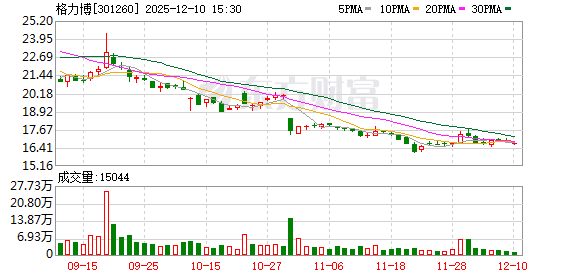
格力博(301260.SZ):与智元机器人关于商用清洁机器人的合作已进入实施阶段,相关产品正在进行量产前的最后测试与优化
Ge Long Hui· 2025-12-10 09:51
Core Viewpoint - The company Greebo (301260.SZ) is advancing its collaboration with Zhiyuan Robotics on commercial cleaning robots, currently in the final testing and optimization phase before mass production [1] Group 1: Product Development - The company adheres to a cautious principle of "mature generation, promotion generation," ensuring product performance and reliability are fully validated before market launch and order acceptance [1] - The company has developed a smart ecosystem centered around new energy power, creating battery packs with voltage platforms of 24V, 40V, 60V, 80V, and 82V [1] - A diverse product matrix of 1,500 SKUs has been established, including garden tools and cleaning equipment, catering to both household consumers and professional landscaping companies [1] Group 2: Competitive Advantage - The interoperability of battery packs across different products within the same voltage platform significantly reduces long-term usage costs, enhancing user stickiness and creating competitive barriers [1] - The company reports that its production and operations are running normally, with strategic development progressing in an orderly manner [1] Group 3: Market Conditions - The trading conditions in the secondary market, including transaction volume and price fluctuations, are influenced by various complex factors such as macroeconomic conditions, industry policies, market sentiment, and liquidity, and do not directly reflect the company's actual operational status [1]

格力博:公司与智元机器人关于商用清洁机器人的合作已进入实施阶段,相关产品正进行量产前的最后测试与优化
Mei Ri Jing Ji Xin Wen· 2025-12-10 09:16
Group 1 - The company is currently in the implementation phase of its collaboration with Zhiyuan Robotics for commercial cleaning robots, with products undergoing final testing and optimization before mass production [2] - The company emphasizes a cautious principle of "mature generation, promotion generation," ensuring product performance and reliability are fully validated before market launch and order acceptance [2] - The company's core advantage lies in its successful construction of an intelligent ecosystem around new energy power, having developed a diverse product matrix of 1500 SKUs based on a voltage platform battery system [2] Group 2 - The product offerings cater to both household consumers and professional landscaping companies, providing innovative comprehensive solutions for various application scenarios [2] - The battery packs within the same voltage platform are interchangeable across different products, significantly reducing long-term usage costs and creating strong user loyalty and competitive barriers [2] - The company's production and operations are running normally, with strategic development progressing in an orderly manner, while stock trading conditions are influenced by multiple complex factors and do not directly reflect the company's actual operating status [2]
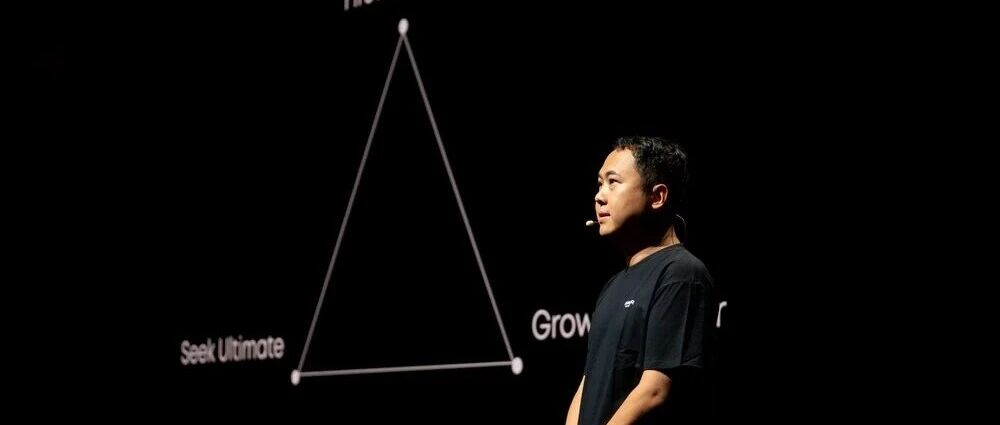
独家对话安克CEO阳萌:当我坚信的“西天”突然崩塌
虎嗅APP· 2025-09-23 00:16
Core Insights - Anker Innovation has adopted a "Shallow Sea Strategy" focusing on smaller consumer electronics markets rather than competing in larger, saturated markets like smartphones and electric vehicles. This strategy aims to achieve sustainable growth through product innovation and channel advantages [7][10][25]. - The company reported impressive financial results, with a revenue of 128.67 billion yuan in the first half of 2025, marking a 33.36% year-on-year increase, and a net profit of 11.67 billion yuan, up 33.8% [6]. - The CEO, Yang Meng, emphasized the importance of talent acquisition and retention as critical to the company's success, especially after facing significant challenges in 2022 [90][94]. Company Overview - Founded in 2011, Anker Innovation has grown to achieve annual revenues exceeding 247 billion yuan and a market capitalization of over 700 billion yuan, with over 95% of its revenue coming from international markets [6]. - The company has expanded its product lines significantly, reaching up to 27 product lines at one point, but has since streamlined to focus on core areas [29][101]. Strategic Framework - The "Shallow Sea Strategy" was born out of a sense of urgency and the need for long-term sustainability, as the CEO recognized the rapid obsolescence of consumer electronics [11][12][16]. - Anker categorizes companies into three types based on their market focus: "Blue Whales" (deep sea), "Great White Sharks" (few shallow categories), and "Orca Pods" (integrating multiple shallow categories) [20][22][25]. Organizational Structure - Anker has implemented a three-tier management structure to support its multi-category strategy, consisting of a top-level design team, business unit leaders, and product line teams [32][30]. - The company has shifted its organizational focus to enhance product line autonomy while maintaining strategic oversight from the headquarters [29][30]. Challenges and Adjustments - Anker faced a "systemic failure" in 2022, with many product lines underperforming, leading to a reevaluation of its management and operational strategies [34][36]. - The company has since reduced its product lines from 27 to 17, focusing on core competencies and aligning with its main business directions [51][52]. Cultural Transformation - In response to the 2022 crisis, Anker has undertaken a cultural overhaul, emphasizing a new set of values centered around "First Principles," "Pursuit of Extremes," and "Mutual Growth" [62][64]. - The company aims to foster an environment that encourages innovation and creativity, moving away from merely competing with peers to focusing on customer value [58][70]. Talent Management - Anker is committed to attracting top talent by offering equity incentives and a profit-sharing model that allocates 70% of total remaining value to employees [95][99]. - The company believes in providing opportunities for employees to take on significant responsibilities early in their careers, which is a key differentiator from larger competitors [97][98]. Brand Strategy - Anker has consolidated its brand matrix to focus on three main brands: Anker for energy-related products, Soundcore for audio products, and Eufy for home automation [101][103]. - This restructuring allows for independent profit generation and resource allocation for each brand, enhancing operational efficiency [104][102].