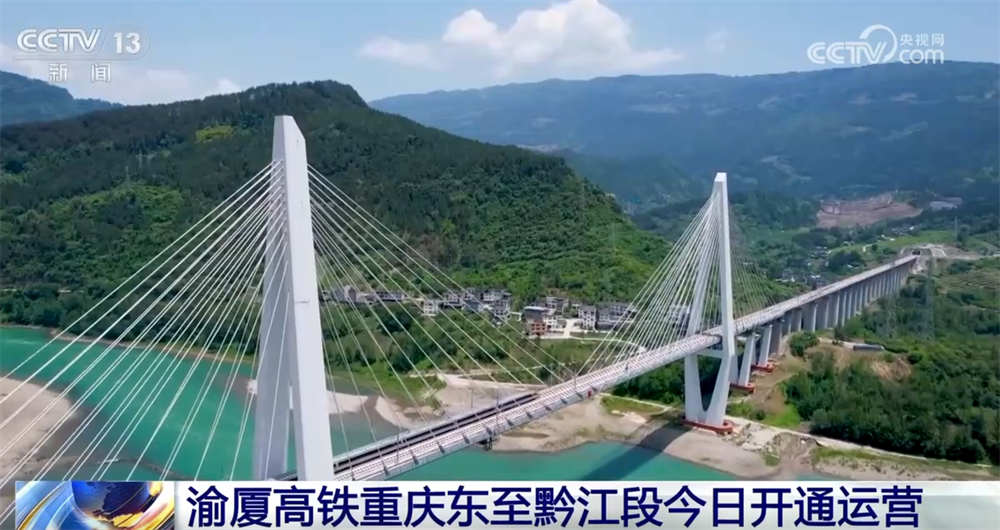
渝厦高铁重庆东至黔江段

Search documents
“人享其行、货畅其流”的背后是中国交通的“硬核”实力
Yang Shi Wang· 2025-08-01 06:01
Group 1 - The article highlights the significant increase in inter-regional mobility in China during the first half of the year, driven by an improved comprehensive transportation network [1] - The newly opened Chongqing-Xiamen high-speed railway segment from Chongqing East to Qianjiang has enhanced travel options and connected rich tourism resources in the region [4][6] - The high-speed railway has not only attracted tourists but also stimulated local economic development, with Qianjiang District seeing a tripling of investment projects compared to the previous year [10] Group 2 - The upgrade of rural roads has facilitated self-driving travel, accounting for over 80% of inter-regional mobility, and has activated rural tourism resources [11] - In Changchun's Shuangyang District, the improvement of a 20-kilometer rural road has connected various tourist attractions, leading to increased visitor numbers [13] - The development of rural roads has also enhanced e-commerce accessibility for villagers, with a reported 15% increase in mail volume in the first half of the year [15] Group 3 - The expansion of air routes, including the opening of branch lines, has made travel to less accessible small cities more efficient [18] - Guizhou's innovative air route combination model has improved travel efficiency, allowing tourists to visit multiple attractions seamlessly [20] - Dedicated shuttle buses from airports to tourist sites have been introduced to address the challenges of dispersed attractions and lengthy ground transfer times [23]

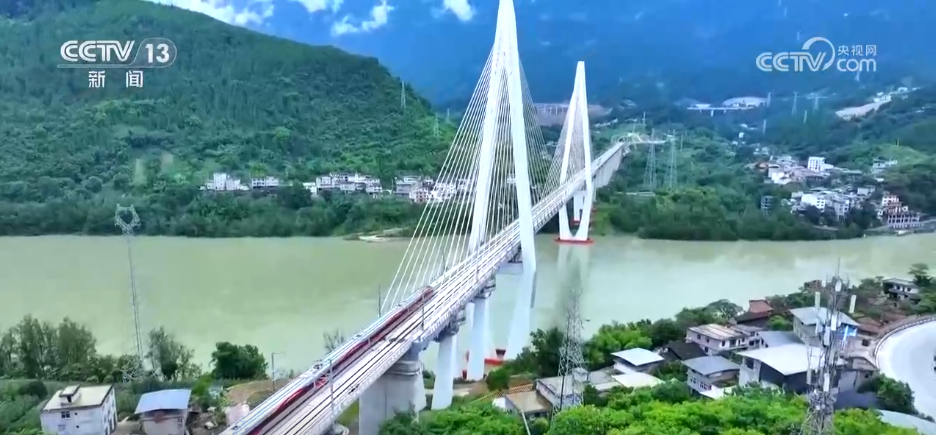
年中经济观察 | “人享其行、货畅其流”的背后是中国交通的“硬核”实力
Yang Shi Wang· 2025-08-01 03:30
Group 1 - The core viewpoint of the articles highlights the significant increase in inter-regional mobility in China during the first half of the year, driven by an improved comprehensive transportation network that enhances travel experiences [1] - The newly opened Chongqing to Qianjiang section of the Yuxia high-speed railway has connected previously isolated areas, boosting tourism and providing new travel options for visitors [4] - High-speed rail stations along the route are promoting discounts for tourists holding train tickets, enhancing the attractiveness of local attractions [6] Group 2 - The opening of high-speed rail has not only increased tourist traffic but also attracted investment opportunities, with 63 projects in discussion in Qianjiang District, amounting to an investment of 30 billion yuan, three times that of the previous year [10] - Upgraded rural roads are facilitating self-driving travel, accounting for over 80% of inter-regional mobility, and are vital for activating rural tourism resources [10][12] - The development of rural roads has led to increased mail volume by over 15%, improving logistics and e-commerce accessibility for rural residents [12] Group 3 - The enhancement of air travel routes, particularly through the opening of branch lines, is making travel more efficient and accessible for smaller cities, contributing to the "say go" travel trend [17] - The "dry and branch linkage" and "branch-to-branch flight" model in Guizhou has created a network that connects major airports with smaller ones, facilitating seamless travel to tourist destinations [19] - Specialized shuttle services from airports to scenic spots are addressing the challenges of dispersed attractions, significantly reducing travel time for tourists [19]
年中经济观察丨说走就走的底气何来?秘密就在这张越织越密的“网”中
Yang Shi Xin Wen· 2025-08-01 01:39
Group 1: Transportation Infrastructure Development - The opening of the Chongqing-Xiamen high-speed railway segment from Chongqing East to Qianjiang has ended the history of no high-speed rail in the southeastern region of Chongqing, providing efficient connections to rich tourism resources and new travel options for summer tourists [3][9] - The high-speed rail stations along the route offer promotional benefits for tourists holding tickets, including free admission to various scenic spots and exclusive discounts on hotels, hot springs, and dining [5][9] - The development of rural roads has significantly improved self-driving travel convenience, with over 80% of cross-regional mobility being self-driving, thus activating rural tourism resources [10][21] Group 2: Economic Impact and Investment - In Qianjiang District, the number of projects under discussion reached 63, with a proposed investment amount of 30 billion yuan, three times that of the same period last year, with manufacturing projects accounting for approximately 26 billion yuan [9] - The local government is focused on optimizing the business environment to expedite project signings and implementations, aiming to convert high-speed rail opportunities into development dividends for the Qianjiang High-tech Zone [9] Group 3: Air Travel Enhancements - The opening and enhancement of branch air routes have made travel to previously inaccessible small cities more efficient, facilitating spontaneous travel experiences [23][26] - Guizhou has introduced a "trunk and branch linkage" model for air routes, creating a network that connects various cities and enhances travel efficiency [26][28] - New air routes have been launched during the summer tourism peak, with high passenger load factors, indicating strong demand for air travel [32]
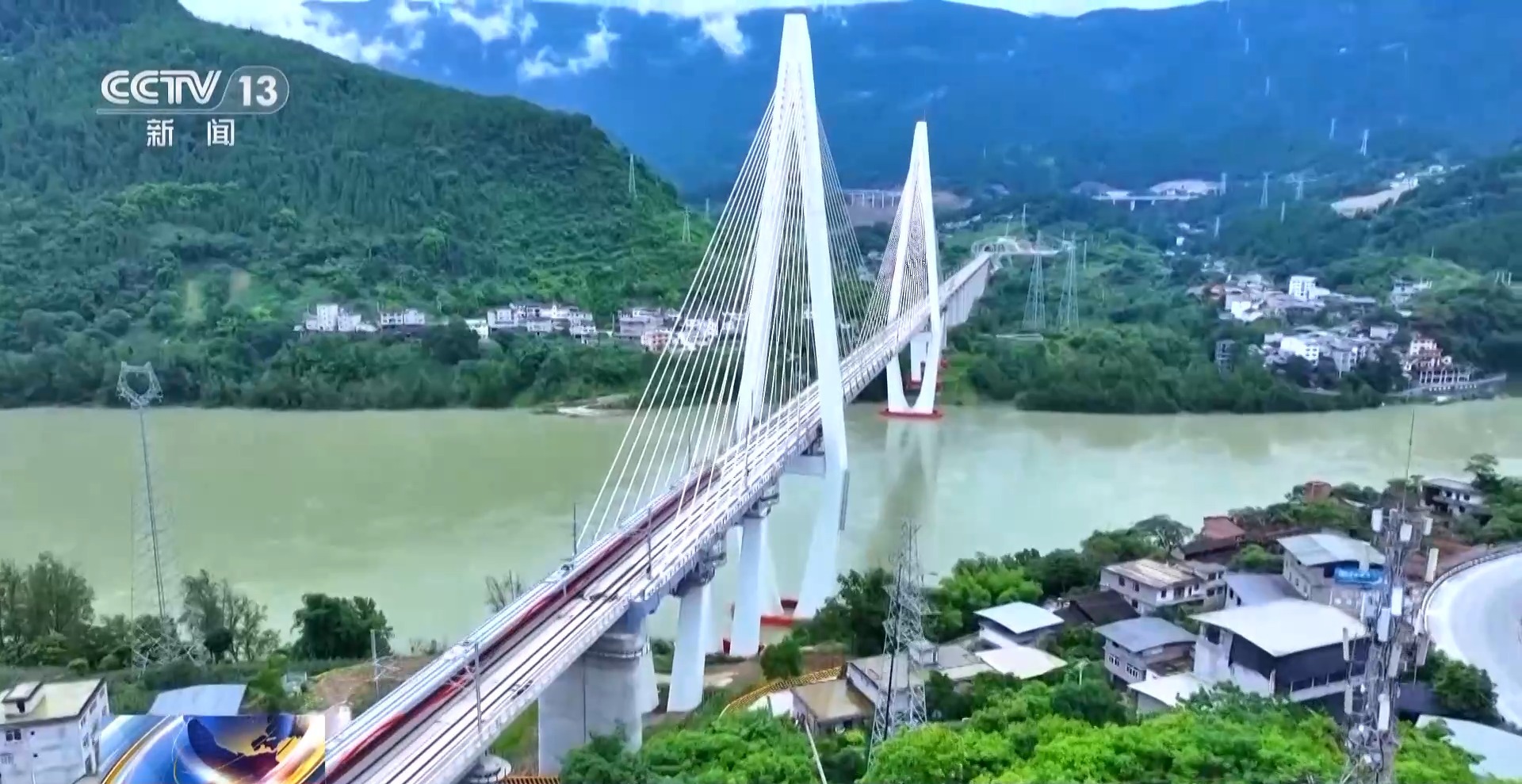
1600公里大通道,向横贯再进一步(经济新方位·重大工程一线)
Ren Min Ri Bao· 2025-06-28 21:49
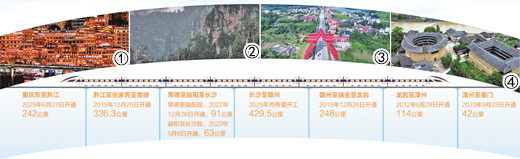
Core Viewpoint - The opening of the Chongqing to Xiamen high-speed railway (Yuxia High-speed Railway) significantly enhances connectivity between key economic regions in China, reducing travel time and improving transportation efficiency [2][4]. Group 1: Infrastructure Development - The Yuxia High-speed Railway is part of the "Eight Vertical and Eight Horizontal" high-speed rail network, serving as the western starting point of the Yuxia corridor, which spans approximately 1,600 kilometers [2]. - The newly opened segment from Chongqing East to Qianjiang is 242 kilometers long, completing a crucial link in the Yuxia corridor [2]. - The railway reduces travel time from Chongqing to Changsha to 3 hours and 53 minutes, cutting down the previous journey by 78 minutes [2][3]. Group 2: Regional Impact - The high-speed railway creates a rapid passenger transport corridor between the Chengdu-Chongqing economic circle and the Changsha-Zhuzhou-Xiangtan urban agglomeration, enhancing regional connectivity [2]. - The opening of this railway marks the end of the no-high-speed-rail history for the southeastern region of Chongqing, providing new opportunities for local tourism and economic development [4]. Group 3: Technological Advancements - The construction of the railway faced significant challenges due to the mountainous terrain, requiring innovative technologies such as advanced geological detection systems and new bridge construction machinery [5][7][8]. - The introduction of the BLCP500 dual-line long rail laying machine has improved efficiency, achieving a record of laying 17.5 kilometers of rail in 18 hours [11]. Group 4: Environmental Considerations - The Chongqing East Station, part of the Yuxia High-speed Railway, is designed with green building standards, featuring energy-saving technologies that can reduce carbon emissions significantly [12]. - The entire railway construction emphasizes ecological protection, avoiding disruption to cultural relics and monitoring soil erosion dynamically [12].
我国交通网络越织越密 “人享其行 物畅其流”图景加速铺展
Yang Shi Wang· 2025-06-27 10:17
Group 1 - The core viewpoint of the news is the significant progress in the construction of China's "Eight Vertical and Eight Horizontal" high-speed rail network, with 81.5% completed and 14% under construction [1][4] - The completed sections include major corridors such as the Beijing-Shanghai and Beijing-Harbin, with ongoing construction in various segments of the network [4] - The opening of the Chongqing to Jiangjiang section of the Yuxia high-speed railway is expected to greatly reduce travel time, with the fastest journey from Chongqing to Changsha taking approximately 3 hours and 53 minutes [6][10] Group 2 - The Yuxia high-speed railway spans 242 kilometers with a design speed of 350 km/h, featuring seven stations including the newly built ones and the expanded Qianjiang station [8] - After the opening of the Yuxia high-speed railway, up to 54 high-speed trains will operate daily, enhancing connectivity between major cities in the region [10] - Chongqing East Station, as a major hub in the western high-speed rail network, will facilitate connections among multiple high-speed lines and conventional railways [10]
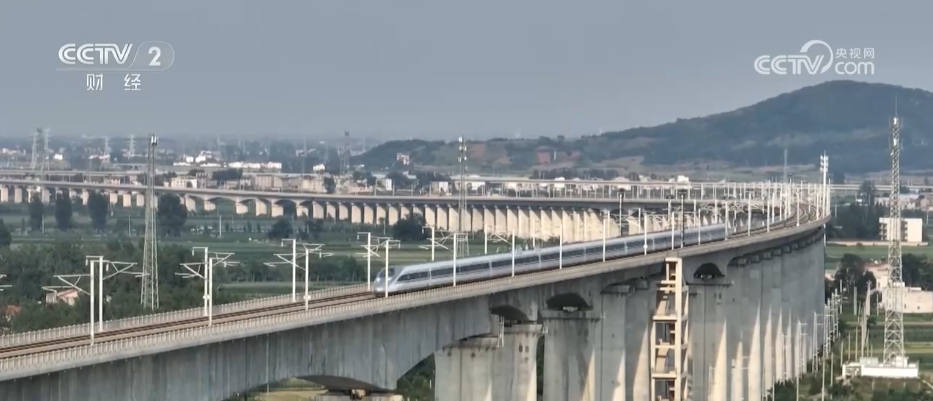
重点工程建设“加速跑” 铁路网不断织密带动区域经济迸发新活力
Yang Shi Wang· 2025-06-27 03:23
Core Points - The opening of the Chongqing East to Qianjiang section of the Yuxia High-Speed Railway on June 27 marks a significant addition to China's "eight vertical and eight horizontal" high-speed rail network [1][4][19] - This new segment connects Chongqing to the Qianjiang-Zhangjiajie-Changde high-speed rail, creating a rapid passenger transport corridor between the Chengdu-Chongqing economic circle and the Changsha-Zhuzhou-Xiangtan urban agglomeration [1][3] Group 1: Infrastructure Development - The Yuxia High-Speed Railway spans 242 kilometers with a design speed of 350 km/h, enhancing connectivity in the region [1][4] - The Chongqing East Station, the largest high-speed rail hub in Western China, officially opened on the same day, featuring a unique architectural design and advanced energy-efficient systems [16][18] - The station will facilitate up to 54 daily train services, significantly reducing travel times between key cities [8][15] Group 2: Economic Impact - The railway's opening is expected to boost local economies, particularly in tourism, by connecting over 30 ethnic minority areas and numerous scenic spots [4][6] - Special promotional ticket packages have been introduced to attract tourists, enhancing the economic benefits of the new rail line [6] - The ongoing railway construction in the Chengdu-Chongqing area has seen nearly 380 billion yuan invested, indicating a strong commitment to infrastructure development [9][15] Group 3: Future Prospects - The Chengdu-Chongqing railway network is projected to reach over 9,000 kilometers, with more than 3,400 kilometers of high-speed rail, facilitating an estimated 55 million passenger trips annually by 2024 [15][19] - The "eight vertical and eight horizontal" high-speed rail network is 81.5% completed, with ongoing projects expected to further enhance regional connectivity and economic growth [19][23]