澎湃P系列

Search documents
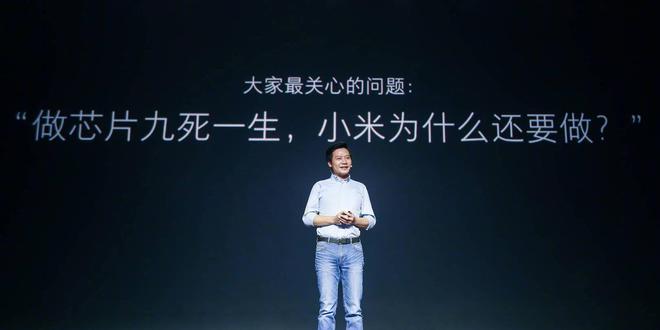
雷军:小米未来五年重点攻坚芯片、AI等底层核心技术
Sou Hu Cai Jing· 2026-02-24 08:00
Core Viewpoint - Xiaomi Group aims to become a global hardcore technology company by focusing on core technologies such as chips, AI, and operating systems during the "15th Five-Year Plan" period [1][3]. Group 1: Strategic Planning - Xiaomi plans to invest an additional 200 billion yuan in R&D over the next five years, building on the 100 billion yuan investment made since 2020 [3]. - The company has set a goal to achieve the integration of self-developed chips, operating systems, and AI models in a specific terminal by 2026 [3]. Group 2: Technological Development - Xiaomi's self-developed chip portfolio includes imaging chips (Surge C series), charging chips (Surge P series), battery management chips (Surge G series), and mobile SoC-level chips (Surge O1) [3]. - The company launched the Surge OS (Xiaomi HyperOS) in 2023, enabling unified connectivity across its ecosystem of devices [3]. - Xiaomi's self-developed AI language model, MiLM, is gradually being implemented on the edge [3]. Group 3: Industry Positioning - The emphasis on chips, AI, and operating systems marks Xiaomi's transition from a terminal hardware manufacturer to a hardcore technology company with foundational technological capabilities [5]. - This strategic choice aligns with the global trend of restructuring the technology industry and raises the bar for Xiaomi's technological organization and long-term investment commitment [5].


小米自研芯片发布,细节全披露
半导体行业观察· 2025-05-22 12:27
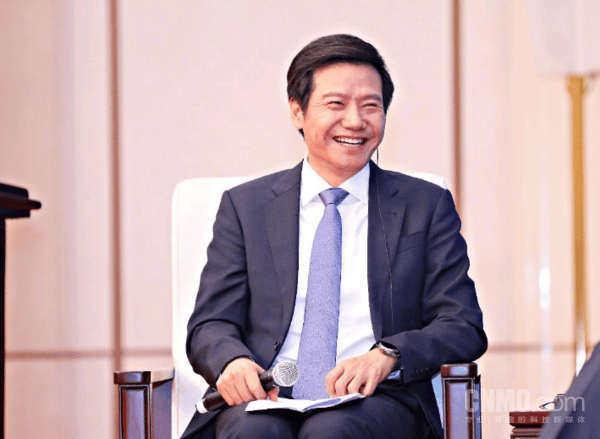
Core Viewpoint - Xiaomi has officially launched its self-developed flagship chip "XringO1," which integrates advanced technology and aims to compete with leading chip manufacturers like Qualcomm and MediaTek [1][5]. Group 1: Chip Development Journey - Xiaomi's chip development journey began in 2014 with the establishment of the "Panghu" project, leading to the release of the "Panghu S1" in 2017, which was positioned as a mid-range mobile chip [3][4]. - The initial phase, referred to as the "Songguo period," saw Xiaomi's first chip, the Panghu S1, which utilized a 28nm process and featured an 8-core architecture [3][4]. - After facing setbacks, Xiaomi paused the development of large SoCs and shifted focus to smaller chips, leading to the creation of several peripheral chips like the Panghu C, P, G, and T series [4][5]. Group 2: Resumption of Large Chip Development - In early 2021, Xiaomi made a significant decision to restart its large chip development, establishing the Shanghai Xuanjie Technology Co., Ltd. to focus on mobile SoCs [4][5]. - The company invested over 13.5 billion RMB in the development of the XringO1 chip over four years, with a projected investment of over 6 billion RMB for the current year [5]. Group 3: Technical Specifications of XringO1 - The XringO1 chip is built on TSMC's N3E process, featuring a "4-cluster 10-core" design with a total of 19 billion transistors [1][5]. - The CPU configuration includes 2 super-large Arm X925 cores, 4 performance cores A725, 2 efficiency cores A725, and 2 ultra-efficiency cores A520, while the GPU consists of a 16-core G925 [1][5]. - The chip also integrates Xiaomi's self-developed ISP, NPU, and PMIC, enhancing its overall performance and capabilities [1][11]. Group 4: Innovations and Performance Enhancements - The XringO1 chip employs advanced techniques such as AI optimization and a four-level low-power architecture to achieve high performance and low power consumption [7][8]. - The ISP integrated into the chip has undergone multiple iterations, with the latest version, C4, featuring advanced capabilities for image processing [10][11]. - The NPU in the XringO1 boasts a computing power of 44 TOPS, supporting various AI applications and enhancing overall device performance [10][11]. Group 5: Future Prospects and Challenges - Xiaomi is actively working on developing its own 5G modem, with previous efforts leading to the creation of a self-developed 4G modem for smartwatches [13]. - The company aims to balance the high costs associated with advanced chip manufacturing through sales of its diverse product range, including IoT devices and smartphones [13].
小米自研手机SoC芯片浮出水面 雷军以“十年饮冰”总结造芯历程
Jing Ji Guan Cha Bao· 2025-05-16 07:34
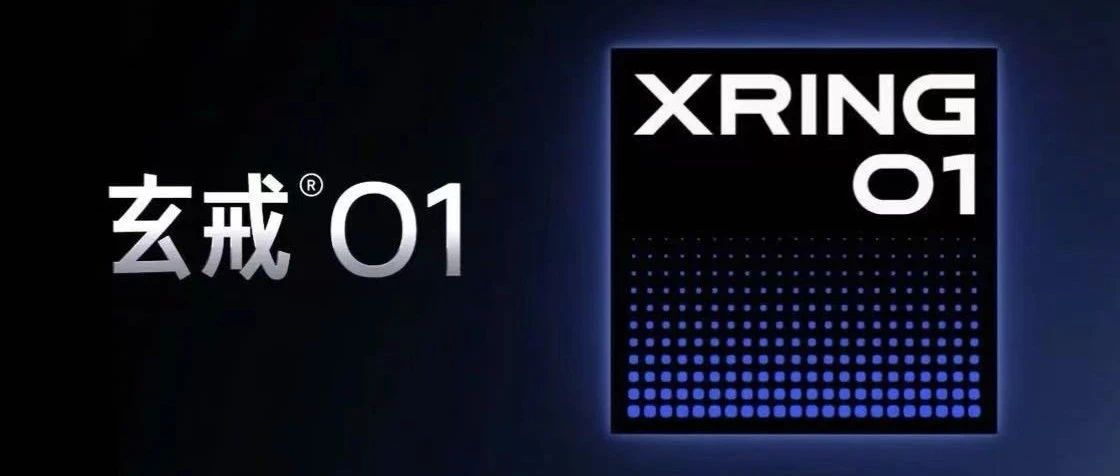
Core Insights - Xiaomi has launched its second self-developed mobile SoC chip, named "Xuanjie O1," marking a significant milestone in its ten-year journey of chip development [2][5] - The new chip is expected to be unveiled in late May 2024 and is anticipated to utilize advanced manufacturing processes, potentially achieving performance levels comparable to leading competitors [3][4] Group 1: Chip Development Journey - Xiaomi's chip development began in October 2014 with the establishment of a subsidiary, Pinecone Electronics, leading to the production of its first SoC, the Surge S1, in 2017 [5] - The Surge S1 was manufactured using a 28nm process and featured an octa-core A53 architecture, but it faced challenges due to outdated technology and insufficient baseband capabilities [5] - Following the initial setbacks, Xiaomi continued to innovate with various chip series, including imaging chips, charging chips, and battery management chips, while also establishing Shanghai Xuanjie Technology Co., Ltd. in December 2021 [5][6] Group 2: Specifications and Expectations for Xuanjie O1 - Although specific details about the Xuanjie O1 chip are not yet disclosed, it is rumored to be based on a second-generation 4nm process and may feature an architecture that includes an Arm Cortex-X925 CPU and an Immortalis-G925 GPU [3] - The chip is expected to adopt an "Arm reference architecture AP + external 5G baseband" design, with potential configurations of 8-core or 10-core CPU clusters [3] - The Xuanjie O1 is likely to be integrated into Xiaomi's flagship model, the Xiaomi 15S Pro, which is set to celebrate the company's 15th anniversary [4]