烤肉自助

Search documents
透过比格比萨闯关IPO,看自助餐行业资本入局与存量博弈的新局
Sou Hu Cai Jing· 2026-02-02 10:00
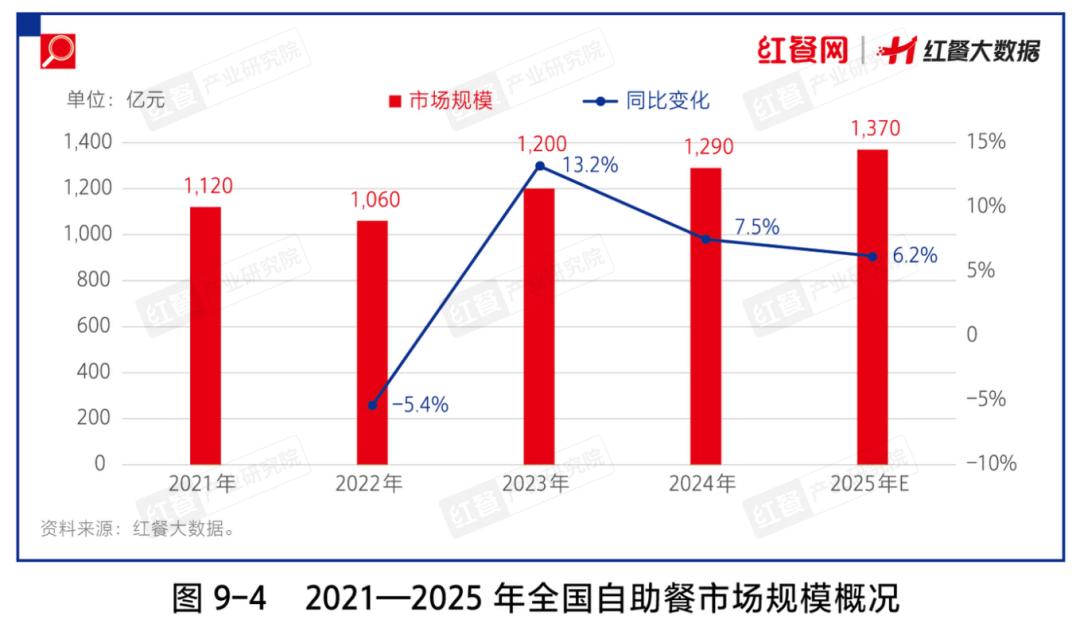
Core Viewpoint - The self-service restaurant industry in China is transitioning from intense price competition to value-driven segmentation, with companies like Big Restaurant International Holdings Ltd. seeking to capitalize on this shift by going public [1] Market Size and Growth - The self-service restaurant market in China is projected to reach 129 billion yuan in 2024, with a year-on-year growth of 7.5%, and is expected to surpass 130 billion yuan in 2025 [3] - The number of self-service restaurant enterprises registered annually has consistently exceeded 6,000 from 2023 to 2024, with over 2,300 registrations in the first five months of 2025 [3] - By May 2025, the total number of self-service restaurant outlets in China is expected to reach 66,000, reflecting a net increase of over 10,000 outlets compared to the previous year [3] Industry Structure and Trends - The industry is experiencing significant structural differentiation, with traditional comprehensive self-service models declining and a focus on niche markets and price reduction becoming the core trend [3][4] - As of May 2025, 80% of self-service restaurants have an average consumer price below 100 yuan, a 17.2 percentage point increase from 2022 [3] Popular Categories - The concentration of specific categories is increasing, with hot pot, barbecue, and pizza leading the market, collectively accounting for nearly 60% of the market share [4] Competitive Landscape - The trend towards lower prices has intensified competition, with major brands reducing prices to capture market share, leading to a price war in the 50-80 yuan range [6] - Major players like Haidilao are entering the low-cost self-service market, further driving down industry price points [6] Challenges for Brands - The influx of new entrants and the high closure rate of restaurants pose significant challenges for smaller brands, with many forced to close due to price wars [7] - Brands are exploring differentiation through product innovation and quality upgrades to build competitive barriers [7] Capital and Expansion - The self-service restaurant sector is entering a phase of accelerated chain expansion, particularly in lower-tier cities, where self-service restaurant outlets account for 51.6% of the total [8] - Capital investment is crucial for supporting expansion plans, with some brands planning to raise funds through IPOs to open hundreds of new outlets by 2028 [8][9] Regional Disparities - There is a notable imbalance in regional development, with northern brands dominating the market while southern regions lag behind in store numbers and market penetration [11] - Southern markets present unique challenges, including local taste preferences and intense competition from both national and local brands [12] Operational Efficiency - The low-margin model of budget self-service restaurants necessitates meticulous operational efficiency, with brands needing to optimize every aspect of their operations to sustain profitability [14][15] - Digital tools and centralized kitchen operations are essential for maintaining quality and controlling costs [15] Investment Logic - The investment logic in the pizza segment reflects a broader trend in the self-service industry, emphasizing the importance of clear category positioning and scalable business models [16] - Capital is increasingly focused on brands with strong supply chain capabilities and operational efficiency, which are critical for sustainable growth [16] Future Outlook - The self-service restaurant industry is expected to continue consolidating, with brands lacking differentiation and operational capabilities likely to exit the market [17][18]


95后跨年怎么过?吃火锅烤肉、打台球、美发美甲……
Sou Hu Cai Jing· 2026-01-03 17:11
Core Insights - Urban consumption vitality was fully released during the New Year period, with cities like Shanghai, Nanjing, and Changsha showcasing strong local consumption activity [1][8] - Diverse consumption experiences, including shopping, cross-city travel, and winter activities, saw significant growth, indicating a robust experience economy [1][3] Consumption Trends - Supermarket shopping and cross-city tourism were popular, with supermarket coupon sales on Douyin increasing by 164% year-on-year, and sales of clothing and jewelry rising by 147% and 109% respectively [3] - The pet care sector also saw a notable increase, with pet grooming services growing by 63% [3] Travel and Accommodation - The travel market was vibrant, with hotel and guesthouse sales increasing by 93% and 97% year-on-year, respectively, and attraction ticket sales rising by 46% [3] - The "Heartfelt List" of hotels saw a 71% increase in sales and an 85% increase in order volume from December 19 to January 1 [3] Experience Economy - The offline experience economy became a new highlight, with "Pindou" handcraft experiences seeing a staggering 1461% increase in sales on Douyin [6] - Theme park visits and pottery experiences also gained popularity, with sales increasing by 106% and 99% respectively [6] Food Consumption - Food consumption remained a key focus during the holiday, with hot pot, chicken pot, grilled fish, and other dishes being particularly favored, and buffet sales increasing by 94% year-on-year [4] Regional Highlights - Cities such as Shanghai, Zhengzhou, Fuzhou, Chengdu, Wuhan, Guangzhou, Hangzhou, Beijing, Nanjing, and Changsha demonstrated strong local consumption vitality during the New Year holiday [8] - Hainan experienced a tourism surge, attracting visitors with its unique climate and travel resources, leading to high demand for group purchases of scenic area tickets and travel packages [8]

人均六七十吃到扶墙出,自助餐凭啥开出近7万家店?
3 6 Ke· 2025-08-15 03:39
Core Insights - The self-service restaurant sector is experiencing renewed growth driven by changing market conditions and consumer preferences, with the market size expected to exceed 1,300 billion yuan in 2025 [1][2]. Market Dynamics - The self-service restaurant market has seen a surge in new registrations, with over 6,000 new companies registered annually from 2023 to 2024, and more than 2,300 in the first five months of 2025, bringing the total number of self-service restaurants close to 40,000 [2]. - The market size for self-service restaurants reached 1,290 billion yuan in 2024, reflecting a year-on-year growth of 7.5% [2]. - As of May 2025, there are approximately 66,000 self-service restaurant outlets in China, with a net increase of over 10,000 outlets compared to the same period in 2024 [2]. Consumer Trends - The proportion of budget self-service restaurants, defined as those with an average spending of under 100 yuan per person, has increased significantly, accounting for 80% of all self-service outlets as of May 2025, up 17.2 percentage points from 2022 [4]. Competitive Landscape - The self-service restaurant market is becoming increasingly segmented, with a variety of specialized formats emerging, such as hot pot, barbecue, steak and seafood, and Japanese-style buffets [6]. - Hot pot self-service restaurants hold the largest market share at 29.3%, followed by barbecue and steak and seafood formats at 19.6% and 18.5%, respectively [6]. Brand Strategies - Brands are adapting to market competition by focusing on specific categories, optimizing their supply chains, and expanding into lower-tier markets [9]. - Notable examples include the "point steak + free self-service" model adopted by Hao De Heng Steakhouse, which has opened over 170 outlets in various regions [8]. Supply Chain Innovations - Companies are enhancing their supply chain capabilities through direct sourcing, self-built processing facilities, and partnerships with supply chain firms to control costs and ensure quality [15]. - The establishment of a 30,000 square meter processing facility by Jiangxi Linchuang Catering Group exemplifies this trend, supporting over 1,000 outlets nationwide [15]. Conclusion - The resurgence of the self-service restaurant sector indicates sustained consumer interest in flexible dining options, although the self-service model may not be a universal solution for all brands [16].