
自助餐

Search documents
透过比格比萨闯关IPO,看自助餐行业资本入局与存量博弈的新局
Sou Hu Cai Jing· 2026-02-02 10:00
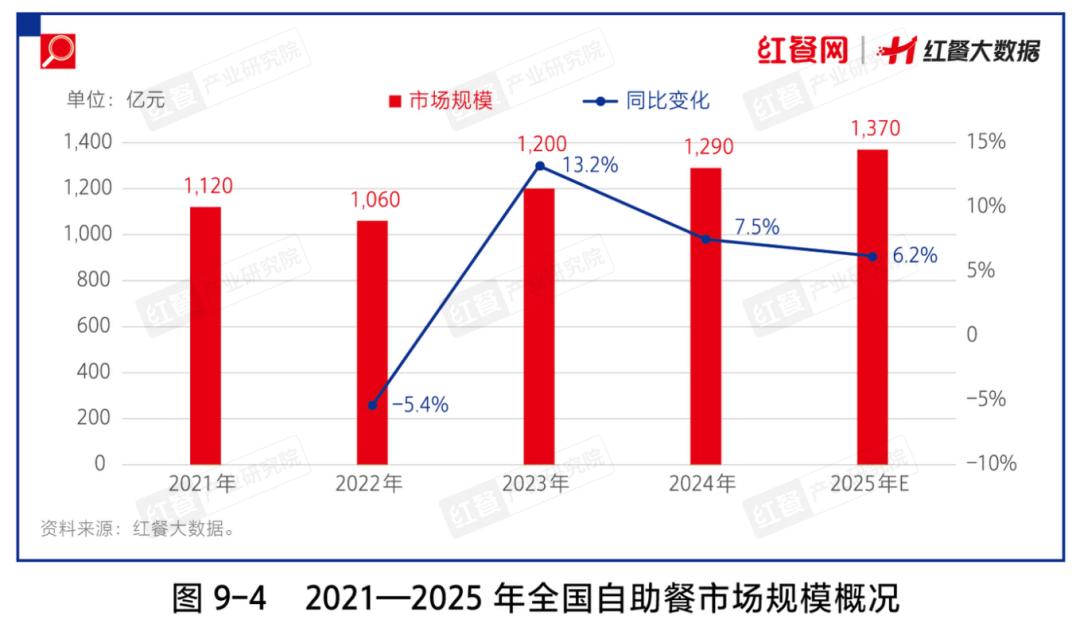
Core Viewpoint - The self-service restaurant industry in China is transitioning from intense price competition to value-driven segmentation, with companies like Big Restaurant International Holdings Ltd. seeking to capitalize on this shift by going public [1] Market Size and Growth - The self-service restaurant market in China is projected to reach 129 billion yuan in 2024, with a year-on-year growth of 7.5%, and is expected to surpass 130 billion yuan in 2025 [3] - The number of self-service restaurant enterprises registered annually has consistently exceeded 6,000 from 2023 to 2024, with over 2,300 registrations in the first five months of 2025 [3] - By May 2025, the total number of self-service restaurant outlets in China is expected to reach 66,000, reflecting a net increase of over 10,000 outlets compared to the previous year [3] Industry Structure and Trends - The industry is experiencing significant structural differentiation, with traditional comprehensive self-service models declining and a focus on niche markets and price reduction becoming the core trend [3][4] - As of May 2025, 80% of self-service restaurants have an average consumer price below 100 yuan, a 17.2 percentage point increase from 2022 [3] Popular Categories - The concentration of specific categories is increasing, with hot pot, barbecue, and pizza leading the market, collectively accounting for nearly 60% of the market share [4] Competitive Landscape - The trend towards lower prices has intensified competition, with major brands reducing prices to capture market share, leading to a price war in the 50-80 yuan range [6] - Major players like Haidilao are entering the low-cost self-service market, further driving down industry price points [6] Challenges for Brands - The influx of new entrants and the high closure rate of restaurants pose significant challenges for smaller brands, with many forced to close due to price wars [7] - Brands are exploring differentiation through product innovation and quality upgrades to build competitive barriers [7] Capital and Expansion - The self-service restaurant sector is entering a phase of accelerated chain expansion, particularly in lower-tier cities, where self-service restaurant outlets account for 51.6% of the total [8] - Capital investment is crucial for supporting expansion plans, with some brands planning to raise funds through IPOs to open hundreds of new outlets by 2028 [8][9] Regional Disparities - There is a notable imbalance in regional development, with northern brands dominating the market while southern regions lag behind in store numbers and market penetration [11] - Southern markets present unique challenges, including local taste preferences and intense competition from both national and local brands [12] Operational Efficiency - The low-margin model of budget self-service restaurants necessitates meticulous operational efficiency, with brands needing to optimize every aspect of their operations to sustain profitability [14][15] - Digital tools and centralized kitchen operations are essential for maintaining quality and controlling costs [15] Investment Logic - The investment logic in the pizza segment reflects a broader trend in the self-service industry, emphasizing the importance of clear category positioning and scalable business models [16] - Capital is increasingly focused on brands with strong supply chain capabilities and operational efficiency, which are critical for sustainable growth [16] Future Outlook - The self-service restaurant industry is expected to continue consolidating, with brands lacking differentiation and operational capabilities likely to exit the market [17][18]


连锁火热小店遇冷,酒店抢滩春节档
Qi Lu Wan Bao· 2026-01-27 15:41
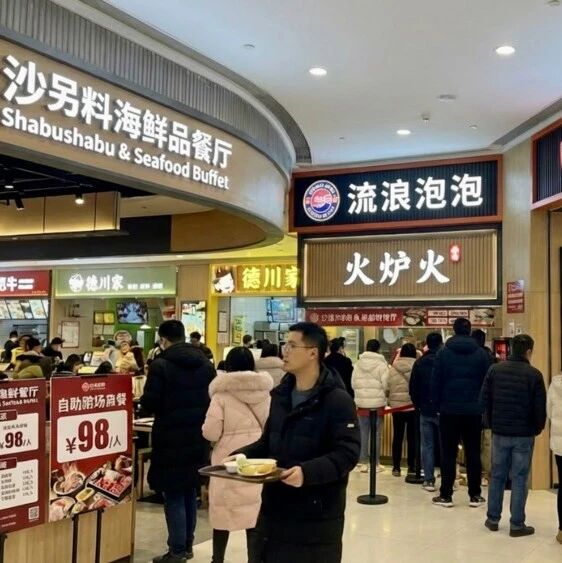
Group 1 - The self-service restaurant market in Tai'an is experiencing a clear segmentation in pricing and quality, with chain brands like Longge and Liu Zhenzhen attracting a young consumer base, while street-side budget options struggle to draw customers [2][3] - Liu Zhenzhen, a popular dining brand, has expanded rapidly, with 44 locations across 28 cities, and 9 of those in Shandong, indicating a strong market presence [3] - Longge, another chain, has also seen significant growth, with over 400 locations established, marking a threefold increase in expansion compared to its first nine years [3] Group 2 - The success of self-service restaurants relies heavily on customer traffic and profitability, with only 20%-30% of such establishments remaining operational beyond a year [5] - Traditional dining establishments are increasingly adopting self-service models as a means of transformation, with hotels like Baosheng planning to offer self-service options during peak holiday seasons [5][6] - The market is witnessing a shift in consumer preferences, with a growing demand for quality over low prices, leading to an increase in customer traffic for mid to high-end self-service restaurants [6][7] Group 3 - The dual forces of supply and demand are driving the growth of self-service restaurants, as young consumers seek value and flexibility, while the self-service model helps reduce operational costs for businesses [7] - Some new entrants in the self-service market face challenges due to product homogeneity and reliance on low pricing strategies, which may not be sustainable [7][8] - Recommendations for the industry include maintaining food safety standards, utilizing smart cost control measures, and incorporating local cultural elements into the dining experience to differentiate offerings [8]
东北夫妻开餐厅一年低调赚了11.47亿,开店387家,准备上市了
创业家· 2026-01-27 11:04
Core Viewpoint - The article discusses the rise of a local pizza brand, Big Pizza, which is set to become the first self-service pizza stock in Hong Kong, leveraging its competitive pricing strategy to attract young consumers and disrupt the market dominated by international giants [7][8][9]. Group 1: Company Overview - Big Pizza, founded by a couple from Northeast China, has grown from a small store near Beijing Zoo to over 300 locations nationwide, achieving annual revenues exceeding 2 billion RMB [13][14]. - The brand's unique selling proposition is its self-service model priced around 39 RMB, significantly lower than competitors like Pizza Hut, which charges 50-100 RMB per pizza [21][24]. - As of September 30, 2025, Big Pizza has expanded to 387 restaurants across 127 cities, establishing a presence in all provincial capitals [30][32]. Group 2: Product Strategy - Big Pizza employs a "7+2+1" product structure, offering 70% core Western dishes (pizzas, pastas), 20% Chinese dishes (rice, stir-fried dishes), and 10% regional specialties to cater to diverse consumer preferences [35][36]. - The brand adapts its menu based on regional tastes, offering fruit-flavored pizzas in southern cities and meat-heavy options in northern areas, maintaining around 130-140 SKUs per location [40][41]. Group 3: Financial Performance - Big Pizza's revenue for 2023, 2024, and the first nine months of 2025 reached 944.5 million RMB, 1.15 billion RMB, and 1.39 billion RMB respectively, with a self-operated restaurant profit margin exceeding 10% [84][85]. - The company plans to open 610-790 new stores between 2026 and 2028, aiming for rapid expansion while managing supply chain pressures and quality control [95]. Group 4: Market Position and Challenges - The self-service restaurant market is projected to grow, with an expected market size of 1.29 billion RMB in 2024, and Big Pizza is positioned as a leading brand in this segment [79][82]. - However, the company faces challenges such as increasing competition in the self-service market, particularly from hot pot and barbecue brands, and the pressure of higher costs in first-tier cities [89][90]. - The trend of declining average spending in the restaurant industry poses a risk to Big Pizza's business model, which relies on high turnover rates [92].

一个商场,全是自助,餐饮人其实也很无奈
虎嗅APP· 2026-01-12 09:23
Core Viewpoint - The article discusses the rapid growth and popularity of the self-service restaurant model in China, highlighting its appeal to consumers and the strategic shifts by various brands to adopt this model for better customer engagement and operational efficiency [5][10][11]. Group 1: Market Trends - By the end of 2025, the total number of self-service restaurant outlets in China is expected to reach approximately 79,000, with 33,000 new openings in the past year [6]. - In key monitored shopping centers, the proportion of self-service dining outlets is projected to average 15.7% in 2025, an increase of about 0.8 percentage points from 2024 [6]. - Self-service restaurants are increasingly dominating shopping malls, with instances of up to 15 self-service restaurants coexisting in a single mall [7]. Group 2: Consumer Preferences - Consumers are shifting towards self-service dining due to improved quality and environment, with many expressing a preference for self-service options during holidays and gatherings [9]. - The new generation of consumers appreciates the variety and experience offered by self-service dining, viewing it as a way to enjoy diverse culinary options [10]. Group 3: Business Strategies - Major restaurant brands are increasingly integrating self-service models to enhance customer attraction and retention, particularly targeting family and young adult demographics [8][13]. - The self-service model is seen as a solution for various brands facing operational challenges, with some brands launching new self-service concepts to revitalize their offerings [11][15]. - Successful self-service restaurants focus on maintaining high quality and cost-effectiveness, with operational efficiencies allowing for better customer service and management [14][17]. Group 4: Competitive Landscape - The self-service dining market is becoming highly competitive, with many brands offering similar products, leading to a need for differentiation through quality and unique offerings [23]. - Brands are moving away from the traditional "all-you-can-eat" model to focus on quality over quantity, emphasizing a curated selection of high-quality ingredients [24]. - The rise of self-service dining is also seen in various sectors, including hotels and corporate cafeterias, which are adapting to consumer demand for affordable and quality dining experiences [21].
自助餐老板哭了!揭秘3个你吃垮不了的暴利真相,第2个扎心了
Sou Hu Cai Jing· 2025-12-22 15:45
Core Insights - The article reveals the hidden profit mechanisms of buffet restaurants, highlighting how they exploit consumer behavior to maximize earnings while minimizing costs. Group 1: Buffet Pricing and Cost Structure - Buffet pricing appears high, but food costs only account for 35%-40% of the total price, meaning customers often consume less value than they perceive [3] - Customers tend to overestimate their consumption capacity, leading to waste, as they fill up on appetizers before reaching more expensive items [3][6] Group 2: Food Quality and Safety - The quality of food served in buffets is often lower than expected; for example, salmon may be made from trimmings, and shrimp is typically frozen [4] - While the food meets safety standards, it may lack in taste and nutritional value, leading to discomfort after meals [4][6] Group 3: Business Strategies and Profit Maximization - Buffet restaurants leverage social media for marketing, using low introductory prices to attract large crowds and achieve high table turnover rates, which can exceed 300 customers per day [6] - Additional revenue is generated through strategies like time limits and upselling, which encourage customers to spend more [7] Group 4: Consumer Tips for Buffets - To maximize value, consumers are advised to arrive hungry, prioritize high-cost items like seafood, and take smaller portions to avoid waste [7][8] - Choosing reputable restaurants can ensure better food quality and safety, despite potentially higher costs [8]
人均六七十吃到扶墙出,自助餐凭啥开出近7万家店?
3 6 Ke· 2025-08-15 03:39
Core Insights - The self-service restaurant sector is experiencing renewed growth driven by changing market conditions and consumer preferences, with the market size expected to exceed 1,300 billion yuan in 2025 [1][2]. Market Dynamics - The self-service restaurant market has seen a surge in new registrations, with over 6,000 new companies registered annually from 2023 to 2024, and more than 2,300 in the first five months of 2025, bringing the total number of self-service restaurants close to 40,000 [2]. - The market size for self-service restaurants reached 1,290 billion yuan in 2024, reflecting a year-on-year growth of 7.5% [2]. - As of May 2025, there are approximately 66,000 self-service restaurant outlets in China, with a net increase of over 10,000 outlets compared to the same period in 2024 [2]. Consumer Trends - The proportion of budget self-service restaurants, defined as those with an average spending of under 100 yuan per person, has increased significantly, accounting for 80% of all self-service outlets as of May 2025, up 17.2 percentage points from 2022 [4]. Competitive Landscape - The self-service restaurant market is becoming increasingly segmented, with a variety of specialized formats emerging, such as hot pot, barbecue, steak and seafood, and Japanese-style buffets [6]. - Hot pot self-service restaurants hold the largest market share at 29.3%, followed by barbecue and steak and seafood formats at 19.6% and 18.5%, respectively [6]. Brand Strategies - Brands are adapting to market competition by focusing on specific categories, optimizing their supply chains, and expanding into lower-tier markets [9]. - Notable examples include the "point steak + free self-service" model adopted by Hao De Heng Steakhouse, which has opened over 170 outlets in various regions [8]. Supply Chain Innovations - Companies are enhancing their supply chain capabilities through direct sourcing, self-built processing facilities, and partnerships with supply chain firms to control costs and ensure quality [15]. - The establishment of a 30,000 square meter processing facility by Jiangxi Linchuang Catering Group exemplifies this trend, supporting over 1,000 outlets nationwide [15]. Conclusion - The resurgence of the self-service restaurant sector indicates sustained consumer interest in flexible dining options, although the self-service model may not be a universal solution for all brands [16].
曾经吃到撑的自助餐,真快凉透了?
Hu Xiu· 2025-07-30 04:11
Core Insights - The high-end buffet sector in China's dining industry has experienced a significant decline, with many popular buffet restaurants facing closure and a drop in revenue [1] Industry Overview - High-end buffets were once a lucrative segment, with annual revenues exceeding 100 million yuan for popular establishments [1] - The perception of buffets has shifted, leading to a decline in consumer interest and patronage [1]