
热搜榜单

Search documents
平台内容治理的破局之道
经济观察报· 2025-11-17 13:47
Core Viewpoint - The resolution of content governance lies not only in responsibility allocation and technical optimization but also in shaping a healthy public opinion ecosystem. Platforms should actively guide the production and dissemination of quality content rather than merely acting as "post-deletion machines" [3][26]. Group 1: Current Governance Challenges - The central internet authority has been conducting "Clear and Bright" actions targeting misinformation from self-media, malicious marketing in short videos, and the misuse of AI technology [4]. - The responsibility boundaries of platforms have become increasingly prominent, with issues such as low violation costs for individual users and the disparity between societal expectations and governance capabilities complicating content review efforts [5][7]. - The responsibility for content review is difficult to ascertain, as platforms face significant challenges in managing vast amounts of user-generated content, which lacks the clear contractual obligations seen in e-commerce [8][9][10]. Group 2: Real-World Dilemmas - The sheer volume of content generated daily makes it nearly impossible for platforms to pre-screen all potentially harmful information, leading to a management gap [13]. - The low cost of individual violations encourages risky behavior among users, as the consequences for them are minimal compared to the significant penalties faced by merchants in e-commerce [14][15]. - There is a mismatch between the high expectations placed on platforms by society and their actual capabilities, leading to a "high responsibility, weak means" paradox [16][18]. Group 3: Path to Resolution - A shift from "single-point accountability" to "layered responsibility" is necessary, distributing accountability among individuals, platforms, and society [22]. - Increasing the cost of individual violations and enhancing traceability through improved user identification and behavior monitoring can help mitigate risks [23]. - Platforms should adopt a proactive approach to governance, focusing on "prevention" rather than "post-incident response" to reduce the spread of harmful content [25]. - The ultimate goal of governance should be to cultivate a healthy public opinion ecosystem, where quality content is promoted and becomes mainstream, rather than merely eliminating violations [26].



热搜榜单究竟为谁而“热”?
Xin Lang Cai Jing· 2025-09-25 23:14
Core Viewpoint - Major online platforms, including Weibo and Kuaishou, have been penalized for failing to manage content responsibly, leading to the proliferation of trivial celebrity news that undermines the online ecosystem [1][2] Group 1: Content Management Issues - Platforms have been criticized for allowing the trending topics to focus excessively on celebrities rather than significant social issues, which diminishes the public interest [1] - The trending topics often reflect a path dependency where initial celebrity promotions evolve into trivial personal matters, resulting in a saturation of similar content [1] Group 2: Impact on Ecosystem - The focus on celebrity content has fostered a gray industry, where fake news and harmful information proliferate, overshadowing quality content and important information [2] - The pursuit of traffic has led to a misalignment of values among MCN institutions and self-media, contributing to chaos in both online and offline environments [2] Group 3: Call for Change - There is a need for platforms to prioritize public interest topics and authentic content to create a healthier online space, which requires a shift in value orientation and responsibility from the platforms [2] - Society should collectively strive to support quality content and avoid engaging with artificially generated trends, fostering a more meaningful online interaction [2]
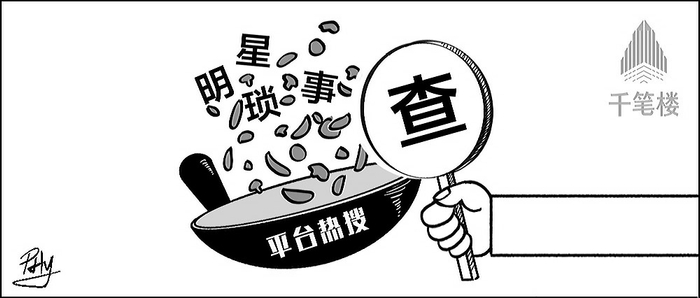
热搜榜单,不能成为炒作明星琐事的“专场”
Xin Lang Cai Jing· 2025-09-24 04:12
Core Viewpoint - Recent actions taken by the internet regulatory authorities against major online platforms highlight the issue of excessive promotion of celebrity gossip and trivial content on trending search lists, which disrupts the online ecosystem [2][4][10] Group 1: Regulatory Actions - Internet regulatory authorities have issued warnings and penalties to platforms for failing to manage content responsibly, particularly regarding the promotion of celebrity-related trivial information [2][4] - The repeated use of terms like "frequent," "multiple," and "key segments" in the regulatory announcements indicates that the issue is widespread and not isolated [4] Group 2: Impact on Online Ecosystem - The trending search lists, akin to a newspaper's front page, reflect the platforms' values and responsibilities, and their current focus on celebrity gossip harms user experience and the overall online environment [5][7] - The prevalence of low-nutritional content related to celebrities, driven by a "traffic-first" mentality, can mislead the public, especially the youth, and distort value judgments [5][7] Group 3: Social Responsibility - In the pursuit of "traffic economy," celebrity gossip has become favored by algorithms, overshadowing more meaningful content [7] - The commercial interests of online platforms should not come at the cost of social responsibility and the integrity of the online ecosystem [7][8] - There is a call for platforms to prioritize the dissemination of positive and uplifting narratives that reflect societal progress and values [8]
又两起!今日头条、UC在热搜榜单呈现不良信息内容被查处
Nan Fang Du Shi Bao· 2025-09-24 02:23
Core Points - The National Internet Information Office (NIIO) has recently taken action against platforms such as Toutiao and UC for failing to manage content responsibly, leading to the dissemination of harmful information and disruption of the online ecosystem [1][2] - Other platforms like Weibo, Kuaishou, and Xiaohongshu have also faced scrutiny for similar issues, with the NIIO emphasizing the need for these platforms to fulfill their responsibilities in content management [2][3] Summary by Category Regulatory Actions - The NIIO has conducted investigations into Toutiao and UC for not fulfilling their content management responsibilities, resulting in the display of harmful information on their platforms [1] - Both platforms received penalties including warnings, orders to rectify issues, and stricter measures against responsible individuals [1] - Weibo and Kuaishou were also previously reported for similar failures, leading to similar regulatory actions [2] Platform Responses - Weibo acknowledged the criticism and has formed a special task force to address the issues related to its trending topics [2] - Kuaishou announced plans to improve its trending topics management mechanism and has established a dedicated team for ecological governance [2] - Xiaohongshu has also set up a special task force to enhance its management capabilities regarding trending topics [2] Ongoing Focus - The NIIO has reiterated its commitment to addressing significant violations that disrupt the online ecosystem and will continue to enforce regulations to ensure platforms uphold their social responsibilities [3]
