清朗行动

Search documents
反转!系违法摆拍,警方已依法处理
21世纪经济报道· 2026-03-30 11:08
Core Viewpoint - A recent incident involving a fabricated video of a ride-hailing driver insulting a passenger has sparked significant public outrage, highlighting issues of misinformation and the negative impact on the ride-hailing industry [1]. Group 1: Incident Overview - The video in question featured a driver making derogatory remarks towards a passenger, which led to widespread condemnation from the public and raised questions about the regulatory standards within the ride-hailing industry [1]. - The Chengdu Public Security Bureau confirmed that the video was staged by an individual seeking attention and that it misled the public, disrupting public order and damaging the image of the ride-hailing sector [1]. Group 2: Industry Impact - The rise of fake videos and malicious portrayals of the ride-hailing industry has been noted, with examples including exaggerated claims about driver earnings and vehicle conditions, which serve to provoke conflict between drivers and passengers [7]. - The Central Cyberspace Affairs Commission has previously initiated actions to address the spread of misinformation that labels and stigmatizes various groups, emphasizing the need for stricter penalties for such behavior [12]. Group 3: Company Response - Didi has committed to intensifying efforts to report and address malicious rumors and fake videos, while also reserving the right to pursue legal action against offenders [13].


清朗春节网络环境,要给“数字泔水”清清库存
Xin Lang Cai Jing· 2026-02-13 11:08
Core Viewpoint - The Central Cyberspace Administration of China has launched a special action called "Clear and Bright: Creating a Joyful and Harmonious Online Environment for the Spring Festival 2026," focusing on addressing low-quality information, referred to as "digital waste," in response to societal expectations [1][3]. Group 1: Digital Waste and Its Impact - "Digital waste" refers to low-quality content that is generated in bulk, often misleading and lacking in substance, which negatively affects user experience and erodes trust in internet platforms [3][4]. - The proliferation of "digital waste" is closely linked to the content production and distribution mechanisms of the internet, where AI tools and algorithmic recommendations favor sensational and easily replicable content [3][4]. Group 2: Governance and Responsibility - Effective governance requires internet platforms to take on greater responsibility, utilizing technology to identify and limit the spread of low-quality information, rather than relying solely on post-fact penalties [4]. - The initiative aims to distinguish between harmful content that misleads and normal expressions of daily life, ensuring that genuine creators and reliable information are more visible [4][5]. Group 3: Significance of the Initiative - The "Clear and Bright" initiative is significant for enhancing the quality of the online space, making it easier for serious creators to be recognized and for rational voices to be heard [4][5].

安徽启动“清朗·江淮净网2026年营造喜庆祥和春节网络环境”专项行动
Xin Lang Cai Jing· 2026-02-13 07:03
Core Viewpoint - The Anhui Provincial Internet Information Office has launched a special action named "Clear and Bright: Creating a Joyful and Harmonious Online Environment for the Spring Festival 2026" to promote a positive online atmosphere during the Spring Festival [1] Group 1: Key Issues Addressed - The action focuses on four prominent issues: maliciously provoking negative emotions, generating and spreading low-quality content, fabricating false information, and directing traffic to illegal activities [2][3] Group 2: Specific Actions - The initiative aims to combat the promotion of negative values such as anti-marriage and anti-childbearing sentiments, as well as the instigation of gender conflict and materialistic comparisons during the festive season [2] - It seeks to eliminate the generation of "digital garbage" content, which includes low-quality, AI-generated material that distorts traditional culture and promotes family conflicts [2] - The action will address the spread of false information related to public safety and market supply during the Spring Festival, including the fabrication of rumors and misleading headlines [3] - It will also target illegal activities such as online gambling and the promotion of superstitions under the guise of fortune-telling services [3]
“清朗·2026年营造喜庆祥和春节网络环境”专项行动启动
Xin Hua She· 2026-02-12 11:17
Core Viewpoint - The Central Cyberspace Administration of China has launched a one-month special campaign titled "Clear and Bright: Creating a Joyful and Harmonious Online Environment for the Spring Festival 2026" to enhance the online atmosphere during the Spring Festival, focusing on addressing significant online ecological issues raised by the public [1] Group 1: Focus Areas of the Campaign - The campaign targets four main issues: malicious provocation of negative emotions, generation and dissemination of "digital waste" or low-quality information, fabrication and spread of false information, and directing traffic to illegal activities [1] - In addressing malicious provocation of negative emotions, the campaign will focus on curbing ostentatious displays of wealth under the guise of "New Year goods procurement" and "Spring Festival customs competition," as well as online fan wars related to popular events [1] - The campaign will also tackle the generation and dissemination of low-quality content using AI and new technologies, which includes producing logically confused, hollow, and highly similar content [1] Group 2: Implementation Measures - The campaign will enforce platform responsibilities, urging key platforms to establish dedicated teams to enhance monitoring of homepage content, trending topics, and push notifications [1] - There will be strict penalties for platforms, accounts, and MCN organizations that exhibit significant violations, with typical cases and governance results to be published to create a strong deterrent effect [1]
春节“清朗”行动:不得鼓吹不婚不育,借春晚挑起互撕拉踩
Nan Fang Du Shi Bao· 2026-02-12 07:58
Core Viewpoint - The National Internet Information Office has launched a one-month special action titled "Clear and Bright: Creating a Joyful and Harmonious Spring Festival Online Environment 2026" to address issues such as malicious provocation of negative emotions and the spread of false information during the Spring Festival [1] Group 1: Key Issues to be Addressed - Malicious provocation of negative emotions, including promoting negative values such as anti-marriage and anti-childbearing, and stirring gender conflict [1] - Generation and dissemination of low-quality content, including the use of AI to create confusing and repetitive information, and the distortion of traditional culture [2] - Fabrication and spread of false information, including rumors related to transportation, market supply, and public safety during the Spring Festival [2] - Attraction of illegal activities, such as gambling and promoting superstitions through online fortune-telling services [3] Group 2: Enforcement Measures - The National Internet Information Office emphasizes the need to hold platforms accountable and strengthen the management of illegal information during the Spring Festival [3] - Key platforms are urged to establish dedicated teams to monitor and manage content, ensuring timely removal of illegal information [3] - Serious penalties will be imposed on platforms and accounts that frequently violate regulations, with typical cases and governance results to be publicly disclosed [3]
救命!猝死程序员的那个大厂,【又】来投诉我了!
程序员的那些事· 2026-02-04 15:46
Core Viewpoint - The article discusses a complaint filed by Guangzhou CVTE Technology Co., Ltd. against a public account for allegedly maliciously sensationalizing a tragic event involving a programmer's death, claiming it harms the company's reputation and violates regulations [3][6]. Group 1: Complaint Details - The complaint was filed on January 27 and reiterated on February 4, focusing on a post about a 32-year-old programmer's death and the HR's insensitive comments [1][2]. - The company claims the content spreads false information, such as "programmer's base salary of 3000" and "death from overwork," which they argue incites social division and damages their reputation [6][8]. - The complaint requests the removal of the post and appropriate action against the account to maintain a healthy online environment [6][3]. Group 2: Response to the Complaint - The article argues that the claims of "maliciously sensationalizing social tragedy" are unfounded, as the coverage aims to raise awareness about the issue [7][10]. - It points out that the claim of "false information" regarding the programmer's salary originated from a legitimate news report, indicating that the information is not fabricated [7][8]. - The article questions the accusation of inciting social division, asking for clarification on which groups are being divided [11]. Group 3: Regulatory Context - The complaint references the "Clear Action" initiative by the Cyberspace Administration of China, which targets false news, but the article asserts that the cited information is based on credible media sources [12][6]. - The terminology used in the complaint, such as "delete the note," suggests a possible confusion between platforms, as "note" is typically used in Xiaohongshu, not WeChat [13].


深圳“清朗”行动发布通报 一批滥用AI账号被查处
Ren Min Wang· 2026-01-05 02:50
Group 1 - Shenzhen's internet information office is conducting a series of "Clear" special actions to combat malicious marketing in short video platforms, misinformation from self-media, abuse of AI technology, and corporate infringement issues [1][2] - The actions include the supervision of local websites and platforms to fulfill their responsibilities, clean up harmful information, and deal with non-compliant accounts to maintain a healthy online ecosystem [1] - Specific applications and accounts, such as "Tianyan" and "Tuqu AI," have been identified for spreading low-quality AI-generated content and failing to meet labeling requirements [1] Group 2 - The special actions also target the dissemination of vulgar information related to minors, false portrayal of campus violence, and exploitation of minors for profit [2] - Several accounts, including those on WeChat and gaming platforms, have been penalized for spreading false information and damaging corporate reputations [2] - Self-media accounts that spread subjective speculation and negative narratives have faced restrictions, including suspension of monetization rights and content display limitations [2] Group 3 - Actions against accounts that provoke negative emotions include those spreading abusive content and exploiting social issues for traffic [3] - Live streaming accounts that engage in vulgar inducement and deception for tips have been restricted or permanently banned [3] - The Shenzhen internet information office plans to continue strengthening governance over various online ecological issues and will publish typical case handling results to promote a clear and orderly online environment [3]
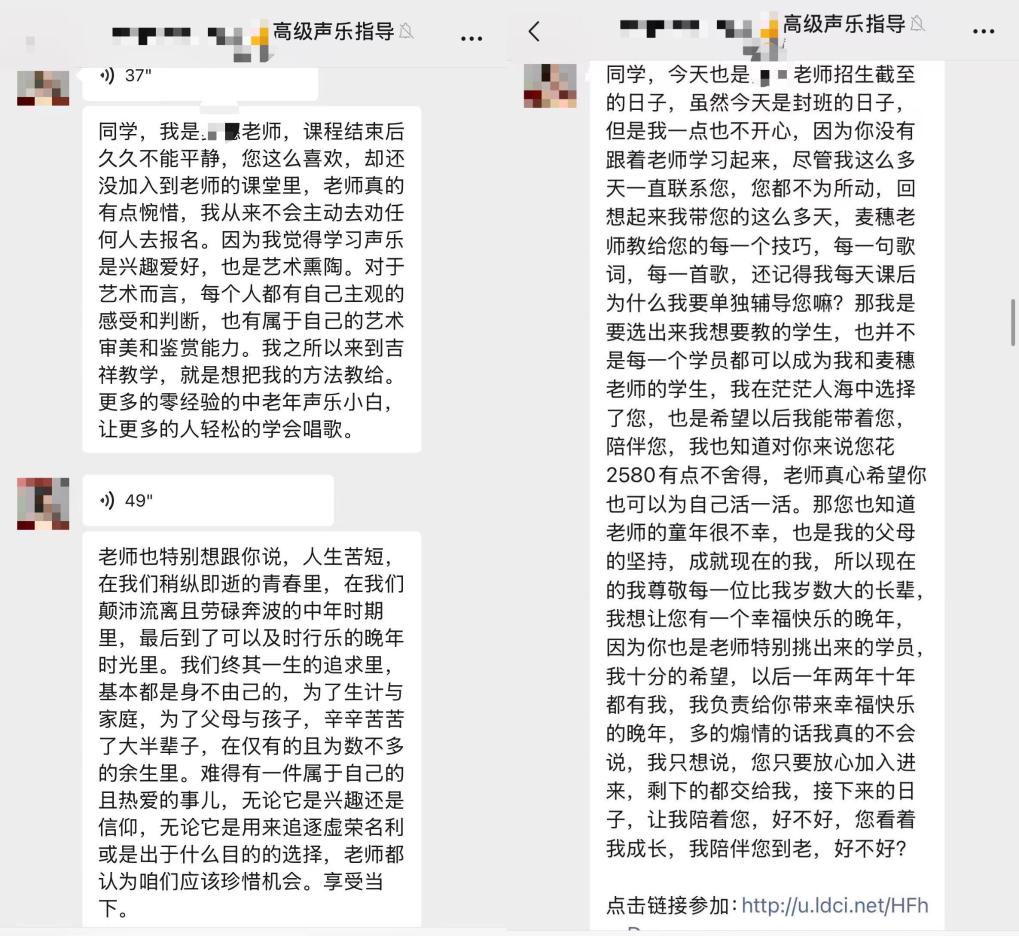
新华视点丨揭秘老年课堂骗局套路
Xin Hua She· 2025-12-31 08:28
Core Viewpoint - The investigation reveals that many elderly individuals are being targeted by fraudulent schemes disguised as educational courses, leading to significant financial losses and exploitation of their desire for social engagement and learning opportunities [1][2]. Group 1: Nature of the Fraud - Many online courses marketed to the elderly claim to be free or low-cost but ultimately pressure participants into purchasing expensive classes or products [2][4]. - Complaints about elderly individuals being scammed in these classes are prevalent on platforms like Black Cat Complaints and social media, indicating a widespread issue [2][8]. - Some courses masquerade as educational but primarily serve as platforms for selling health products, often with misleading claims about their efficacy [4][7]. Group 2: Tactics Used - Sales tactics include emotional manipulation, where instructors use "family-like" language to persuade elderly participants to spend money on high-priced courses [3][4]. - Instructors often employ aggressive follow-up strategies, including persistent messaging and emotional appeals, to encourage purchases [3][4]. - Some courses require participants to buy expensive equipment or enroll friends to continue their education, creating a cycle of financial pressure [5][6]. Group 3: Regulatory and Operational Issues - Many of the companies offering these courses lack proper educational credentials and operate outside legal regulations, raising concerns about their legitimacy [6][10]. - Investigations have found that some companies are in a state of operational irregularity, complicating the recovery of funds for victims [6][8]. - The involvement of unqualified personnel, including salespeople posing as experts, further undermines the integrity of these educational offerings [6][7]. Group 4: Recommendations and Responses - Industry experts suggest increasing regulatory oversight and collaboration among various governmental departments to combat fraudulent practices in elderly education [9][10]. - There is a call for the development of more quality educational resources for the elderly, utilizing community and educational institutions to provide legitimate learning opportunities [10][11]. - Families are encouraged to be proactive in supporting elderly relatives by educating them about legitimate educational channels and fraud prevention [11].
平台内容治理的破局之道
经济观察报· 2025-11-17 13:47
Core Viewpoint - The resolution of content governance lies not only in responsibility allocation and technical optimization but also in shaping a healthy public opinion ecosystem. Platforms should actively guide the production and dissemination of quality content rather than merely acting as "post-deletion machines" [3][26]. Group 1: Current Governance Challenges - The central internet authority has been conducting "Clear and Bright" actions targeting misinformation from self-media, malicious marketing in short videos, and the misuse of AI technology [4]. - The responsibility boundaries of platforms have become increasingly prominent, with issues such as low violation costs for individual users and the disparity between societal expectations and governance capabilities complicating content review efforts [5][7]. - The responsibility for content review is difficult to ascertain, as platforms face significant challenges in managing vast amounts of user-generated content, which lacks the clear contractual obligations seen in e-commerce [8][9][10]. Group 2: Real-World Dilemmas - The sheer volume of content generated daily makes it nearly impossible for platforms to pre-screen all potentially harmful information, leading to a management gap [13]. - The low cost of individual violations encourages risky behavior among users, as the consequences for them are minimal compared to the significant penalties faced by merchants in e-commerce [14][15]. - There is a mismatch between the high expectations placed on platforms by society and their actual capabilities, leading to a "high responsibility, weak means" paradox [16][18]. Group 3: Path to Resolution - A shift from "single-point accountability" to "layered responsibility" is necessary, distributing accountability among individuals, platforms, and society [22]. - Increasing the cost of individual violations and enhancing traceability through improved user identification and behavior monitoring can help mitigate risks [23]. - Platforms should adopt a proactive approach to governance, focusing on "prevention" rather than "post-incident response" to reduce the spread of harmful content [25]. - The ultimate goal of governance should be to cultivate a healthy public opinion ecosystem, where quality content is promoted and becomes mainstream, rather than merely eliminating violations [26].


平台内容治理的破局之道
Jing Ji Guan Cha Bao· 2025-11-14 16:28
Core Viewpoint - The article discusses the ongoing "Clear and Bright" campaign by the Central Cyberspace Administration of China, which targets misinformation, malicious marketing in short videos, and the misuse of AI technology, highlighting the challenges of content regulation on digital platforms [2][3]. Group 1: Responsibility and Governance - The article emphasizes the need to clarify responsibility attribution in digital spaces, particularly in content review, where different platforms have varying responsibilities [4][5]. - Major internet platforms have faced legal scrutiny for allowing false information and inflammatory content to proliferate, indicating a need for stricter content governance [4][6]. - The distinction between e-commerce platforms and content platforms is highlighted, with e-commerce platforms having clearer responsibility structures compared to content platforms, which face challenges due to the decentralized nature of user-generated content [6][7]. Group 2: Challenges in Content Regulation - Content platforms struggle with the sheer volume and diversity of information, making it nearly impossible to pre-screen all content effectively [9][10]. - The low cost of individual user violations leads to a lack of accountability, as users can easily create new accounts to continue posting harmful content after being banned [10][11]. - There is a significant asymmetry between the responsibilities placed on platforms and the powers they possess to enforce compliance, leading to platforms often being blamed for user misconduct [11][12]. Group 3: The Dilemma of Content Review - Platforms face a dilemma in content review, where overly strict measures may alienate users, while lenient policies can lead to the spread of harmful information [13][14]. - Public expectations for platforms to swiftly identify and remove harmful content often exceed the technical capabilities of these platforms, creating a gap between societal demands and operational realities [14][15]. Group 4: Pathways to Resolution - The article suggests a shift from a model of "single-point accountability" to a "layered responsibility" approach, distributing accountability among individuals, platforms, and society [17][18]. - Increasing the cost of individual violations and enhancing traceability of user actions are proposed as methods to improve accountability [18][19]. - The need for algorithmic transparency and the development of multi-objective algorithms that balance user engagement with social responsibility is emphasized [20]. - A proactive approach to content regulation, focusing on prevention rather than reaction, is recommended to mitigate the spread of harmful content [21][22]. - Finally, fostering a healthy discourse ecosystem where platforms actively promote quality content rather than merely reacting to violations is deemed essential for long-term governance success [22].