
狮王精酿系列

Search documents
【企韵风华】15.84亿起!燕京啤酒发布这份业绩预告!
Sou Hu Cai Jing· 2026-01-23 08:26
Core Viewpoint - Yanjing Beer is expected to achieve a net profit of approximately 1.584 billion to 1.742 billion yuan in 2025, marking a year-on-year growth of 50% to 65%, continuing its trend of over 50% annual net profit growth for four consecutive years [1] Group 1: Financial Performance - For the first three quarters of 2025, Yanjing Beer reported a revenue of 13.433 billion yuan, a year-on-year increase of 4.57%, and a net profit of 1.77 billion yuan, a significant year-on-year growth of 37.45% [4] - From 2022 to 2024, the company's revenue grew from 13.202 billion yuan to 14.667 billion yuan, with a compound annual growth rate (CAGR) of 5.4%, while net profit surged from 352 million yuan to 1.056 billion yuan, with a CAGR of 73.4% [4] - The company's operating costs increased by only 0.57%, significantly lower than the revenue growth of 4.57%, indicating a notable improvement in gross margin [5] Group 2: Strategic Transformation - Yanjing Beer is focusing on quality growth through a systematic transformation, shifting from quantity to quality and emphasizing growth quality and profitability [3] - The company is implementing nine major strategic reforms to build long-term competitive advantages, enhancing management efficiency and brand strength [4] - Yanjing Beer is diversifying its product offerings with a three-tier product structure of "mid-to-high-end + mid-range + regional specialties," which has led to a 9.32% year-on-year increase in revenue from mid-to-high-end products [7] Group 3: Market Position and Competitive Advantage - Despite a general decline in the beer industry, Yanjing Beer has positioned itself as a "dark horse" in the market, successfully navigating through economic cycles by focusing on consumer demand [4] - The company has achieved a market share exceeding 75% in North and South China, driven by its high-end product strategy and innovative marketing approaches [8] - Yanjing Beer is also expanding into the beverage sector with the launch of Best Jia soda, aiming to complement its beer offerings and enhance its market presence [8] Group 4: Shareholder Returns - Yanjing Beer has been increasing its cash dividends, with a distribution of 0.19 yuan per share for the 2024 fiscal year and a mid-year dividend of 1.00 yuan per 10 shares for the first three quarters of 2025 [8]



「港股IPO观察」净利率从3%飙至27%!金星啤酒IPO亮出“暴利底牌”:中式精酿高定价能否抵御巨头围剿
Hua Xia Shi Bao· 2026-01-16 11:49
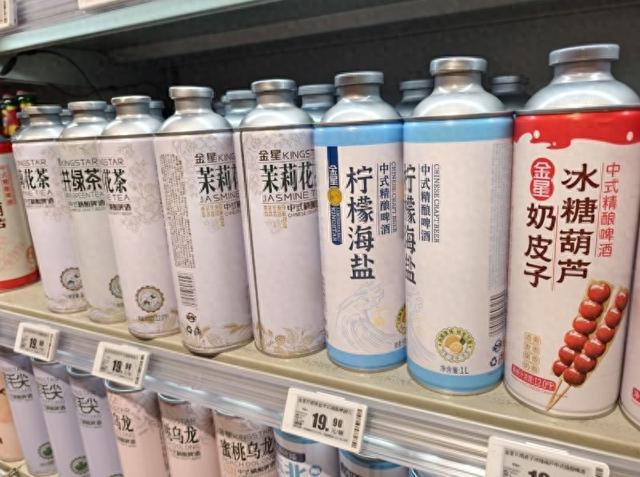
Core Viewpoint - Henan Jinxing Beer Co., Ltd. is embarking on an IPO journey in Hong Kong, aiming to enhance corporate governance, transparency, and secure capital for long-term product development and channel expansion [2][5]. Company Overview - Founded in 1982, Jinxing Beer has evolved from traditional beer to a focus on "Chinese craft beer," launching its first craft beer, Jinxing Maojian, in August 2024, which significantly boosted its performance [3][4]. - In 2023, the company reported revenues of 356 million yuan and a net profit of 12.2 million yuan, but by 2024, revenues surged to 730 million yuan, a 104.9% increase, with net profit reaching 125 million yuan, a 928% increase [3][4]. Financial Performance - For the first three quarters of 2025, Jinxing Beer achieved revenues of 1.11 billion yuan, a 191.2% increase year-on-year, and a net profit of 305 million yuan, a 1095.8% increase [3][4]. - The company has become the eighth largest in China's beer industry and the fifth largest domestic beer company, with a retail sales compound annual growth rate (CAGR) of 23.7% from 2022 to 2024 [4]. Product Pricing and Profitability - Jinxing Beer’s craft beer is priced significantly higher than traditional beers, with craft beer retail prices around 20 yuan per can (1L), compared to traditional beers priced between 2.5 yuan per can (330ml) and 6 yuan per bottle (500ml) [4]. - The gross margin has improved, with figures of 27.3%, 37.8%, and 47% for 2023, 2024, and the first three quarters of 2025, respectively, while net margins reached 3.4%, 17.2%, and 27.5% [4]. Market Position and Competition - Jinxing Beer faces increasing competition from major players like China Resources Beer and Yanjing Beer, which are expanding their craft beer offerings [6][9]. - The company relies heavily on distributors for sales, with 94.8% of its revenue coming from this channel, and has a network covering 29 provinces in China [7]. Strategic Outlook - The IPO is seen as a strategic move to strengthen Jinxing Beer’s market position amid intensifying competition, allowing for enhanced funding for innovation and brand development [5][9]. - The company aims to maintain its focus on Chinese craft beer while navigating the challenges posed by larger competitors and evolving market dynamics [8][9].
燕京啤酒 2024 年业绩逆势增长:高端化战略显效背后的隐忧
Xin Lang Zheng Quan· 2025-04-11 06:04
Group 1 - The company achieved a total revenue of 14.667 billion yuan in 2024, representing a year-on-year growth of 3.20%, and a net profit attributable to shareholders of 1.056 billion yuan, which saw a significant increase of 63.74% [1] - The beer sales volume reached 4.0044 million kiloliters, with a year-on-year increase of 1.57%, driven primarily by the strong performance of the flagship product, Yanjing U8, which sold 696,000 kiloliters, up 31.40% [2] - The company's strategic adjustments since 2022, focusing on product structure optimization and channel refinement, have led to a substantial increase in operating profit by 56.96% and total profit by 51.26% [2] Group 2 - The craft beer market is expected to exceed 100 billion yuan by 2025, with a penetration rate of 6.3%, but the industry remains fragmented with a low concentration (CR5 below 20%) [3] - Yanjing's craft beer series faces competition from both domestic brands like Youbrew and foreign brands like Goose Island, with a market share of only 1.2% in 2024 [3] - The company's growth model relies on regional focus and single product breakthroughs, which may help avoid pressure from leading companies in the short term, but long-term challenges include a limited product line and low management efficiency [3]