玛莎拉蒂汽车

Search documents
王兴:美团要减少登味,以后别叫我兴哥;魅族手机“解体”:做车机,做AI,或者离开;比亚迪高管回应进军F1丨邦早报
创业邦· 2026-03-14 01:05
Group 1 - Meituan's CEO Wang Xing stated that the impact of AI agents will be greater than that of ChatGPT, predicting significant changes in productivity and organizational structures [2][3] - Meizu announced a major restructuring, with over 50% of its employees, approximately 400 people, expected to leave, as the company shifts focus towards automotive and AI sectors [2][3] - Tencent's customer service responded to inquiries about the WeChat Moments editing feature, stating that there is currently no notification regarding its launch [2] Group 2 - Pop Mart has filed a lawsuit against Tuo Zhu for copyright infringement, with ongoing discussions for potential settlement and cooperation [5][6] - Meta is reportedly planning to lay off at least 20% of its workforce to offset costs related to AI infrastructure [9] - Xpeng Hu Tian has completed nearly $200 million in a new round of equity financing, bringing its total historical equity financing to approximately $1 billion [18] Group 3 - Apple announced a reduction in the App Store commission rate for China, lowering the standard rate from 30% to 25% and the small business program rate from 15% to 12% [11][12] - BYD's executive confirmed the company's exploration into entering competitive racing, including F1 [13] - Netflix has laid off dozens of employees from its global product team as part of an internal restructuring [17]





品牌世界驰名长盛不衰,为何这一地成就“跑车王国”?
Zhong Guo Qi Che Bao Wang· 2026-01-09 07:44
Core Viewpoint - Italy is renowned for its prestigious sports car brands, which have thrived due to a combination of historical significance, craftsmanship, and a unique production model that emphasizes quality over quantity [4][9][10]. Group 1: Historical Significance and Brand Development - Italy's automotive industry includes iconic brands such as Ferrari, Lamborghini, Maserati, Pagani, and Alfa Romeo, each with a rich history and unique characteristics [5][6][7]. - Ferrari, founded in 1929, initially focused on Formula 1 racing before expanding into road cars, achieving a record delivery of 7,195 new cars in 2011, solidifying its status in the global market [5]. - Lamborghini, established in 1963, faced bankruptcy in the 1980s but was revitalized under Audi's ownership, producing high-performance models like the Aventador SVJ and Huracan [6]. - Maserati, since its inception in 1914, has been synonymous with luxury and craftsmanship, competing closely with Ferrari [6]. Group 2: Production Model and Craftsmanship - The Italian automotive industry is characterized by a "small and beautiful" production model, focusing on handcrafted vehicles that offer personalized services to customers [9][10]. - Ferrari's production line in Maranello exemplifies this approach, with a daily output of 20 cars, emphasizing quality and meticulous attention to detail [9]. - Pagani produces only about 40 units of its Huayra model annually, showcasing the brand's commitment to craftsmanship and exclusivity [9]. Group 3: Cultural Impact and Market Position - The culture of racing in Italy intertwines with art, making Italian sports cars not just vehicles but expressions of passion and creativity [11][12]. - The unique Italian approach to automotive design and engineering has positioned these brands as luxury collectibles, appealing to a niche market of affluent consumers who value exclusivity and craftsmanship [10][12]. - The emotional connection to speed and performance in Italian racing culture enhances the allure of these brands, making them symbols of aspiration and achievement [11][12].

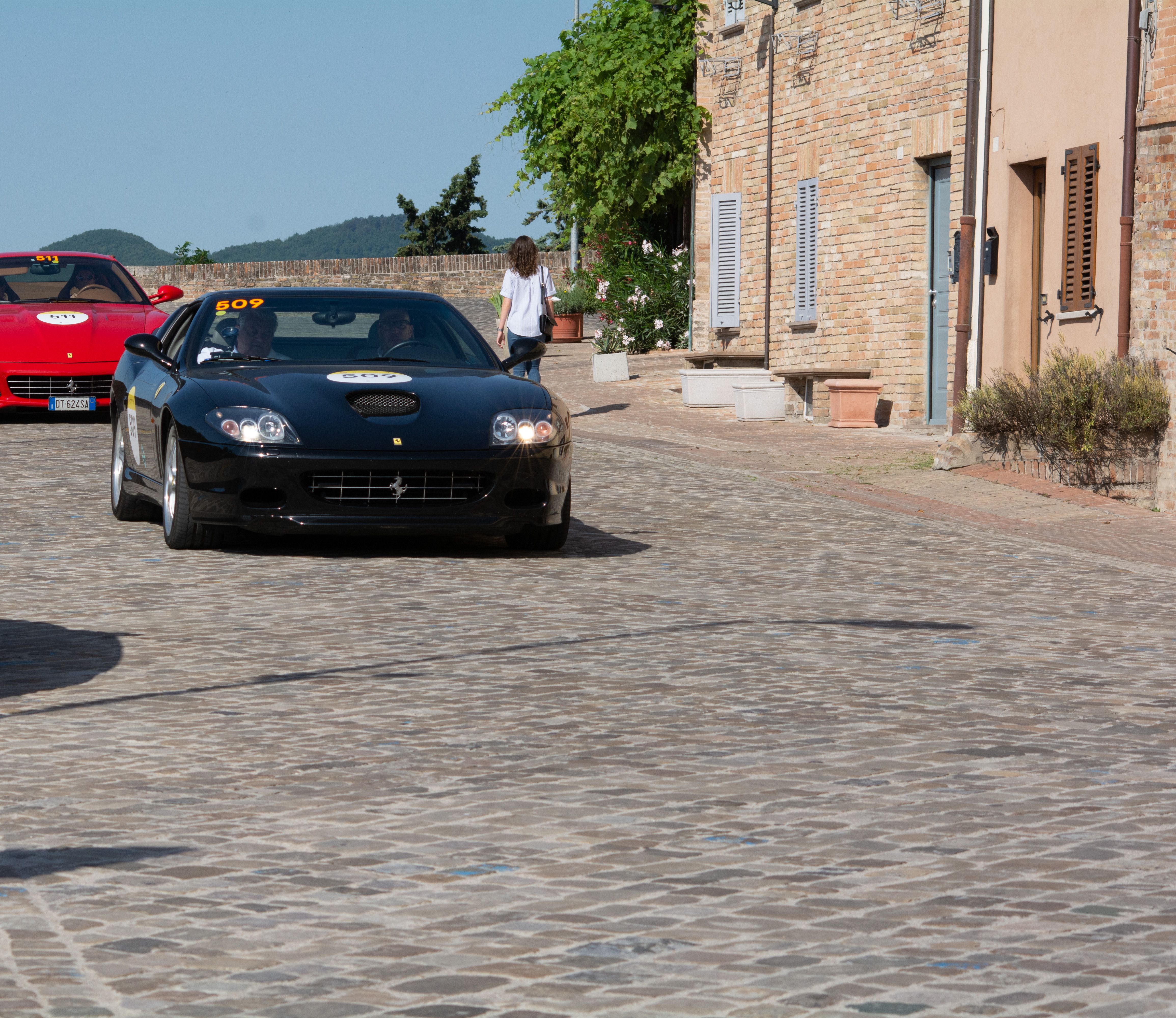
玛莎拉蒂在华销量7年跌超九成,二手豪车90后买家占比达47%
Xin Lang Cai Jing· 2025-12-18 03:32
Core Viewpoint - Maserati's sales in China have plummeted over 90% in seven years, reflecting broader challenges in the luxury car market, which is now entering a "price-sensitive era" [1] Sales Performance - Maserati's sales in China reached 14,400 units in 2017, making it the brand's largest single market globally [1] - By 2024, sales in China dropped to 1,228 units, indicating a significant decline [1] - In the first nine months of 2025, Maserati's cumulative sales were only 1,023 units, further highlighting the downward trend [1] Market Trends - The current situation of Maserati mirrors that of many luxury car brands, suggesting a shift in consumer behavior towards more price-sensitive purchasing [1]
Stellantis签署新投资协议,为何盯上这一地?
Zhong Guo Qi Che Bao Wang· 2025-10-15 09:11
Core Viewpoint - Stellantis has signed a strategic cooperation agreement with the UAE to develop an integrated automotive ecosystem in Abu Dhabi, focusing on investment opportunities in the local automotive industry [2]. Group 1: Automotive Ecosystem Development - The collaboration aims to create a comprehensive automotive ecosystem covering manufacturing, logistics, and technology research and development, reflecting the integration of the automotive industry with regional economic growth [3]. - Key areas of exploration include the production of electric vehicles, parts manufacturing, and the establishment of a regional distribution network, leveraging Abu Dhabi's resources and policies alongside Stellantis's technology [3][4]. Group 2: Technological and Logistical Advantages - Stellantis will provide automotive manufacturing technology and supply chain management expertise, which are core advantages developed over years of operation [4]. - Abu Dhabi offers significant logistical infrastructure, particularly through the Khalifa Port Free Trade Zone, which enhances supply chain efficiency and reduces costs [4][5]. Group 3: Market Potential and Strategic Positioning - The partnership targets market gaps in the Middle East and North Africa, where demand for automobiles is increasing but local production is lagging, presenting substantial market potential [5][6]. - Abu Dhabi's strategic location facilitates rapid logistics, allowing goods to reach major markets in Europe, Asia, and Africa within 48 hours, enhancing Stellantis's market access [5][6]. Group 4: Policy and Economic Environment - The UAE is advancing its "2030 National Industrial Strategy," aiming to increase the manufacturing sector's contribution to GDP, with the automotive industry being a key focus area supported by favorable policies [7]. - Stellantis can engage with local research institutions and universities to enhance technology development, aligning with the UAE's economic diversification goals [7]. Group 5: Renewable Energy and Sustainability - The UAE aims for 50% of its energy to come from clean sources by 2050, which aligns with Stellantis's capabilities in electric vehicle technology and the potential for collaboration in battery material processing and green energy supply [8]. - The partnership could create a closed-loop system for "new energy vehicles + green energy," positioning Stellantis competitively in the global carbon neutrality race [8]. Group 6: Future Industry Dynamics - The collaboration highlights a new focus in the automotive industry on "hub ecosystems," which combine efficient logistics, supportive policies, and strong technology transfer capabilities [9]. - This partnership signifies a shift in global automotive industry logic, moving from simple capacity output to a deep integration of technology, capital, and ecosystem [9].


Stellantis高管大调整!奥立维任中国及亚太区负责人,将携手东风加快新能源转型
Mei Ri Jing Ji Xin Wen· 2025-10-09 09:17
Group 1 - Stellantis Group announced a leadership restructuring, appointing Grégoire Olivier as the head of China and Asia-Pacific, reflecting a focus on regional leadership [1][3] - Emanuele Cappellano will lead the Pro One commercial vehicle business and oversee the European region and brands, while Jean-Philippe Imparato becomes CEO of Maserati [2] - The restructuring aims to enhance regional focus and prepare for future business success, as stated by CEO Antonio Filosa [3] Group 2 - Following the resignation of former CEO Carlos Tavares in December 2024, Stellantis has been streamlining its organizational structure and making several high-level personnel changes [4] - Stellantis is planning a new strategy to address operational challenges, with a new group strategy set to be released in the first half of 2026 [4] - The company reported a significant decline in performance for the first half of 2025, with revenues of €74.3 billion, a 13% year-over-year decrease, and a net loss of €2.3 billion compared to a net profit of €5.6 billion in the same period last year [4] Group 3 - Stellantis has been actively engaging with the Chinese market, with multiple high-level visits aimed at strengthening partnerships, particularly with Dongfeng Motor Group [7][8] - The new CEO Antonio Filosa has emphasized the importance of accelerating the company's electrification strategy in China to remain competitive globally [7] - The frequency of visits by Stellantis executives to China marks a strategic shift from the previous management's approach, highlighting the necessity of establishing a strong foothold in the Chinese market for successful global electrification [8]