瑞基奥仑赛注射液(倍诺达)

Search documents
中泰国际每日晨讯-20251209
ZHONGTAI INTERNATIONAL SECURITIES· 2025-12-09 02:21
Market Overview - On December 8, the Hang Seng Index fell below the 26,000-point mark, closing down 319 points (1.2%) at 25,765 points, with a total market turnover of HKD 206.2 billion[1] - The market is awaiting the Federal Reserve's interest rate decision, with expectations of a 0.25% rate cut[1] - The net inflow of Hong Kong Stock Connect was HKD 1.54 billion[1] Sector Performance - Chinese brokerage stocks rose after the China Securities Regulatory Commission announced a slight easing of regulations, with Huatai Securities up 5.2%, China Merchants Securities up 2.8%, and CITIC Securities up 1.7%[1] - Major Chinese banks saw declines, with China Construction Bank down 4.0%, China Merchants Bank down 3.5%, and Industrial and Commercial Bank of China down 3.5%[1] - Pop Mart's stock dropped 8.5% amid concerns over declining sales growth for Labubu products[1] U.S. Market Insights - The Dow Jones Index closed down 215 points (0.4%) at 47,739 points, while the Nasdaq fell 32 points (0.1%) to 23,545 points, and the S&P 500 dropped 23 points to 6,846 points[2] - Investors expect the Federal Reserve to cut rates by 0.25% on Thursday, supported by a milder core PCE index[2] Macroeconomic Data - China's total import and export value in November was USD 549.03 billion, up 4.3% year-on-year, with exports rising 5.9% and imports increasing by 1.9%[3] - The trade surplus was USD 111.68 billion, exceeding market expectations of USD 103.1 billion[3] - In the real estate sector, new home sales in 30 major cities fell 33.3% year-on-year, with significant declines across all city tiers[3] Industry Trends - The automotive sector anticipates increased lithium battery production in December, leading to improved industry conditions and price increases, with CATL up 3.3% and Ganfeng Lithium up 7.0%[4] - The healthcare sector saw a 1.5% decline in the Hang Seng Healthcare Index, despite the addition of 114 new drugs to the national medical insurance list, benefiting several major pharmaceutical companies[4] - The renewable energy and utility sectors experienced declines, with major utility stocks falling between 1.0% and 2.8%[5]
首版!商保创新药目录19个:百万元一针的抗癌药,五款CAR-T纳入,有哪些影响?
13个精算师· 2025-12-08 16:01
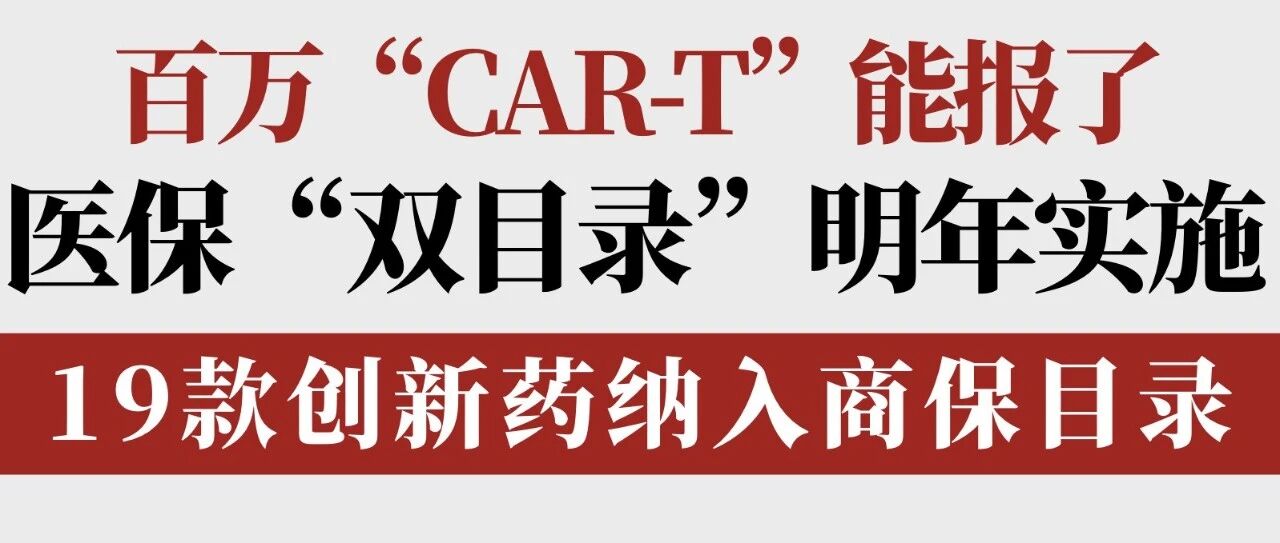
Core Viewpoint - The article discusses the implementation of a "dual directory" for medical insurance in China, which includes a basic medical insurance directory and a commercial health insurance innovative drug directory, effective from January 1, 2026. This aims to enhance access to high-value innovative drugs that are not covered by basic insurance [2][5][10]. Group 1: Innovative Drug Directory - The first version of the commercial health insurance innovative drug directory includes 19 drugs, comprising 14 cancer treatment drugs and 2 Alzheimer's drugs [6][10]. - The inclusion of drugs in the commercial health insurance innovative drug directory requires price negotiations, with expected price reductions of 20%-40% [16][21]. - The directory aims to address the needs for high-value drugs that exceed the basic medical insurance coverage, thereby alleviating the financial burden on patients [5][13]. Group 2: Impact on Patients and Insurance - The commercial health insurance innovative drug directory is not subject to DRG/DIP payment restrictions, facilitating better access to these drugs [22][24]. - The integration of "medical insurance + commercial insurance" is expected to streamline the settlement process for patients, reducing their financial and time burdens [25][28]. - The article highlights three benefits for consumers: access to drugs without DRG/DIP limitations, potential for one-stop settlement, and the establishment of a consistent drug list across insurance companies [22][25][26].

过百万的CAR-T药物,价格有望大幅下降?
第一财经· 2025-10-10 07:10
Core Viewpoint - WuXi AppTec's subsidiary, WuXi Biologics, has submitted a supplementary application for the domestic production of a viral vector for its CAR-T cell therapy product, Rikeolunai Injection, which targets blood cancers. This move aims to enhance the stability of supply and reduce production costs, thereby improving the product's market competitiveness and potential for insurance negotiations [3][6][7]. Group 1: Product Development and Approval - WuXi Biologics' Rikeolunai Injection has received approval for three indications in the domestic market, focusing on hematological malignancies [3]. - The number of CAR-T cell therapy products approved in China has reached seven, but high prices, such as Rikeolunai Injection's price of 1.29 million yuan per dose, limit accessibility [6]. Group 2: Cost and Supply Chain Challenges - The high cost of viral vectors, which are crucial for CAR-T cell therapy production, has been a significant barrier to market entry and insurance negotiations. The industry has faced multiple failures in price negotiations with national insurance [6][7]. - The company has developed a domestically produced viral vector (JWLV011) to mitigate supply chain issues and reduce costs associated with foreign suppliers [6][8]. Group 3: Clinical Research and Efficacy - A Phase II study has shown that the Rikeolunai Injection produced with the new domestic viral vector has comparable clinical efficacy to that produced with existing foreign vectors, with an overall response rate (ORR) of 66.67% and a complete response (CR) rate of 41.67% observed after three months [8].