
瑞拓龄

Search documents
长寿药是富人的智商税吗?
Xin Lang Cai Jing· 2026-01-22 13:01
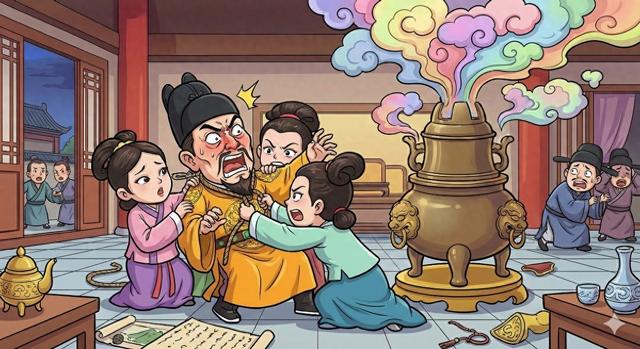
Core Viewpoint - The introduction of the anti-aging product "瑞拓龄" by Guoyao, priced between 2000 to over 7000 yuan, has sparked debate on whether longevity drugs are merely a "wealth tax" for the rich, with increasing interest from elite groups like entrepreneurs and executives [1][11] Group 1: Historical Context of Longevity Pursuits - Throughout history, the pursuit of longevity has been a constant theme, with ancient Chinese emperors and Western aristocrats engaging in various dubious practices to extend their lives [2][4] - The historical use of bloodletting as a common medical practice illustrates how wealthy individuals often fell victim to ineffective treatments, which later became known as a "wealth tax" due to their lack of scientific basis [5][7] Group 2: Scientific Advances in Aging Research - Recent decades have seen significant breakthroughs in aging research, particularly with the discovery that inhibiting mTOR can extend lifespan in mice, leading to advancements in anti-aging products [8][9] - The development of the "希诺裂" (Senolytic) technology by the Mayo Clinic has shown promise in clearing aging cells, further advancing the field of aging intervention [9] - Companies like Eli Lilly, Roche, and Senogen have begun to invest in aging intervention products, with Senogen leading the way in product development based on mTOR inhibition and Senolytic pathways [9][11] Group 3: Market Implications and Future Outlook - The partnership between Guoyao and Senogen to introduce 瑞拓龄 in China indicates a shift towards more scientifically-backed anti-aging products in a market previously filled with dubious alternatives [11][14] - The ongoing debate about whether longevity drugs are a "wealth tax" for the rich may soon find resolution as the market evolves with more credible scientific support [14]

每月花3000元买长寿:“口服衰老抑制剂”瑞拓龄走红,是科学还是生意?
3 6 Ke· 2025-10-23 12:14
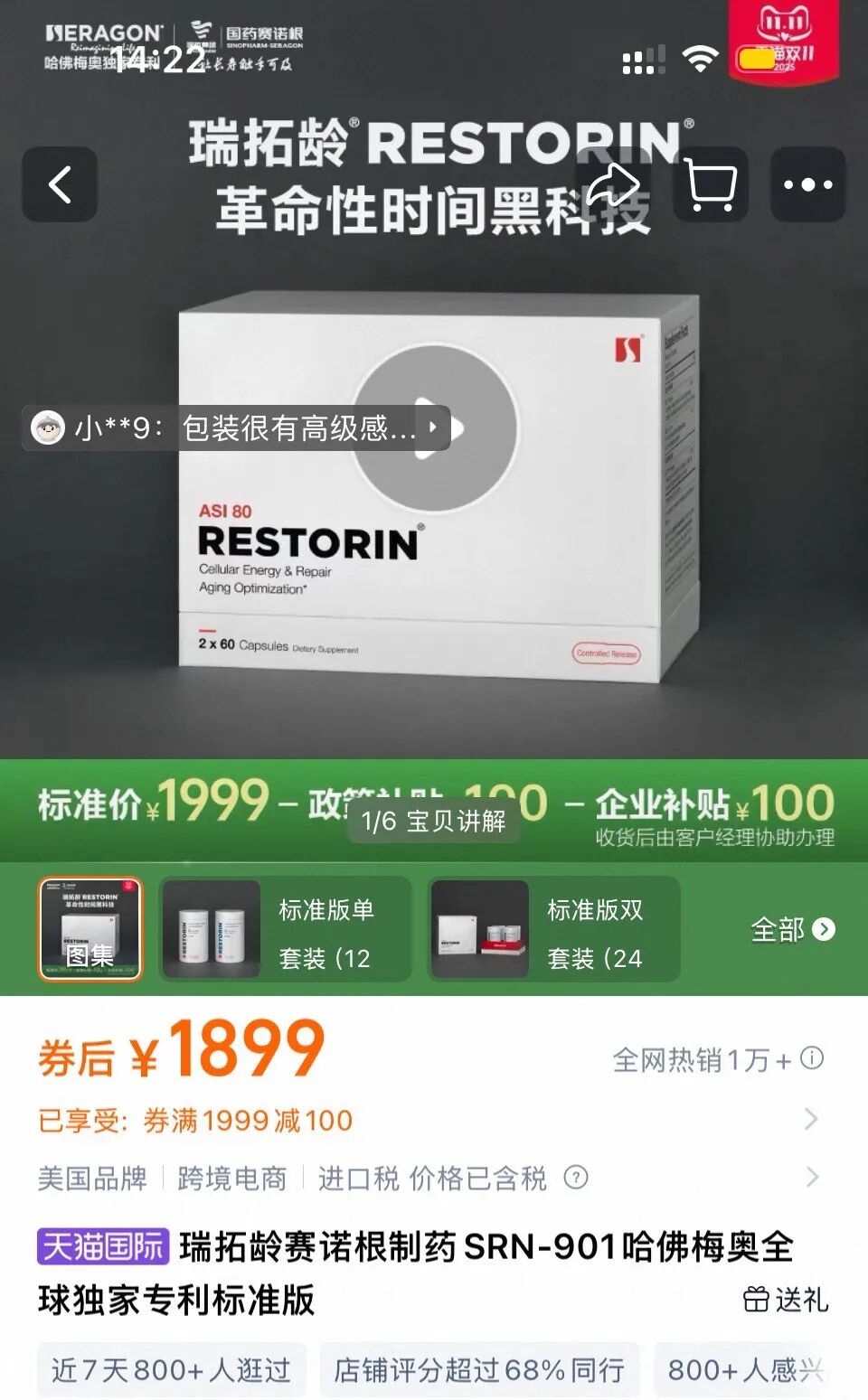
Core Insights - The product "Restorin" (瑞拓龄), marketed as an "oral aging inhibitor," has gained popularity in China, with sales exceeding 10,000 units since its launch [1][3][4] - The product is developed by Guoyao Sainogen, a joint venture between China National Pharmaceutical Group and American Seragon Biosciences, focusing on anti-aging and longevity medicine [3][4][21] - The underlying mechanism of Restorin is based on the SRN-901 drug candidate, which has shown promising results in preclinical mouse studies, extending lifespan by 34% [6][10][22] Company Overview - Guoyao Sainogen was established during the 2023 China International Import Expo, serving as the operational platform for Seragon in China and the Asia-Pacific region [4][21] - The company is primarily focused on e-commerce operations and brand promotion rather than drug development and registration [15][22] Product Details - Restorin is sold in units of 60 capsules per box at a price of approximately 2000 RMB, with monthly costs reaching 2000-3000 RMB based on recommended dosages [1][3] - The product contains various ingredients aimed at promoting mitochondrial regeneration and energy metabolism, targeting health-conscious middle-aged consumers [13][22] Regulatory Status - Despite being marketed with a drug-like narrative, Restorin is classified as a dietary supplement rather than a pharmaceutical drug, allowing it to bypass rigorous clinical trial requirements [14][19] - In the U.S., dietary supplements are regulated under the Dietary Supplement Health and Education Act (DSHEA), which requires safety and truthful labeling but not efficacy validation [14][19] Market Trends - The anti-aging and longevity sector is experiencing significant growth, with over 200 companies globally and a total valuation exceeding $60 billion [25][26] - The rise of products like Restorin reflects a broader trend of consumer interest in health management and longevity, driven by public health anxieties and technological advancements [3][22] Scientific Context - The SRN-901 candidate has not yet entered formal clinical trials, with existing studies primarily focused on safety rather than efficacy [8][10] - The decline of NAD+ levels with age has made it a focal point in anti-aging research, with various products claiming to enhance NAD+ levels [7][28] Consumer Perception - Consumer feedback on Restorin has been mixed, with some reporting improved energy and sleep quality, while others experienced adverse effects [13][30] - Marketing strategies often blur the lines between dietary supplements and pharmaceuticals, creating a perception of scientific credibility without validated efficacy [17][19]
长寿经济大爆发,衰老干预已成为现实?
Hu Xiu· 2025-09-25 03:44
Core Insights - Global billionaires are increasingly investing in anti-aging intervention technologies rather than in the metaverse or Mars colonization [1] - The introduction of advanced anti-aging products by state-owned enterprises signifies a shift in investment focus towards longevity and health [1] Industry Summary - The anti-aging industry is gaining traction as a lucrative investment opportunity, attracting significant attention from wealthy investors [1] - The listing of companies like Ruetao Age indicates a growing market for anti-aging products and services, reflecting consumer demand for longevity solutions [1] Company Summary - Ruetao Age's market entry represents a pivotal moment for the anti-aging sector, potentially leading to increased competition and innovation in the field [1] - The involvement of state-owned enterprises in this sector may enhance credibility and accelerate the development of cutting-edge anti-aging technologies [1]
国货精品扎堆亮相,大湾区高品质消费“磁场效应”渐成
2 1 Shi Ji Jing Ji Bao Dao· 2025-09-03 08:17
Group 1: Event Overview - The Fourth China (Macau) International High-Quality Consumption Expo and Hengqin World Bay Area Forum was held from September 3 to 7, showcasing an innovative "one exhibition, two locations" model in Hengqin and Macau [1] - The expo aims to promote high-quality consumption and international trade cooperation in the Guangdong-Hong Kong-Macao Greater Bay Area, focusing on meeting people's high-quality material and spiritual needs [1] Group 2: Participating Companies and Products - Eight companies from Jiangxi participated, showcasing high-end ceramics and agricultural products, with a focus on cultural and artistic value [2] - The company "Qiaogeng Renjia" presented green pickled vegetables with low nitrite levels, targeting the growing demand for healthy and organic products in the Greater Bay Area [3] Group 3: Market Opportunities - The event provided a platform for domestic brands to expand internationally, with companies like Guojizhi and China Gold leveraging Macau's status as a free port to enhance their global presence [4][5] - The Greater Bay Area's high-quality consumption environment is seen as a rapid channel for domestic agricultural products to reach international markets, with logistics solutions enabling quick delivery to locations like Singapore [5] Group 4: Traditional Chinese Medicine and Health Products - China National Pharmaceutical Group showcased a range of health products, emphasizing the Greater Bay Area as a key market for biomedicine and health consumption [6] - Companies like Meikangxing are focusing on internationalizing traditional Chinese medicine, utilizing the expo to break cultural barriers and expand into Southeast Asia and Portuguese-speaking countries [7]