
生态鱼

Search documents
鱼跃新春 产销两旺 新疆兵团盐碱地养出“致富鱼”
Zhong Guo Xin Wen Wang· 2026-02-13 12:18
Core Insights - The fish farming industry in the Sixteenth Regiment has transformed a previously unproductive saline-alkali land into a thriving aquaculture hub, leveraging local water resources and technological innovations to overcome challenges in fish farming [1][2] - The total fish production in 2024 is projected to reach 6,321 tons, accounting for 54% of the total production in Aral City, with a value exceeding 1.56 billion yuan [2] - By 2025, fish production is expected to increase to 6,780 tons, with an estimated value of 1.9 billion yuan, indicating a robust growth trajectory for the industry [2] Industry Development - The Sixteenth Regiment has established a comprehensive aquaculture ecosystem by nurturing leading enterprises such as Changxin Aquaculture and Jinhong Aquatic Products, fostering a full-chain development model that includes breeding, processing, and branding [2] - The continuous expansion of aquaculture scale is leading to the development of deep processing projects for aquatic products, enhancing the value chain and product offerings [2] - The focus on technological innovation and brand strengthening is aimed at promoting high-quality development in the aquaculture sector, contributing to rural revitalization efforts [2]
(新春走基层)鱼跃新春 产销两旺 新疆兵团盐碱地养出“致富鱼”
Xin Lang Cai Jing· 2026-02-12 14:22
Core Insights - The article highlights the successful development of the aquaculture industry in the Aral City of Xinjiang, particularly in the Sixteenth Group, where innovative techniques have transformed previously unproductive saline-alkali land into a thriving fish farming area [1][3]. Industry Overview - The aquaculture sector in the Sixteenth Group is experiencing significant growth, with a total fish production of 6,321 tons in 2024, accounting for 54% of the total production in the Aral City, and generating a revenue of over 156 million yuan [5]. - The expected fish production for 2025 is projected to reach 6,780 tons, with an estimated value of 190 million yuan, indicating a robust growth trajectory for the industry [5]. Technological Innovation - The local industry has leveraged its unique water resource advantages and collaborated with research teams from Ningbo University to overcome challenges related to saline-alkali water quality and fish species adaptation, leading to successful aquaculture practices [3]. - The introduction of Zhejiang's Sanmen blue crab into the region is a notable achievement, with plans to release 1.2 million crab seedlings in 2025, aiming for a production of 60 tons, thereby diversifying the aquaculture offerings [3]. Economic Impact - The growth of the aquaculture industry is not only contributing to the local economy but also providing a stable income platform for workers, enhancing their livelihoods [5]. - The establishment of leading enterprises such as Changxin Aquaculture and Jinhong Aquatic Products has fostered a comprehensive development model that integrates breeding, processing, and branding within the aquaculture sector [5]. Future Prospects - The Sixteenth Group plans to continue its focus on the aquaculture industry by deepening technological innovation and strengthening brand development, aiming for high-quality growth and contributing to rural revitalization efforts [5].

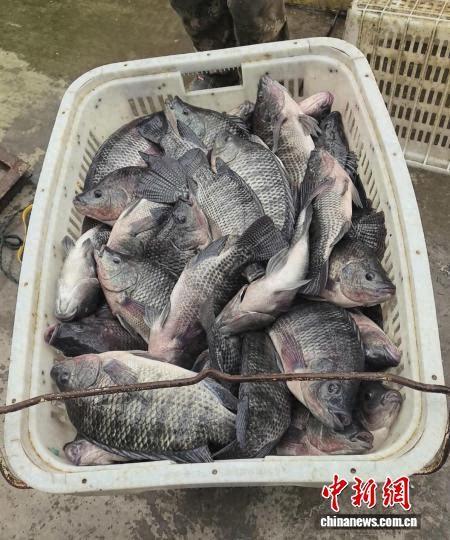
喂料用药随意 药品残留超标
Xin Lang Cai Jing· 2025-12-22 20:23
Core Viewpoint - The article highlights the emerging issues in the aquaculture industry, particularly the phenomenon of "sliding in the gap," where many enterprises and farmers operate without proper licenses and fail to adhere to safety regulations, posing significant risks to food safety and public health [1][2][4]. Group 1: Industry Issues - Many aquaculture enterprises in Guizhou are found to operate without licenses, lacking records for inputs and failing to conduct quality checks before sales [2][3]. - The absence of proper management leads to the use of unregulated drugs, resulting in excessive drug residues in fish products, which can pose health risks to consumers [2][4]. - A specific case revealed that a catfish farm had enrofloxacin levels at 119.31 μg/kg, exceeding the national safety standard of 100 μg/kg [4]. Group 2: Regulatory Actions - The local prosecutor's office initiated a public interest lawsuit against the agricultural bureau for failing to enforce food safety regulations, leading to a court ruling that mandated the bureau to ensure compliance among aquaculture enterprises [3]. - Following the court's decision, the agricultural bureau developed a template for recording aquaculture inputs to enhance traceability and accountability [3]. Group 3: Safety Hazards - The use of banned substances was reported, with a farm found storing tetracycline and ceftriaxone, which violates veterinary drug regulations [5]. - The lack of awareness among farmers regarding safety standards and regulations contributes to the prevalence of unsafe practices in aquaculture [6]. Group 4: Recommendations for Improvement - Experts suggest that collaboration among agricultural, market regulation, and judicial departments is essential to strengthen food safety measures and enforce penalties for violations [7]. - The industry should promote the development of eco-friendly fish species and improve aquaculture practices to ensure both quality and safety of fish products [7].
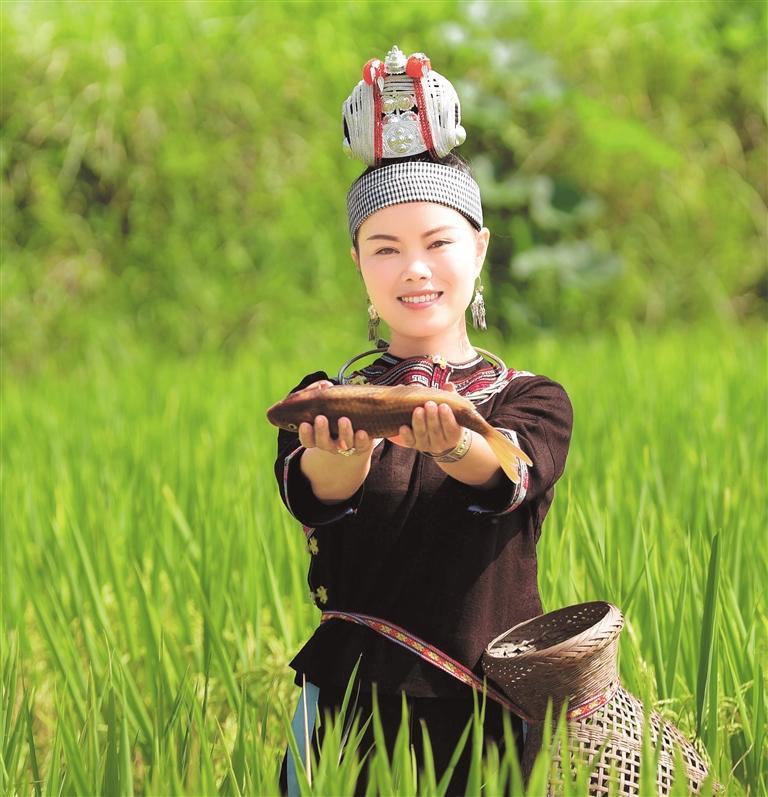
好水养好鱼 丰产又增收
Xin Lang Cai Jing· 2025-12-21 22:46
Core Viewpoint - Guizhou province is focusing on ecological fishery development, adhering to the "ecology first, green development" principle, and implementing the "ten-year fishing ban" policy in the Yangtze River basin to promote high-quality ecological fishery development and transform water resource advantages into economic benefits [5][6][11]. Group 1: Ecological Fishery Development - Guizhou has implemented a comprehensive ban on net cage farming since 2018 to address environmental degradation and promote "zero net cage, ecological fish" development [5][6]. - The province has established 32 national-level healthy aquaculture demonstration farms and 78 provincial-level ecological fishery demonstration bases, with ecological fishery output value maintaining over 20% growth for three consecutive years [7]. - The government has issued multiple guidelines and plans to support the development of ecological fisheries, including the "Guizhou Province '14th Five-Year' Water and Water Industry Development Plan" [6][7]. Group 2: Technological Support - The integration of technology in fish farming has led to significant improvements, such as real-time monitoring of water quality and automated feeding systems, resulting in doubled yields and improved fish survival rates [9]. - Guizhou has developed over 7.2 billion fish fry and 14,400 tons of fish species, including local varieties and unique species, supported by a comprehensive data platform for resource monitoring [9][10]. Group 3: Diverse Business Models - The province has adopted various ecological farming models, including "no feeding, no fertilization, natural breeding" in large reservoirs, and has established 37 large-scale reservoirs for fish farming [10]. - In rice-growing areas, integrated farming models such as "rice + black-spotted frog" and "rice + big-mouth catfish" have been promoted, benefiting over 700,000 households [10]. - The sturgeon industry has developed a complete industrial chain, with the "Guizhou Sturgeon" brand valued at over 960 million yuan, leading the nation in production for two consecutive years [10]. Group 4: Economic Impact - By the end of 2024, Guizhou's aquatic product output is projected to reach 295,000 tons, with a total fishery economic output value of 9.29 billion yuan, reflecting growth of 18.7% and 26.7% respectively compared to the end of the 13th Five-Year Plan [11]. - The province has successfully achieved a virtuous cycle of "fishing for water and using fish to purify water," with over 98.3% of monitored water quality in good condition [11].
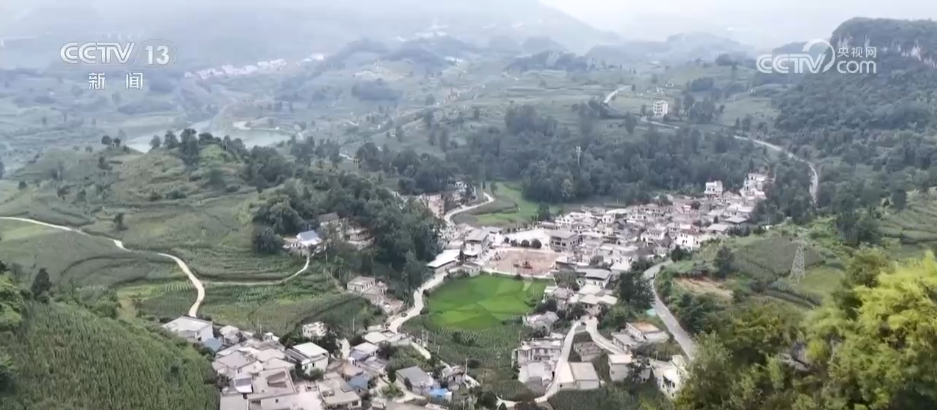
从环境“小整治”到村貌“大提升” “脏乱差”小村变身美丽乡村
Yang Shi Wang· 2025-09-07 03:27
Core Viewpoint - The article highlights the ongoing efforts and initiatives in rural environmental improvement in China, particularly focusing on the case of Jinzhong Village in Liupanshui City, Guizhou Province, which has seen significant changes in its living conditions through various government-supported projects [1][3]. Group 1: Environmental Improvement Initiatives - Since 2018, the Chinese government has launched multiple action plans aimed at improving rural living environments, including the "Three-Year Action Plan for Rural Living Environment Improvement" and the "Five-Year Action Plan for Rural Living Environment Improvement (2021-2025)" [1]. - Jinzhong Village has implemented several measures to enhance its living environment, including the ongoing remediation of a 2,800 square meter pond, which is the only pond in the village [3][5]. Group 2: Housing and Sanitation Upgrades - The village is a pilot site for the "Modern Livable Farmhouse Construction" project, supported by 3.25 million yuan in government funding, aimed at renovating traditional houses and sanitation facilities [5][7]. - The renovation process faced initial resistance from villagers, leading to the decision to create a "model room" to demonstrate the benefits of the upgrades [9]. - As a result of the pilot project, all 45 households in the pilot area have completed kitchen renovations, and the village has established a sewage network to manage wastewater from six groups of residents [11]. Group 3: Livestock and Waste Management - The village faces challenges in upgrading livestock facilities, as many residents keep livestock close to their homes, necessitating temporary relocation during renovations [12][14]. - The upgraded livestock facilities include features for separating waste and installing septic tanks, significantly improving the hygiene conditions in the village [16]. Group 4: Community Engagement and Training - The village organizes regular training sessions for women to enhance their domestic skills, promoting cleanliness and community involvement through material rewards and family evaluations [18].
让绿水青山释放更多生态红利
Ren Min Ri Bao· 2025-05-04 22:12
Core Viewpoint - The article discusses the balance between protecting the water quality of Dongting Lake and promoting the healthy development of the aquaculture industry, highlighting the shift from traditional fishing to ecological fish farming in the region [1][2]. Group 1: Ecological Fish Farming - The main fish being cultivated in the area is the "ecological fish," specifically the fat head fish, which is sold at prices two to three times higher than ordinary pond fish due to its natural rearing method [1]. - The ecological fish are raised using the "human release, natural growth" method, where no feed is provided, allowing the fish to grow on natural microorganisms and aquatic plants [2]. - The local government has unified management of over 40,000 acres of aquaculture water surface to promote green transformation in the industry, achieving ecological, economic, and social benefits [1]. Group 2: Economic Viability and Market Strategy - The ecological fish grow slowly, taking a year to reach one to two pounds, compared to four to five pounds for ordinary pond fish, necessitating a market-oriented approach to ensure stable income [2]. - The fat head fish is specifically targeted for the popular dish "chopped pepper fish head," which has high market demand and stable prices, with distribution primarily through cold chain logistics to the Guangdong-Hong Kong-Macao region [2]. - The region is also integrating ecological tourism with fish sales, creating attractions such as bird-watching spots and selling rare fish species like the black shell crucian carp at prices between 30 to 40 yuan per pound [2]. Group 3: Technological Advancements - New aquaculture technologies are being adopted to enhance the value of the fishery, including the establishment of fully enclosed indoor fish ponds that utilize microorganisms to remove ammonia nitrogen from the water [2]. - The local government is constructing a drying fish processing plant and developing online live-streaming platforms to improve cold chain logistics, thereby continuously releasing ecological benefits from the green environment [2].