
生物基材料单体

Search documents
华恒生物:与印遇龙院士团队签订氨基酸应用研究开发战略合作协议
synbio新材料· 2026-01-15 02:09
Core Viewpoint - The article discusses a strategic cooperation agreement between Huaheng Biological and a research team led by Academician Yin Yulong, focusing on the innovative research and industrial application of amino acids in animal nutrition [1][3]. Group 1: Strategic Cooperation - The cooperation aims to advance research and development in amino acids for animal nutrition, with a focus on transforming research outcomes into efficient and environmentally friendly feed additives [3]. - The collaboration is expected to lead to breakthroughs in the application of amino acids in low-protein diets, precision feeding, and green farming, supporting sustainable development in the livestock industry [3]. Group 2: Company Overview - Huaheng Biological (688639.SH) is a high-tech enterprise centered on synthetic biology, specializing in green technology innovation and value creation, with main products including amino acids, vitamins, and bio-based materials [4]. - The company provides innovative and sustainable products and solutions for various fields, including intermediates, animal nutrition, personal care, plant nutrition, and functional foods [4].


「微元合成」获近3亿元融资,以甲醇为原料、开发大宗生物基产品|早起看早期
36氪· 2026-01-08 00:10
Core Viewpoint - "Micro Yuan Synthesis" has recently secured nearly 300 million yuan in a new round of equity financing, with the funds primarily aimed at accelerating the research and development of methanol-based bio-manufacturing of bulk bio-based products [1][2]. Group 1: Company Developments - "Micro Yuan Synthesis" has successfully developed and industrialized several human and animal nutrition products, including allulose, lutein, and mannitol [1]. - The company has achieved significant commercial progress in the development of core products like allulose, becoming the first in China to receive administrative approval for allulose production through a biological fermentation process [1][2]. - A strategic partnership has been established with Cargill, focusing on the promotion and production collaboration of allulose and other sugar-reducing products [2]. Group 2: Industry Context - The global production of chemical products is approximately 2.3 billion tons annually, while bio-based products account for only 180 million tons, indicating a significant gap and potential for growth in bio-manufacturing [4]. - The development of non-grain bio-based products is essential, particularly using alternative carbon sources like straw and CO2, to address the challenges of raw material costs in bio-manufacturing [4]. - Methanol is identified as an ideal alternative carbon source, with China's coal-based methanol production capacity exceeding 10 million tons, representing 67% of the global total, and facing overcapacity issues [4].
3亿元融资!微元合成加速推进甲醇生物制造大宗生物基产品
合成生物学与绿色生物制造· 2026-01-04 05:36
Core Viewpoint - The article emphasizes the importance of "non-grain" raw materials in the future of the bio-manufacturing industry, highlighting the recent funding round of nearly 300 million yuan for Weiyuan Synthesis to accelerate the development of methanol-based bio-manufactured products [2][3]. Group 1: Industry Trends - The bio-manufacturing sector is positioned as a key driver for future industrial transformation, with McKinsey predicting that 60% of global material production could be synthesized biologically [2]. - The current reliance on starch sugars for bio-based products poses a risk of "competing with food" due to the high demand for agricultural resources, which contradicts the goals of sustainable development [2][3]. Group 2: Methanol Production and Capacity - China's methanol production capacity has rapidly expanded, exceeding 100 million tons, with an additional 100 million tons planned, primarily from coal, which accounts for 80% of production [4][5]. - The development of green methanol production using renewable energy sources is gaining traction, with plans for 6 million tons of green methanol capacity by mid-2025, which could support the bio-manufacturing sector and contribute to carbon neutrality goals [5]. Group 3: Weiyuan Synthesis Developments - Weiyuan Synthesis has successfully developed high-efficiency strains for assimilating methanol and is advancing its pipeline for bio-manufactured products, including bulk amino acids and bio-based materials [7]. - This innovation addresses the raw material challenges in bio-manufacturing and helps mitigate the domestic surplus of methanol, while also reducing reliance on imported soybean meal, thereby enhancing food security [7].
「微元合成」获近3亿元融资,以甲醇为原料、开发大宗生物基产品 | 36氪首发
3 6 Ke· 2026-01-04 00:08
Group 1 - The core viewpoint of the article is that "微元合成" has recently secured nearly 300 million yuan in a new round of equity financing, with the funds aimed at accelerating the research and development of methanol-based biomanufacturing products [1][2] - The company has made significant progress in the development and commercialization of human and animal nutrition products, including allulose, lutein, and mannitol [1] - The financing will focus on the strategic area of "methanol biomanufacturing," with the company having already developed multiple high-efficiency methanol-assimilating strains [2][3] Group 2 - The company has received administrative approval from the National Health Commission for the production of allulose through a unique fermentation process, making it the first in China to do so [1][2] - The innovative "one-step fermentation method" simplifies the production process and significantly reduces costs compared to traditional methods [2] - The global production of chemical products is approximately 2.3 billion tons annually, while biobased products account for only 180 million tons, highlighting the need for non-food carbon sources in biomanufacturing [3] Group 3 - Methanol is identified as an ideal alternative carbon source, with China's coal-to-methanol capacity exceeding 10 million tons, representing 67% of the global total [3] - The company aims to utilize methanol to produce bulk amino acids, thereby reducing reliance on imported soybean meal and ensuring food security [3] - The development of non-food biobased products, particularly using agricultural residues and carbon dioxide, is gaining industry attention despite challenges in cost and logistics [3]
时隔半年再获融资!上海交大科技成果转化代表企业「肆芃科技」完成数千万元Pre-A+轮融资
synbio新材料· 2025-05-20 08:27
Core Viewpoint - SiPeng Technology has successfully completed a multi-million Pre-A+ round of financing, which will be used to accelerate the commercialization of bio-based materials and the construction of a third-generation carbon source bio-manufacturing platform [1][2]. Group 1: Company Overview - SiPeng Technology, established in 2022, focuses on material synthesis and bio-manufacturing, with a founding team that has over 20 years of industry experience [1]. - The company has achieved significant breakthroughs in "bottleneck" technologies and has successfully scaled up multiple bio-manufacturing products [1][2]. - SiPeng Technology is recognized as a representative enterprise for the transformation of scientific achievements from Shanghai Jiao Tong University [1]. Group 2: Financing and Investment - The recent Pre-A+ round was led by Shanghai Guotou Futeng Capital, with XiQiao Capital serving as the exclusive financial advisor [1]. - In October 2024, SiPeng Technology completed a nearly 100 million Pre-A round, which was led by Guotou Chuanghe and followed by Rugao Kechuang Investment [1]. Group 3: Technological Advancements - SiPeng Technology has developed a smart bio-manufacturing platform and a high-performance material application development platform, aiming to produce globally competitive bio-based products [1][2]. - The company has broken the overseas technology monopoly and has completed mass production verification of various bio-based polyols/acids, achieving international leadership in fermentation concentration and cost [1][2]. Group 4: Carbon Source Utilization - SiPeng Technology is collaborating with the Tianjin Institute of Industrial Biotechnology of the Chinese Academy of Sciences to promote the industrialization of bio-based material monomers using methanol as a raw material [2]. - The company is focusing on the industrialization of first and second-generation carbon source products while planning to utilize methanol and carbon dioxide as raw materials for third-generation carbon sources, significantly reducing the reliance on food carbon sources and lowering bio-manufacturing costs [2]. Group 5: Market Outlook - Shanghai Guotou Futeng Capital emphasizes that the synthetic biology field requires both product development and scalable sales for long-term success, aligning with the goals of carbon neutrality and sustainability [4]. - SiPeng Technology aims to establish a long-term market advantage through strain iteration, carbon source replacement, and continuous optimization of production processes [4].

“甲醇生物制造”大爆发?肆芃科技联手天工所攻关大宗生物基材料单体产品!
合成生物学与绿色生物制造· 2025-04-24 13:57
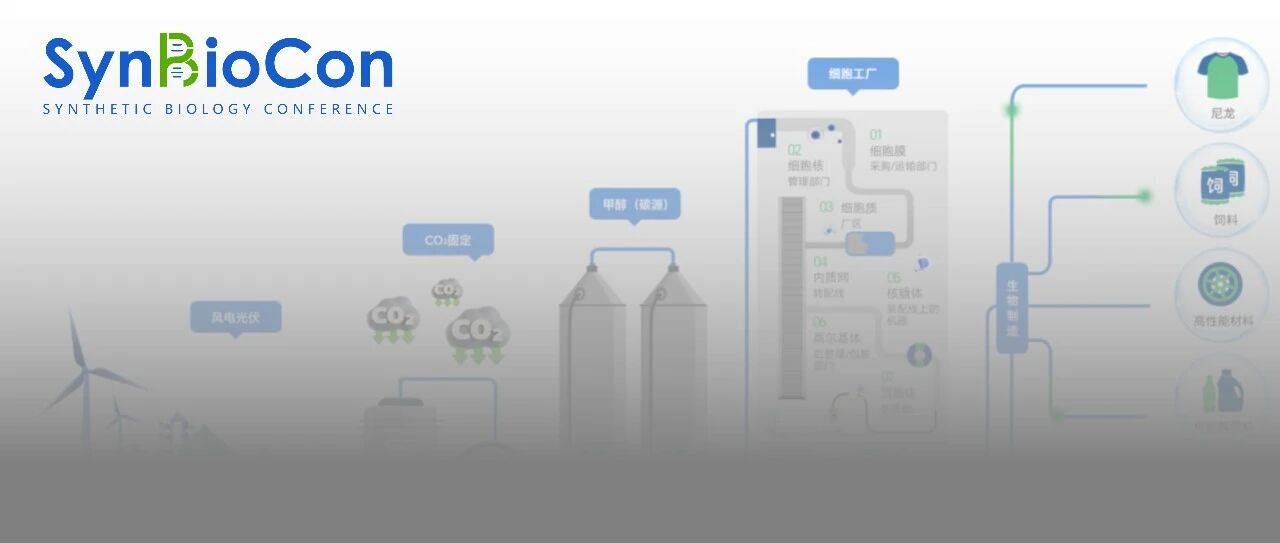
在"双碳"目标与生物制造产业升级的双重驱动下,碳源迭代——即以粮食作物、淀粉为原料的第一代碳源逐渐过渡到以非粮生物质为原料的第二代碳 源,进而转向以二氧化碳、甲醇等一碳化合物为原料的第三代碳源,成为合成生物学领域的核心命题之一。 【SynBioCon】 获 悉, 4 月 21 日,上海肆芃科技有限公司(以下简称"肆芃科技")宣布和中国科学院天津工业生物技术研究所(以下简称"天津工 生所")达成合作,双方 将以甲醇为原料开发大宗生物基材料单体产品 ,突破传统生物制造对粮食碳源的依赖,并推动" 一碳生物制造 "的工业化落 地。 这场产学联姻将如何突破技术壁垒?甲醇路线能否推动生物基材料技术与产业发展? 肆芃科技的创始人兼董事长 陶飞 ,以及天津工生所的 王钰研究员 ,就此次合作的目标、未来发展规划等方面进行了深入交流。 在实际应用过程中,如何提高其转化率和流向产物的代谢通量仍是核心挑战。"天津工生所在甲醇利用微生物底盘上的积累,尤其是对 高温甲醇利用底 盘 的改造技术,为我们提供了从 0 到 1 的技术突破的希望。"陶飞表示。 "我们团队最初尝试改造现有工业菌种(如大肠杆菌)以高效利用甲醇,但甲醇利用能力与自然界 ...