电子债权凭证

Search documents
构建金融支持冰雪经济新生态|哈行支持冰雪相关行业贷款余额34亿元
Sou Hu Cai Jing· 2026-01-08 04:05
Core Insights - Harbin Bank is focusing on building a new financial ecosystem to support the ice and snow economy in Heilongjiang, with a total loan balance of 3.4 billion yuan for ice and snow-related industries by the end of November 2025 [1] - The bank has tailored financial products to meet the diverse needs of the ice and snow industry, including loans for small and micro enterprises in sports, accommodation, and cultural sectors [1][2] Group 1 - Harbin Bank has supported 25 enterprises and provided 113 loans to individual practitioners in the ice and snow industry, with a total loan balance of 88 million yuan [1] - The bank offers a range of financial products, including the Ice and Snow Cultural Tourism Loan and the Xin Dan Cultural Tourism Quick Loan for small and micro clients [1] - For heavy asset tourism projects, the bank provides project loans with terms of up to 20 years [1] Group 2 - Harbin Bank has provided credit support to various ice and snow sports equipment companies, including funding for projects like the Ice World Four Seasons project and the renovation of Friendship Palace [1] - The bank has collaborated with nine leading internet platforms to design a series of ice and snow consumption activities, enhancing consumer engagement in the ice and snow economy [2] - The bank has launched the "Ice and Snow Benefit Financial Package" to promote Harbin's ice and snow brand both nationally and internationally [2]
一颗螺丝钉“拧紧”大产业 “金融链”助力中小微企业冲破资金困局
Yang Shi Wang· 2025-06-27 03:10
Group 1 - The article emphasizes the importance of the "financial chain" in stabilizing and facilitating the supply chain, highlighting its role in driving the flow of funds, technology, and talent across various sectors [1][2] - Supply chain finance has evolved from traditional asset-backed loans to a model that packages core enterprises and their upstream and downstream partners, addressing financing difficulties and reducing costs [1][2] - The scale of China's supply chain finance industry has surpassed 40 trillion yuan, maximizing industrial potential [1] Group 2 - Financial services are increasingly supporting the real economy and linking it to international markets, with the foreign exchange market in China recording a cumulative transaction of 100.28 trillion yuan from January to April this year [1] - The article discusses the critical role of small and medium-sized enterprises (SMEs) in economic development and how the financial chain helps them overcome funding obstacles and manage exchange rate fluctuations [4][19] - Innovations such as electronic debt certificates and one-yuan options for hedging foreign exchange risks are highlighted as effective financial tools for SMEs [12][18][19] Group 3 - The production of essential components, like screws, is crucial for large machinery and infrastructure, with significant investments required for their development [6][10] - Financial innovations are being implemented to address industry pain points, ensuring that funds are accurately directed to where they are needed most within the supply chain [19] - The article notes various innovative financial models being adopted in regions like Shanghai and Guangdong to support emerging industries, including artificial intelligence and commercial aerospace [19]


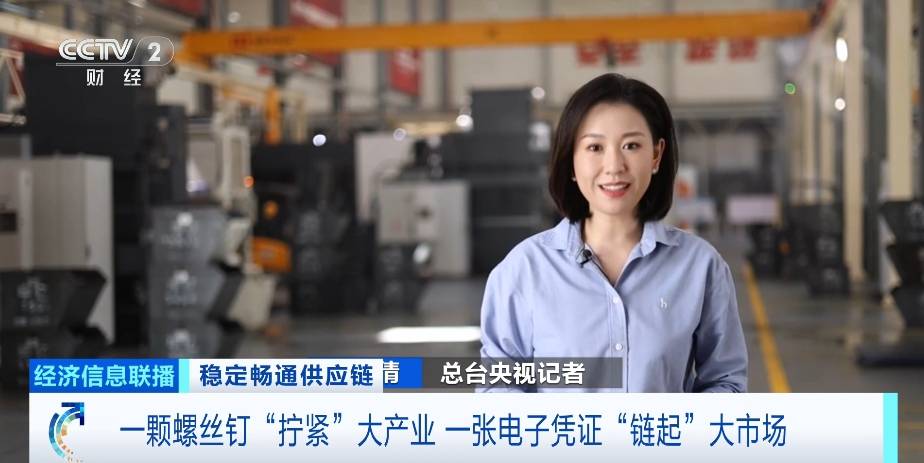
一颗螺丝钉“拧紧”大产业 一张电子凭证“链起”大市场
Sou Hu Cai Jing· 2025-06-26 14:29
Core Viewpoint - The article emphasizes the critical role of small and micro enterprises in economic development, highlighting how financial innovations can help these businesses overcome funding obstacles and manage exchange rate fluctuations. Group 1: Importance of Small and Micro Enterprises - Small and micro enterprises are likened to stars, individually small but collectively significant in driving economic growth [1] - A specific example is given of a screw, which, despite its small size, is essential for the operation of large machinery and infrastructure [3][5] Group 2: Financial Innovations Supporting Enterprises - Financial institutions are extending credit to supply chain enterprises through electronic debt certificates, which allow suppliers to secure loans based on verified transaction data [11][13] - The introduction of electronic debt certificates enables rapid access to funds, allowing businesses to maintain production and meet market demands [13] Group 3: Managing Exchange Rate Risks - Small enterprises face significant risks from exchange rate fluctuations, particularly in international trade, where even minor changes can lead to substantial financial losses [20][22] - Financial products like the "one-yuan option" allow businesses to lock in exchange rates for future transactions, providing a safety net against market volatility [22][24] Group 4: Broader Financial Innovations - Financial innovations are being implemented across various sectors, including artificial intelligence and commercial aerospace, to enhance operational efficiency and risk management [26] - The article highlights the ongoing expansion of financial innovations, which are increasingly targeting the specific needs of supply chains and contributing to economic stability [26]