电桥

Search documents
博世中国否认开启裁员 徐大全回应:个别传统业务线变动属正常情况
Mei Ri Jing Ji Xin Wen· 2026-02-06 03:25
Group 1 - Bosch China is undergoing minor personnel adjustments affecting around 200 employees, primarily in traditional business lines, which has been misinterpreted as mass layoffs [1][6] - As of December 31, 2025, Bosch China is expected to have approximately 57,000 employees, including over 10,000 in research and development [1][6] - The adjustments are aligned with Bosch Group's overall operational strategy and industry trends [2][6] Group 2 - Bosch Group's preliminary financial report for 2025 indicates a slight sales increase to €91 billion, up from €90.3 billion in 2024, with a real growth rate of 4.2% after adjusting for currency effects [3][8] - The EBIT margin for 2025 is approximately 2%, lower than the expected 3.5% for 2024, attributed to a weak economic environment and rising market challenges [3][8] - Bosch Group anticipates a challenging year in 2025, focusing on systematic growth strategies and enhancing competitiveness despite external pressures [3][8] Group 3 - In China, Bosch Group achieved sales of ¥149.8 billion (approximately €18.46 billion) in 2025, representing a year-on-year growth of 4.9% [4][9] - The smart mobility sector remains a core growth driver for Bosch China, with ongoing development in electric bridges, smart cockpits, and driver assistance solutions [4][9] - Bosch is optimistic about its business development in China and plans to increase investments, particularly in areas like intelligent driving, electrification, and steer-by-wire technology [10]

利润率跌破2%:博世中国挥刀裁员
Xin Lang Cai Jing· 2026-02-04 12:07
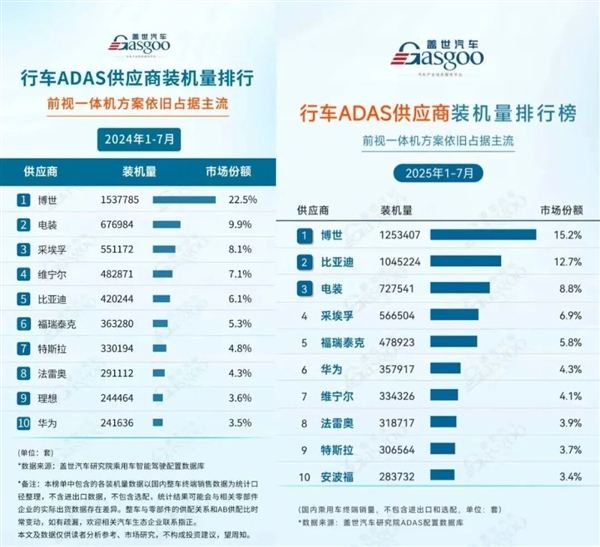
Core Insights - Bosch is facing unprecedented transformation challenges in the Chinese market, including layoffs and restructuring efforts to adapt to the declining demand for traditional fuel vehicles and the rise of new energy vehicles [1][2][7] Group 1: Layoffs and Restructuring - Bosch has initiated layoffs affecting nearly 200 employees, particularly in its Wuxi base, which focuses on fuel vehicle and hydrogen fuel cell projects [1][8] - The company has announced a global layoff plan of 22,000 employees, with 9,000 in Germany in 2024 and an additional 13,000 in 2025, indicating a significant workforce reduction [2][8] - Bosch's employee count in China is projected to decrease from approximately 58,000 at the end of 2023 to 56,000 by the end of 2024, reflecting a steady decline [8] Group 2: Financial Performance - Bosch's sales are expected to slightly increase to €91 billion in 2025, but the EBIT margin is projected to drop to about 2%, down from 3.5% in 2024, indicating a significant decline in profitability [2][9] - The company has set aside €3.1 billion for restructuring costs, which is about 3.5% of the projected sales for 2025, highlighting the financial strain from ongoing adjustments [9] Group 3: Market Position and Competition - Bosch's competitive position in the Chinese market is deteriorating due to the rapid rise of local companies like Huawei and BYD, which are gaining market share through faster technology iterations and better cost performance [4][11] - In the ADAS sector, Bosch's market share dropped from 22.5% in the first half of 2024 to 15.2% in the same period of 2025, while Huawei's share increased from 3.5% to 4.3% [11] - Bosch's position in the cockpit domain is particularly weak, ranking ninth with only 3.6% market share, while local competitors like BYD Electronics lead the market [11][12] Group 4: Strategic Responses - In response to declining profits and local competition, Bosch is increasing its R&D investment in China, targeting 11.9 billion yuan in 2024, which is about 8% of its sales, focusing on local development projects [12][13] - Bosch is also leveraging its global presence to assist Chinese automakers in expanding internationally, having supported over 200 models in their overseas ventures [13]
补偿N+4!德国巨头博世在华人员优化 燃油车成“重灾区”
Xin Lang Ke Ji· 2026-02-03 06:03
Core Viewpoint - Bosch is undergoing significant layoffs, particularly in its fuel vehicle and hydrogen fuel cell projects in China, amid declining sales and increased competition from local companies like Huawei and BYD [1][2][3] Group 1: Layoffs and Company Response - Bosch has initiated layoffs affecting nearly 200 employees in China, with more layoffs expected in June 2024 [1] - The company claims these layoffs are part of normal operational management, despite internal confirmations of economic layoffs [1][2] - Bosch's global workforce is also being reduced, with plans to cut 22,000 jobs by 2030, including 9,000 in Germany announced in 2024 [1][2] Group 2: Financial Performance - Bosch's sales in China showed a slight increase, with 2023 sales at approximately 139 billion RMB, a 5.2% year-on-year growth, but this slowed to 2.7% in 2024 [3] - The company's EBIT margin is projected to be around 2% for 2025, significantly below the expected 3.5% for 2024, indicating financial strain [2] Group 3: Market Competition - Bosch's market share in ADAS (Advanced Driver Assistance Systems) has declined, with a 15.2% share in the first half of 2025, down from 22.5% in the same period of 2024 [4][6] - Competitors like BYD and Huawei are rapidly gaining market share, with BYD's market share doubling from 6.1% to 12.7% [6][8] - The shift in market dynamics is attributed to local companies focusing on core technologies and faster iteration speeds, which are eroding Bosch's traditional advantages [8][9] Group 4: Industry Trends - The automotive industry is experiencing a shift in power dynamics, with Chinese companies increasingly recognized as potential leaders in innovation [9] - Bosch's reliance on traditional fuel vehicle technologies is becoming a liability as the industry moves towards electric and smart vehicle solutions [9]
今年将投产50个电动出行项目! 博世董事会主席史蒂凡·哈通:未来五年要在各关键市场跻身前三
Mei Ri Jing Ji Xin Wen· 2025-05-09 07:46
Core Insights - Bosch anticipates no significant turnaround in overall conditions for the year, but aims to rank among the top three suppliers in key markets within the next five years as part of its 2030 strategy [1] - For fiscal year 2024, Bosch projects sales of €90.3 billion, a decline of 1.4% year-over-year, with an adjusted decline of 0.5% after currency effects [1] - The company aims for an average annual sales growth of at least 6% and a profit margin of at least 7% by 2030 [1] Financial Performance - Bosch's EBIT for 2024 is projected at €3.1 billion, down from €4.8 billion in 2023, resulting in an EBIT margin of 3.5% [1] - Free cash flow is expected to be positive at €900 million, with working capital increasing to €8.2 billion from €7.4 billion in 2023 [1] - Sales by region for 2024 include €44.5 billion in Europe (down 5%), €16 billion in North America (up 5%), €1.8 billion in South America (up 6%), and €28.1 billion in Asia-Pacific (up 1%) [2] Market Challenges and Strategies - The automotive market is projected to decline, with global production expected to drop from 94 million units in 2023 to 93 million in 2024 [1] - Bosch plans to optimize costs and adjust its structure to maintain competitiveness in a rapidly changing market, particularly in China [1][3] - The company is focusing on localization strategies in key markets to enhance supply chain resilience and better serve local customers [3] Business Segments - The smart mobility segment is a significant part of Bosch's business, with projected sales of €55.8 billion for fiscal year 2024 [4] - Other segments include consumer goods with sales growth of 1.6% to €20.3 billion, industrial technology with a decline of 13% to €6.4 billion, and energy and building technology with a decline of 2.7% to €7.5 billion [4] Future Projects and Innovations - Bosch plans to launch 50 electric mobility projects this year, primarily in Europe and China [7] - The company is developing advanced driver assistance systems and AI-powered cockpit platforms, with significant contributions from its Chinese operations [7] - Bosch acknowledges the challenges of achieving profitability in new business areas, emphasizing the need for strong product development during transitional periods [7]