
电动出行

Search documents
欧洲二手电动车,销量激增
财联社· 2026-03-26 10:42
Core Viewpoint - The ongoing conflict in the Middle East is driving up gasoline prices, which in turn is leading to a significant increase in the sales of used electric vehicles (EVs) across Europe [1][2]. Group 1: Market Trends - The rise in fuel costs is making consumers hesitant to purchase traditional fuel vehicles, resulting in a surge in demand for electric vehicles in the used car market [2]. - In Norway, the largest used car trading platform, Finn.no, reports that electric vehicles have surpassed diesel cars to become the best-selling vehicle type on their platform [2]. - Data from the European Commission indicates that average gasoline prices in the EU rose by 12% from February 23 to March 16, reaching €1.84 per liter (approximately $2.12) [3]. Group 2: Sales Data - French online used car retailer Aramisauto noted that the proportion of electric vehicles sold increased from 6.5% to 12.7% within three weeks, while gasoline vehicle sales dropped from 34% to 28% and diesel vehicle sales fell from 14% to 10% [3]. - The OLX platform reported significant increases in electric vehicle inquiries across various markets, including France (+50%), Romania (+40%), Portugal (+54%), and Poland (+39%), with all markets showing weekly acceleration in interest [3]. Group 3: Consumer Behavior - The CEO of OLX highlighted that interest in electric vehicles was already on the rise before the recent events, suggesting that the current instability is accelerating an ongoing transition [4]. - The availability of a wider range of used electric vehicle models and the increasing prevalence of battery health certifications are alleviating consumer concerns, further supporting sales growth [4]. - Used electric vehicles are typically priced up to 40% lower than new cars and can be delivered immediately, making them more responsive to market sentiment and fluctuations in gasoline prices [4]. Group 4: Regional Insights - Data from Marketcheck indicates a noticeable and sustained increase in used electric vehicle sales since the outbreak of the conflict [5]. - In the Nordic region, platforms like Blocket reported an 11% increase in electric vehicle sales in the first two weeks of March compared to the previous two weeks, with a 17% rise in browsing activity [5][6]. - Denmark's Bilbasen also observed a rise in electric vehicle search volumes, attributing this trend primarily to rising gasoline prices [6]. - Germany's largest online car market, mobile.de, reported that the proportion of electric vehicle searches surged from 12% to 36% since early March, with inquiries for used electric vehicles increasing by 66% compared to February [6][7].


肯推出国家电动出行政策框架
Shang Wu Bu Wang Zhan· 2026-02-10 04:21
Core Viewpoint - Kenya's Ministry of Roads and Transport has launched a national electric mobility policy framework to promote the adoption of electric vehicles (EVs) across the country [1] Group 1: Policy Initiatives - The national electric mobility policy framework aims to reduce emissions in the transport sector [1] - The framework includes plans to develop charging infrastructure and accelerate local manufacturing and assembly of electric vehicles [1] - The policy encourages innovation and investment in the electric vehicle sector to ensure a steady supply of EVs in the local market [1] Group 2: Regulatory Measures - New electric vehicles and motorcycles will be required to use standardized green license plates [1] - As of December 2025, the number of registered electric vehicles in Kenya is projected to reach 24,754 units [1]
德国成为全球第二大电动汽车生产国
Guan Cha Zhe Wang· 2026-02-05 09:39
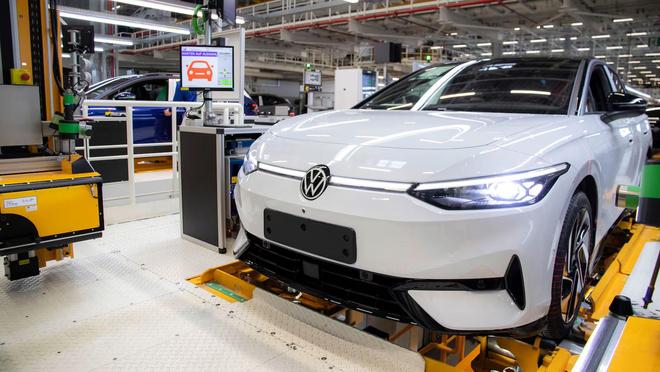
Core Insights - Germany's electric vehicle production is set to reach a historic high by 2025, with significant growth in both fully electric and plug-in hybrid vehicles [1][3]. Group 1: Electric Vehicle Production - In the previous year, Germany's production of fully electric vehicles increased by 15% to 1.22 million units, while plug-in hybrid vehicle production surged by 54% to approximately 450,000 units [3]. - The total production of electrified passenger cars in Germany reached 1.67 million, marking a 23% increase from the previous year, making Germany the second-largest electric vehicle producer globally, surpassing the U.S. [3]. - Electric vehicles now account for about 40% of Germany's total automotive production [3]. Group 2: Market Trends and Government Support - The German government announced a subsidy of up to $7,000 (approximately 48,000 RMB) for low- to middle-income families to purchase new electric vehicles, which is expected to boost production further [3]. - By 2026, Germany's electric vehicle production is projected to grow by an additional 6%, reaching 1.76 million units [3]. Group 3: Industry Challenges and Consumer Acceptance - VDA President Hildegard Mueller acknowledged the growth in the automotive sector but emphasized the need to address key infrastructure gaps, including the deployment of charging stations and modernization of the power grid [5]. - The acceptance of electric vehicles among consumers is rising, with electric vehicles expected to make up 30% of new car registrations by 2025, reflecting a nearly 50% year-on-year increase [5]. - Chinese automotive brands are leading the growth in the alternative fuel vehicle segment in Germany, with significant increases in registration numbers for brands like Leap Motor, Lynk & Co, and BYD [5].
欧企:中国造太香,就买
Guan Cha Zhe Wang· 2026-02-03 01:09
Core Viewpoint - Despite European concerns about Chinese companies controlling infrastructure, Chinese electric buses are gaining popularity in Europe due to their lower prices and higher quality compared to local brands [1][7]. Group 1: Market Trends - Chinese electric buses, particularly from BYD and Yutong, are increasingly being purchased by European countries such as Germany, Belgium, and Austria, with operators praising their cost-effectiveness and quality [1][2]. - A report by McKinsey indicates that by 2024, Chinese electric buses will hold a 21% market share in Europe, with BYD and Yutong accounting for the majority [2]. Group 2: Product Features - BYD's electric buses can operate for 8 hours on a full charge and are approximately €100,000 cheaper than similar German models, which typically cost around €600,000 [2]. - The design of BYD buses places three out of five battery packs under the floor, lowering the center of gravity and enhancing safety, especially in the event of an accident [2]. Group 3: Contracts and Collaborations - In Belgium, the public transport operator De Lijn has awarded BYD a contract for up to 500 electric buses, with an initial order of 268 buses, marking a significant step in their electrification strategy [5]. - BYD plans to assemble these buses in Hungary to meet EU local value creation requirements and is set to build a second assembly plant to increase production capacity to 1,250 electric buses and trucks annually [5]. Group 4: Political and Regulatory Environment - Some European politicians have raised concerns about Chinese companies, citing issues like data privacy and strategic dependency, particularly in relation to Yutong's contracts [7][8]. - The Chinese government has emphasized its commitment to data privacy and security, urging European countries to provide a fair and non-discriminatory business environment for all companies [8].



外卖小哥的“神器”,要IPO了
3 6 Ke· 2026-02-02 10:44
Core Viewpoint - Tailin Technology Co., Ltd. has submitted an IPO application to the Hong Kong Stock Exchange, aiming to leverage capital market power to enhance its position in the increasingly competitive electric two-wheeler market in China [1][3]. Group 1: Company Overview - Tailin ranks third in the Chinese electric two-wheeler market with a market share of approximately 12.7% as of 2024 [1]. - The company offers a diverse product range, including 50 models of electric bicycles, 38 models of electric motorcycles, and three models of electric tricycles [3]. - Tailin's revenue is projected to grow from 11.88 billion RMB in 2023 to 13.6 billion RMB in 2024, representing a growth rate of 14.5% [5]. Group 2: Financial Performance - Revenue for the nine months ending September 30, 2025, is expected to increase to 14.84 billion RMB, a growth rate of 38.6% compared to the same period in 2024 [5]. - Net profit is forecasted to rise from 287 million RMB in 2023 to 472 million RMB in 2024, marking a growth rate of 64.9% [5]. - The average selling price of electric bicycles is 1,393.7 RMB, while electric motorcycles average 1,585.3 RMB [7]. Group 3: Market Challenges - Tailin faces intense competition from established players like Yadea and Aima, as well as emerging brands like Ninebot and Niu, which are targeting the high-end market [7]. - The domestic electric two-wheeler market is nearing saturation, with over 420 million units in circulation, equating to one vehicle for every three people [7]. - The company is also contending with a significant financial burden, with net current liabilities reaching 2.05 billion RMB as of September 30, 2025 [9]. Group 4: Regulatory Environment - The implementation of stringent new national standards poses additional challenges, as Tailin must ensure compliance across its extensive distribution network to avoid penalties [12]. - The new regulations aim to address safety issues and require significant adjustments in manufacturing and sales practices [12]. Group 5: Strategic Initiatives - Tailin has begun to explore international markets, with overseas revenue contributing only 2.4% of total income in 2024, indicating potential for growth in less saturated markets [9]. - The company has been expanding its presence in countries like Kenya, Uganda, and the Philippines since 2010, although brand recognition and market penetration remain limited [9].
外卖小哥的“神器”,要IPO了
凤凰网财经· 2026-02-02 10:07
Core Viewpoint - The article discusses the IPO application of Tailin Technology Co., Ltd. on the Hong Kong Stock Exchange, highlighting its position as the third-largest player in the electric two-wheeler market in mainland China, with a market share of approximately 12.7% as of 2024. If successful, Tailin will join Yadea and Aima as a major industry player listed on the capital market [1][2]. Group 1: Company Overview - Tailin Technology was founded in 2003 in Shenzhen, seizing the opportunity presented by the ban on traditional motorcycles to pivot towards electric bicycles [4]. - The company offers a diverse product range, including 50 models of electric bicycles, 38 models of electric motorcycles, and three models of electric tricycles, catering to various transportation needs [4][7]. Group 2: Financial Performance - Tailin's revenue is projected to grow from 11.88 billion RMB in 2023 to 13.6 billion RMB in 2024, representing a growth rate of 14.5%. For the nine months ending September 30, 2025, revenue is expected to increase from 10.71 billion RMB to 14.84 billion RMB, a growth rate of 38.6% [7][8]. - The company's net profit is forecasted to rise from 287 million RMB in 2023 to 472 million RMB in 2024, a growth rate of 64.9%. For the same nine-month period, net profit is expected to jump from 370 million RMB to 823 million RMB, a growth rate of 122.4% [7][8]. Group 3: Market Challenges - Tailin faces intense competition from established brands like Yadea and Aima, as well as emerging players like Ninebot and Niu, which are vying for market share in the high-end segment [10]. - The domestic electric two-wheeler market is nearing saturation, with over 420 million units in circulation, equating to one vehicle for every three people [10]. Group 4: Pricing and Profitability - The average selling price of Tailin's electric bicycles is 1,393.7 RMB, while electric motorcycles average 1,585.3 RMB. Despite maintaining prices above 1,000 RMB, profit margins remain constrained due to industry-wide price wars [11][12]. - Tailin's gross margin for electric bicycles improved from 13.3% in 2023 to 17.7% in the first nine months of 2025, while electric motorcycles saw an increase from 13.3% to 18.1% [14]. Group 5: International Expansion - Tailin has begun to explore international markets, which are still in a growth phase compared to the domestic market. The global electric two-wheeler market is projected to reach $74.9 billion in 2024, with a compound annual growth rate of 8.7% from 2025 to 2034 [16]. - However, as of 2024, revenue from overseas markets accounts for only 2.4% of Tailin's total income, indicating limited current impact [17]. Group 6: Regulatory and Operational Challenges - The implementation of stringent new national standards poses significant challenges for Tailin, particularly in ensuring compliance across its extensive distribution network of over 30,000 stores [19]. - The company is also grappling with high levels of short-term liabilities, totaling 2.05 billion RMB as of September 30, 2025, primarily due to trade payables [17][18]. Group 7: Consumer Perception and Brand Trust - Tailin's reliance on lower-tier markets has led to substantial sales, but it risks alienating younger consumers who prioritize technology and smart features in their purchasing decisions [20][21]. - The company faces challenges in consumer trust, with over 2,000 complaints reported, particularly regarding after-sales service and battery quality issues [20]. Group 8: Conclusion - Tailin's upcoming IPO is marked by high debt and low gross margins, raising concerns about its long-term viability in a competitive market. The company must address operational challenges and enhance its technological offerings to secure its position in the industry [25].

在葡萄牙,中国电动汽车吸引力持续上升
Xin Hua She· 2026-01-08 00:26
Group 1 - The core viewpoint of the article highlights the increasing attractiveness of Chinese electric vehicles (EVs) in Portugal, with a notable shift in consumer preferences towards these vehicles [2][3]. - In the first eleven months of 2025, pure electric vehicles accounted for 22.9% of new car registrations in Portugal, nearing the 25% mark for gasoline vehicles, indicating a rapid transition towards electric mobility [2]. - BYD led the Portuguese electric vehicle market with 645 registrations in November 2025, reflecting a significant year-on-year growth of 119.4%, and a total of 4,477 registrations in the first eleven months of 2025, up 90.5% from the same period in 2024 [2]. Group 2 - Tesla remains the leader in annual cumulative registrations in Portugal, but the gap with Chinese electric vehicle brands is narrowing, indicating a shift from being an alternative option to becoming a significant force in the Portuguese automotive market [2]. - The competitive advantages of Chinese electric vehicles in Portugal include quality, technology, design, and cost-effectiveness, making brands like BYD appealing to consumers [2]. - Emerging Chinese brands are also gaining traction in the Portuguese market, with registrations for Leap Motor at 210, Xpeng at 785, and Polestar at 484 from January to November last year, showcasing the growing acceptance of these brands [3].
通讯|在葡萄牙,中国电动汽车吸引力持续上升
Xin Hua She· 2026-01-07 04:00
Core Insights - The attractiveness of Chinese electric vehicles (EVs) in Portugal is on the rise, with increasing market acceptance among consumers [1] Market Trends - In the first 11 months of 2025, pure electric vehicles accounted for 22.9% of new car registrations in Portugal, nearing the 25% share of gasoline vehicles and significantly higher than the 5.7% share of diesel vehicles, indicating a rapid shift towards electric mobility [1] - BYD led the Portuguese electric vehicle market with 645 registrations in November 2025, representing a substantial year-on-year growth of 119.4% [1] - The total registration of BYD electric vehicles in Portugal reached 4,477 units in the first 11 months of 2025, marking a 90.5% increase compared to the same period in 2024 [1] Competitive Landscape - Tesla remains the leader in annual cumulative registrations in Portugal, but the gap with Chinese electric vehicle brands is narrowing, indicating a shift from being an alternative option to becoming a significant force in the Portuguese automotive market [1] - A senior executive from the Salvador Caetano Group, one of Portugal's largest dealership groups and a representative of several Chinese EV brands, highlighted that Chinese electric vehicles excel in quality, technology, design, and cost-effectiveness [1] Consumer Preferences - Portuguese consumers are increasingly choosing Chinese electric vehicles due to their appealing design, competitive ownership costs, and high value-for-money configurations [1] - The growing acceptance of Chinese electric vehicles is also enhancing the attractiveness of other emerging brands in the Portuguese market [1] Industry Impact - The performance of Chinese electric vehicle brands reflects their technological competitiveness and their growing role in shaping sustainable mobility in Portugal, providing more choices, innovation, and affordability for consumers [1]
通讯丨在葡萄牙,中国电动汽车吸引力持续上升
Xin Hua Wang· 2026-01-07 04:00
Group 1 - The core viewpoint of the articles highlights the increasing attractiveness of Chinese electric vehicles (EVs) in Portugal, with a notable shift in consumer preferences towards these brands due to their quality, technology, design, and cost-effectiveness [1][2][3] - In the first eleven months of 2025, pure electric vehicles accounted for 22.9% of new car registrations in Portugal, nearing the 25% mark for gasoline vehicles, indicating a rapid transition towards electric mobility [1] - BYD led the Portuguese electric vehicle market with 645 registrations in November 2025, reflecting a significant year-on-year growth of 119.4%, and a total of 4,477 registrations in the first eleven months of 2025, up 90.5% from the same period in 2024 [1][2] Group 2 - Tesla remains the leader in annual cumulative registrations in Portugal, but the gap with Chinese brands is narrowing, indicating a shift from being an alternative option to becoming a significant force in the Portuguese automotive market [1][2] - The increasing acceptance of Chinese electric vehicles among Portuguese consumers is also benefiting other emerging brands, with Leap Motor registering 210 vehicles, Xpeng 785 vehicles, and Polestar 484 vehicles in the same period [2] - The performance of Chinese electric vehicle brands reflects their technological competitiveness and their growing role in shaping sustainable mobility in Portugal, providing more choices and affordability for consumers [3]
阿联酋电动出行迎来里程碑式发展
Shang Wu Bu Wang Zhan· 2026-01-02 15:19
Core Insights - The UAE's used electric vehicle registration is projected to increase by 41% in 2025 [1] - Dubai has registered over 40,000 electric vehicles, indicating significant market penetration [1] - Abu Dhabi's charging activity has seen a year-on-year growth of 60%, reflecting an expanding infrastructure [1] Industry Developments - The rapid development of unified charging prices and infrastructure is laying the groundwork for the widespread adoption of electric vehicles [1]