白牡丹

Search documents
六妙白茶闪耀茶王赛,斩获多项奖项
Zhong Guo Zhi Liang Xin Wen Wang· 2025-12-24 06:12
六妙白茶严格遵循"自然萎凋,不炒不揉"的传统技法,在适宜温湿度下让茶叶历经60小时以上自然 缓慢萎最大限度保留活性酶与丰富内质。后续经专业茶窖科学陈化,让茶叶在时光中自然转化,成就甘 醇绵柔的经典风味。 此次获奖茶品覆盖白毫银针、白牡丹、寿眉全品类,无论是银针的毫香蜜韵、牡丹的花香甘甜,还 是寿眉的醇厚枣香,均以纯净通透的茶汤、鲜活灵动的气息和持久绵长的回甘征服了专业评审团的味 蕾,八项重磅大奖与十一项优质奖是对其全品类、高品质的印证。 近日,备受茶界瞩目的福鼎老白茶茶王赛圆满落幕。六妙白茶股份有限公司及子公司凭借卓越品质 与深厚底蕴从众多参赛品牌中脱颖而出,一举斩获最高荣誉"茶王"称号,狂揽八项重磅大奖及十一项优 质奖以十九项荣誉的辉煌战绩书写行业传奇佳话! 本次福鼎老白茶茶王赛由福建省广电福鼎白茶严选中心承办,汇聚全国各地存放的福鼎老白茶。评 审过程专业严苛、公正权威,是检验福鼎老白茶品质的赛事平台。六妙白茶在这场高规格对决中脱颖而 出其品质实力得到行业高度认可。 荣誉的根基,始于自然的馈赠。六妙白茶核心产区坐落于北纬27°福鼎白茶黄金带,这里云雾缭 绕、溪流纵横,特有的红黄壤土富含矿物质,为茶叶赋予"山 ...
如何品味不同的茶(答读者问·传统文化)
Ren Min Ri Bao· 2025-11-28 22:00
Core Viewpoint - The article discusses the rich history and cultural significance of tea in China, detailing the six major types of tea and their unique characteristics, processing methods, and suitable consumer groups [2][4][5][6]. Group 1: Types of Tea - Green tea is one of the earliest types of tea in China, characterized by its non-fermented nature and processing methods such as pan-frying and drying, resulting in a "clear soup and green leaves" quality [2]. - Black tea, fully fermented, undergoes processes like withering and oxidation, leading to a "red soup and red leaves" quality, with notable varieties from Anhui and Yunnan [4]. - Oolong tea, or blue tea, is semi-fermented and combines characteristics of both green and black tea, with unique processing steps that enhance its aroma and flavor [4]. - White tea is minimally processed, involving withering and drying, resulting in a sweet and mild flavor, primarily produced in Fujian [5]. - Yellow tea is lightly fermented and features a unique "sealing yellow" process that reduces bitterness, producing a "yellow soup and yellow leaves" quality [5]. - Black tea, known for its post-fermentation process, has a rich history and is produced in various regions, with specific health benefits for certain consumer groups [5]. Group 2: Cultural Significance - The article emphasizes the deep-rooted cultural heritage of tea in China, highlighting its integration into daily life and traditional practices, encouraging individuals to explore and appreciate the diverse flavors and aromas of different tea types [6].


如何品味不同的茶
Ren Min Ri Bao· 2025-11-28 21:56
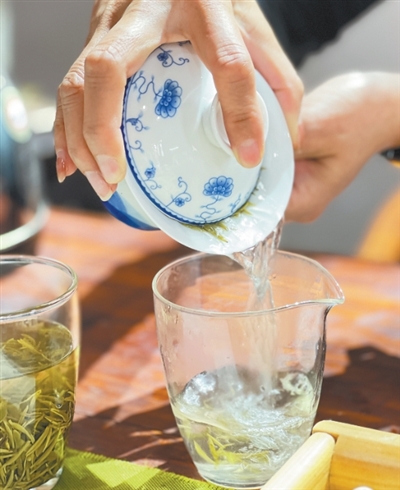
Core Insights - The article discusses the rich history and cultural significance of tea in China, highlighting the six major types of tea: green tea, black tea, oolong tea, white tea, yellow tea, and black tea [1][2][3] Green Tea - Green tea is one of the earliest types of tea in China, characterized as unfermented and processed through steps like killing green, shaping, and drying [1] - Major varieties include West Lake Longjing from Zhejiang, known for its "green color, fragrant aroma, sweet taste, and beautiful shape," and Biluochun from Jiangsu, which has a curled shape and rich aroma [1] Black Tea - Black tea is fully fermented and includes varieties such as small leaf black tea, gongfu black tea, and broken black tea, processed through withering, rolling, fermentation, and drying [2] - Notable types include Qimen black tea from Anhui, known for its rich aroma, and Dianhong from Yunnan, which has a strong and fresh flavor [2] Oolong Tea - Oolong tea, also known as blue tea, is semi-fermented and involves processes like withering, making green, killing green, rolling, and drying [2] - Famous varieties include Da Hong Pao from Fujian, recognized for its balanced aroma and flavor, and Fenghuang Dancong from Guangdong, known for its lasting fragrance and sweet taste [2] White Tea - White tea is minimally processed, involving withering and drying, and is classified as lightly fermented [2] - Key varieties include Baihao Yinzhen, which is covered in white hairs and resembles needles, and Bai Mudan, which has a floral appearance and a sweet flavor [2] Yellow Tea - Yellow tea is lightly fermented and involves a unique "sealing yellow" process that reduces bitterness and creates a "yellow soup and yellow leaves" quality [3] - A notable type is Junshan Yinzhen from Hunan, which has a golden appearance and sweet flavor [3] Black Tea (Post-Fermented) - Black tea has a long history and plays a significant role in tea trade, characterized by post-fermentation and processes like killing green, rolling, piling, re-rolling, and drying [3] - It is produced in regions like Hunan, Hubei, Sichuan, Yunnan, and Guangxi, with Anhua black tea known for its unique aroma and rich flavor [3] Cultural Significance - The article emphasizes the deep-rooted tea culture in China, encouraging individuals to explore different types of tea that suit their preferences while appreciating the profound heritage of Chinese traditional culture [3]
顺时而饮,科学品茗(信息服务台)
Ren Min Ri Bao· 2025-10-07 21:51
Core Viewpoint - The article emphasizes the importance of seasonal and time-based tea consumption in Chinese culture, highlighting how different types of tea can harmonize with the body's needs throughout the year and day [2][3][5]. Seasonal Tea Recommendations - Spring: Drink floral teas like jasmine tea to alleviate "spring fatigue" and promote liver health [3]. - Summer: Green teas (e.g., West Lake Longjing) and white teas (e.g., Baihao Yinzhen) are recommended to combat heat and humidity [3]. - Autumn: Oolong teas (e.g., Wuyi Rock Tea) are ideal for addressing dryness and nourishing lung health [3]. - Winter: Black teas (e.g., Keemun black tea) and dark teas (e.g., ripe Pu-erh) are suggested for warming the body and aiding digestion [3]. Time-Based Tea Consumption - Morning: Light green or white tea is recommended to hydrate and refresh the body after sleep [4]. - Late Morning to Noon: Green tea is ideal for enhancing mental alertness and cognitive function [5]. - Post-Lunch: Oolong tea helps with digestion and revitalizes energy levels [5]. - Afternoon: Black tea can be enjoyed, possibly with milk or honey, to soothe the stomach and emotions [5]. Balance and Personalization - The article stresses the importance of understanding individual body needs, suggesting that different tea types can serve as "harmonizers" for various health conditions [5]. - The concept of "scientific tea drinking" is introduced, advocating for alignment with seasonal changes, personal health, and emotional states [5].
柏柳村:白茶飘香的故乡
Zhong Guo Huan Jing Bao· 2025-06-18 01:10
Core Viewpoint - Fuding white tea, recognized as a geographical indication product of China, has gained international acclaim and is deeply rooted in the unique culture and values of its origin, Fuding City, particularly in Bai Liu Village, known as the "First Village of Chinese White Tea" [1][3]. Group 1: Historical Significance - Fuding white tea was officially recognized as a protected geographical product by the former National Quality Supervision and Inspection Administration in June 2004 [1]. - Bai Liu Village has been a significant contributor to the white tea industry, with over 3 million acres of white tea seedlings planted nationwide, 70% to 80% of which originate from this village [1]. - The village was designated as the "First Village of Chinese White Tea" in 2009 after expert evaluation by the China International Tea Culture Research Association [1]. Group 2: Cultural Heritage - The legacy of white tea production in Bai Liu Village is attributed to generations of tea artisans, including Mei Xiangjing, a master of white tea making and a national intangible cultural heritage inheritor [3][4]. - Mei Xiangjing's grandfather, Mei Bozhen, played a pivotal role in promoting Fuding white tea, winning a gold medal at the Panama-Pacific International Exposition in 1915 [3][4]. - The family has a rich history in the tea business, with Mei Bozhen establishing a tea business that gained recognition across China and beyond [3][4]. Group 3: Modern Developments - The current tea production area in Bai Liu Village is approximately 5,400 acres, with 16 tea factories operating in the village [1]. - Mei Fusheng, a descendant of the Mei family, is committed to preserving traditional charcoal baking techniques in tea production, emphasizing quality control and the natural properties of white tea [7][8]. - The white tea industry in Fuding City is thriving, with 350,000 out of a population of 600,000 engaged in the white tea sector, supported by 300,000 acres of tea plantations [9].