
祁门红茶

Search documents
强化品牌建设 发展绿色农业
Ren Min Ri Bao· 2026-02-27 03:13
Group 1 - The core viewpoint emphasizes the opportunity for green agriculture development due to rising consumer demand for healthy food, leading to the creation of distinctive regional public brands for ecological products [1] - A proposal was made to promote green development in agriculture and rural areas, focusing on cultivating new industries and business models through the development of ecological product brands [1] - The Ministry of Agriculture and Rural Affairs plans to enhance policy guidance and improve mechanisms to promote green and efficient variety innovation and accelerate the application of green technologies [2] Group 2 - The Ministry of Agriculture and Rural Affairs will support the cultivation and promotion of ecological public brands with high ecological benefits and economic value, exploring pathways for realizing the ecological value of green quality agricultural products [2] - There is a strong sense of responsibility among representatives regarding agricultural development, with a focus on rural land, rural elderly care, agricultural modernization, and farmer skills training [2]
强化品牌建设 发展绿色农业(落地有声·高质量办理代表建议)
Ren Min Ri Bao· 2026-02-26 22:12
Group 1 - The core viewpoint emphasizes the opportunity for green agriculture development due to rising consumer demand for healthy food, leading to the creation of distinctive regional public brands for ecological products [1] - The proposal to develop ecological product regional public brands aims to promote green development in agriculture and cultivate new industries and business models [1] - The response from the Ministry of Agriculture and Rural Affairs highlights a comprehensive approach to advancing agricultural green development and strengthening brand construction [2] Group 2 - The Ministry of Agriculture and Rural Affairs plans to enhance policy guidance, improve work mechanisms, and promote the innovation of green and efficient varieties [2] - The Ministry will support the cultivation and promotion of ecological product regional public brands with high ecological benefits and economic value [2] - The focus areas for future suggestions include rural pension, agricultural modernization, and farmer skills training, reflecting a commitment to rural revitalization [2]
11个茶文化系统拟入选!国家级候选名单公示
Nan Fang Nong Cun Bao· 2026-01-12 12:01
Core Points - The article discusses the announcement of 90 traditional agricultural systems, including 11 tea culture systems, as candidates for the eighth batch of China's important agricultural cultural heritage [2][3][5] - The tea culture systems represent 12.2% of the total candidates and cover 10 provincial-level administrative regions in China, highlighting their distinctive characteristics [3][4] Group 1: Tea Culture Systems - The 11 tea culture systems nominated include: 1. Jiangsu Yixing Yangxian Tea Culture System 2. Anhui Qimen Tea Culture System 3. Fujian Wuyishan Tea Culture System 4. Jiangxi Lushan Yunwu Tea Culture System 5. Henan Xinyang Maojian Tea Culture System 6. Hubei Wufeng Tea Culture System 7. Hunan Mountain Berry Tea Culture System 8. Hainan Wuzhishan Daya Tea Culture System 9. Chongqing Nanchuan Dazhu Tea Culture System 10. Chongqing Wuxi Laoying Tea Culture System 11. Guizhou Puan Siqiu Tea Culture System [4] Group 2: Regional Highlights - Jiangsu Yixing has a tea garden area of 75,000 acres, producing nearly 1,100 tons of premium tea annually [10][11] - Anhui Qimen is known for Qimen black tea, created in 1875, recognized for its unique aroma and quality [15][16][17] - Fujian Wuyishan is the origin of red and oolong tea, with a tea garden area of approximately 148,000 acres and an industry value exceeding 15 billion yuan [19][20] - Jiangxi Lushan Yunwu tea is noted for its unique flavor and has a brand value of 7.651 billion yuan [23] - Henan Xinyang Maojian has a tea garden area of 2.16 million acres, with a total tea production of 82,000 tons and a total output value of 15.3 billion yuan [37] - Hubei Wufeng has established a 222,000-acre ecological tea garden, achieving a tea production of 30,000 tons and a comprehensive output value of 1.4 billion yuan [40][41] - Hunan Mountain Berry Tea is recognized for its unique flavor and medicinal value, included in the national health commission's food directory [46][47] - Hainan Wuzhishan Daya Tea is identified as a new species of wild tea tree, located in a national park [49][50] - Chongqing Nanchuan Dazhu Tea is made from rare fresh leaves and has received national geographical indication certification [52][53] - Chongqing Wuxi Laoying Tea is a unique ancient tea species with a significant number of ancient tea trees [58][63] - Guizhou Puan Siqiu Tea is notable for its ancient tea seed fossils and early harvesting season, recognized as the first picking area in Guizhou [65][67]


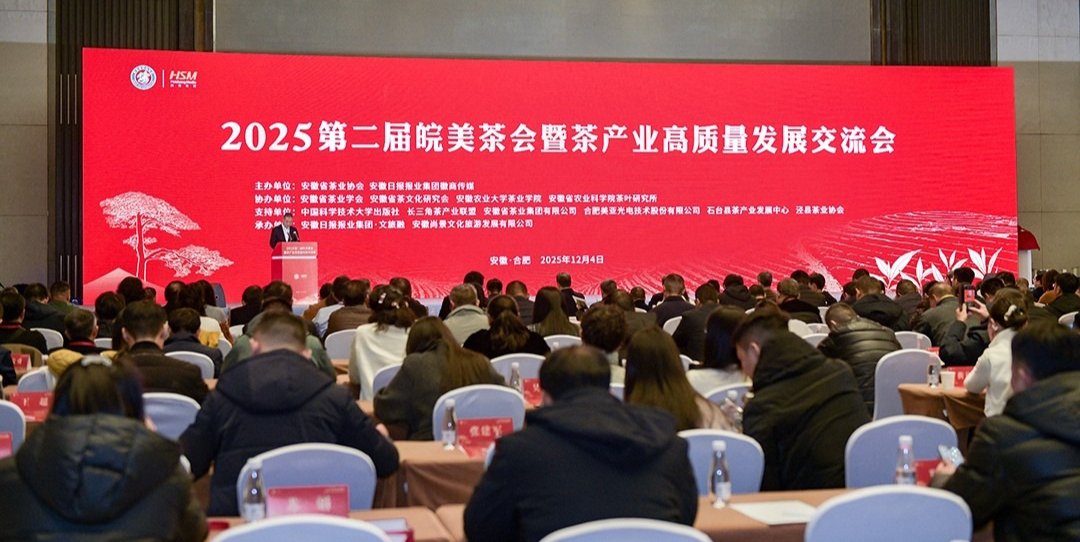
2025第二届皖美茶会圆满举办 赋能徽茶产业高质量发展
Zhong Guo Jin Rong Xin Xi Wang· 2025-12-05 13:26
Core Insights - The 2025 Second Anhui Tea Conference successfully held on December 4, focusing on the coordinated development of Anhui's tea industry, injecting new momentum for high-quality growth [1][10] - The event gathered tea industry experts, local leaders, and business representatives to discuss new opportunities for the development of Anhui's tea industry [1][3] Group 1: Event Overview - The conference was co-hosted by the Anhui Tea Association and Anhui Daily Media Group, with support from various academic and industry organizations [1] - The first Anhui Tea Conference in 2024 established a significant promotional platform for brands like Qimen Black Tea, and the second conference aims to further showcase achievements and promote Anhui tea nationally and globally [3] Group 2: Key Presentations and Discussions - Professor Xia Tao from Anhui Agricultural University summarized the discussions, emphasizing the importance of technology and cultural leadership in the tea industry [3] - Jiang Yongwen, Deputy Director of the Chinese Academy of Agricultural Sciences Tea Research Institute, discussed innovation paths for high-quality development in the tea sector [5] - Representatives from Baima Tea Co. and Huangshan Xixian Weiwei Tea Co. shared their strategies for embracing AI and digital transformation in traditional tea enterprises [5] Group 3: Publications and Initiatives - The conference saw the release of a new book titled "Anhui Tea Welcomes Guests from All Over the World," which provides an in-depth analysis of Anhui's tea development practices [7] - The event also announced the 2025 key recommended regional public brand list and tea enterprise list, along with the establishment of the "Most Beautiful Tea Travel Route Cooperation Alliance" [7] Group 4: Media Engagement and Publicity - The "Anhui Tea County Leaders Speak" series, initiated in June, involved nearly 20 county leaders promoting Anhui's tea industry, garnering extensive media coverage from over 70 platforms [8] - This initiative aimed to showcase the achievements of Anhui's coordinated tea development and enhance the brand's visibility across the nation [8] Group 5: Future Outlook - The successful hosting of the second Anhui Tea Conference not only highlighted achievements since the 14th Five-Year Plan but also built consensus for higher goals during the 15th Five-Year Plan [10] - Anhui aims to deepen the coordinated development of its tea industry, positioning it as a pillar for rural prosperity and expanding its market reach [10]
巴拿马万国博览会与中国茶的百年渊源
Jiang Nan Shi Bao· 2025-12-02 07:23
Core Insights - The Panama-Pacific International Exposition in 1915 served as a significant opportunity for Chinese tea to re-enter the international market and showcase its quality [1][3] Industry Overview - Chinese tea has a history of thousands of years, with various categories such as green tea, black tea, oolong tea, and white tea, featuring renowned products like West Lake Longjing and Qimen black tea [1] - The international competitiveness of Chinese tea declined in modern times due to economic pressures from Western powers and slow technological advancements in domestic tea production [1] Key Events - Preparations for the exposition involved collaboration between Chinese tea merchants and relevant institutions to select representative high-quality teas from different regions [2] - Huang Zhipu, a key figure, sent the selected Fuding white tea, Baihao Yinzhen, to the exposition, which won a gold medal, enhancing the international reputation of Chinese tea [2] Awards and Recognition - The Chinese tea exhibition attracted significant attention, with Qimen black tea winning a gold award, and other varieties like West Lake Longjing and Wuyi rock tea also receiving various accolades [3] - The awards led to an increase in tea exports to Europe and America, particularly for Qimen black tea and Fuding white tea, which gained international recognition [3] Industry Impact - The success at the exposition highlighted the importance of quality improvement and brand building for Chinese tea merchants, prompting some tea regions to enhance production techniques and standardize processes [3] - The event marked a pivotal moment in the history of Chinese tea, providing a reference point for the modernization of the tea industry [3] Current Status - A century later, Chinese tea continues to hold a significant position in the international market, with the achievements from the Panama exposition serving as a motivational legacy for ongoing development in the industry [3]
如何品味不同的茶
Ren Min Ri Bao· 2025-11-28 21:56
Core Insights - The article discusses the rich history and cultural significance of tea in China, highlighting the six major types of tea: green tea, black tea, oolong tea, white tea, yellow tea, and black tea [1][2][3] Green Tea - Green tea is one of the earliest types of tea in China, characterized as unfermented and processed through steps like killing green, shaping, and drying [1] - Major varieties include West Lake Longjing from Zhejiang, known for its "green color, fragrant aroma, sweet taste, and beautiful shape," and Biluochun from Jiangsu, which has a curled shape and rich aroma [1] Black Tea - Black tea is fully fermented and includes varieties such as small leaf black tea, gongfu black tea, and broken black tea, processed through withering, rolling, fermentation, and drying [2] - Notable types include Qimen black tea from Anhui, known for its rich aroma, and Dianhong from Yunnan, which has a strong and fresh flavor [2] Oolong Tea - Oolong tea, also known as blue tea, is semi-fermented and involves processes like withering, making green, killing green, rolling, and drying [2] - Famous varieties include Da Hong Pao from Fujian, recognized for its balanced aroma and flavor, and Fenghuang Dancong from Guangdong, known for its lasting fragrance and sweet taste [2] White Tea - White tea is minimally processed, involving withering and drying, and is classified as lightly fermented [2] - Key varieties include Baihao Yinzhen, which is covered in white hairs and resembles needles, and Bai Mudan, which has a floral appearance and a sweet flavor [2] Yellow Tea - Yellow tea is lightly fermented and involves a unique "sealing yellow" process that reduces bitterness and creates a "yellow soup and yellow leaves" quality [3] - A notable type is Junshan Yinzhen from Hunan, which has a golden appearance and sweet flavor [3] Black Tea (Post-Fermented) - Black tea has a long history and plays a significant role in tea trade, characterized by post-fermentation and processes like killing green, rolling, piling, re-rolling, and drying [3] - It is produced in regions like Hunan, Hubei, Sichuan, Yunnan, and Guangxi, with Anhua black tea known for its unique aroma and rich flavor [3] Cultural Significance - The article emphasizes the deep-rooted tea culture in China, encouraging individuals to explore different types of tea that suit their preferences while appreciating the profound heritage of Chinese traditional culture [3]
顺时而饮,科学品茗(信息服务台)
Ren Min Ri Bao· 2025-10-07 21:51
Core Viewpoint - The article emphasizes the importance of seasonal and time-based tea consumption in Chinese culture, highlighting how different types of tea can harmonize with the body's needs throughout the year and day [2][3][5]. Seasonal Tea Recommendations - Spring: Drink floral teas like jasmine tea to alleviate "spring fatigue" and promote liver health [3]. - Summer: Green teas (e.g., West Lake Longjing) and white teas (e.g., Baihao Yinzhen) are recommended to combat heat and humidity [3]. - Autumn: Oolong teas (e.g., Wuyi Rock Tea) are ideal for addressing dryness and nourishing lung health [3]. - Winter: Black teas (e.g., Keemun black tea) and dark teas (e.g., ripe Pu-erh) are suggested for warming the body and aiding digestion [3]. Time-Based Tea Consumption - Morning: Light green or white tea is recommended to hydrate and refresh the body after sleep [4]. - Late Morning to Noon: Green tea is ideal for enhancing mental alertness and cognitive function [5]. - Post-Lunch: Oolong tea helps with digestion and revitalizes energy levels [5]. - Afternoon: Black tea can be enjoyed, possibly with milk or honey, to soothe the stomach and emotions [5]. Balance and Personalization - The article stresses the importance of understanding individual body needs, suggesting that different tea types can serve as "harmonizers" for various health conditions [5]. - The concept of "scientific tea drinking" is introduced, advocating for alignment with seasonal changes, personal health, and emotional states [5].
安徽祁门:百年红茶香飘四海
Jing Ji Ri Bao· 2025-08-07 07:45
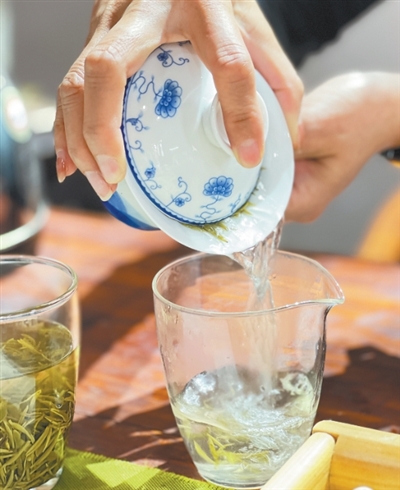
Core Viewpoint - Qimen black tea, known as "Qihong," is the only black tea among China's top ten famous teas, renowned for its high fragrance and quality, and has been recognized as a UNESCO intangible cultural heritage [1][4]. Industry Overview - Qimen County has a total tea garden area of 190,000 acres, with over 600 tea processing and operating entities, including one national key leading enterprise and four national high-tech enterprises [6]. - The tea industry in Qimen County is structured around a "company + cooperative + base + farmer" model, providing numerous job opportunities and stable income for local farmers [2][3]. Production and Technology - Qimen County has implemented a fully automated, integrated production line for Qimen black tea, reducing processing time from 50 days to 13 hours, with a daily processing capacity of approximately 20,000 pounds [8]. - The county promotes smart tea garden management using IoT sensors and drones to monitor and manage tea cultivation, enhancing production efficiency [7]. Brand Development - Qimen black tea has over 1,300 registered trademarks, including one famous trademark and several provincial-level recognized brands, and has been consistently ranked among the top ten regional public brands in China [4]. - The establishment of the "Qimen Black Tea Association" collective trademark aims to standardize production and protect the brand's integrity [5]. Cultural and International Promotion - Qimen County actively promotes its tea culture through various events and activities, enhancing the visibility and appeal of Qimen black tea [9]. - The county has opened overseas experience stores and conducted promotional events in countries like the UK, Singapore, and Malaysia, contributing to the internationalization of Qimen black tea [10][11].
传统茶该向“新茶饮”学点啥
Jing Ji Ri Bao· 2025-08-06 22:23
Core Insights - The new tea beverage industry has experienced rapid growth, with annual sales reaching tens of billions or even over a hundred billion yuan, attracting attention from traditional tea practitioners [1] - New tea beverages are popular due to their appealing taste, high aesthetic value, and effective marketing strategies [1][2] Group 1: Popularity Factors of New Tea Beverages - The taste of new tea beverages caters to young consumers' desire for innovative flavors and personalized experiences, combining tea with fruits, milk, and other ingredients for a unique "drink and chew" experience [1] - The aesthetic appeal of new tea beverages, characterized by attractive packaging and distinctive branding, aligns with young consumers' tendencies to share visually appealing products on social media [1] - Effective marketing strategies, including a unified brand image and diverse service channels (online, offline, takeout, delivery), have successfully attracted more customers [1] Group 2: Challenges and Opportunities for Traditional Tea Industry - The traditional tea industry has advantages such as rich cultural heritage and unique product characteristics but faces challenges like low cultural accumulation and easy replicability of business models [2] - Traditional tea brands should enhance their original branding through measures like ecological tea garden construction and geographical indication protection to avoid homogenization [2] - Accelerating digital transformation through new media channels can help bridge the gap between traditional tea culture and younger consumers [2] - Diversifying product forms, such as developing tea powders and capsules, can address the complexities of traditional tea preparation and adapt to fast-paced lifestyles [2] Group 3: Market Structure and Capitalization - The national tea market has a scale of nearly 300 billion yuan with over 70,000 tea companies, yet there are no A-share listed companies in the traditional tea sector [3] - The new tea beverage industry is actively seeking capital in overseas markets, highlighting the need for the traditional tea industry to improve its market concentration to realize its potential [3]
凤凰单丛第四!2025全国茶叶区域公用品牌影响力指数报告发布
Nan Fang Nong Cun Bao· 2025-05-30 12:31
Core Insights - The "2025 National Tea Regional Public Brand Influence Index Report" has been released, ranking Fenghuang Dancong tea fourth with an index of 926, indicating a significant increase in brand influence compared to its fifth place in 2024 [2][3]. Brand Rankings - The top four tea brands in the report are: 1. Anxi Tieguanyin - 946.8 2. Xinyang Maojian - 945 3. Fuding White Tea - 942.3 4. Fenghuang Dancong Tea - 926 [4]. Report Overview - The report was compiled by the Tea Industry Branch of the China Agricultural International Cooperation Promotion Association and the Brand Development and Research Center of the China Agricultural Research Institute, covering 88 regional public tea brands across 15 provinces [5][6]. Analysis Dimensions - The report analyzes the competitive landscape of Chinese tea brands through six dimensions: industry development, market conditions, brand building, brand awareness, market share, and online presence [7]. Regional Distribution - The report highlights that the provinces of Henan, Fujian, Guangdong, and Anhui dominate the tea brand landscape in China [11]. Tea Category Insights - The report notes a "head and tail" phenomenon in green tea brands, while oolong and black teas adopt a "small but refined" strategy, with Anxi Tieguanyin and Guangdong Fenghuang Dancong forming a "Fujian-Guangdong Oolong Corridor" [12][13]. Brand Influence Trends - The report identifies three structural trends facing regional public tea brands: resource concentration towards leading brands, solidified consumer recognition, and high barriers for new brands [17]. Strategic Recommendations - Leading brands are advised to strengthen value leadership, mid-tier brands should focus on niche markets, and lower-tier brands need to innovate agilely to break through [18].