
百赫安

Search documents
首次实现年度盈利!百济神州2025年净利润2.87亿美元,营收增长40%至53.43亿美元
Hua Er Jie Jian Wen· 2026-03-25 18:32
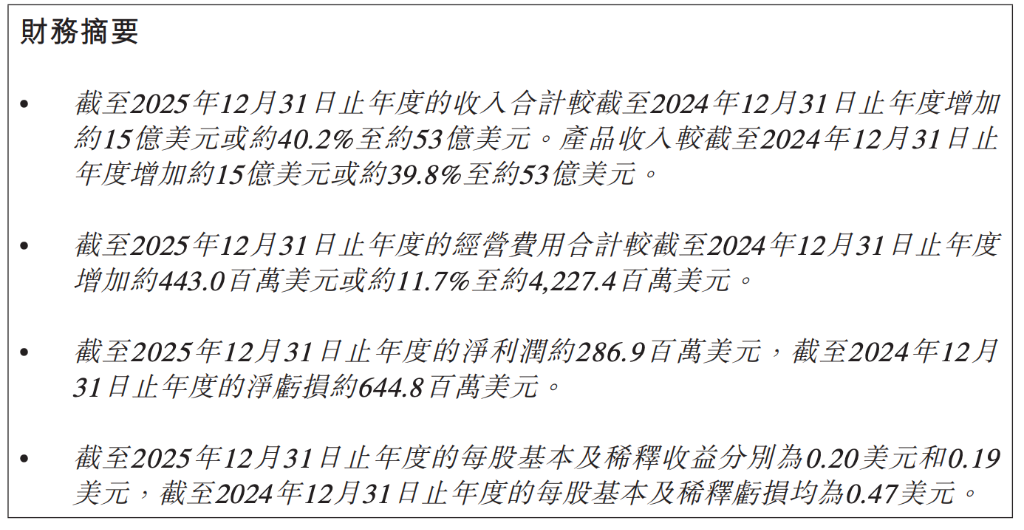
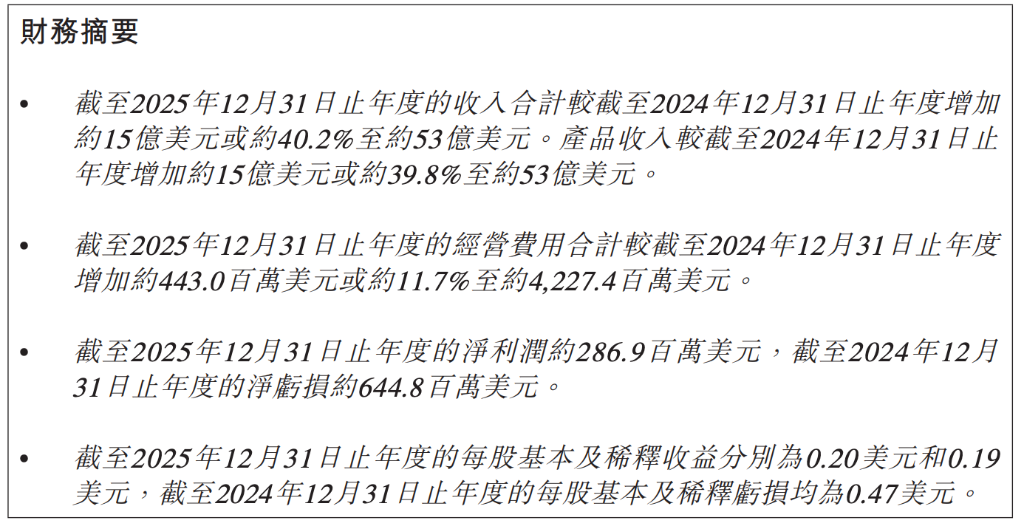
Core Insights - The company achieved a total revenue of $5.343 billion in 2025, marking a year-on-year growth of 40.2%, with product revenue netting $5.282 billion, up 39.8% [1][3] - The company recorded a net profit of $287 million in 2025, a significant turnaround from a net loss of $645 million in the previous year, indicating a sustainable growth phase for its business model [1][3] Revenue Breakdown - The core product, Baiyueze, generated global sales of $3.928 billion, reflecting a 48.6% increase and maintaining its leading position among BTK inhibitors [1][3] - Baiyueze accounted for approximately 74% of total product revenue, while Baizean (Tislelizumab) contributed $737 million, up 18.8% [3] - Other products included Anjavi (Denosumab) with $306 million in revenue, up 36.4%, and Beilitai (Bonetuzumab) with $104 million, up 40.2% [3] Cash Flow and Profitability - Cash and cash equivalents reached $4.548 billion by the end of 2025, a 73.1% increase, with net cash flow from operating activities at $1.128 billion, a turnaround from a net outflow of $141 million in the previous year [1][3] - The gross profit for 2025 was $4.667 billion, with a gross margin of 87.3%, an improvement from 84.3% in 2024 [4] Cost Management - The increase in gross margin was attributed to a higher proportion of high-margin Baiyueze sales, ongoing optimization of manufacturing costs, and the gradual operationalization of the Hopewell production facility [4] - Research and development expenses rose to $2.146 billion, a 9.9% increase, while sales and administrative expenses reached $2.081 billion, up 13.7% [5][7] Financial Health - As of the end of 2025, total assets amounted to $8.189 billion, with shareholder equity at $4.361 billion and total liabilities at $3.827 billion [7] - The company secured a credit agreement with HSBC and other financial institutions for approximately $768 million to refinance short-term operational funding [7] Pipeline Progress - The company is advancing its pipeline with the approval of Sotoclis (a next-generation BCL2 inhibitor) for treating relapsed or refractory mantle cell lymphoma and chronic lymphocytic leukemia, with FDA priority review status [8] - The HERIZON-GEA-01 study for Baihe'an (Zanidatamab) achieved positive endpoints, paving the way for a market application for HER2-positive gastric esophageal adenocarcinoma [8]

首次实现年度盈利!百济神州2025年净利润2.87亿美元,营收增长40%至53.43亿美元|财报见闻
Hua Er Jie Jian Wen· 2026-03-25 13:01
Core Insights - The company achieved a milestone in 2025 by recording a net profit of $287 million, successfully turning around from a net loss of $645 million in the previous year, marking its first annual profit since inception [1] - Total revenue for the year reached $5.343 billion, representing a year-on-year growth of 40.2%, with product revenue netting $5.282 billion, up 39.8% [1] Revenue Breakdown - The core product, Baiyueze, generated $3.928 billion in global sales, a 48.6% increase, maintaining its leading position among BTK inhibitors [3] - Bai Ze An (Tislelizumab) contributed $737 million, growing by 18.8% [3] - Other products included Anjiao Wei (Denosumab) at $306 million, up 36.4%, and Beili Tuo (Bonetuzumab) at $104 million, up 40.2% [3] - Other income reached $60.97 million, a significant increase of 98.6%, primarily from royalties related to the collaboration with Amgen [4] Profitability and Cash Flow - Gross profit for 2025 was $4.67 billion, with a gross margin of 87.3%, up from 84.3% in 2024, driven by improved product mix and manufacturing efficiencies [5] - The company reported a net cash flow from operating activities of $1.128 billion, a turnaround from a net outflow of $141 million in the previous year [1] Cost Structure and Efficiency - Research and development expenses totaled $2.146 billion, a 9.9% increase, while sales and administrative expenses were $2.081 billion, up 13.7% [6] - The combined expenses accounted for 78.6% of product revenue, down from 90.2% the previous year, indicating improved operational leverage [6] Financial Health - As of the end of 2025, total assets were $8.189 billion, with shareholder equity at $4.361 billion and total liabilities at $3.827 billion [8] - The company secured approximately $768 million in term loans from financial institutions for refinancing short-term operational funding [8] Pipeline Progress - The company is advancing its pipeline with the approval of Sotokura (a new generation BCL2 inhibitor) expected in January 2026 for treating relapsed or refractory mantle cell lymphoma and chronic lymphocytic leukemia [9] - The HERIZON-GEA-01 study for Bai He An (Zanidatamab) achieved positive endpoints, paving the way for a market application in HER2-positive gastric adenocarcinoma [9] - The company is uniquely positioned with potential best-in-class candidates across three key targets in chronic lymphocytic leukemia [9]
首次年度盈利!百济神州2025年营收增超四成 百悦泽全球大卖逾280亿元
Mei Ri Jing Ji Xin Wen· 2026-02-26 15:55
Core Viewpoint - BeiGene achieved a significant milestone by reporting its first annual profit in 2025, with total revenue reaching 38.205 billion yuan, a year-on-year increase of 40.4%, and a net profit of 1.422 billion yuan, recovering from a net loss of 4.978 billion yuan in the previous year [1][5]. Financial Performance - Total revenue for 2025 was 38.205 billion yuan, up from 27.214 billion yuan in the previous year, marking a 40.4% increase [3]. - Product revenue contributed 37.770 billion yuan, reflecting a 39.9% increase from 26.994 billion yuan [3]. - Operating profit was 2.562 billion yuan, a turnaround from an operating loss of 4.162 billion yuan [3]. - Total profit amounted to 2.558 billion yuan, compared to a loss of 4.163 billion yuan in the prior year [3]. - Net profit attributable to the parent company was 1.422 billion yuan, recovering from a loss of 4.978 billion yuan [3]. Product Performance - The growth in product revenue was primarily driven by the sales of the BTK inhibitor Brukinsa (Zebutinib) and the PD-1 inhibitor Tislelizumab [5]. - Brukinsa achieved global sales of 28.067 billion yuan in 2025, a 48.8% increase year-on-year, making it the first "blockbuster" drug in China's pharmaceutical sector [5][6]. - Sales in the U.S. market for Brukinsa reached 20.206 billion yuan, up 45.5%, while sales in Europe and China were 4.265 billion yuan (66.4% increase) and 2.472 billion yuan (33.1% increase), respectively [6]. Regulatory Approvals and Pipeline - Brukinsa has been approved in over 75 markets globally, with recent updates in the U.S., EU, and UK based on positive results from the Phase 3 ALPINE trial [6][7]. - Tislelizumab has been approved in over 50 markets, with plans to submit new indications for gastric cancer treatment in the U.S. and China in 2026 [7]. R&D and Future Outlook - The company is focusing on diversifying its product pipeline to reduce reliance on Brukinsa, with several candidates in late-stage clinical trials [8]. - BeiGene's product BeiGene (Sotigalimab) has received approval for the first global marketing application in China for certain types of lymphoma [9]. - The company anticipates launching multiple candidates for solid tumors and has received fast-track designation for BGB-B2033 for liver cancer treatment [9][10]. - For 2026, BeiGene projects revenue between 43.6 billion and 45 billion yuan, representing a growth rate of 14.12% to 17.79% compared to 2025 [11].
创新药保障“最后一公里”待解
2 1 Shi Ji Jing Ji Bao Dao· 2025-12-15 23:04
Core Insights - The release of the new National Medical Insurance Directory and the first Commercial Health Insurance Innovative Drug Directory marks a significant shift in China's healthcare system towards a dual-driven model of "basic medical insurance + commercial health insurance" [1][2] Group 1: Policy Changes - The new directories will be implemented on January 1, 2026, and represent a milestone in establishing a multi-tiered medical insurance system in China [2] - The Commercial Health Insurance Innovative Drug Directory provides a high-quality "drug pool" for insurance companies, reducing the barriers for product development and information asymmetry [2][3] - The basic medical insurance directory has added 114 new drugs, achieving a negotiation success rate of 88.19%, the highest in seven years, enhancing drug coverage in critical areas [3][4] Group 2: Drug Inclusion and Coverage - The first Commercial Health Insurance Innovative Drug Directory includes 19 drugs, focusing on high-value innovative treatments that exceed basic insurance coverage, such as CAR-T therapies and Alzheimer's drugs [4][5] - Five CAR-T therapies have been included in the directory, representing over half of the currently available products in China, with prices exceeding 1 million yuan for most [5][6] - The directory also includes treatments for rare diseases, demonstrating a commitment to vulnerable populations [6] Group 3: Market Dynamics - The dual-directory system is designed to address the structural challenges of high-value innovative drugs, allowing commercial insurance to cover these costs before they are potentially included in basic insurance [7][8] - The introduction of commercial insurance funding is expected to enhance the clinical drug level and overall R&D return rates for leading innovative pharmaceutical companies [6][11] Group 4: Consumer Impact - The new payment structure allows patients to access innovative therapies without facing the dilemma of full out-of-pocket costs, as commercial insurance will provide support [8][9] - The expansion of special drug lists in commercial insurance products is becoming a trend, with many regions updating their offerings to include high-value cancer and rare disease medications [9][10] - However, challenges remain in ensuring that hospitals stock these high-cost drugs and that the claims process is efficient and transparent [10]
创新药保障“最后一公里”待解:买得到、赔得快、保得起
2 1 Shi Ji Jing Ji Bao Dao· 2025-12-15 10:47
Core Insights - The release of the 2025 National Medical Insurance Directory and the first Commercial Health Insurance Innovative Drug Directory marks a significant milestone in China's healthcare payment system, transitioning to a dual-driven model of "basic medical insurance + commercial health insurance" [1][3][10] Group 1: Policy Changes - The new policies clarify the payment boundaries between government and market, with the Commercial Health Insurance Innovative Drug Directory focusing on high-value innovative drugs that exceed the basic medical insurance coverage [3][4] - The 2025 Medical Insurance Directory adds 114 new drugs, achieving a negotiation success rate of 88.19%, the highest in seven years, with a total of 3,253 drugs now covered [3][4] Group 2: Drug Inclusion - The first Commercial Health Insurance Innovative Drug Directory includes 19 drugs, such as CAR-T therapies and new Alzheimer's medications, which are typically expensive and risky, thus not included in basic medical insurance [4][5] - Five CAR-T therapies have been included in the directory, representing over half of the currently available products in China, with prices exceeding 1 million yuan for most [5][6] Group 3: Market Dynamics - The dual-track system addresses the affordability of high-value drugs for patients while providing a sustainable return mechanism for pharmaceutical companies, thus driving high-quality development in China's innovative drug industry [4][6] - The introduction of these directories is expected to enhance clinical medication levels and overall R&D returns, particularly benefiting leading innovative pharmaceutical companies with extensive pipelines [6][7] Group 4: Consumer Impact - The integration of the two directories allows for a complementary relationship, where commercial insurance can cover innovative drugs first before they are potentially included in basic medical insurance [7][8] - The "gradient payment" mechanism enables patients to access the latest therapies without facing the dilemma of full out-of-pocket expenses, as commercial insurance will provide payment support [8][10] Group 5: Implementation Challenges - There are practical challenges in ensuring that hospitals stock the newly included high-priced drugs, as they may face financial disincentives to do so [10][11] - The claims process for commercial insurance may still require patients to pay upfront, which can be a significant burden for high-cost innovative drugs [10][11] - The potential for increased claims rates due to the inclusion of high-risk drugs may lead to higher insurance premiums or stricter underwriting standards in the future [12]

医保商保“双目录”发布 科创板创新药企收获颇丰
Xin Hua Cai Jing· 2025-12-10 15:41
Group 1 - The 2025 National Medical Insurance Drug List includes 114 new drugs, with 50 being innovative drugs, showing an overall success rate of 88%, an increase from 76% in 2024 [1] - Nine innovative drugs from the Sci-Tech Innovation Board have been included in the medical insurance list, highlighting the strength and vitality of these companies [1] - The first version of the Commercial Health Insurance Innovative Drug List has been released, complementing the basic medical insurance and providing new possibilities for patients to access cutting-edge treatments [4] Group 2 - Nearly 90% of new drugs approved by Sci-Tech Innovation Board companies have received medical insurance support, indicating a shift towards value realization for these companies [2] - The drug "Junshi Biological's Junshida" is the only domestic PCSK9-targeted drug for patients intolerant to statins, now included in the medical insurance list [2] - The successful renewal negotiations for several innovative drugs confirm their clinical value and market position, benefiting a wider patient population [6][7] Group 3 - Innovative drugs from companies like Baiji Shenzhou and Junshi Biological have been recognized for their clinical value and patient benefits, leading to their inclusion in the medical insurance list [7] - The R&D investment of Sci-Tech Innovation Board companies reached a new high in the first three quarters of 2025, with a year-on-year increase of over 10%, indicating a strong commitment to innovation [7] - The cycle of "R&D investment - innovation results - insurance support - market return - reinvestment in R&D" is being established and strengthened within the industry [7]

港股异动 | 百济神州(06160)高开逾3% 百赫安联合百泽安与化疗的3期临床研究取得积极结果
智通财经网· 2025-11-18 01:31
Core Viewpoint - BeiGene (06160) experienced a significant stock increase of 3.53%, reaching HKD 223.2, following the announcement of positive results from the Phase III HERIZON-GEA-01 study [1] Group 1: Study Results - The HERIZON-GEA-01 study evaluated the efficacy and safety of the HER2-targeted bispecific antibody, Zhenidamab, either as a monotherapy or in combination with the PD-1 inhibitor, Tislelizumab, for first-line treatment of HER2-positive locally advanced or metastatic gastroesophageal adenocarcinoma (GEA) [1] Group 2: Market Performance and Analyst Ratings - CITIC Securities previously noted that BeiGene's Bruton’s tyrosine kinase (BTK) product is experiencing significant growth, leading to an upward revision of the annual performance guidance [1] - The company is expected to see continued commercialization success from its key pipelines, including BTK, PD-1 in the EU and Japan, and other significant products like BCL-2, CDAC, and CDK4, maintaining a "Buy" rating [1]
持续加码创新药 叮当健康DTP药房上架金蓓欣
Zheng Quan Shi Bao Wang· 2025-11-13 12:38
Core Insights - Dingtang Health has launched a new innovative drug, injection Vuxin Qibai monoclonal antibody (brand name: Jinbeixin), which was approved by the National Medical Products Administration in July 2023 for treating acute gouty arthritis in adults who are intolerant to or have contraindications for non-steroidal anti-inflammatory drugs and/or colchicine [1] - The prevalence of hyperuricemia among Chinese adults was reported at 14% from 2018 to 2019, with gout prevalence ranging from 0.86% to 2.20%, indicating a rising trend and younger onset age [1] - The gout medication market in China is projected to exceed 10 billion yuan by 2030 [1] Company Developments - Dingtang Health is actively expanding its innovative drug portfolio, having introduced several innovative drugs under its "New Special Drug Life Ark" plan and "Original Drug Supply Alliance" initiative, enhancing patient access and treatment adherence [1] - The company is enhancing its AI technology development and application, establishing smart warehouses and cold chain delivery services across major regions, and integrating online medical insurance payment systems [2] - For the first half of 2025, Dingtang Health reported revenues of 2.327 billion yuan, a year-on-year increase of 2.6%, with a gross profit of 816 million yuan and a gross margin of 35% [2] - The company narrowed its losses to 52.02 million yuan, a 42.1% improvement compared to the same period in 2024, with adjusted net profit losses reduced by 78.2% [2] - Future strategies include focusing on user lifecycle health management, expanding smart center warehouse construction, and enhancing service capabilities in major cities like Beijing, Shanghai, and Shenzhen [2]
百济神州有限公司
Shang Hai Zheng Quan Bao· 2025-08-06 19:00
Group 1 - The company has adjusted its 2025 annual operating performance forecast to provide investors with a clearer understanding of its business performance and future prospects [1][2] - The adjustment in expected operating income is primarily attributed to the leading position of Baiyueze in the US market and its continued expansion in Europe and other key global markets [3] Group 2 - For the first half of 2025, the company's product revenue reached 17.36 billion RMB, a year-on-year increase of 45.8%, while total operating revenue was 17.52 billion RMB, up 46.0% from the previous year [9] - The net profit attributable to the parent company for the first half of 2025 was 450 million RMB, with total assets at 44.87 billion RMB, an increase of 4.8% from the beginning of the period [9][19] - Baiyueze's global sales totaled 12.53 billion RMB in the first half of 2025, representing a year-on-year growth of 56.2%, with US sales at 8.96 billion RMB, up 51.7% [10][11] Group 3 - Baiyueze is the only BTK inhibitor with flexible dosing options, and it has been approved in 75 markets globally, with ongoing clinical trials in over 30 countries [12] - The company is also advancing its next-generation pipeline products and emphasizes a rapid concept verification strategy in its global clinical development [14] - The company has a significant presence in the oncology research field, with a large team dedicated to small molecule and antibody drug discovery [14] Group 4 - The company has initiated several key clinical trials for its products, including the global phase III trial for Sonrotoclax in combination with Baiyueze for CLL patients [15][16] - The company plans to launch multiple clinical trials for various cancer treatments in the coming years, including trials for breast cancer and lung cancer [17]